Arctic Animals
Arctic animals live in some of the harshest conditions on Earth — a region spanning the Arctic Ocean and the tundra of northern North America, Europe, Asia, and Greenland, where temperatures regularly plunge below -30°C (-22°F) and sea ice covers much of the landscape for months at a time. To survive, arctic species share a common toolkit of adaptations: thick fur or blubber for insulation, compact bodies with smaller ears, tails, and limbs to minimize heat loss, and, in species like the arctic fox and ptarmigan, a coat that turns white in winter for camouflage against snow and ice. Marine hunters such as the polar bear and narwhal rely on sea ice itself as a hunting platform and travel route, while herd animals like caribou and muskoxen survive the near-total darkness of the polar winter on stored fat reserves and thick double-layered coats. Because so many arctic species depend on sea ice specifically — not just cold temperatures — the rapid pace of Arctic ice loss from climate change is considered one of the most direct threats facing this group of animals today.
Adapting to Months of Darkness and Months of Light
The Arctic's extreme latitude means the sun doesn't rise at all for weeks around the winter solstice, and doesn't set at all around the summer solstice — a light cycle unlike almost anywhere else on Earth. Many arctic animals adjust their behavior around this rhythm rather than a normal day-night cycle: some, like the arctic ground squirrel, cope with the long winter by hibernating through it entirely, while migratory birds like the arctic tern time their movements to follow near-constant daylight between the Arctic and Antarctic, giving it more daylight hours per year than any other animal on Earth.
The Arctic Food Web Depends on Sea Ice
Sea ice is not just a surface arctic animals travel across — for many species, it's the foundation of the entire food web. Algae growing on the underside of sea ice feeds the zooplankton that in turn feed arctic cod, which support seals, and ultimately polar bears at the top of the chain. When sea ice forms later in the year or melts earlier, as has increasingly happened with a warming climate, that timing mismatch can ripple through every level of this food web, not just affect the animals that physically stand on the ice.
Arctic vs. Antarctic: Not the Same Animals
Despite both being cold, polar environments, the Arctic and Antarctic support almost entirely different animal communities, because they're geographically isolated from one another. Polar bears, arctic foxes, and muskoxen are found only in the Arctic, which is mostly ocean surrounded by land; penguins, in turn, are found only in the Southern Hemisphere and never naturally occur in the Arctic, since Antarctica is land surrounded by ocean, a difference that shaped completely separate evolutionary paths for cold-adapted wildlife on each pole.
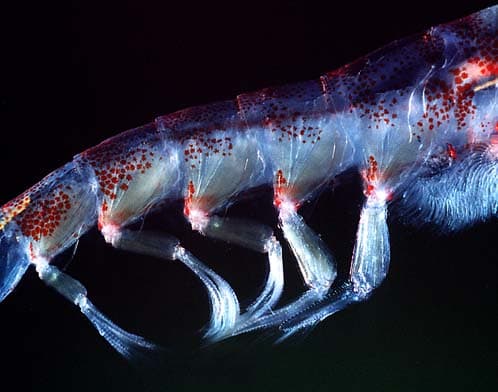
Antarctic Krill
Euphausia superba
Marine AnimalAntarctic krill is a small, shrimp-like crustacean that forms the foundation of the entire Antarctic food web, supporting whales, seals, penguins, and countless fish species. Despite its tiny individual size, its total biomass is estimated to be one of the largest of any animal species on Earth, gathering in massive swarms that can stretch for kilometers and be seen from space.
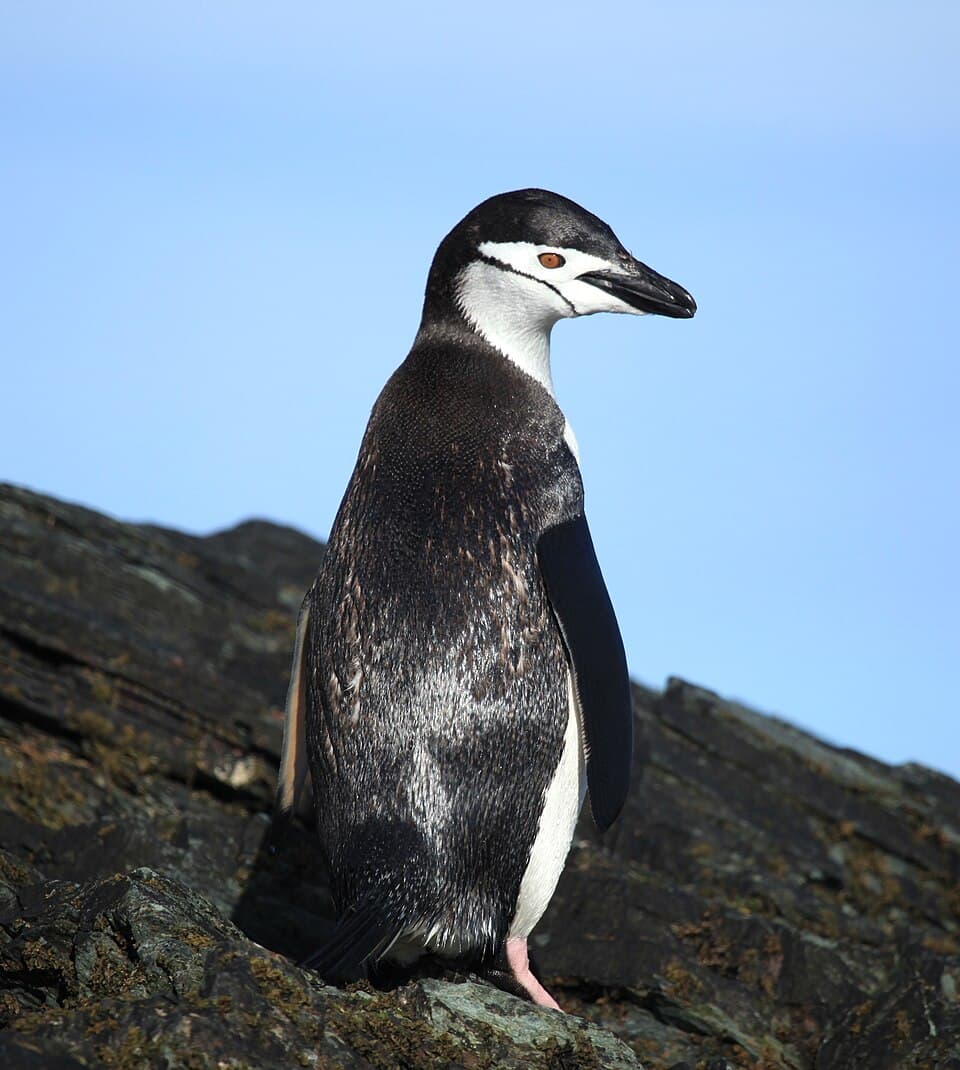
Chinstrap Penguin
Pygoscelis antarcticus
BirdThe chinstrap penguin is named for the narrow black band running under its chin, giving it the appearance of wearing a tiny helmet strap. Among the most numerous penguin species in the world, it breeds in enormous colonies across the Antarctic Peninsula and surrounding sub-Antarctic islands.

Emperor Penguin
Aptenodytes forsteri
BirdThe emperor penguin is the tallest and heaviest of all penguin species, uniquely breeding through the brutal Antarctic winter on sea ice far from open water.
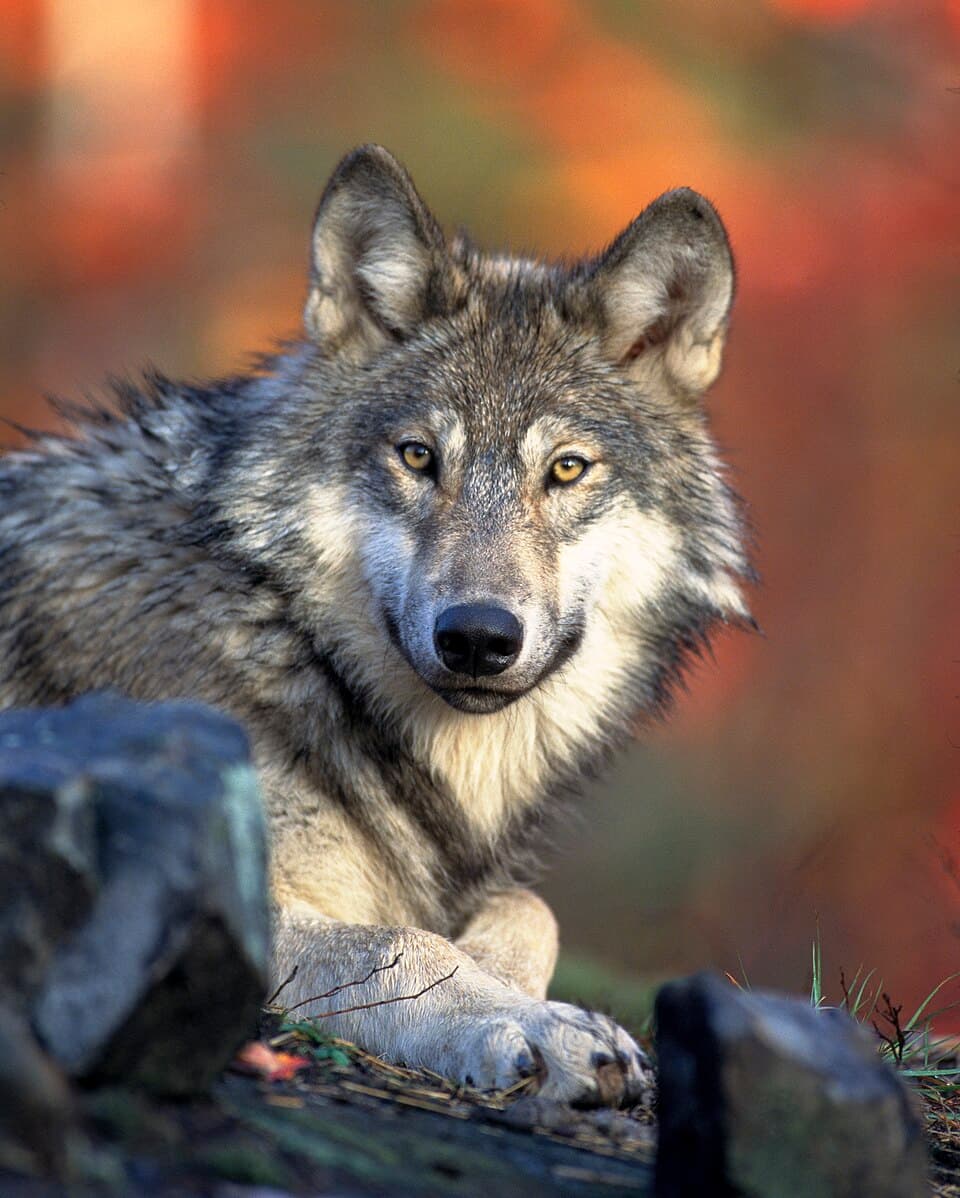
Gray Wolf
Canis lupus
MammalThe gray wolf is the largest wild member of the dog family, once ranging across nearly the entire Northern Hemisphere and living in tightly-coordinated family packs.
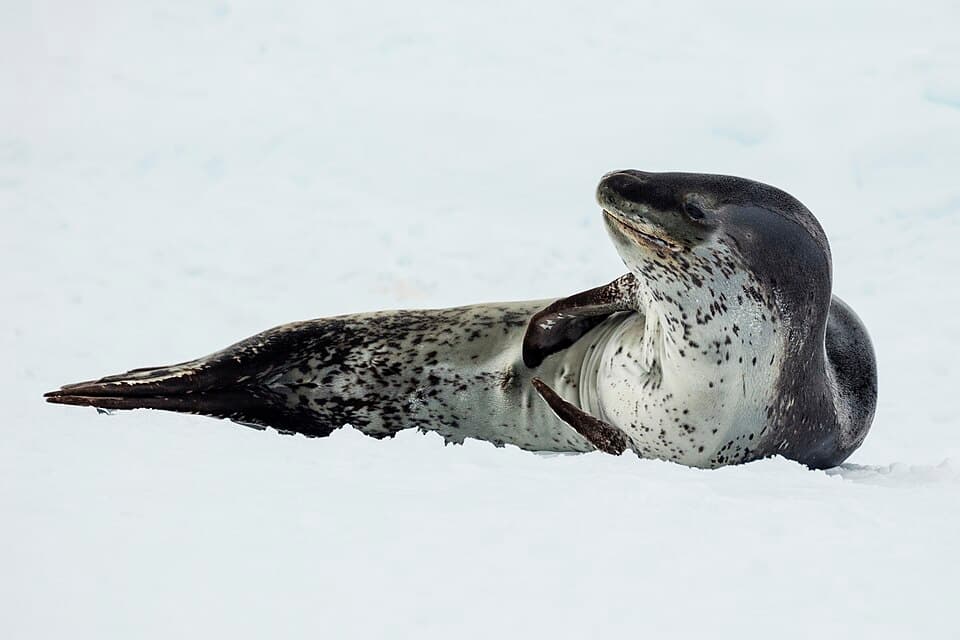
Leopard Seal
Hydrurga leptonyx
MammalThe leopard seal is one of Antarctica's top predators, named for the dark spotted pattern across its pale coat and a fierce reputation to match. Unlike most seals, which primarily eat fish, the leopard seal is a formidable hunter capable of taking down penguins and even other seal species.

Narwhal
Monodon monoceros
MammalThe narwhal is an Arctic whale famous for the male's long spiraled tusk, which is actually an enormous protruding canine tooth, earning it the nickname 'unicorn of the sea'.
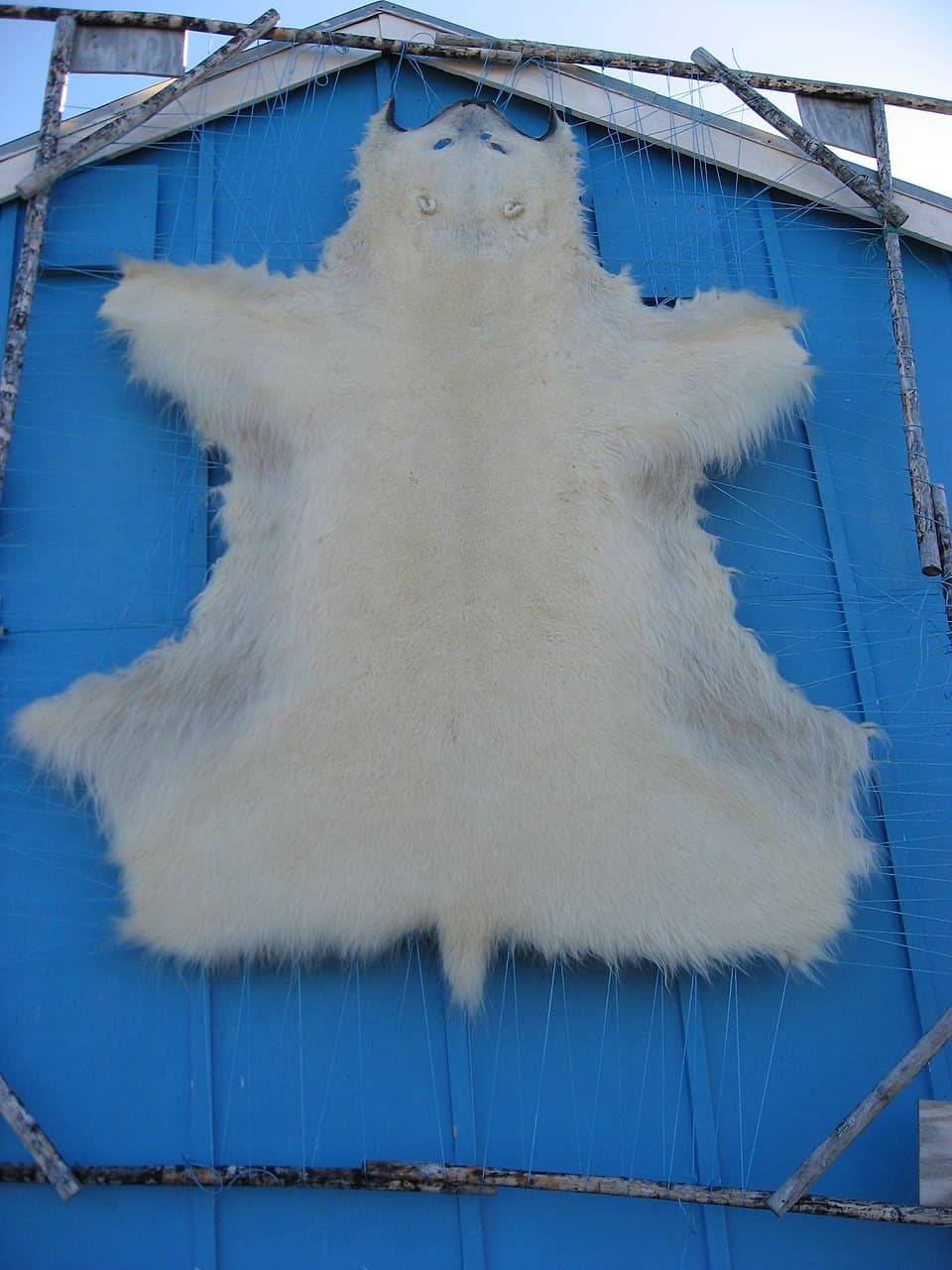
Polar Bear
Ursus maritimus
MammalThe polar bear is the largest land carnivore on Earth, superbly adapted to hunting seals across the sea ice of the Arctic Circle.
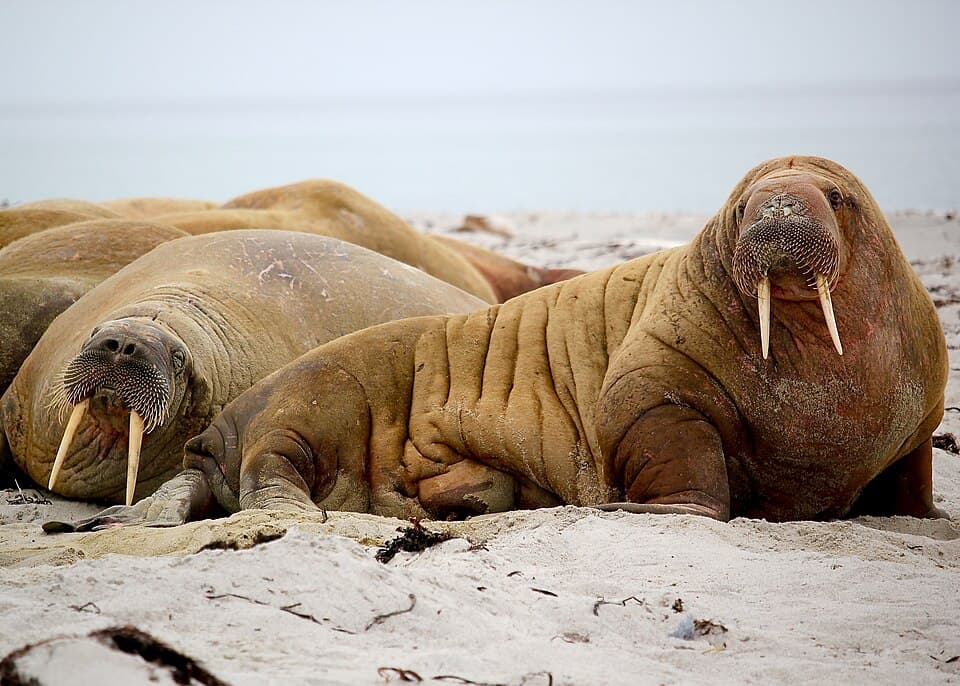
Walrus
Odobenus rosmarus
MammalThe walrus is a massive Arctic marine mammal easily identified by its long ivory tusks, thick blubber layer, and distinctive whiskered snout.
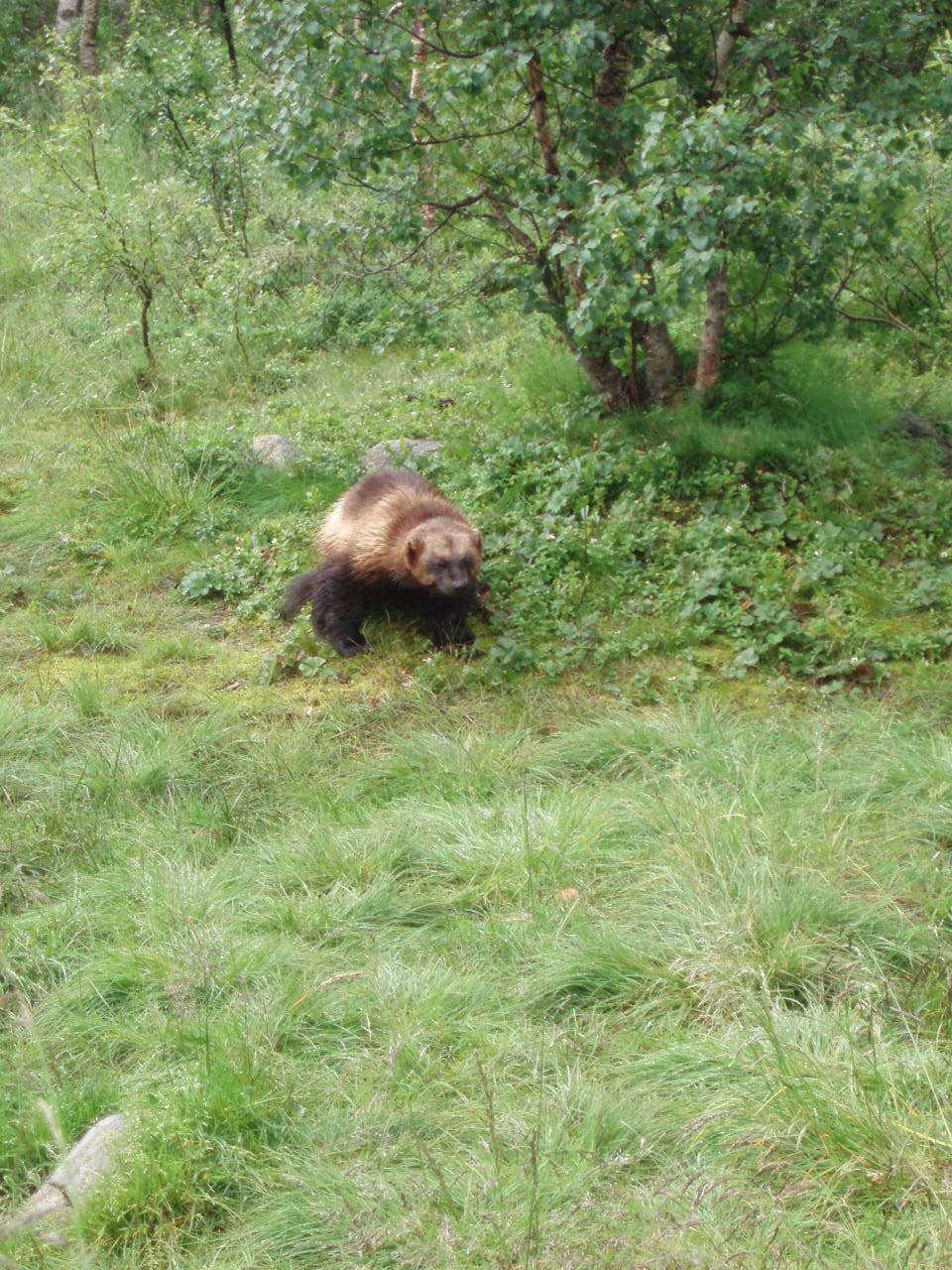
Wolverine
Gulo gulo
MammalThe wolverine is the largest land-dwelling member of the weasel family, a solitary and famously tenacious predator and scavenger of far northern forests and tundra. Despite its bear-like appearance, it is much smaller than its reputation suggests, roughly the size of a medium dog, but is capable of driving much larger animals like wolves away from a carcass.
Arctic Animals FAQs
How many arctic animals are listed here?
This page currently features 9 species, and more are added regularly as the dataset grows.
What is the most popular animal in this list?
Polar Bear is currently the most popular animal in Arctic Animals.
Are any of these animals endangered?
Yes — 2 of the 9 species listed are classified as vulnerable, endangered, or critically endangered.
Explore Other Habitats
Forest Animals
Dense tree cover provides food, shelter, and camouflage for a huge range of species, from insects to apex predators.
Ocean Animals
Covering over 70% of the planet, the ocean is home to everything from microscopic plankton to the largest animal ever known.
Desert Animals
Extreme heat, cold nights, and scarce water shape animals with remarkable adaptations for survival in arid landscapes.
Grassland Animals
Open plains and savannas support grazing herds and the predators that follow them across Africa, Asia, and the Americas.
Mountain Animals
Thin air, steep terrain, and cold temperatures favor sure-footed, well-insulated species adapted to high altitudes.
Wetland Animals
Marshes, swamps, and floodplains support an especially rich mix of amphibians, reptiles, birds, and mammals.
Rainforest Animals
The most biodiverse ecosystem on the planet, home to a staggering density of species packed into a small footprint.