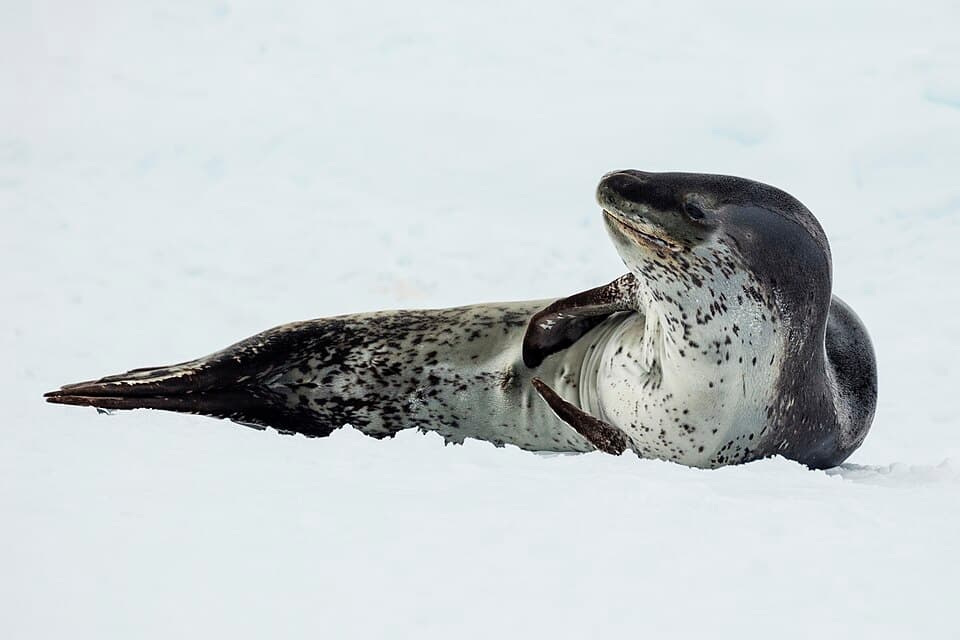
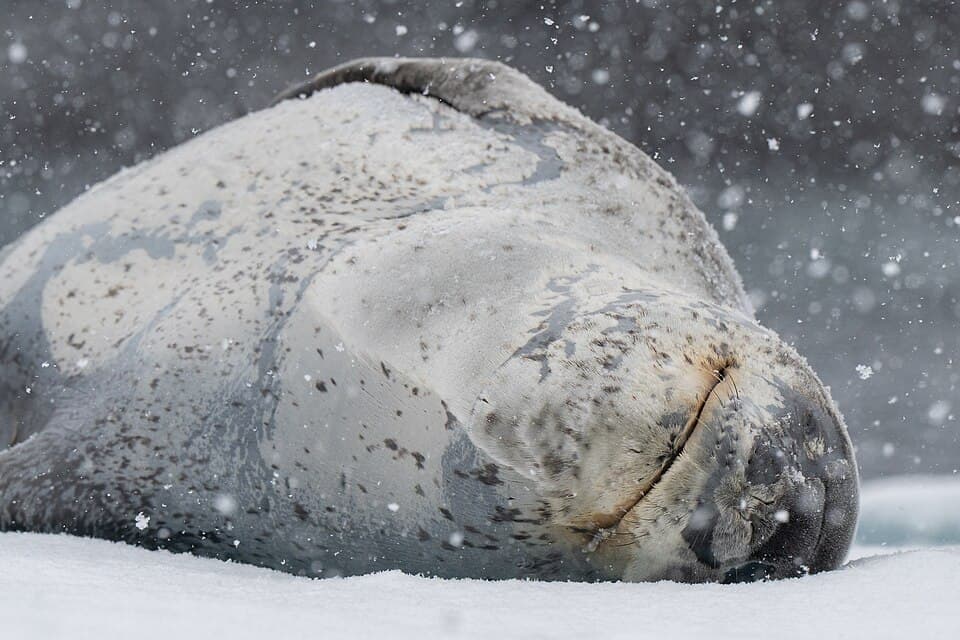
Photo: Godot13 · CC BY-SA 4.0 · via Wikimedia Commons
Overview
The leopard seal is one of Antarctica's top predators, named for the dark spotted pattern across its pale coat and a fierce reputation to match. Unlike most seals, which primarily eat fish, the leopard seal is a formidable hunter capable of taking down penguins and even other seal species.
Appearance
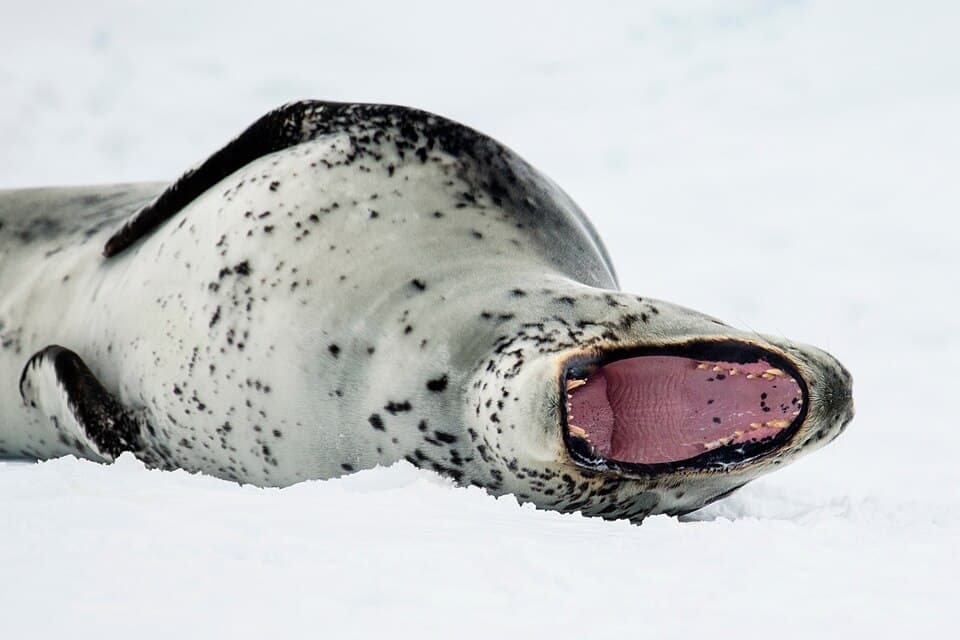
It has a long, powerful, streamlined body with a distinctively large reptilian-looking head and a wide mouth built for both crushing krill and shearing flesh. Its dark gray back fades to a pale, spotted underside, providing camouflage from both above and below in open water.
Habitat & Distribution
The leopard seal is found in arctic, ocean habitats.
Diet & Behavior
Diet: Carnivore — Meat-eating animals that hunt, scavenge, or fish for prey, ranging from big cats to snakes and birds of prey.
Leopard seals hunt penguins by waiting near the water's edge or patrolling just offshore, ambushing birds as they enter or exit the sea, then often thrashing the carcass violently against the water's surface to remove skin and feathers before feeding. Unlike many seal species, leopard seals are largely solitary, coming together mainly to breed, and are also known for an unusual, complex underwater song produced by males during the breeding season.
Predators
- Orcas
Prey
- Penguins
- Other seals
- Fish
- Krill
- Squid
Interesting Facts
- 1
A leopard seal's diet ranges from tiny krill to full-grown penguins and even other, smaller seal species.
- 2
Male leopard seals produce complex, repetitive underwater songs during the breeding season, audible for long distances.
- 3
It's one of the top predators in the Antarctic ecosystem, second in size there only to the elephant seal among seals.
- 4
A leopard seal's spotted coat provides camouflage against both the ocean surface from below and the seafloor from above.
- 5
Despite occasional dramatic encounters with humans, unprovoked attacks on people remain extremely rare.
Gallery
Leopard Seal FAQs
What do leopard seals eat?
Leopard seals have an unusually broad diet for a seal, ranging from krill and fish to penguins and even other, smaller seal species, making them one of Antarctica's top predators.
Are leopard seals dangerous to humans?
Leopard seals are powerful predators and there have been rare documented incidents involving humans, but unprovoked attacks are extremely uncommon and they generally show more curiosity than aggression toward people.
Why do leopard seals have spotted coats?
Their dark, spotted pattern provides camouflage in the water, helping them blend in against the ocean depths when viewed from above and against the brighter surface when viewed from below.
Do leopard seals live in groups?
No, leopard seals are largely solitary animals outside of the breeding season, unlike many other seal species that gather in large colonies.
What does a leopard seal eat?
The leopard seal is a carnivore. Its diet includes penguins, other seals, fish, krill.
Where does the leopard seal live?
The leopard seal is found in arctic, ocean habitats across antarctica.
Is the leopard seal endangered?
The leopard seal has a conservation status of Least Concern. Widespread and abundant species that are not currently at significant risk of extinction.
How long do leopard seals live?
A leopard seal's typical lifespan is 15–26 years in the wild.
How much does a leopard seal weigh?
An adult leopard seal typically weighs 200–600 kg.