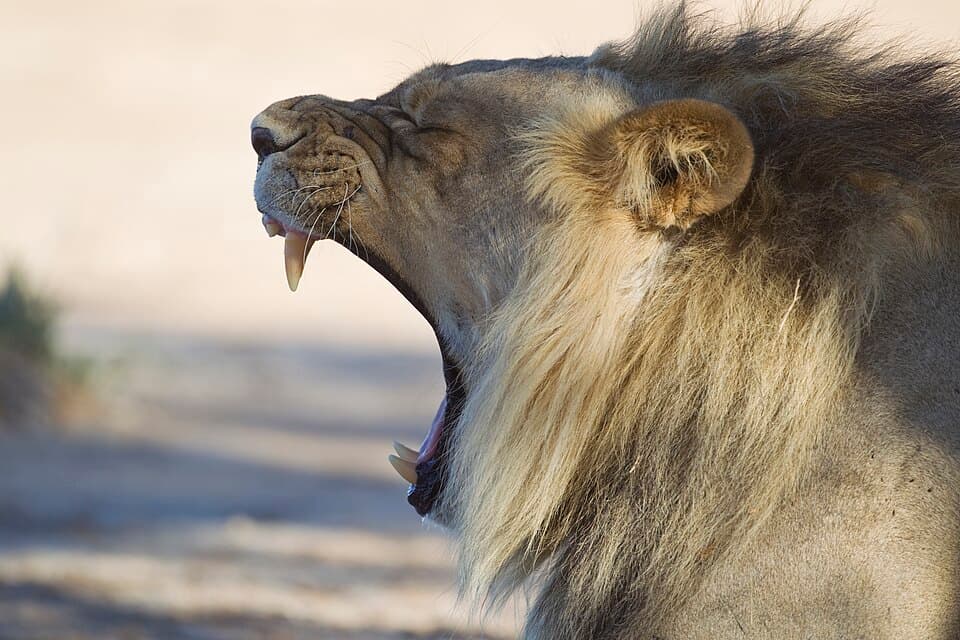
Photo: Yathin S Krishnappa · CC BY-SA 3.0 · via Wikimedia Commons
Overview
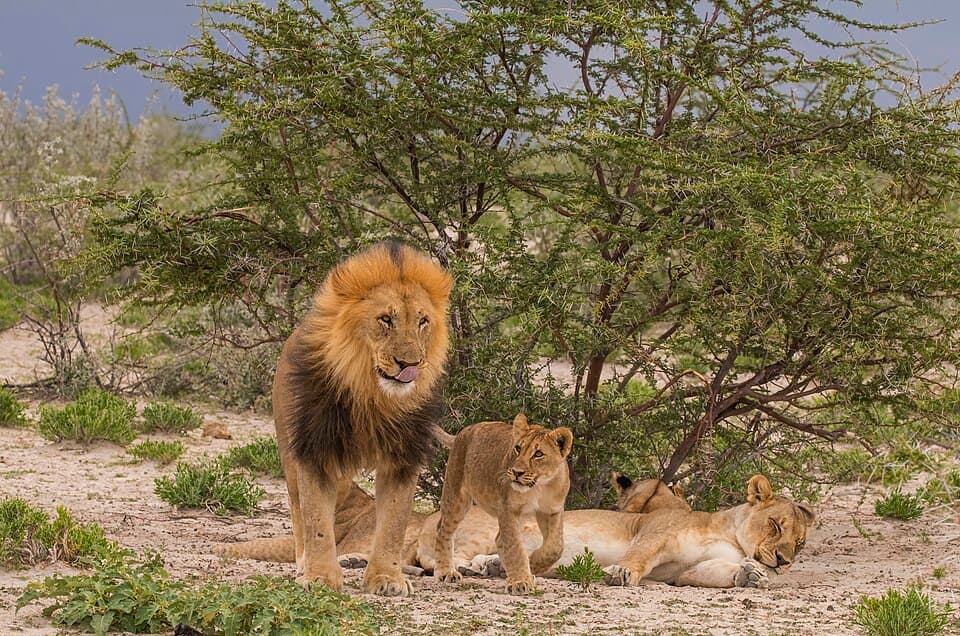
The lion is one of the world's most recognizable big cats, known as the 'king of the jungle' despite living mainly on open savanna, and is the only cat species that lives in large social groups called prides.
Appearance
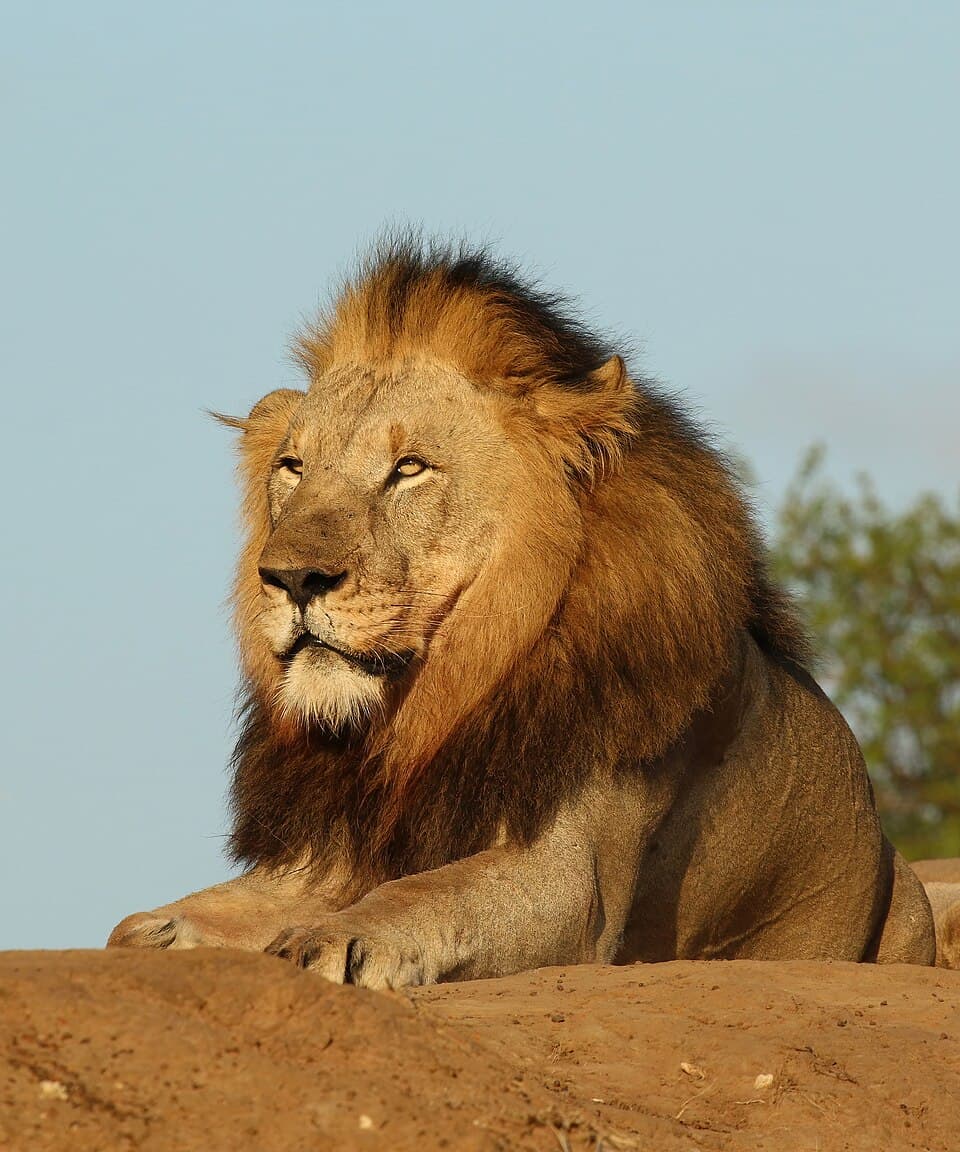
Males are famous for a thick mane of fur around the head and neck that darkens with age, while both sexes have a muscular tawny-gold body and a tufted tail.
Habitat & Distribution
The lion is found in grassland habitats.
Diet & Behavior
Diet: Carnivore — Meat-eating animals that hunt, scavenge, or fish for prey, ranging from big cats to snakes and birds of prey.
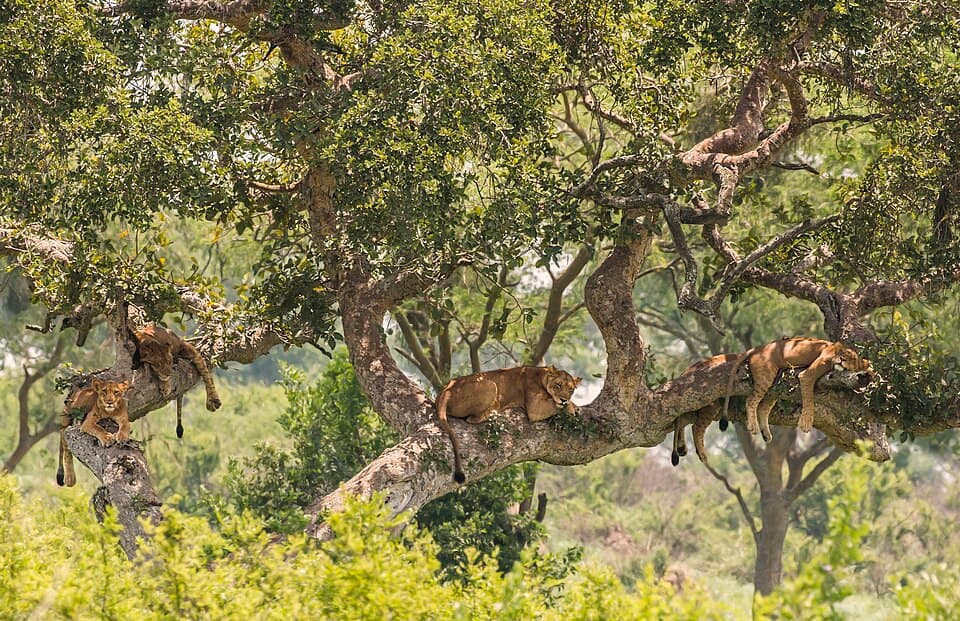
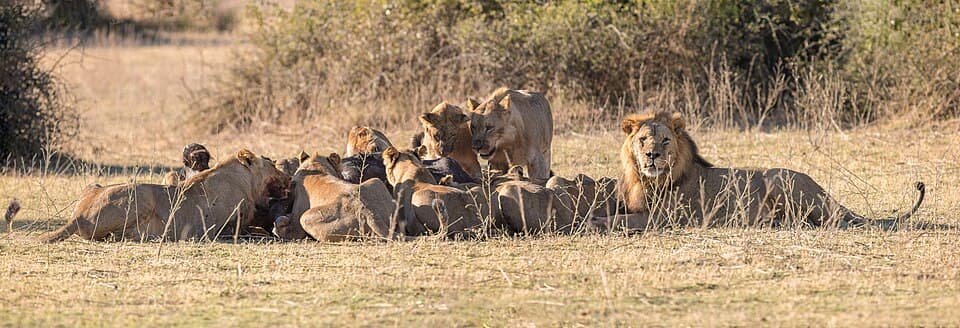
Lions live in prides of related females, cubs, and a small number of males, hunt cooperatively mostly at night, and spend up to 20 hours a day resting.
Predators
- Humans
Prey
- Zebra
- Wildebeest
- Buffalo
- Antelope
Interesting Facts
- 1
A lion's roar can be heard from up to 8 kilometers away.
- 2
Lionesses do the majority of a pride's hunting.
- 3
A male's mane darkens and grows fuller with age and testosterone levels.
Gallery
Lion FAQs
What does a lion eat?
The lion is a carnivore. Its diet includes zebra, wildebeest, buffalo, antelope.
Where does the lion live?
The lion is found in grassland habitats across africa and asia.
Is the lion endangered?
The lion has a conservation status of Vulnerable. Species facing a high risk of extinction in the wild due to habitat loss, hunting, or other pressures.
How long do lions live?
A lion's typical lifespan is 10–14 years in the wild.
How fast can a lion run?
The lion can reach speeds of up to 80 km/h.
How much does a lion weigh?
An adult lion typically weighs 120–250 kg.