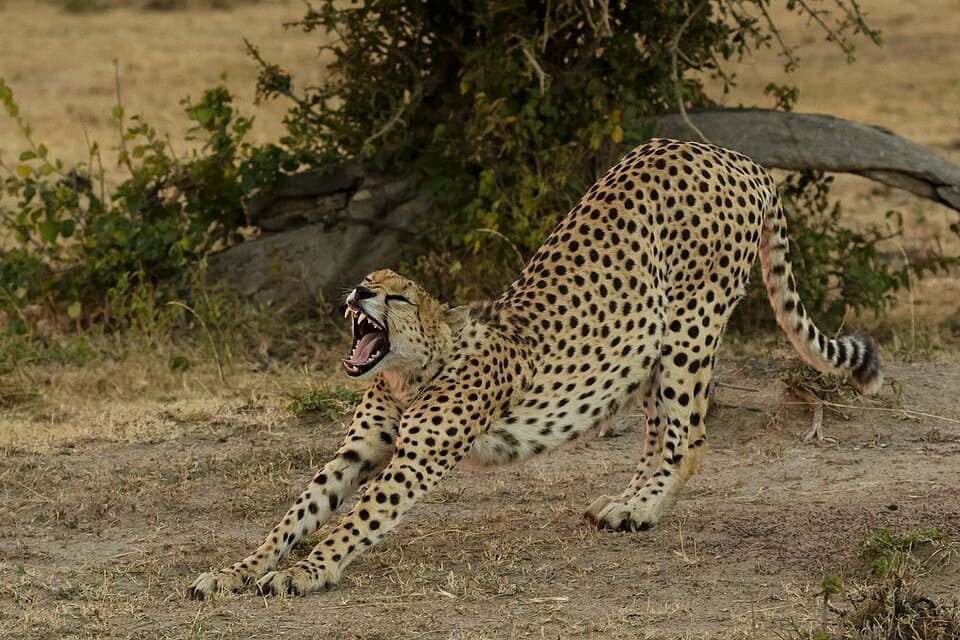
Photo: Joachim Huber · CC BY-SA 2.0 · via Wikimedia Commons
Overview
The cheetah is the fastest land animal on Earth, built for explosive short sprints across the open grasslands and semi-desert of Africa, with a small, remnant population also surviving in Iran. Its speed comes at a genetic cost: cheetahs went through a severe population bottleneck thousands of years ago, leaving today's cheetahs with unusually low genetic diversity, which makes the species more vulnerable to disease on top of the threats it already faces from habitat loss and human-wildlife conflict.
Appearance
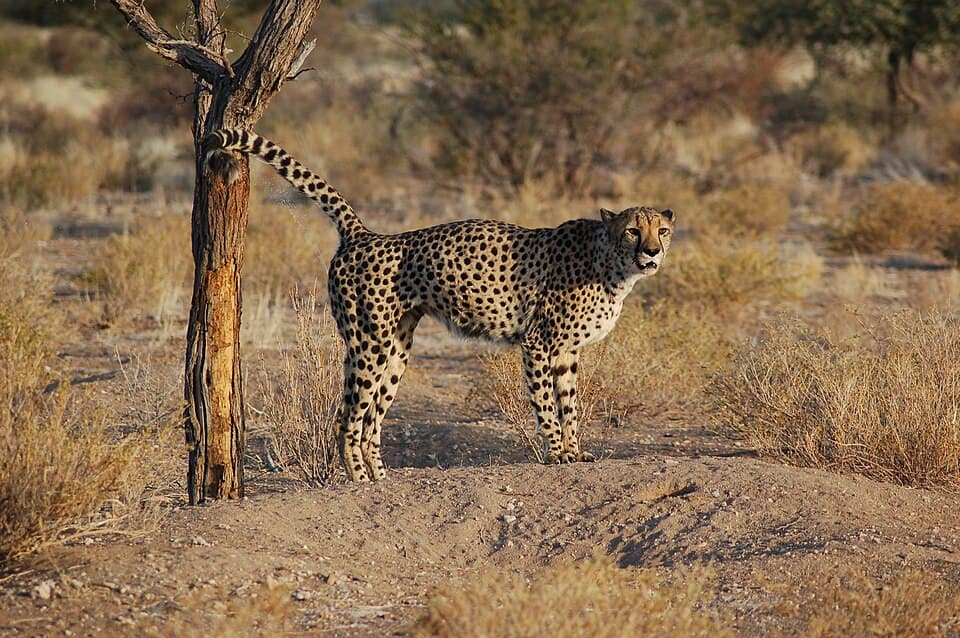
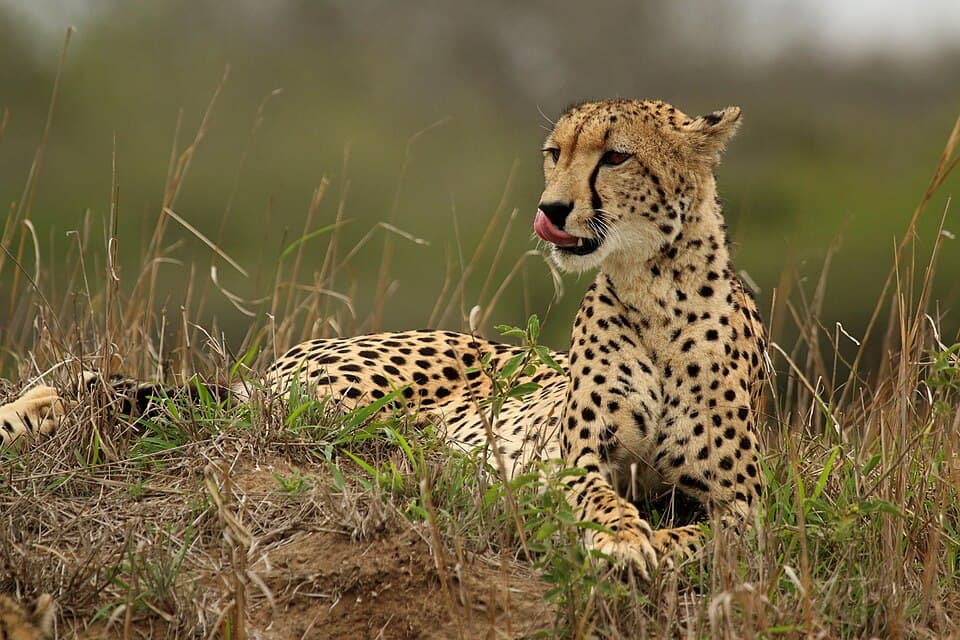
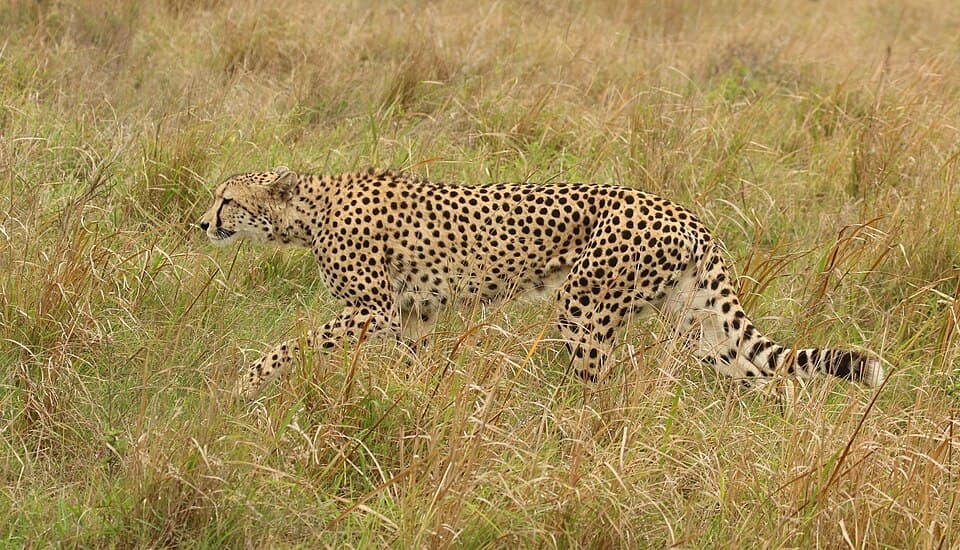
It has a slender, lightweight frame built for speed rather than power, black tear-mark stripes running from the eyes to the mouth that are thought to reduce sun glare while hunting, and a solid tan coat covered in small round black spots for camouflage in tall grass. Unlike other big cats, its claws are only semi-retractable and stay partly exposed, functioning like a sprinter's cleats for extra grip, and its long, flattened tail acts as a rudder, letting it make sharp, high-speed turns while chasing prey.
Habitat & Distribution
The cheetah is found in grassland, desert habitats.
Diet & Behavior
Diet: Carnivore — Meat-eating animals that hunt, scavenge, or fish for prey, ranging from big cats to snakes and birds of prey.
Cheetahs hunt during the day using speed rather than stealth, reaching top speed in a few seconds before a burst pursuit lasting under a minute — after which they must stop and recover, since sustained sprinting at full speed would raise their body temperature dangerously high. Females are largely solitary except when raising cubs, while males often form small, long-term coalitions with their brothers to defend territory together. Cub mortality is unusually high in the wild, since cheetahs are outmatched in direct confrontation with lions, hyenas, and leopards and often lose kills — or cubs — to these larger predators.
Predators
- Lion
- Hyena
- Leopard
Prey
- Gazelle
- Impala
- Hare
Interesting Facts
- 1
A cheetah can accelerate from 0 to 100 km/h in about three seconds.
- 2
Its spine flexes like a spring to extend its stride while sprinting.
- 3
Unlike other big cats, cheetahs cannot roar — they chirp, purr, and hiss instead.
- 4
Its claws are only semi-retractable, unlike the fully retractable claws of most other cats, giving it extra grip like a sprinter's cleats.
- 5
Cheetahs went through a severe genetic bottleneck thousands of years ago, leaving today's population with unusually low genetic diversity.
- 6
Fewer than 7,000 cheetahs are estimated to remain in the wild.
Gallery
Cheetah FAQs
How fast can a cheetah run?
A cheetah can reach speeds of up to 120 km/h (75 mph) in short bursts, though it can only sustain top speed for a matter of seconds before needing to stop and cool down.
Why can't cheetahs roar?
Cheetahs belong to a different genus (Acinonyx) than roaring big cats like lions and tigers (Panthera), and lack the specialized larynx structure needed to roar. Instead, they chirp, purr, and hiss.
Are cheetahs endangered?
Cheetahs are classified as vulnerable, with fewer than 7,000 estimated to remain in the wild. They face pressure from habitat loss, human-wildlife conflict, and illegal wildlife trafficking of cubs.
Do cheetahs live in groups?
Female cheetahs are largely solitary except when raising cubs, while males often form small coalitions with their brothers and stay together for life to defend territory.
What does a cheetah eat?
The cheetah is a carnivore. Its diet includes gazelle, impala, hare.
Where does the cheetah live?
The cheetah is found in grassland, desert habitats across africa.
Is the cheetah endangered?
The cheetah has a conservation status of Vulnerable. Species facing a high risk of extinction in the wild due to habitat loss, hunting, or other pressures.
How long do cheetahs live?
A cheetah's typical lifespan is 10–12 years in the wild.
How fast can a cheetah run?
The cheetah can reach speeds of up to 120 km/h.
How much does a cheetah weigh?
An adult cheetah typically weighs 21–72 kg.