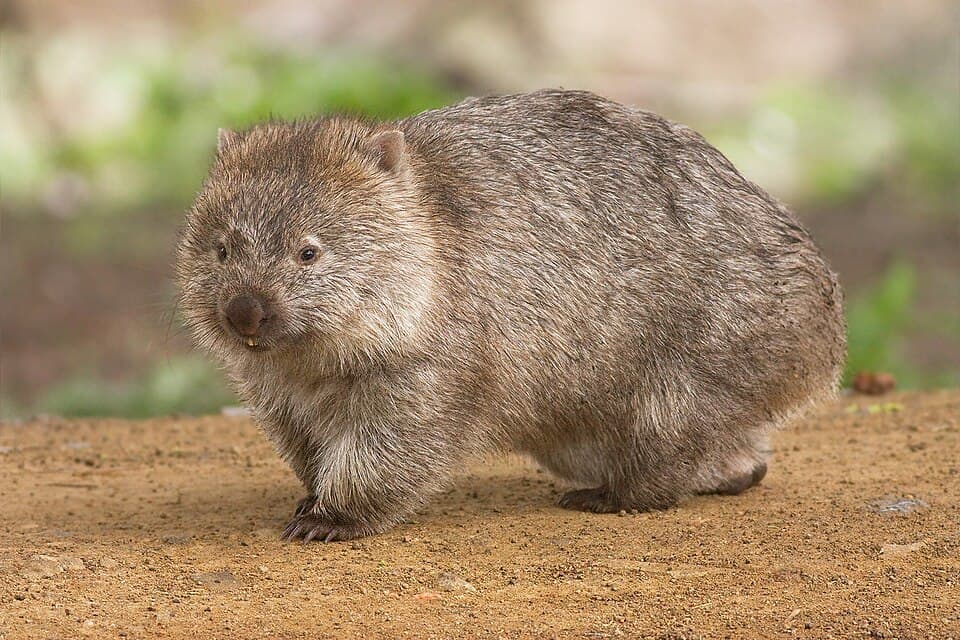
Photo: JJ Harrison (jjharrison89@facebook.com) · CC BY-SA 3.0 · via Wikimedia Commons
Overview
The common wombat is a stocky, burrowing marsupial native to Australia, known for digging some of the most extensive burrow systems of any animal its size. Despite its slow, waddling gait, it can sprint in short bursts when threatened and is a powerful, capable digger built like a small bulldozer.
Appearance
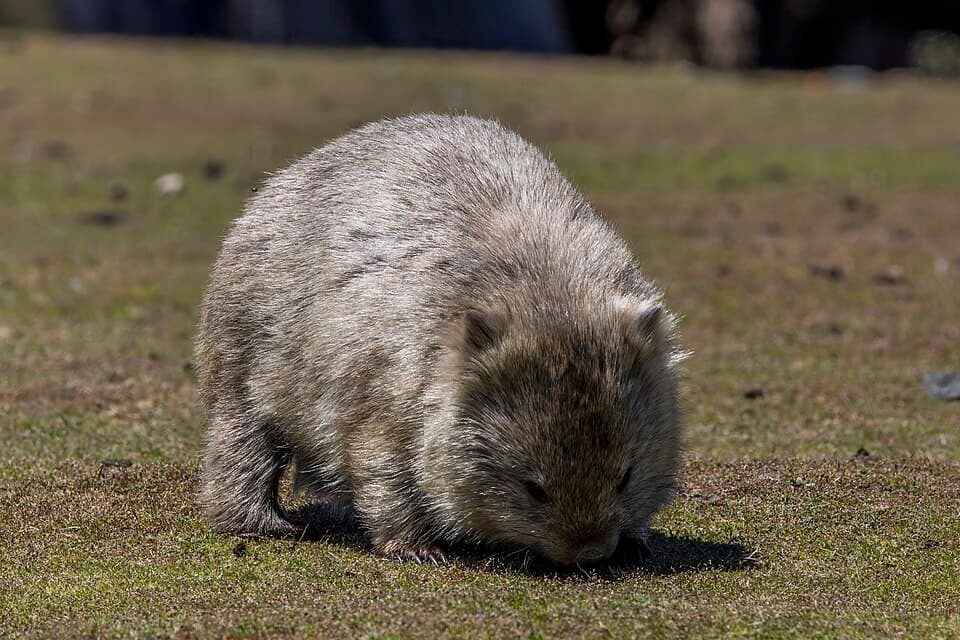
It has a broad, muscular body covered in coarse brown or gray fur, short sturdy legs with strong claws built for digging, and a distinctively flattened rear end that it uses to block the entrance of its burrow against predators. Its head is wide and flat, with small eyes and rounded ears.
Habitat & Distribution
The common wombat is found in forest, grassland habitats.
Diet & Behavior
Diet: Herbivore — Plant-eating animals that graze or browse on grasses, leaves, and other vegetation, from tiny insects to giant elephants.
Wombats are largely solitary, nocturnal animals that spend most of the day resting in extensive burrow systems they dig themselves, sometimes stretching over 20 meters long with multiple entrances. When threatened in its burrow, a wombat can use its tough, cartilage-reinforced rear to crush a predator against the tunnel roof or wall, a highly effective defense against animals trying to follow it inside.
Predators
- Dingoes
- Tasmanian devils (young)
- Eagles (young)
Prey
This species does not prey on other animals.
Interesting Facts
- 1
Wombats produce cube-shaped droppings, one of the only animals known to do so, which help them mark territory without the droppings rolling away.
- 2
A wombat's rear end is reinforced with tough cartilage, which it uses defensively to block or crush threats inside its burrow.
- 3
Despite their stocky build, wombats can run in short bursts at speeds over 35km/h when threatened.
- 4
Their burrow systems can stretch more than 20 meters long, with multiple chambers and entrances.
- 5
Wombats have backward-facing pouches, unlike kangaroos, which prevents dirt from getting into the pouch while the mother digs.
Gallery
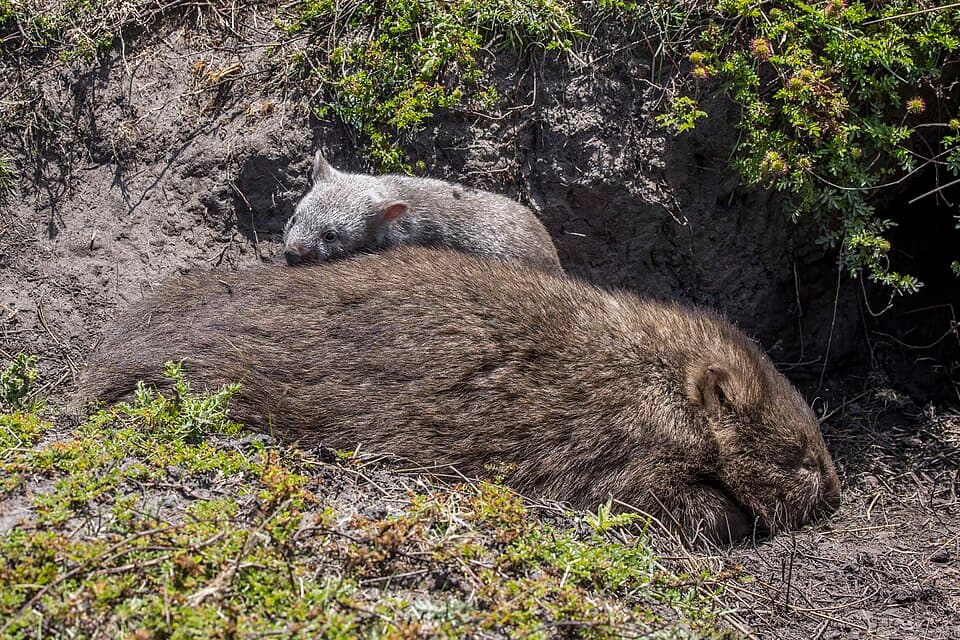
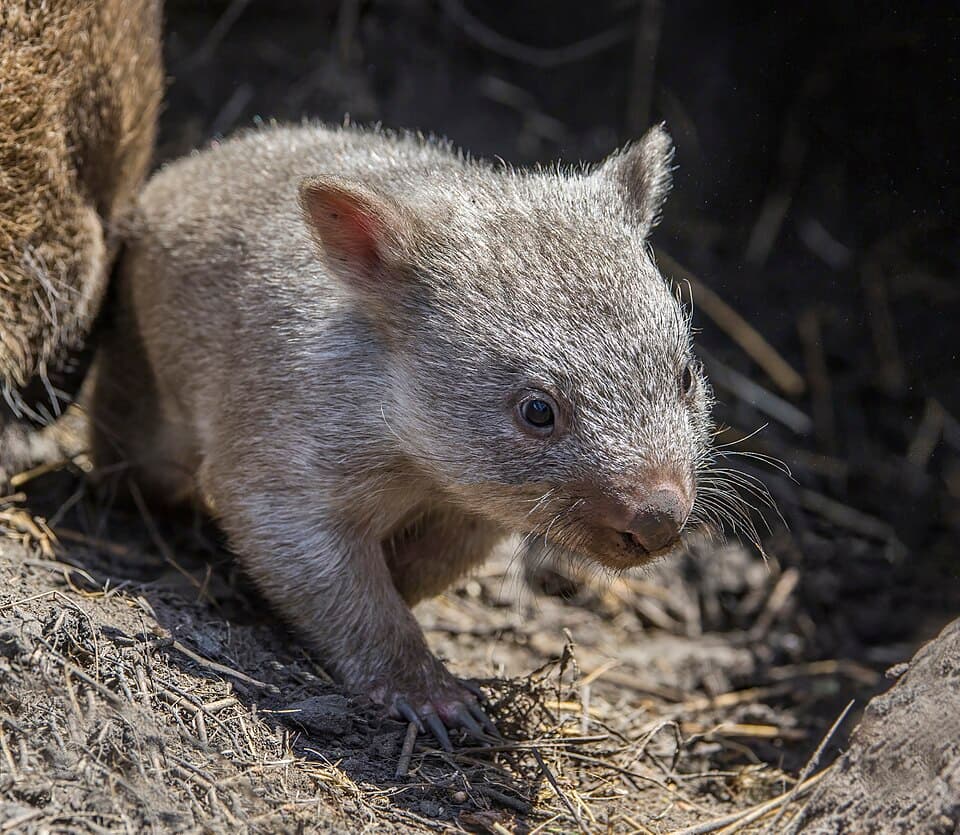
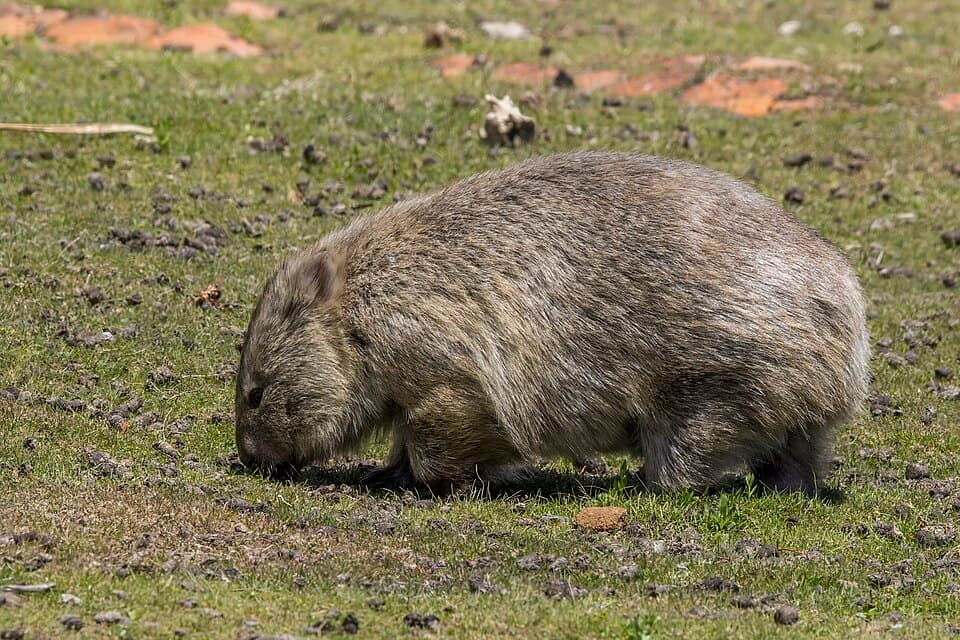
Common Wombat FAQs
Why do wombats have cube-shaped poop?
Wombats are one of the only animals known to produce cube-shaped droppings, a shape their intestines produce that helps the droppings stay stacked in place on rocks and logs to mark territory, rather than rolling away.
How fast can a wombat run?
Despite their stocky, slow-looking build, wombats can sprint at speeds over 35km/h in short bursts when threatened.
Why does a wombat's pouch face backward?
A wombat's pouch opens toward its rear rather than forward, which prevents soil from getting inside and covering the joey while the mother is digging.
How does a wombat defend itself?
A wombat's rear end is reinforced with tough, cartilage-like skin, which it uses to block the entrance to its burrow or crush a predator's head against the tunnel roof if pursued underground.
What does a common wombat eat?
The common wombat is a herbivore. Plant-eating animals that graze or browse on grasses, leaves, and other vegetation, from tiny insects to giant elephants.
Where does the common wombat live?
The common wombat is found in forest, grassland habitats across australia.
Is the common wombat endangered?
The common wombat has a conservation status of Least Concern. Widespread and abundant species that are not currently at significant risk of extinction.
How long do common wombats live?
A common wombat's typical lifespan is 5–15 years in the wild.
How much does a common wombat weigh?
An adult common wombat typically weighs 20–35 kg.