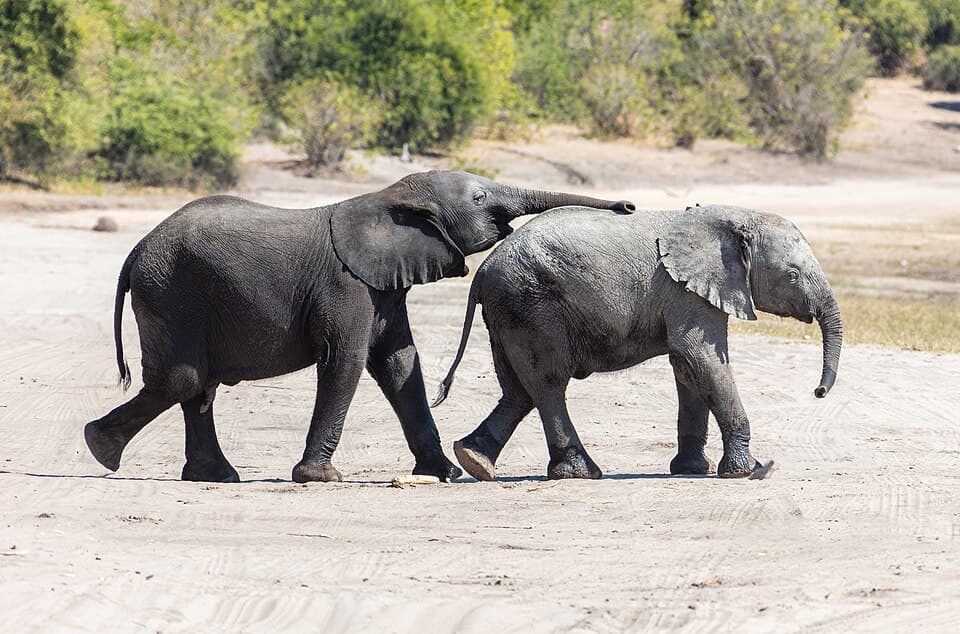
Photo: Geoff Gallice · CC BY 2.0 · via Wikimedia Commons
Overview
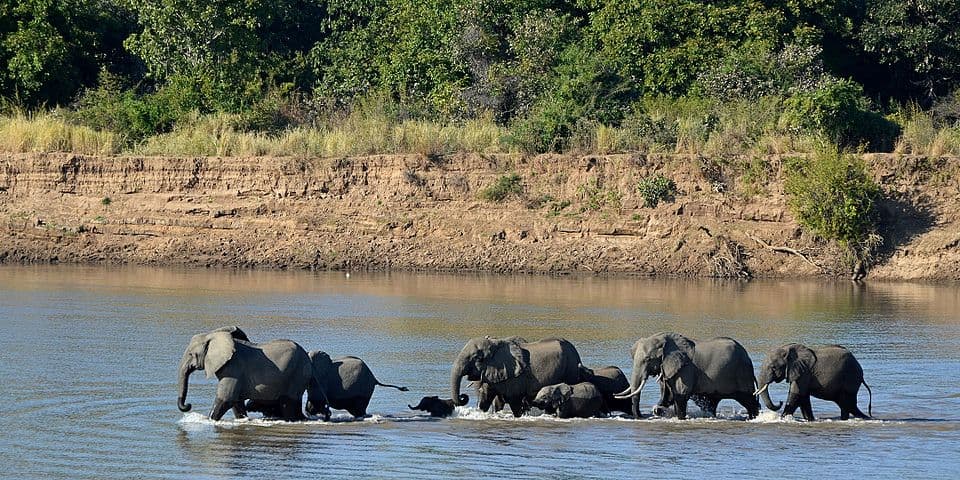
The African elephant is the largest living land animal, roaming savannas, forests, and semi-arid regions across sub-Saharan Africa in tightly-bonded matriarchal herds. This entry refers specifically to the African bush elephant, the larger of two African species recognized by the IUCN since 2021 — the other, the African forest elephant, is smaller, has straighter tusks, and lives in the dense rainforests of Central and West Africa. Elephant populations were decimated by ivory poaching through the 20th century, and though international trade bans and anti-poaching efforts have slowed the decline in many regions, habitat loss and human-wildlife conflict continue to threaten the species today.
Appearance
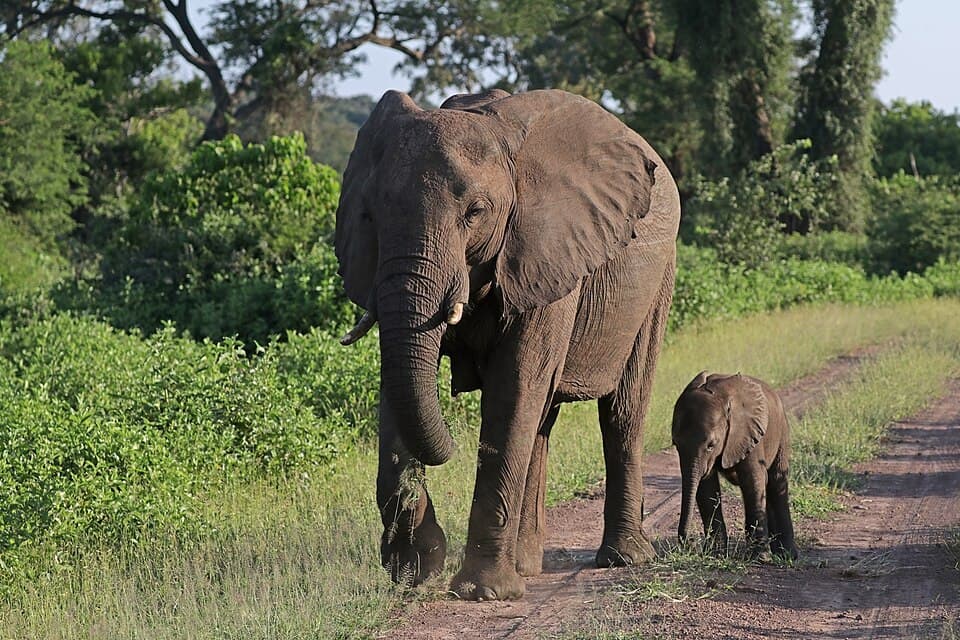
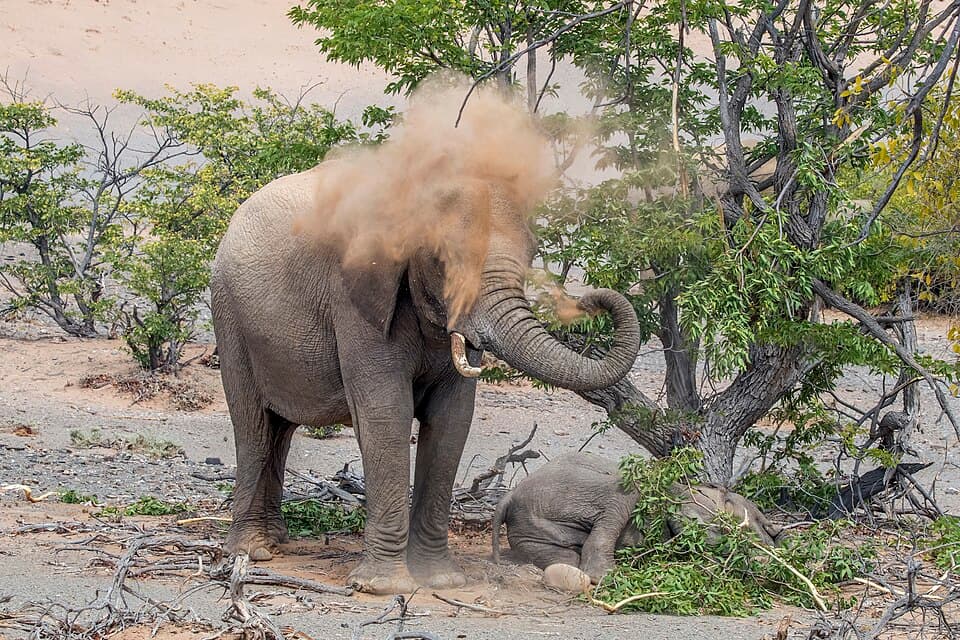
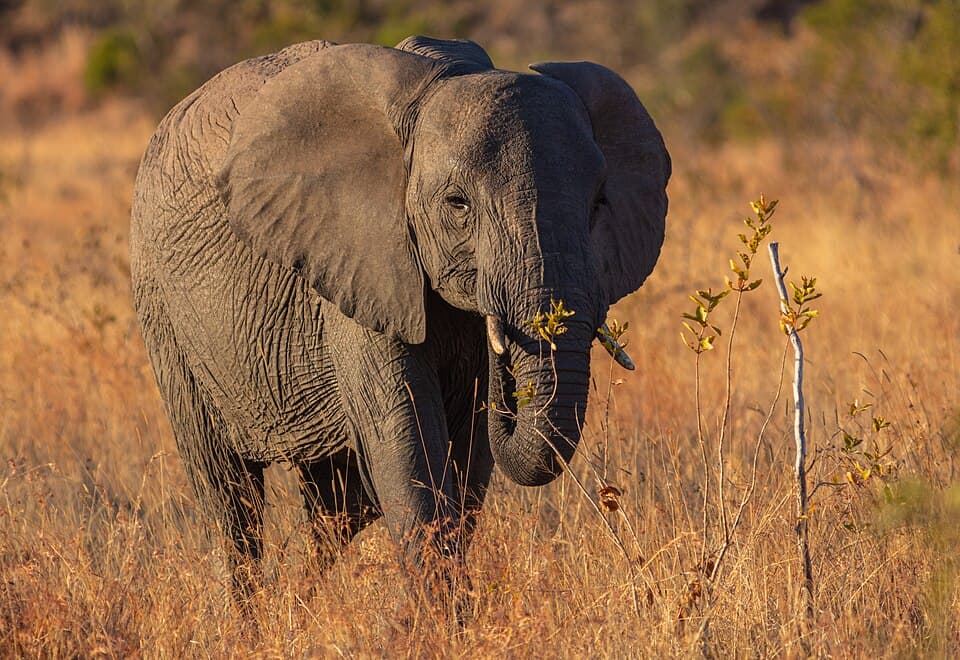
It is instantly recognizable by its massive gray body, large flapping ears shaped roughly like the African continent, long curved tusks, and a muscular trunk with two finger-like tips at its end that allow for surprisingly delicate manipulation. Adult bulls can weigh up to 6,000kg and stand over 3 meters tall at the shoulder, making them significantly larger than Asian elephants. Its oversized ears aren't just for hearing — they're laced with blood vessels close to the surface and flapped constantly to radiate away excess heat, acting as a built-in cooling system in the African heat. Unlike Asian elephants, both male and female African elephants typically grow tusks.
Habitat & Distribution
The african elephant is found in grassland, forest habitats.
Diet & Behavior
Diet: Herbivore — Plant-eating animals that graze or browse on grasses, leaves, and other vegetation, from tiny insects to giant elephants.
Elephants live in complex matriarchal family groups led by the oldest and most experienced female, while males typically leave the herd around age 12 to 15 to live alone or in loose bachelor groups. They communicate through low-frequency infrasound rumbles, largely below the range of human hearing, that can travel several kilometers and are detected by other elephants partly through vibrations felt in their feet. Elephants are also among the most cognitively sophisticated land animals: they can recognize themselves in a mirror, use tools, cooperate to solve problems, and display grief-like behavior around their dead, sometimes returning to a deceased herd member's remains and lingering over the bones.
Predators
- Lion (calves only)
- Humans
Prey
This species does not prey on other animals.
Interesting Facts
- 1
An elephant's trunk contains over 40,000 muscles and can lift up to 270kg.
- 2
Elephants can recognize themselves in a mirror, a rare sign of self-awareness.
- 3
A single elephant can eat up to 150kg of vegetation in a day.
- 4
The African elephant's gestation period is about 22 months, the longest of any mammal.
- 5
African elephants are considered a keystone species: by uprooting trees and digging waterholes, they help shape the savanna landscape in ways that benefit many other species.
Gallery
African Elephant FAQs
How much do African elephants eat and drink each day?
An adult African elephant can eat up to 150kg of vegetation and drink 150 to 200 liters of water a day, spending most of its waking hours foraging to meet those needs.
Are African elephants endangered?
African elephants are classified as Endangered, primarily due to ivory poaching and habitat loss from human expansion, despite international trade bans and conservation efforts that have helped some populations recover.
What's the difference between African and Asian elephants?
African elephants are generally larger, with bigger ears shaped like the African continent, and both males and females typically grow tusks. Asian elephants are smaller, have smaller rounded ears, and usually only males grow prominent tusks.
How long do African elephants live?
African elephants can live 60 to 70 years in the wild, among the longest lifespans of any land mammal, aided by strong social bonds and matriarchal knowledge passed down within the herd.
What does a african elephant eat?
The african elephant is a herbivore. Plant-eating animals that graze or browse on grasses, leaves, and other vegetation, from tiny insects to giant elephants.
Where does the african elephant live?
The african elephant is found in grassland, forest habitats across africa.
Is the african elephant endangered?
The african elephant has a conservation status of Endangered. Species facing a very high risk of extinction in the wild in the near future.
How long do african elephants live?
A african elephant's typical lifespan is 60–70 years in the wild.
How fast can a african elephant run?
The african elephant can reach speeds of up to 40 km/h.
How much does a african elephant weigh?
An adult african elephant typically weighs 2,700–6,000 kg.