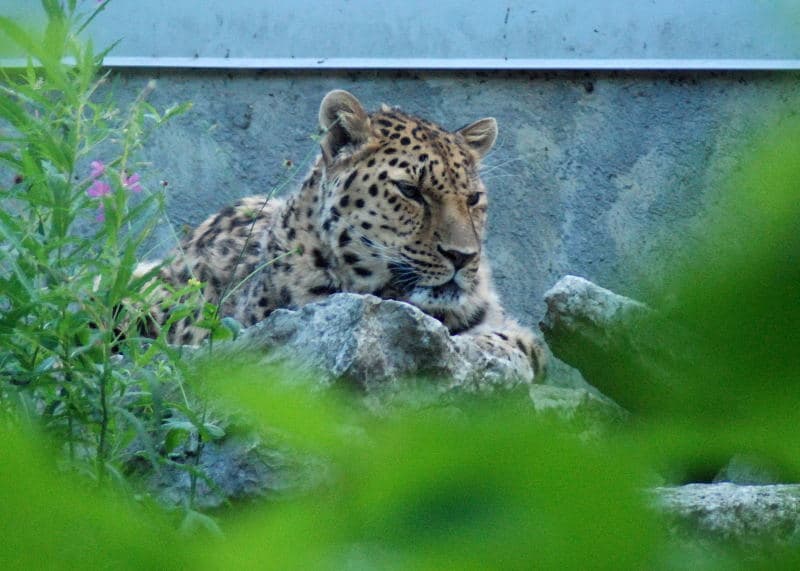
Photo: Mesilane127 · CC BY-SA 3.0 · via Wikimedia Commons
Overview
The Amur leopard is the rarest big cat in the world, a leopard subspecies adapted to the cold, snowy forests of the Russian Far East and northeastern China. Decades of poaching and habitat loss reduced the wild population to a critical low, though recent conservation efforts have helped numbers slowly recover from the brink.
Appearance
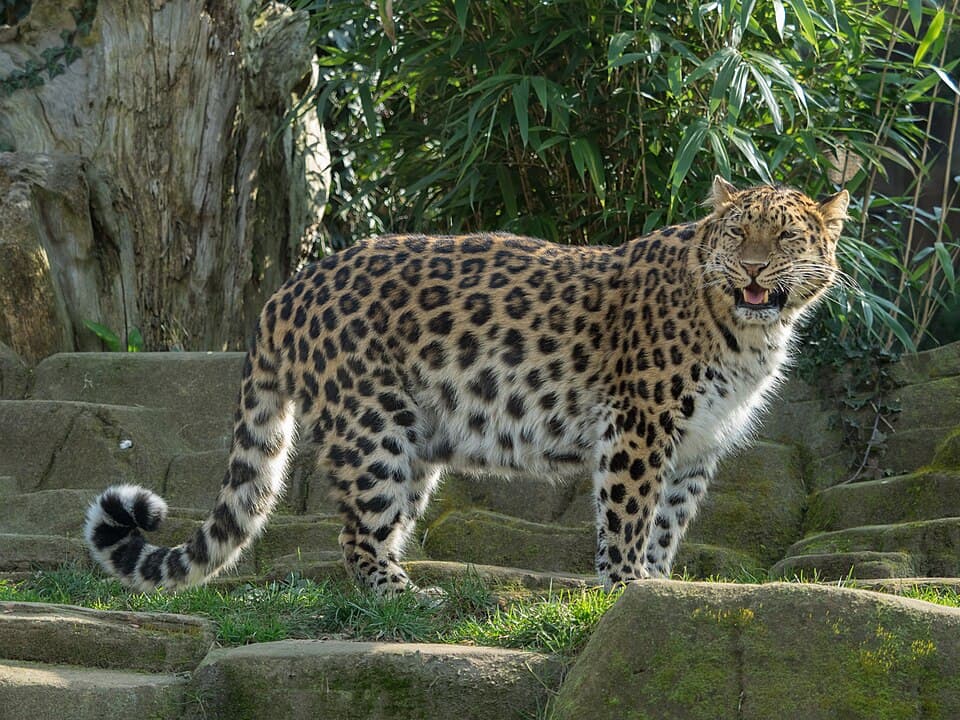
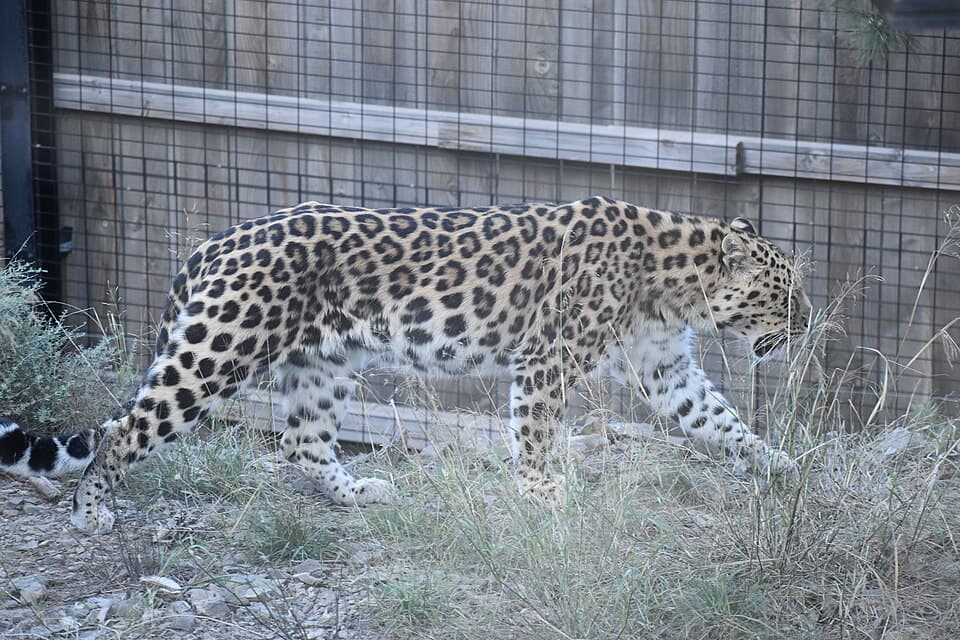
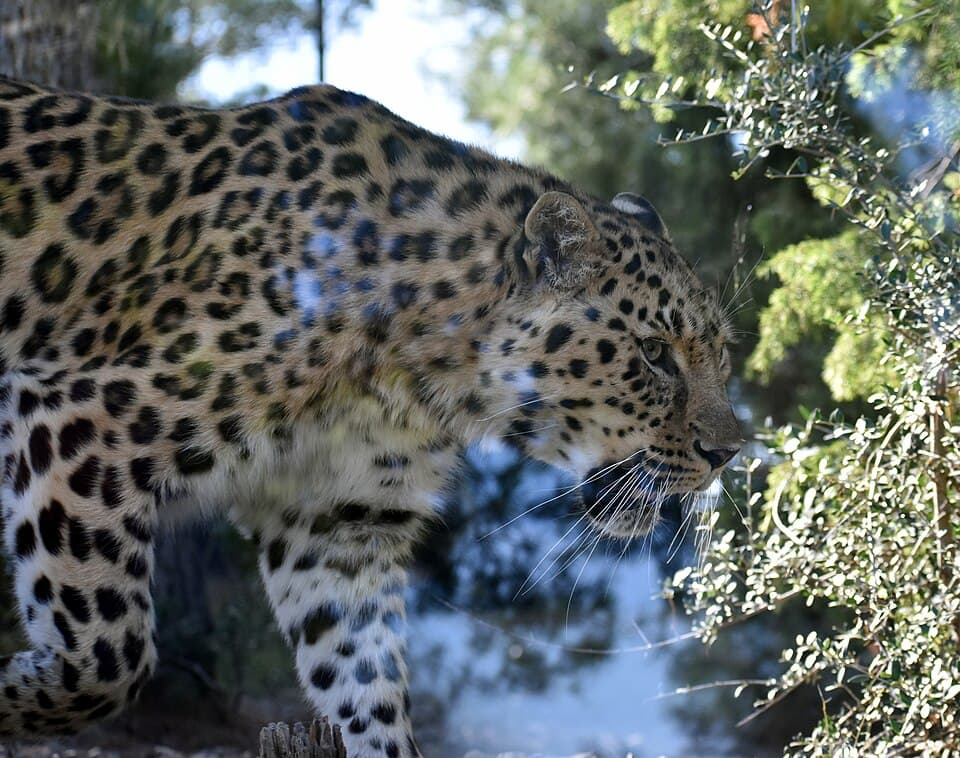
It has a thick, pale cream to golden coat marked with widely-spaced rosettes, longer and denser fur than tropical leopard subspecies to survive harsh winters, and notably long legs suited to moving through deep snow. Its coat can grow up to 7cm long in winter, among the thickest of any big cat.
Habitat & Distribution
The amur leopard is found in forest, mountain habitats.
Diet & Behavior
Diet: Carnivore — Meat-eating animals that hunt, scavenge, or fish for prey, ranging from big cats to snakes and birds of prey.
Amur leopards are solitary, territorial hunters that rely on stealth and a powerful pounce to ambush prey, often dragging a kill up into a tree to keep it away from scavengers, a behavior shared with other leopard subspecies. Unlike leopards in warmer climates, they must cope with extreme seasonal temperature swings, adapting their hunting patterns and fur density to survive winters that can drop below -30 degrees Celsius.
Predators
- Humans
- Amur tigers (rare)
Prey
- Deer
- Wild boar
- Hares
- Small mammals
Interesting Facts
- 1
The Amur leopard is considered the rarest big cat in the world, with wild population estimates once dropping to around 30 individuals before conservation efforts began recovering the population.
- 2
Its winter coat can grow up to 7cm long, among the thickest fur of any big cat species.
- 3
It's one of the few leopard subspecies adapted to survive heavy snow and temperatures well below freezing.
- 4
Like other leopards, it often hauls its kills up into trees to protect them from scavengers such as bears and tigers.
- 5
Camera-trap monitoring programs have helped researchers confirm the population is slowly increasing after decades of decline.
Gallery
Amur Leopard FAQs
How many Amur leopards are left in the wild?
The wild population dropped to roughly 30 individuals in the early 2000s, making it the rarest big cat in the world, though conservation efforts since then have helped numbers slowly recover to more than 100.
Where do Amur leopards live?
Amur leopards live in the temperate forests of the Russian Far East and parts of northeastern China, a much colder climate than most other leopard subspecies.
How is the Amur leopard different from other leopards?
The Amur leopard has thicker, longer fur and longer legs than tropical leopard subspecies, adaptations for surviving deep snow and extreme cold that other leopards never encounter.
Why did Amur leopard numbers decline so severely?
Poaching for its fur, prey depletion from illegal hunting of deer and other prey species, and severe habitat loss and fragmentation all combined to push the Amur leopard to the brink of extinction by the early 2000s.
What does a amur leopard eat?
The amur leopard is a carnivore. Its diet includes deer, wild boar, hares, small mammals.
Where does the amur leopard live?
The amur leopard is found in forest, mountain habitats across asia.
Is the amur leopard endangered?
The amur leopard has a conservation status of Critically Endangered. Species facing an extremely high risk of extinction, often down to only a handful of populations left in the wild.
How long do amur leopards live?
A amur leopard's typical lifespan is 10–15 years in the wild.
How fast can a amur leopard run?
The amur leopard can reach speeds of up to 58 km/h.
How much does a amur leopard weigh?
An adult amur leopard typically weighs 25–48 kg.