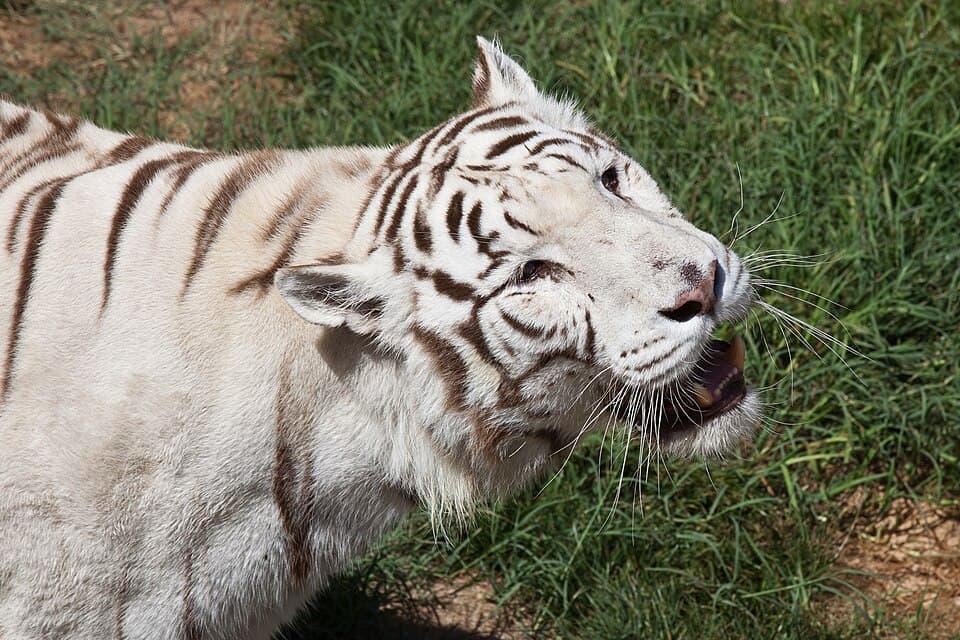
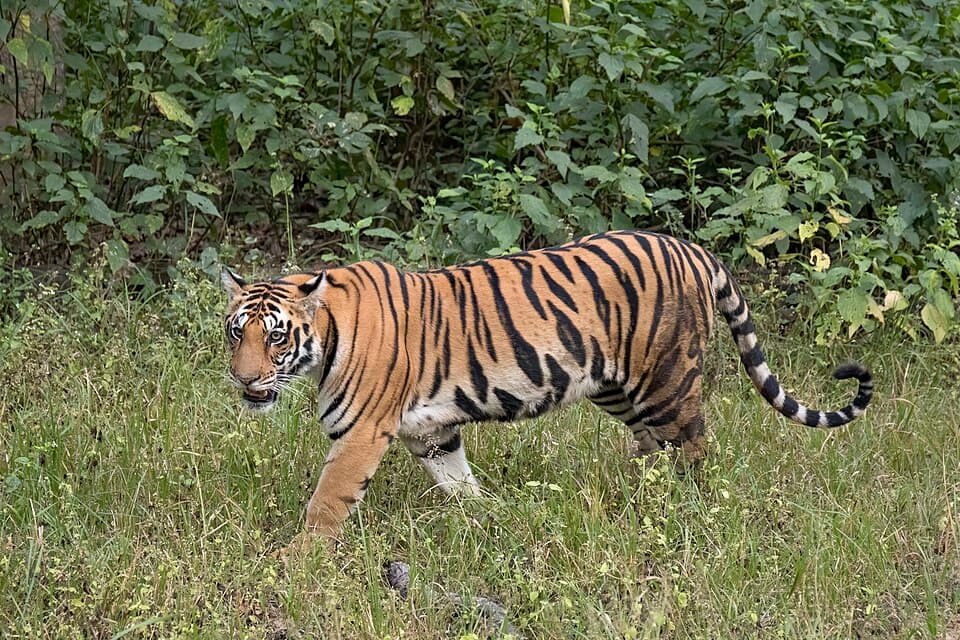
Photo: Luis Miguel Bugallo Sánchez (Lmbuga) · CC BY-SA 3.0 · via Wikimedia Commons
Overview
The Bengal tiger is the most numerous tiger subspecies, with India alone holding the large majority of the world's wild tiger population, and it is the largest wild cat native to Asia's forests, mangroves, and grasslands. Smaller populations also survive in Bangladesh, Nepal, and Bhutan, including in the Sundarbans, a vast mangrove delta shared by India and Bangladesh where tigers are unusually strong swimmers and sometimes hunt aquatic prey. India launched Project Tiger in 1973 to protect the subspecies through a network of dedicated reserves, and the country's wild tiger population has grown substantially since, even as poaching for the illegal wildlife trade and habitat fragmentation remain serious ongoing threats.
Appearance
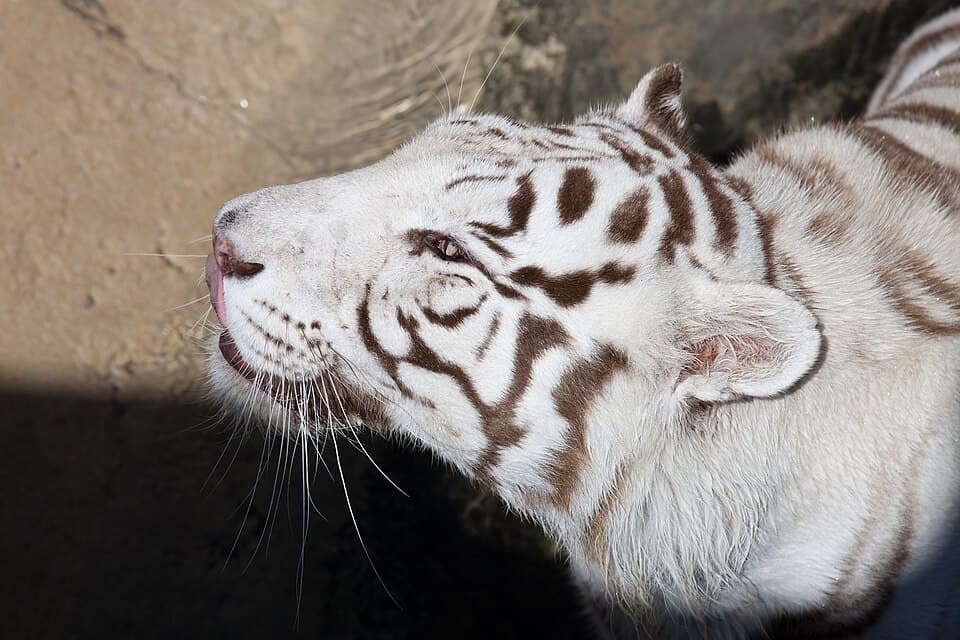
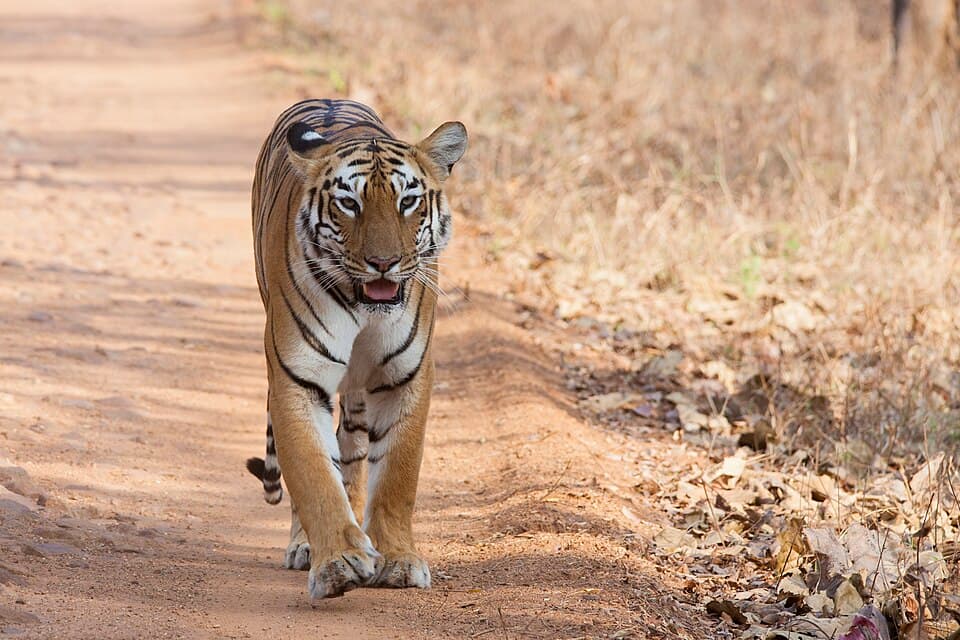
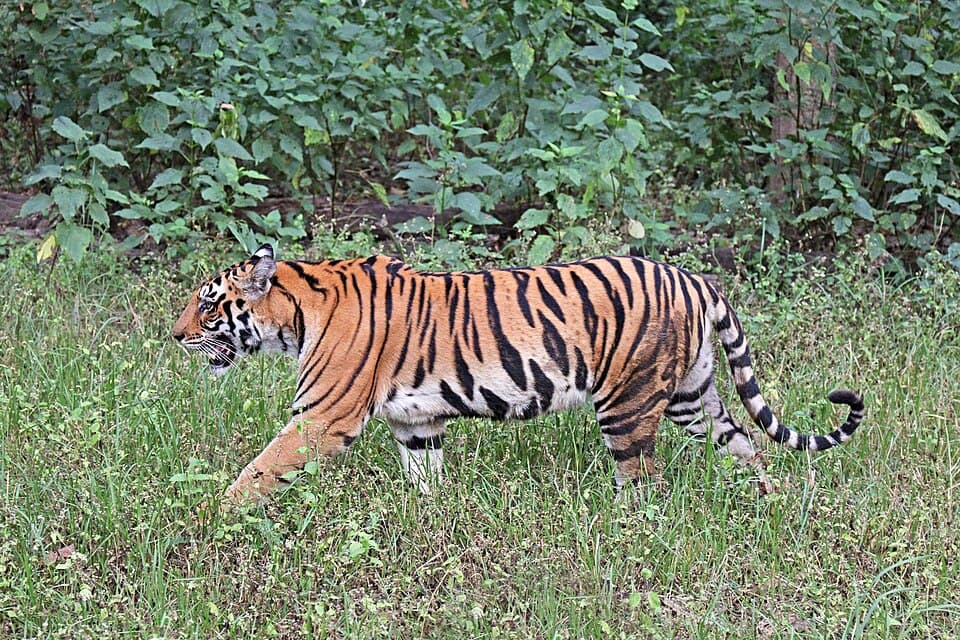
It has a bright orange coat marked with distinctive black stripes that are unique to every individual, much like a human fingerprint, along with a white underbelly and white patches above each eye. Adult males typically weigh 140 to 260kg and can measure over 3 meters from nose to tail, making them noticeably larger than females. A rare recessive gene occasionally produces white Bengal tigers, with white fur and blue eyes — they are not albinos, and are not a separate subspecies, just an unusual color variant most often seen in captivity today.
Habitat & Distribution
The bengal tiger is found in forest, wetlands habitats.
Diet & Behavior
Diet: Carnivore — Meat-eating animals that hunt, scavenge, or fish for prey, ranging from big cats to snakes and birds of prey.
Bengal tigers are solitary and territorial, marking large home ranges with scent and claw marks, and a single male's territory typically overlaps those of several females. As powerful ambush hunters, they stalk prey at close range before a short, explosive charge, aiming to bring down large animals like deer or wild boar with a bite to the throat or nape rather than relying on sustained speed. Cubs stay with their mother for around two years, learning to stalk and hunt before dispersing to establish their own territory — a survival rate that remains low, since cubs are vulnerable to starvation, other predators, and territorial adult tigers during this period.
Predators
- Humans
Prey
- Deer
- Wild boar
- Buffalo
Interesting Facts
- 1
No two tigers have the same stripe pattern, much like human fingerprints.
- 2
A tiger's stripes are also on its skin, not just its fur.
- 3
Bengal tigers are excellent swimmers and often cool off in rivers and ponds.
- 4
India's Project Tiger, launched in 1973, established a network of dedicated tiger reserves and helped grow the country's wild tiger population.
- 5
A white coat with blue eyes occasionally appears in Bengal tigers due to a rare recessive gene — it's a color variant, not albinism or a separate subspecies.
Gallery
Bengal Tiger FAQs
Are Bengal tigers endangered?
Yes — Bengal tigers are classified as Endangered, primarily due to poaching for the illegal wildlife trade and habitat loss, though conservation programs like India's Project Tiger have helped populations recover in protected reserves.
Where do most Bengal tigers live?
The large majority of wild Bengal tigers live in India, with smaller populations in Bangladesh, Nepal, and Bhutan, including the Sundarbans mangrove forest shared by India and Bangladesh.
Are white tigers a different species?
No — white Bengal tigers are the same subspecies with an unusual recessive gene that produces white fur and blue eyes. They are not albinos and don't occur as a stable population in the wild today.
How do Bengal tigers hunt?
Bengal tigers rely on stealth rather than speed, stalking prey at close range before a short, explosive charge, and typically killing large prey with a bite to the throat or the back of the neck.
What does a bengal tiger eat?
The bengal tiger is a carnivore. Its diet includes deer, wild boar, buffalo.
Where does the bengal tiger live?
The bengal tiger is found in forest, wetlands habitats across asia.
Is the bengal tiger endangered?
The bengal tiger has a conservation status of Endangered. Species facing a very high risk of extinction in the wild in the near future.
How long do bengal tigers live?
A bengal tiger's typical lifespan is 10–15 years in the wild.
How fast can a bengal tiger run?
The bengal tiger can reach speeds of up to 65 km/h.
How much does a bengal tiger weigh?
An adult bengal tiger typically weighs 140–260 kg.