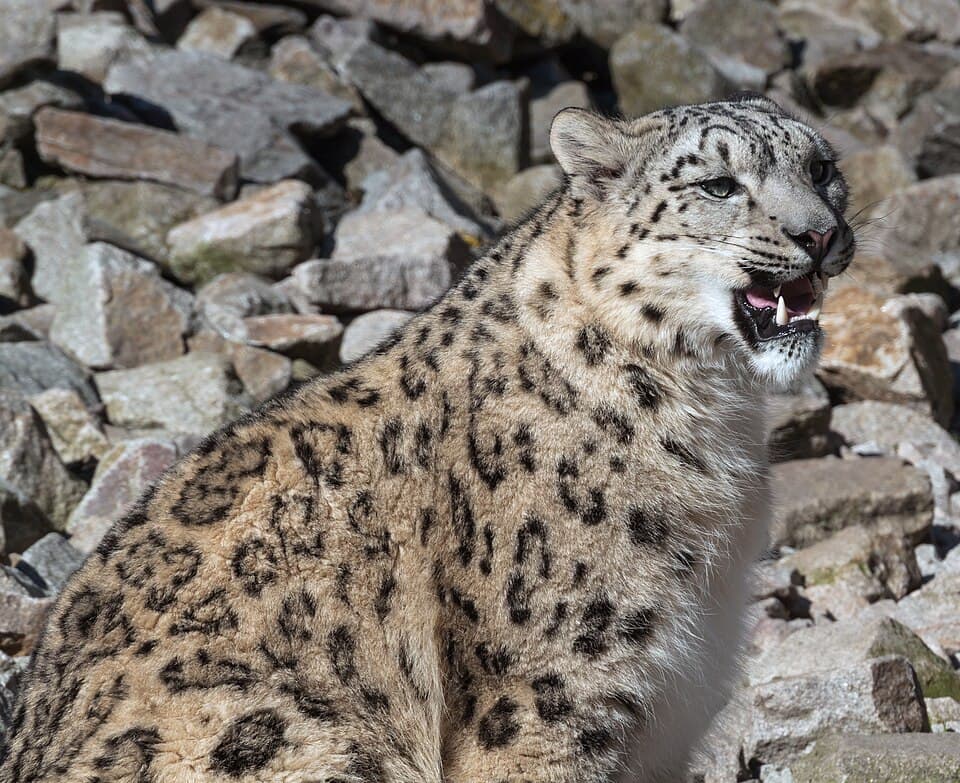
Photo: Manfred Werner - Tsui · CC BY-SA 3.0 · via Wikimedia Commons
Overview
The snow leopard is an elusive big cat adapted to life in the high, cold mountains of Central and South Asia — including the Himalayas, the Tibetan Plateau, and ranges across roughly a dozen countries from Afghanistan to Mongolia — so rarely seen in the wild that it's often called the 'ghost of the mountains'.
Appearance
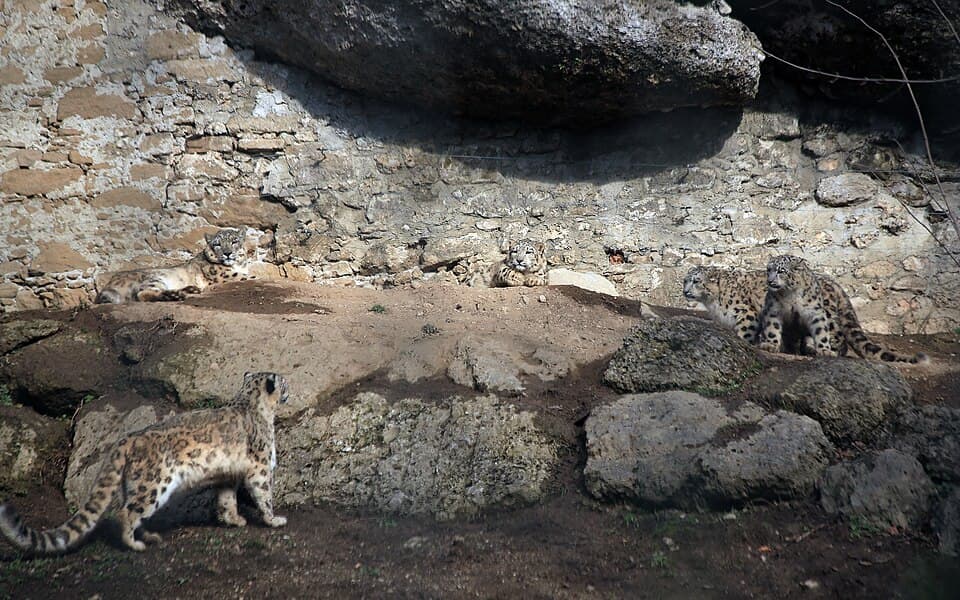
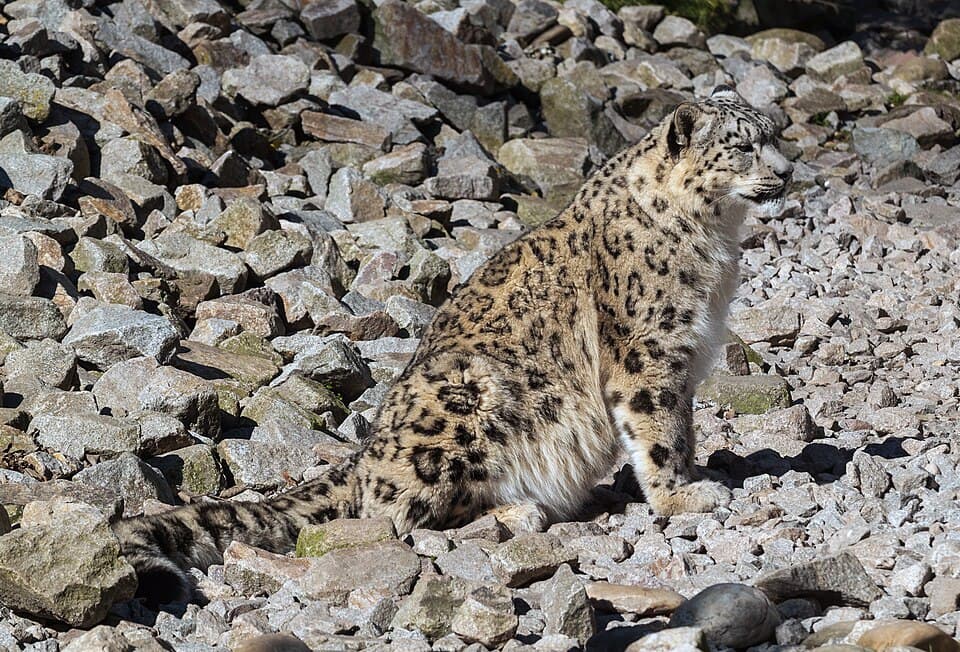
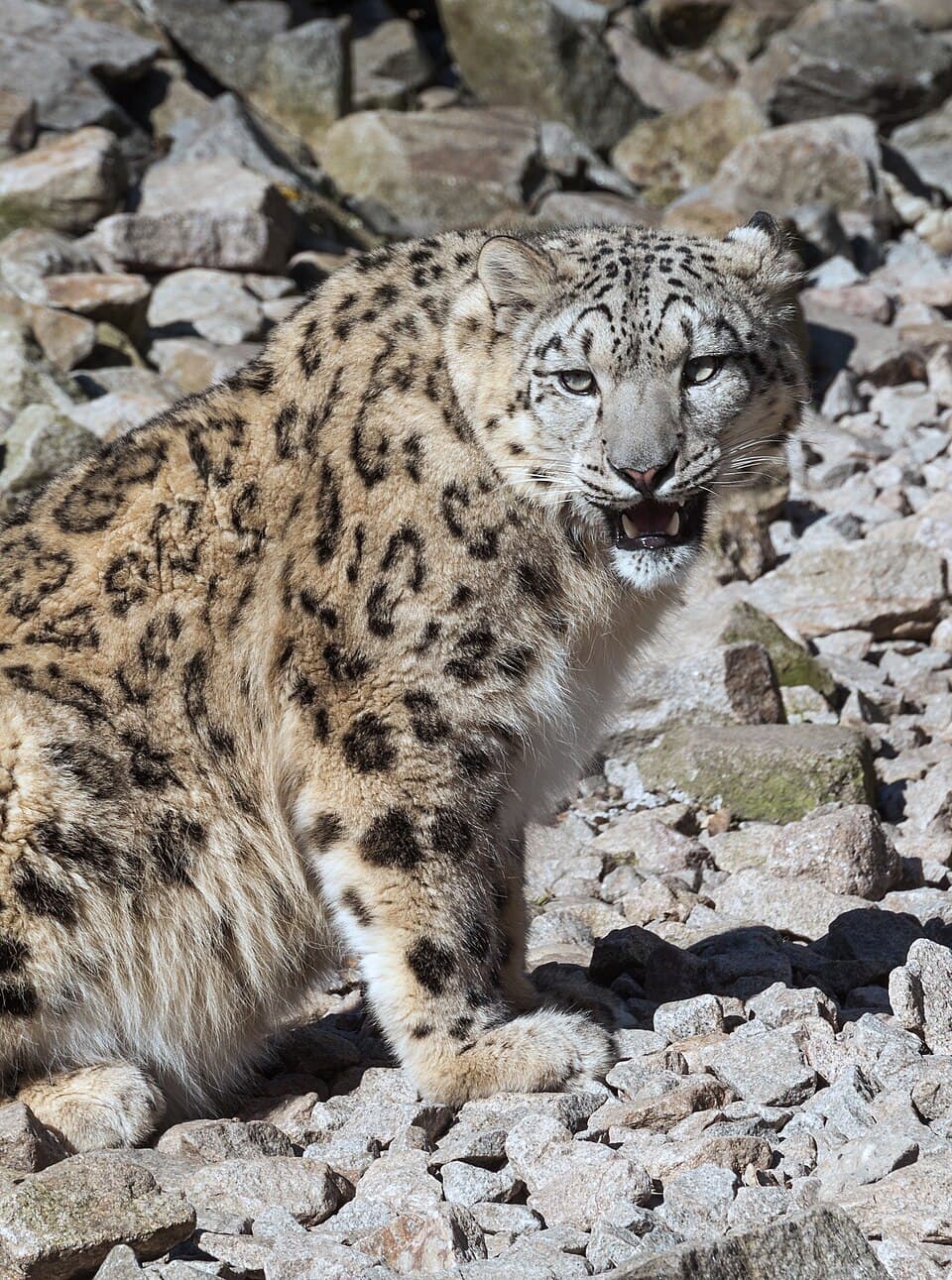
It has a thick smoky-gray coat patterned with dark rosettes that provides near-perfect camouflage against rocky, snow-dusted terrain, and an unusually long, thick tail nearly as long as its body, used for balance on steep slopes and wrapped around itself like a scarf for warmth. Its oversized paws act as natural snowshoes, with thick fur on the pads for grip and insulation, while a wide nasal cavity helps warm frigid air before it reaches the lungs.
Habitat & Distribution
The snow leopard is found in mountain habitats.
Diet & Behavior
Diet: Carnivore — Meat-eating animals that hunt, scavenge, or fish for prey, ranging from big cats to snakes and birds of prey.
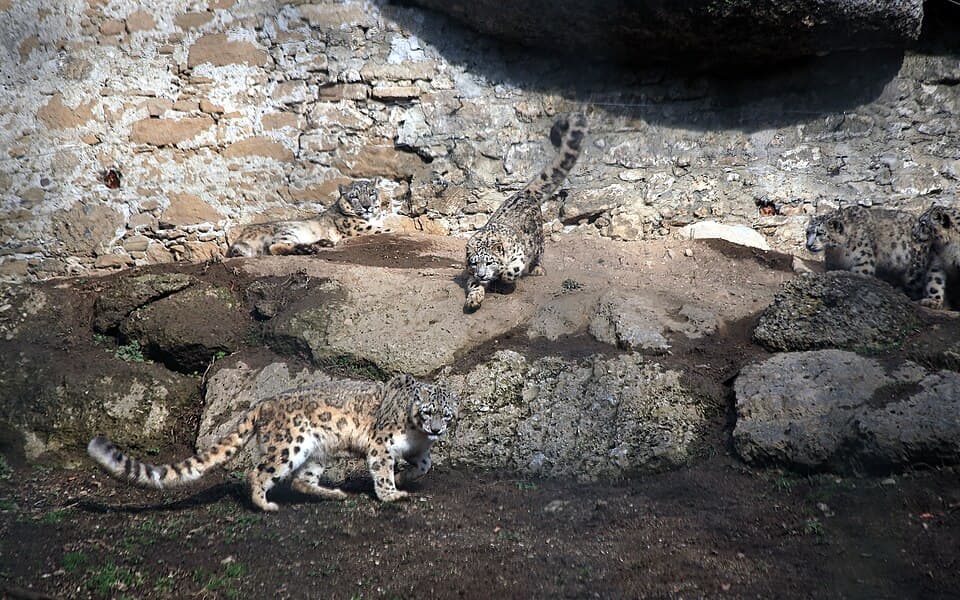
Snow leopards are solitary and largely crepuscular, capable of leaping up to 15 meters in a single bound across steep, rocky mountain terrain, typically at elevations between 3,000 and 4,500 meters. Unlike lions, tigers, and other roaring big cats, snow leopards cannot roar — a difference rooted in the structure of the larynx — and instead purr and produce a range of chuffs, growls, and yowls. Mothers raise litters of two to three cubs alone, with young typically staying close to their mother for nearly two years before becoming independent.
Predators
- Humans
Prey
- Blue sheep
- Ibex
- Marmot
Interesting Facts
- 1
It can leap up to 15 meters in a single bound.
- 2
Its thick tail can be wrapped around its body like a scarf for warmth.
- 3
Unlike other big cats, snow leopards cannot roar.
- 4
A wide nasal cavity helps warm freezing mountain air before it reaches the lungs.
- 5
Its oversized paws act like natural snowshoes, spreading its weight across snow and ice.
- 6
Estimates suggest as few as 4,000 to 6,500 snow leopards remain in the wild.
Gallery
Snow Leopard FAQs
Why can't snow leopards roar?
Snow leopards lack the specialized larynx and vocal fold structure that lets lions, tigers, and other big cats roar. Instead, they purr and make a range of other sounds, including chuffs, growls, and yowls.
Where do snow leopards live?
Snow leopards live in the high mountains of Central and South Asia, across roughly a dozen countries including Afghanistan, China, India, Kyrgyzstan, Mongolia, Nepal, and Pakistan, typically at elevations between 3,000 and 4,500 meters.
How many snow leopards are left in the wild?
Estimates suggest somewhere between 4,000 and 6,500 snow leopards remain in the wild, which is part of why the species is classified as vulnerable.
What do snow leopards eat?
Snow leopards primarily hunt blue sheep, ibex, and marmots, and are capable of taking down prey up to three times their own body weight.
What does a snow leopard eat?
The snow leopard is a carnivore. Its diet includes blue sheep, ibex, marmot.
Where does the snow leopard live?
The snow leopard is found in mountain habitats across asia.
Is the snow leopard endangered?
The snow leopard has a conservation status of Vulnerable. Species facing a high risk of extinction in the wild due to habitat loss, hunting, or other pressures.
How long do snow leopards live?
A snow leopard's typical lifespan is 15–18 years in the wild.
How fast can a snow leopard run?
The snow leopard can reach speeds of up to 55 km/h.
How much does a snow leopard weigh?
An adult snow leopard typically weighs 22–55 kg.