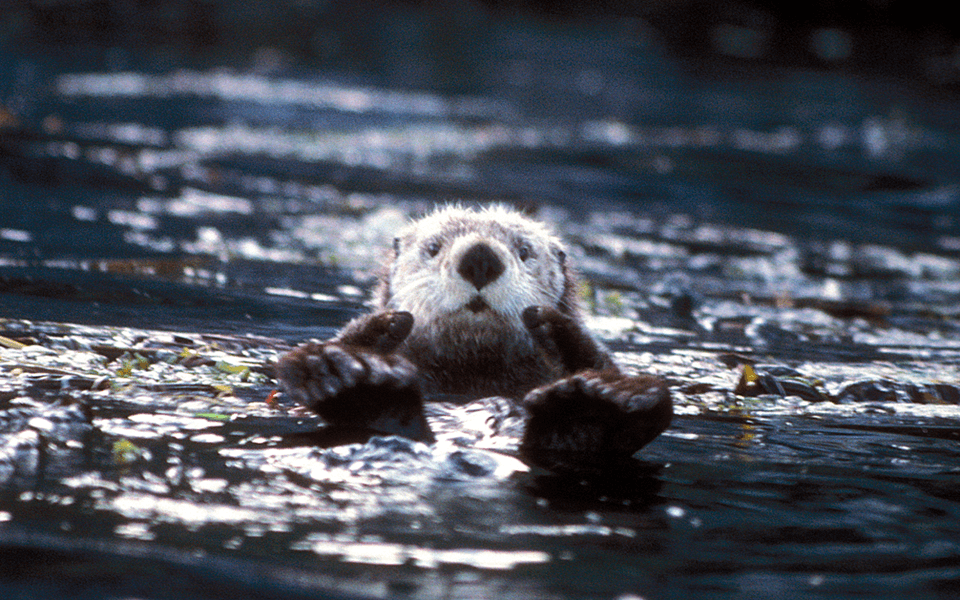
Photo: David Menke · Public domain · via Wikimedia Commons
Overview
The sea otter is the heaviest member of the weasel family and one of the few mammals known to use tools, cracking open shellfish with rocks while floating on its back.
Appearance
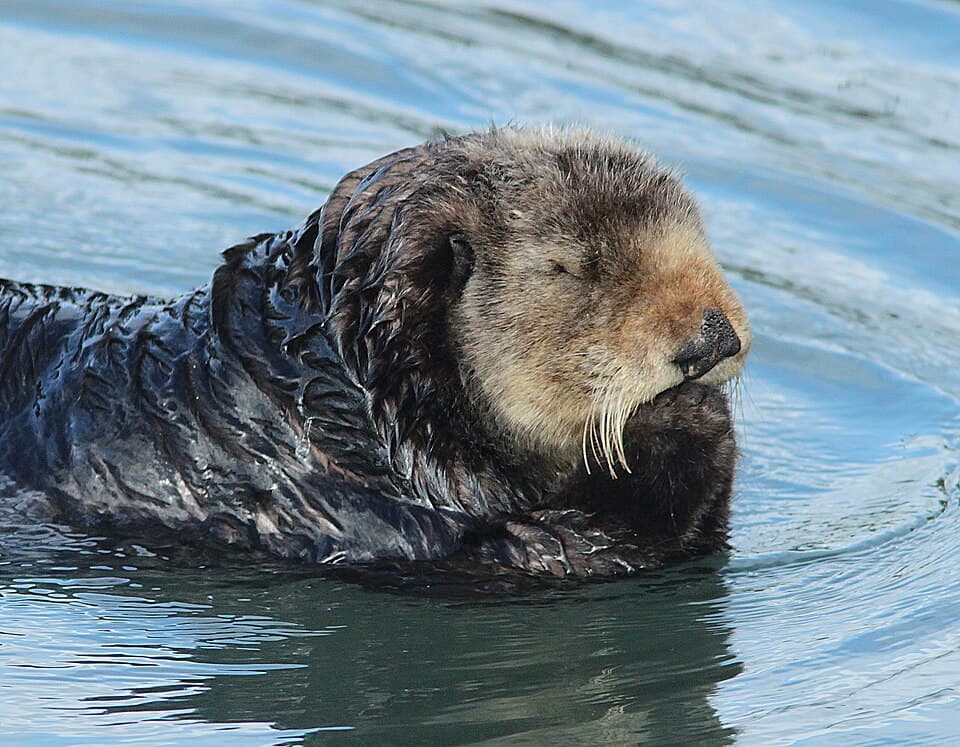
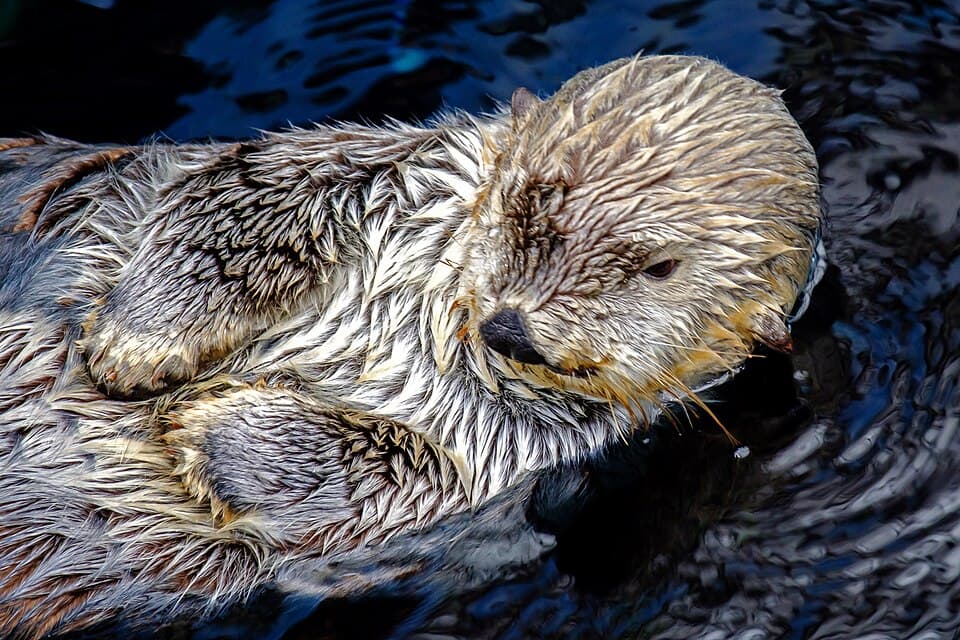
It has a dense, water-resistant brown coat — the thickest fur of any animal — short forelimbs, and large webbed hind feet.
Habitat & Distribution
The sea otter is found in ocean habitats.
Diet & Behavior
Diet: Carnivore — Meat-eating animals that hunt, scavenge, or fish for prey, ranging from big cats to snakes and birds of prey.
Sea otters wrap themselves in kelp to keep from drifting while sleeping, hold hands in groups called rafts, and use rocks as tools to crack open shellfish.
Predators
- Orca
- Great white shark
- Bald eagle (pups)
Prey
- Sea urchins
- Clams
- Crabs
Interesting Facts
- 1
A sea otter's fur can have up to a million hairs per square inch, the densest of any animal.
- 2
They hold hands while sleeping in groups called rafts to avoid drifting apart.
- 3
Sea otters are one of the few animals known to use tools, like rocks, to open shellfish.
Gallery

Sea Otter FAQs
What does a sea otter eat?
The sea otter is a carnivore. Its diet includes sea urchins, clams, crabs.
Where does the sea otter live?
The sea otter is found in ocean habitats across north america and asia.
Is the sea otter endangered?
The sea otter has a conservation status of Endangered. Species facing a very high risk of extinction in the wild in the near future.
How long do sea otters live?
A sea otter's typical lifespan is 10–20 years in the wild.
How much does a sea otter weigh?
An adult sea otter typically weighs 14–45 kg.