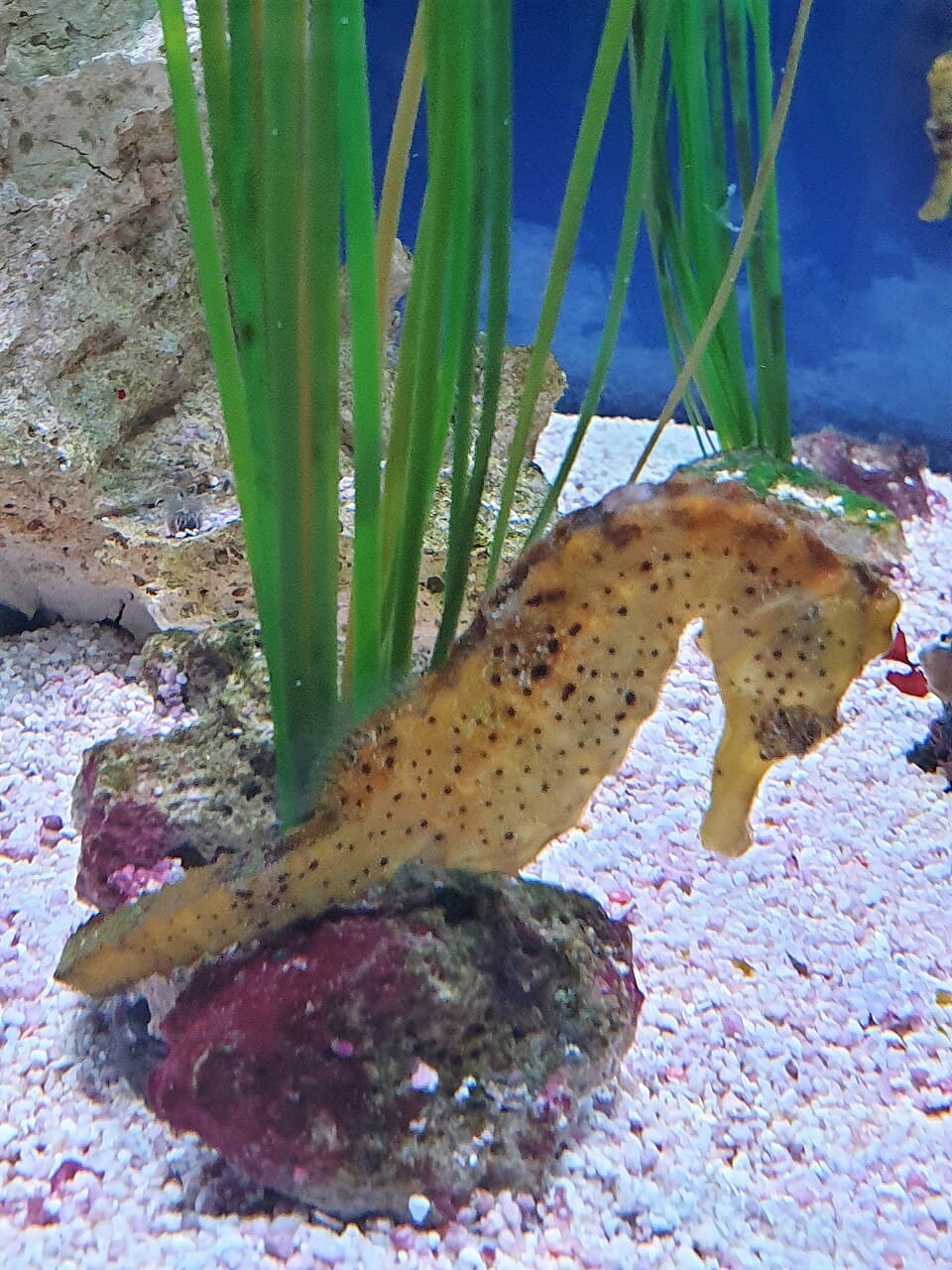
Photo: Nhobgood Nick Hobgood · CC BY-SA 3.0 · via Wikimedia Commons
Overview
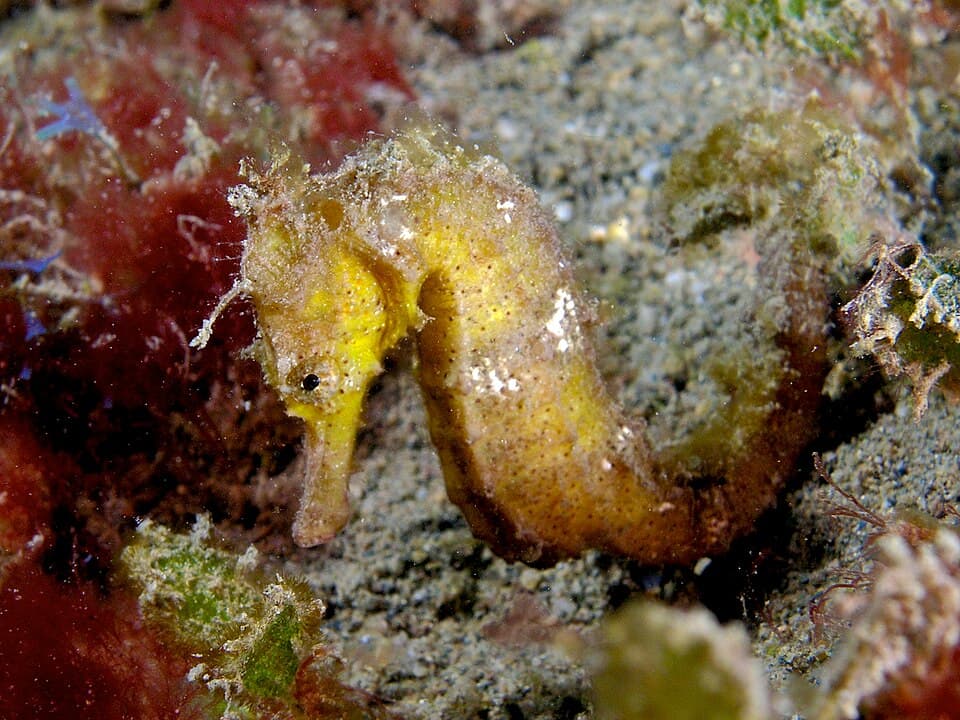
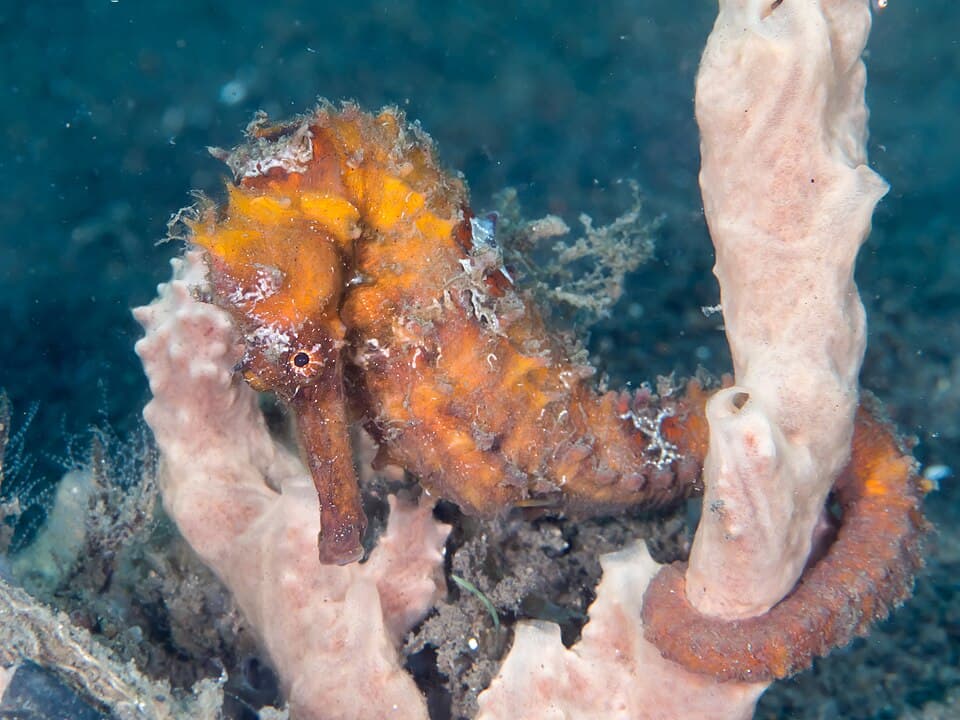
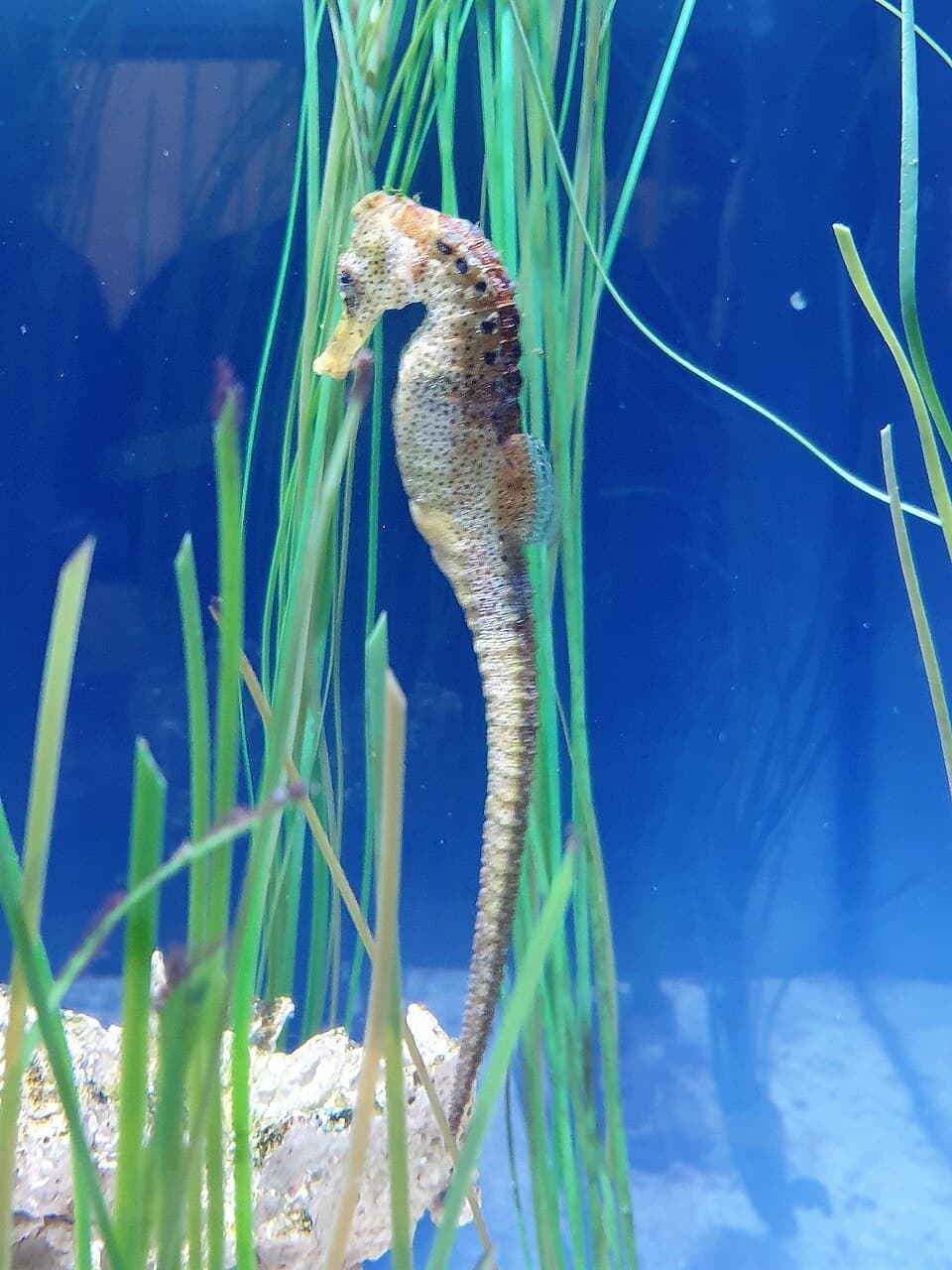
The seahorse is one of the ocean's most distinctive fish, with an upright, horse-like body shape unlike almost any other fish species. Rather than swimming powerfully, it drifts through seagrass beds and coral reefs, anchoring itself in place with a flexible, prehensile tail wrapped around plant stems or coral.
Appearance
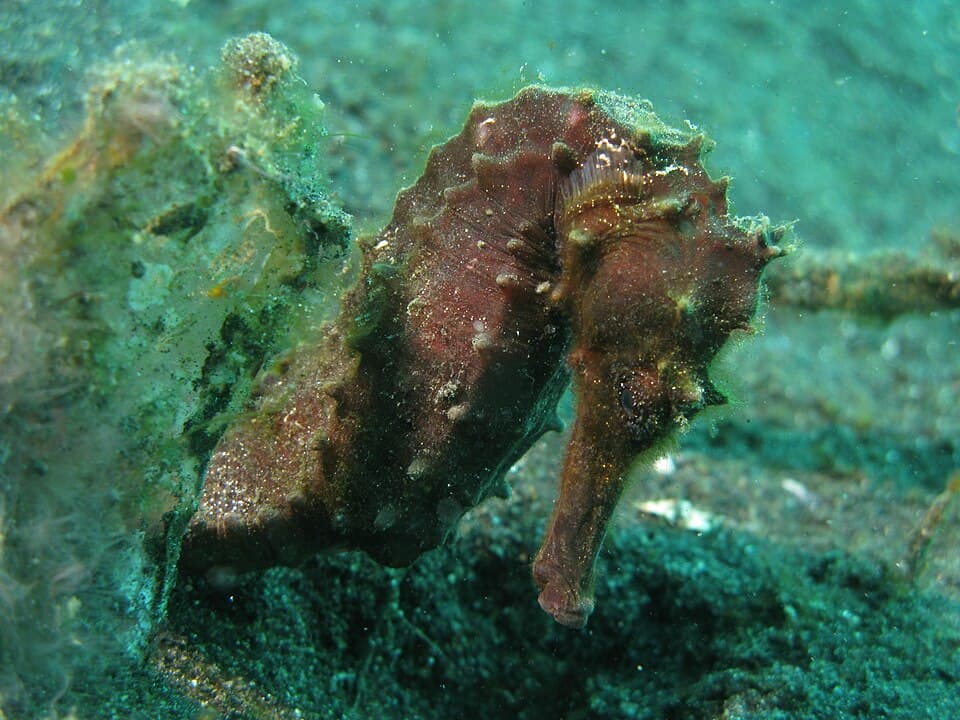
It has a bony, armor-plated body bent into a right angle, a long tubular snout used to suck up prey, and a coiled, grasping tail instead of the fin most fish use for propulsion. Its dorsal fin, positioned along its back, beats rapidly to provide what little forward movement it has.
Habitat & Distribution
The seahorse is found in ocean habitats.
Diet & Behavior
Diet: Carnivore — Meat-eating animals that hunt, scavenge, or fish for prey, ranging from big cats to snakes and birds of prey.
Seahorses are famously among the few animal species where the male carries and gives birth to the young, incubating fertilized eggs in a specialized pouch on his abdomen before releasing fully-formed baby seahorses into the water. Many species also form pair bonds and perform a daily greeting ritual with their mate, involving color changes and synchronized movement.
Predators
- Crabs
- Rays
- Larger fish
- Seabirds
Prey
- Tiny crustaceans
- Plankton
- Small fish larvae
Interesting Facts
- 1
Male seahorses, not females, carry and give birth to the young, incubating eggs in a specialized belly pouch.
- 2
A seahorse has no stomach, so it must eat almost constantly to get enough nutrition.
- 3
It's one of the slowest-swimming fish in the ocean, relying on its prehensile tail to anchor itself rather than swimming far.
- 4
Seahorses lack scales entirely -- their bodies are instead covered by a thin layer of skin stretched over bony plates.
- 5
Many seahorse species form long-term pair bonds and greet their mate with a daily ritual dance.
Gallery
Seahorse FAQs
Why do male seahorses give birth?
Male seahorses have a specialized brood pouch on their abdomen where the female deposits eggs. The male fertilizes and carries them through incubation, eventually giving birth to fully-formed baby seahorses -- one of the only reproductive systems like it in the animal kingdom.
Are seahorses good swimmers?
No -- seahorses are actually very weak swimmers, among the slowest of any fish. They rely on their prehensile tail to anchor themselves to seagrass or coral rather than swimming long distances.
Why are seahorses endangered?
Many seahorse species, including this one, are considered vulnerable due to overharvesting for traditional medicine, the aquarium trade, and loss of the shallow coastal habitats like seagrass beds and coral reefs they depend on.
What do seahorses eat?
Seahorses have no stomach, so they must eat almost continuously, using their tube-like snout to suck up tiny crustaceans, plankton, and small fish larvae.
What does a seahorse eat?
The seahorse is a carnivore. Its diet includes tiny crustaceans, plankton, small fish larvae.
Where does the seahorse live?
The seahorse is found in ocean habitats across asia and australia.
Is the seahorse endangered?
The seahorse has a conservation status of Vulnerable. Species facing a high risk of extinction in the wild due to habitat loss, hunting, or other pressures.
How long do seahorses live?
A seahorse's typical lifespan is 1–4 years in the wild.
How much does a seahorse weigh?
An adult seahorse typically weighs 0.001–0.015 kg.