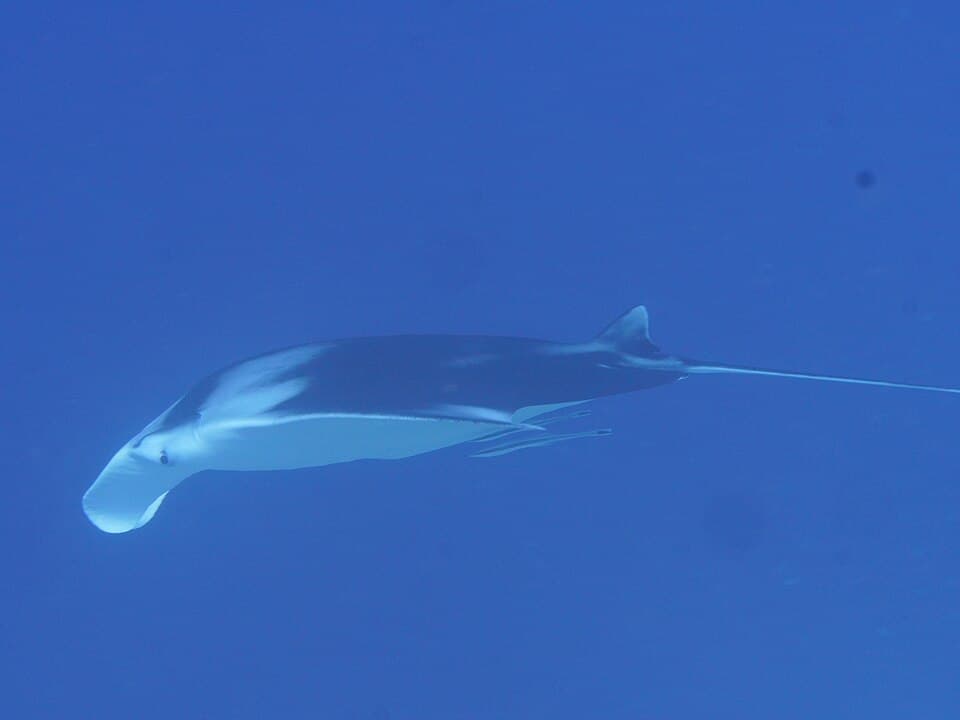
Photo: Pauline Walsh Jacobson · CC BY 4.0 · via Wikimedia Commons
Overview
The giant oceanic manta ray is the largest ray species in the world, with a wingspan that can reach up to 7 meters across. Despite its enormous size, it feeds exclusively on some of the ocean's smallest organisms, filtering huge volumes of zooplankton through specialized gill plates as it swims.
Appearance
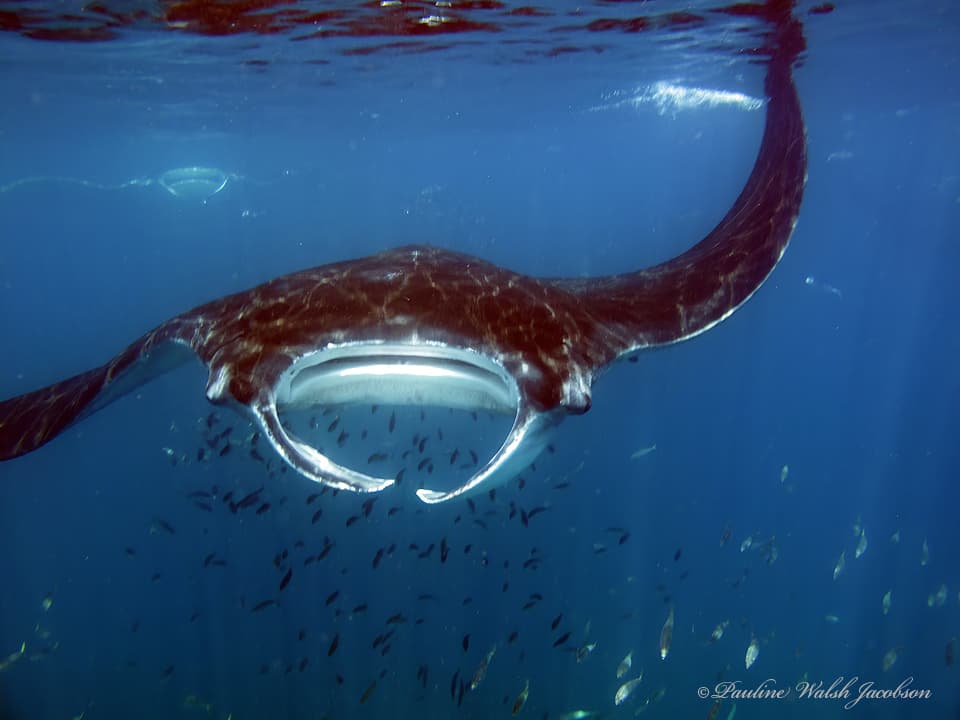
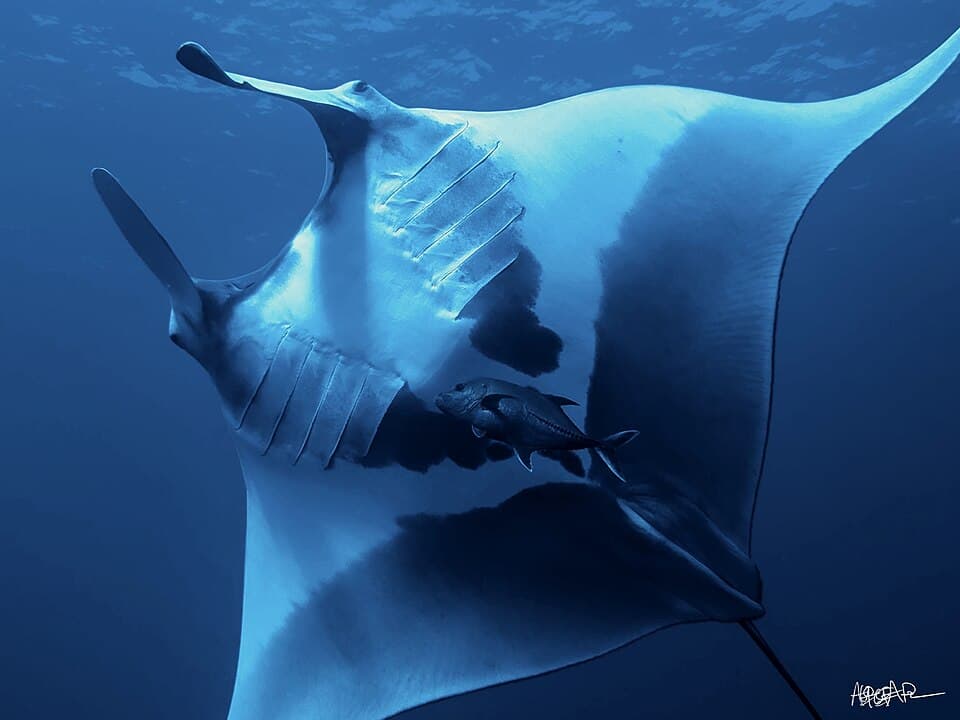
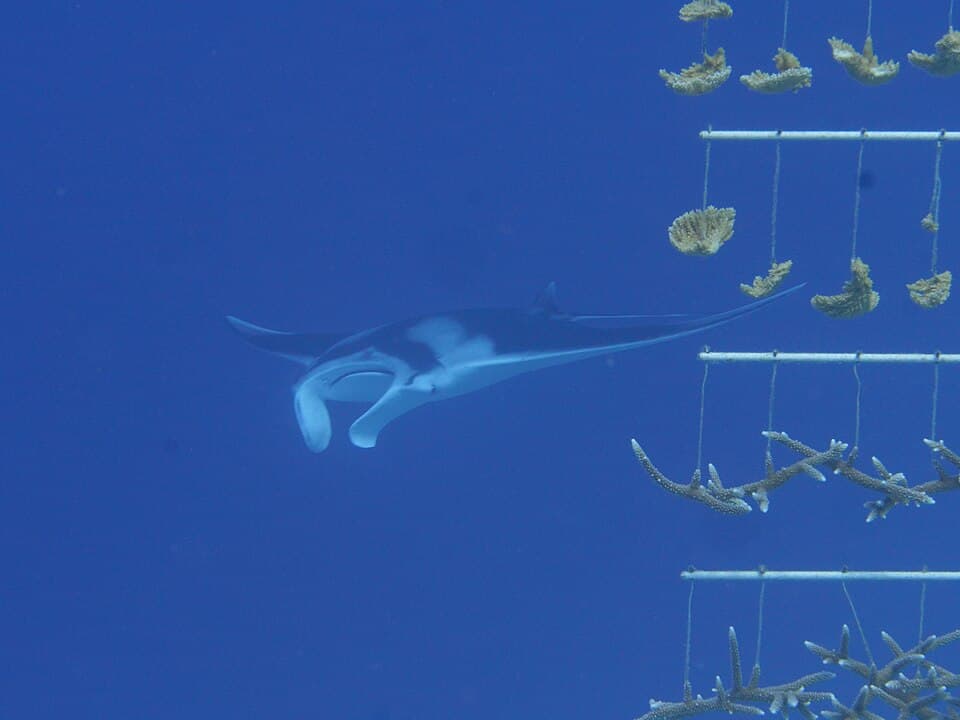
It has a flattened, diamond-shaped body with two large pectoral fins that extend into wing-like flaps, a wide mouth positioned at the front of its head rather than underneath like most rays, and distinctive cephalic fins that unfurl to funnel food toward its mouth while feeding. Coloring is typically dark gray to black on top with a unique white pattern on the underside, similar to a fingerprint, that researchers use to identify individuals.
Habitat & Distribution
The giant oceanic manta ray is found in ocean habitats.
Diet & Behavior
Diet: Carnivore — Meat-eating animals that hunt, scavenge, or fish for prey, ranging from big cats to snakes and birds of prey.
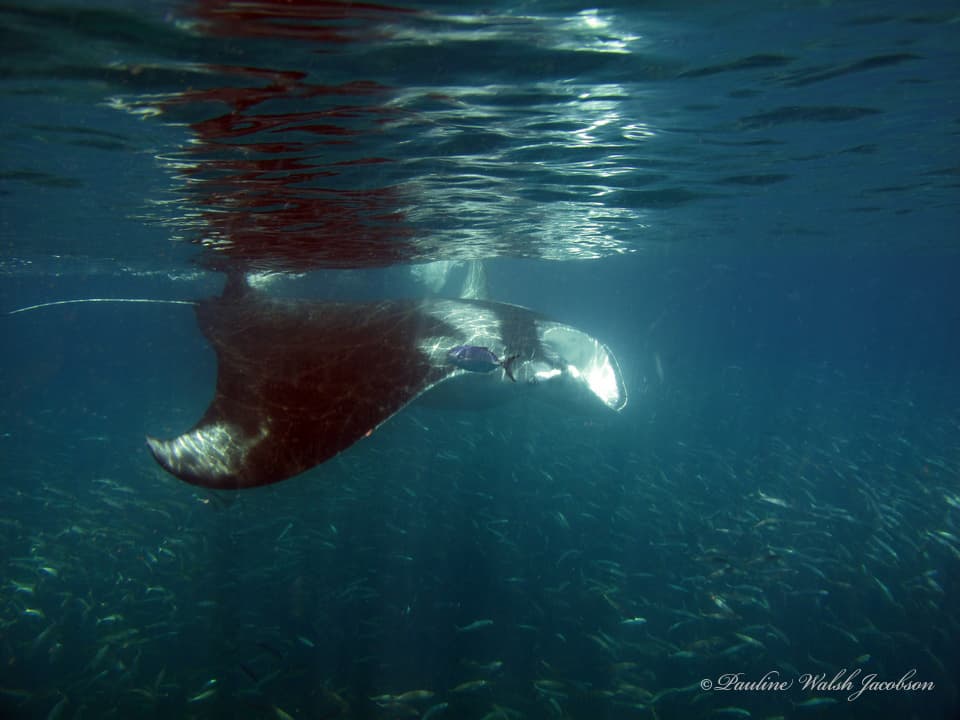
Giant oceanic manta rays are filter feeders, swimming slowly with their mouths open through dense patches of zooplankton, sometimes performing repeated barrel rolls through a single food-rich area to maximize feeding efficiency. They are also known to visit 'cleaning stations,' specific reef locations where small fish pick parasites off their skin, and some individuals return to the same cleaning stations repeatedly over years.
Predators
- Large sharks
- Orcas
Prey
- Zooplankton
- Small fish larvae
Interesting Facts
- 1
The unique white pattern on a manta ray's underside is like a fingerprint, letting researchers identify individual animals over years.
- 2
It has the largest brain-to-body size ratio of any fish, and is considered one of the most intelligent fish species.
- 3
A giant oceanic manta ray's wingspan can reach up to 7 meters across.
- 4
Unlike most rays, its mouth is positioned at the front of its head rather than underneath its body.
- 5
Manta rays visit 'cleaning stations' on reefs, where small fish remove parasites from their skin.
Gallery
Giant Oceanic Manta Ray FAQs
Are manta rays dangerous to humans?
No -- giant oceanic manta rays have no stinger or teeth capable of harming humans and feed only on tiny zooplankton. They're considered completely harmless and are popular with divers.
How big can a manta ray get?
The giant oceanic manta ray is the largest ray species in the world, with a wingspan that can reach up to 7 meters across.
What do manta rays eat?
Manta rays are filter feeders that eat zooplankton and small fish larvae, funneling food into their mouths using specialized fins called cephalic lobes as they swim.
Why are manta rays considered endangered?
Giant oceanic manta rays are slow to reproduce, typically having only one pup every few years, which makes their populations especially vulnerable to threats like targeted fishing for their gill plates and accidental bycatch.
What does a giant oceanic manta ray eat?
The giant oceanic manta ray is a carnivore. Its diet includes zooplankton, small fish larvae.
Where does the giant oceanic manta ray live?
The giant oceanic manta ray is found in ocean habitats across africa, asia, and australia.
Is the giant oceanic manta ray endangered?
The giant oceanic manta ray has a conservation status of Endangered. Species facing a very high risk of extinction in the wild in the near future.
How long do giant oceanic manta rays live?
A giant oceanic manta ray's typical lifespan is 40–50 years in the wild.
How much does a giant oceanic manta ray weigh?
An adult giant oceanic manta ray typically weighs 1,000–2,000 kg.