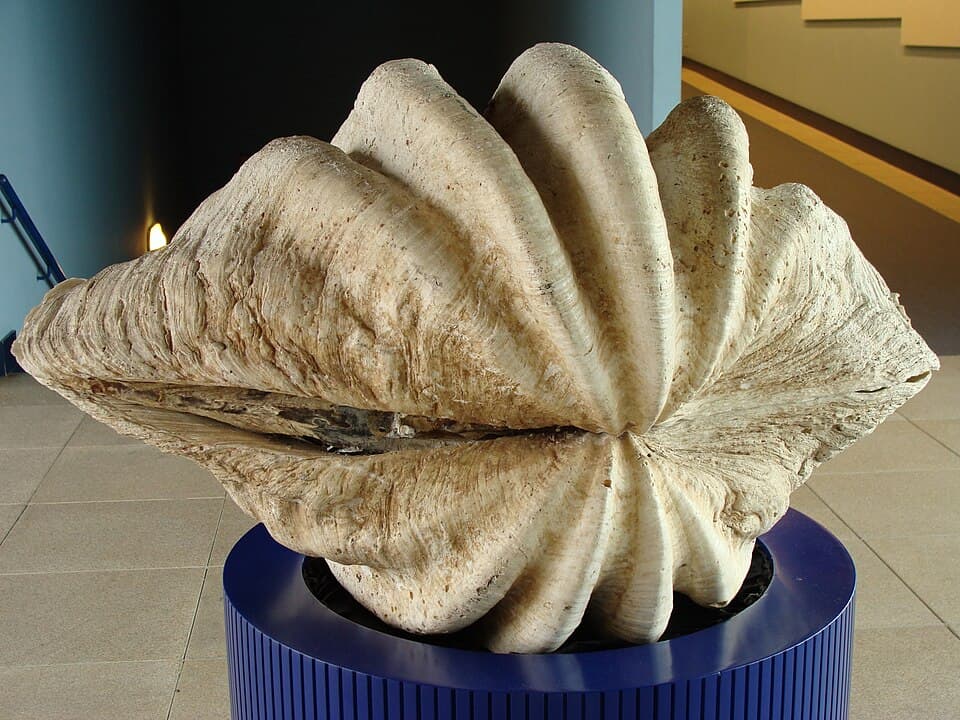
Photo: Fernando Losada Rodríguez · CC BY-SA 4.0 · via Wikimedia Commons
Overview
The giant clam is the largest living bivalve mollusk in the world, capable of growing shells over a meter across and living for a century or more anchored to the same spot on a coral reef. Rather than actively hunting for food, it hosts millions of photosynthetic algae within its colorful mantle tissue, drawing most of its energy from sugars the algae produce using sunlight.
Appearance
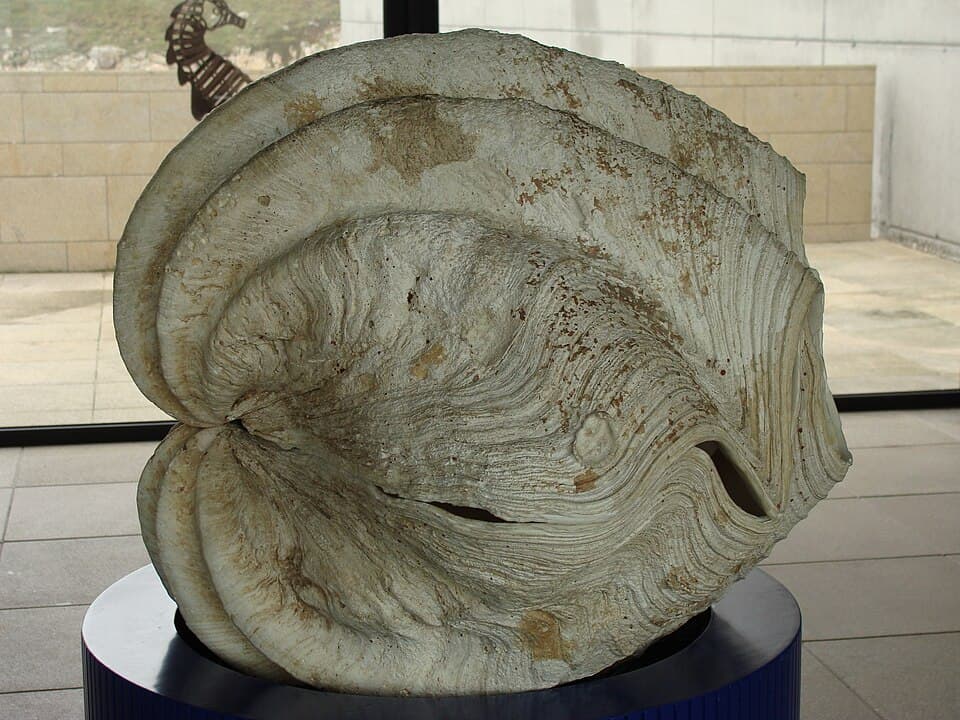
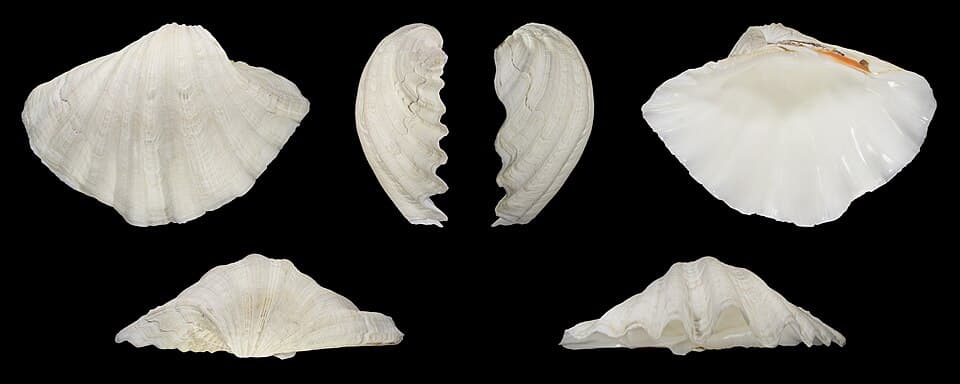
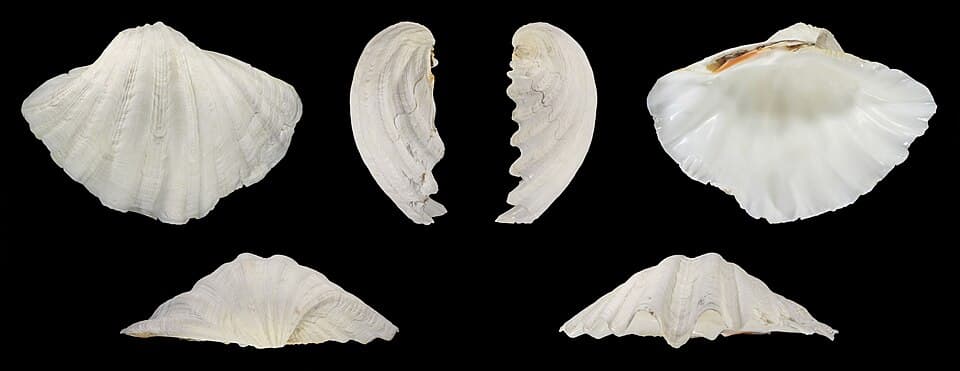
It has a massive, heavily ribbed shell that can weigh hundreds of kilograms, with fleshy mantle tissue exposed between the shell's two halves displaying vivid patterns of blue, green, purple, or gold, colors produced by the light-reflecting cells surrounding its symbiotic algae. Once settled as a juvenile, an adult giant clam remains fixed in place for the rest of its long life.
Habitat & Distribution
The giant clam is found in ocean habitats.
Diet & Behavior
Diet: Herbivore — Plant-eating animals that graze or browse on grasses, leaves, and other vegetation, from tiny insects to giant elephants.
A giant clam spends nearly its entire adult life anchored in one spot on a reef, opening its shell during daylight hours to expose its mantle to the sun, maximizing photosynthesis from the algae living inside its tissue. It supplements this energy source by filter feeding, drawing in seawater and straining out tiny plankton, and can rapidly close its shell if it detects a shadow or disturbance nearby.
Predators
- Humans
- Sea turtles (juveniles)
- Triton snails (juveniles)
Prey
This species does not prey on other animals.
Interesting Facts
- 1
A giant clam can live for over a century, spending nearly its entire adult life fixed in the same spot on a reef.
- 2
It hosts millions of photosynthetic algae in its tissue, drawing most of its energy from sunlight rather than hunting for food.
- 3
Its shell can grow over a meter across, making it the largest living bivalve mollusk on Earth.
- 4
The vivid blue, green, and purple colors in its mantle come from special cells that help focus sunlight onto its symbiotic algae.
- 5
Despite popular myths about clams trapping divers, a giant clam closes far too slowly to pose any real danger to a person.
Gallery
Giant Clam FAQs
Can a giant clam trap a diver underwater?
No -- this is a popular myth. A giant clam closes its shell slowly enough that a diver could easily avoid it, and there are no verified cases of a giant clam trapping or drowning a person.
How does a giant clam get its food?
A giant clam gets most of its energy from photosynthetic algae living symbiotically inside its mantle tissue, supplementing this by filter feeding on tiny plankton from the surrounding water.
How long do giant clams live?
Giant clams are extremely long-lived, with estimates suggesting individuals can survive for over a century once settled in a suitable spot on a reef.
Why are giant clams vulnerable?
Giant clams are threatened by overharvesting for their meat and shells, along with degradation of the coral reef habitats they depend on.
What does a giant clam eat?
The giant clam is a herbivore. Plant-eating animals that graze or browse on grasses, leaves, and other vegetation, from tiny insects to giant elephants.
Where does the giant clam live?
The giant clam is found in ocean habitats across asia and australia.
Is the giant clam endangered?
The giant clam has a conservation status of Vulnerable. Species facing a high risk of extinction in the wild due to habitat loss, hunting, or other pressures.
How long do giant clams live?
A giant clam's typical lifespan is 60–100 years in the wild.
How much does a giant clam weigh?
An adult giant clam typically weighs 100–200 kg.