Photo: Miramikhail · CC BY-SA 3.0 · via Wikimedia Commons
Overview
The dugong is a large marine mammal closely related to manatees, spending its entire life grazing on seagrass meadows in the shallow coastal waters of the Indian and western Pacific Oceans. It is the only strictly herbivorous marine mammal that lives exclusively in the sea, unlike manatees, which sometimes venture into freshwater rivers.
Appearance
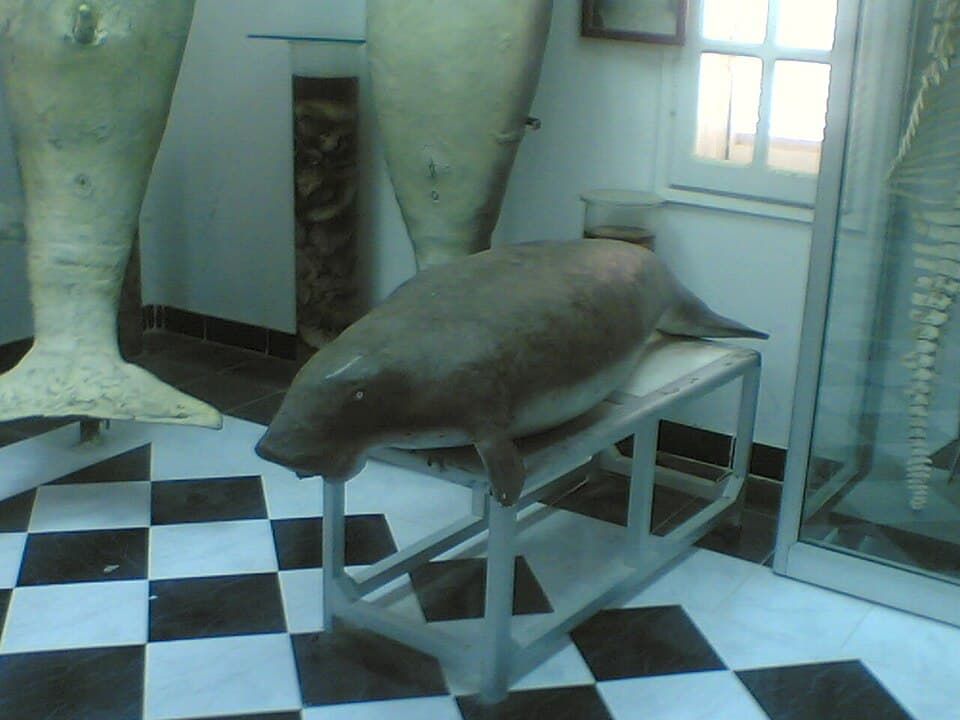
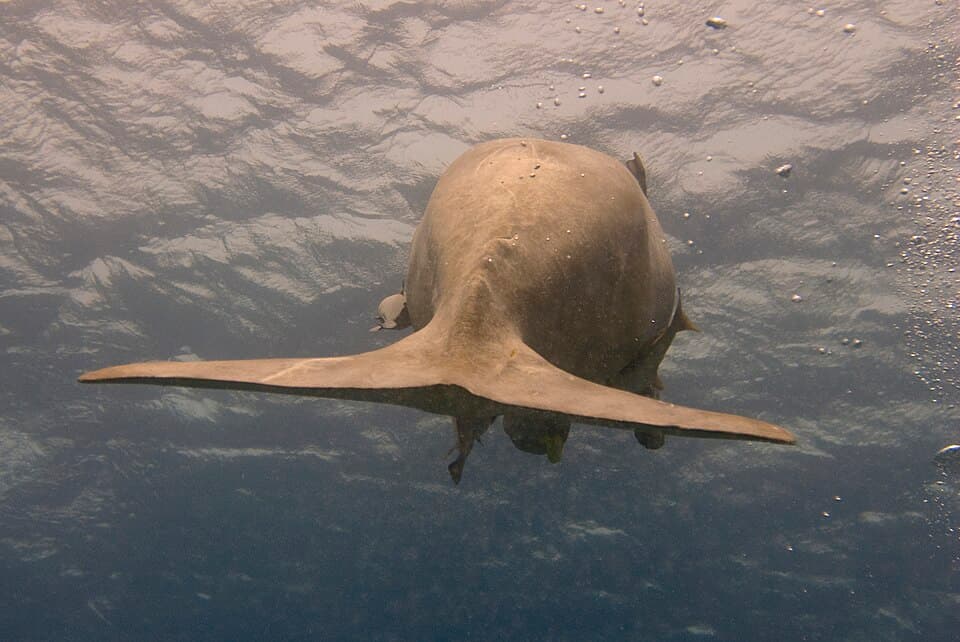
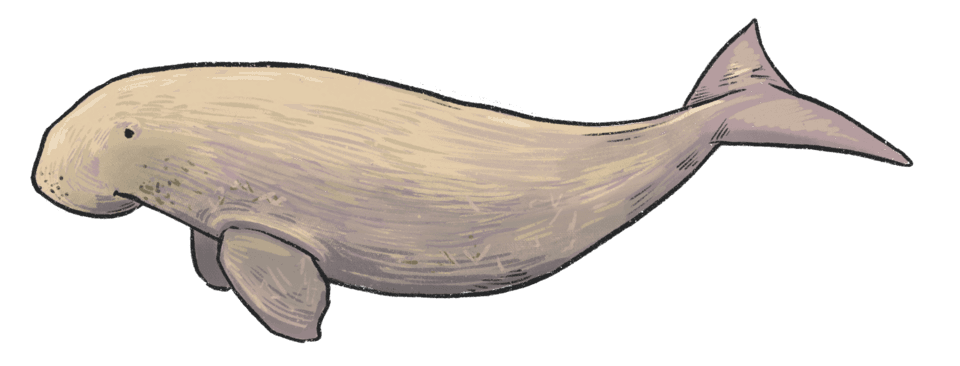
It has a rounded, streamlined gray body, a distinctive downturned snout adapted for grazing on seagrass along the seafloor, and a dolphin-like fluked tail rather than the paddle-shaped tail of a manatee. Its small eyes and thick, wrinkled skin give it an appearance often compared to a gentle, oversized seal-like creature.
Habitat & Distribution
The dugong is found in ocean habitats.
Diet & Behavior
Diet: Herbivore — Plant-eating animals that graze or browse on grasses, leaves, and other vegetation, from tiny insects to giant elephants.
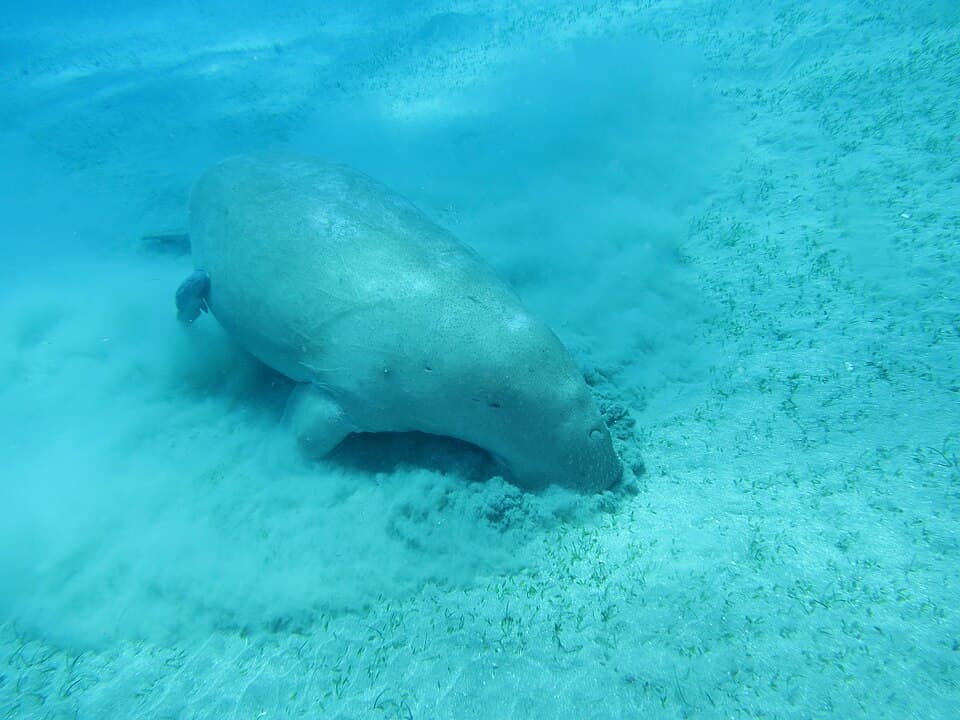
Dugongs spend most of their day grazing along the seafloor, uprooting entire seagrass plants and leaving distinctive feeding trails visible in shallow seagrass meadows. They are usually solitary or found in small groups, surfacing every few minutes to breathe, and are believed to be one of the real-world inspirations behind ancient mermaid legends among sailors.
Predators
- Sharks
- Orcas
- Saltwater crocodiles
Prey
This species does not prey on other animals.
Interesting Facts
- 1
Dugongs are believed to be one of the animals behind old sailor legends of mermaids and sirens.
- 2
They can live 50 to 70 years, among the longest lifespans of any marine mammal.
- 3
A dugong spends nearly its entire life grazing on seagrass, leaving visible feeding trails on the seafloor.
- 4
Unlike manatees, dugongs never enter freshwater and live exclusively in the sea.
- 5
A dugong's closest living relatives are manatees, together forming the mammal order Sirenia.
Gallery
Dugong FAQs
What do dugongs eat?
Dugongs are strict herbivores that feed almost exclusively on seagrass, grazing along the seafloor in shallow coastal waters and sometimes uprooting entire plants.
What's the difference between a dugong and a manatee?
Dugongs have a fluked, dolphin-like tail and live exclusively in saltwater, while manatees have a rounded, paddle-shaped tail and can also live in freshwater rivers and estuaries.
Are dugongs endangered?
Dugongs are classified as Vulnerable, threatened primarily by loss of seagrass habitat, boat strikes, and entanglement in fishing nets.
How long do dugongs live?
Dugongs are long-lived for a marine mammal, with lifespans estimated between 50 and 70 years.
What does a dugong eat?
The dugong is a herbivore. Plant-eating animals that graze or browse on grasses, leaves, and other vegetation, from tiny insects to giant elephants.
Where does the dugong live?
The dugong is found in ocean habitats across africa, asia, and australia.
Is the dugong endangered?
The dugong has a conservation status of Vulnerable. Species facing a high risk of extinction in the wild due to habitat loss, hunting, or other pressures.
How long do dugongs live?
A dugong's typical lifespan is 50–70 years in the wild.
How much does a dugong weigh?
An adult dugong typically weighs 230–420 kg.