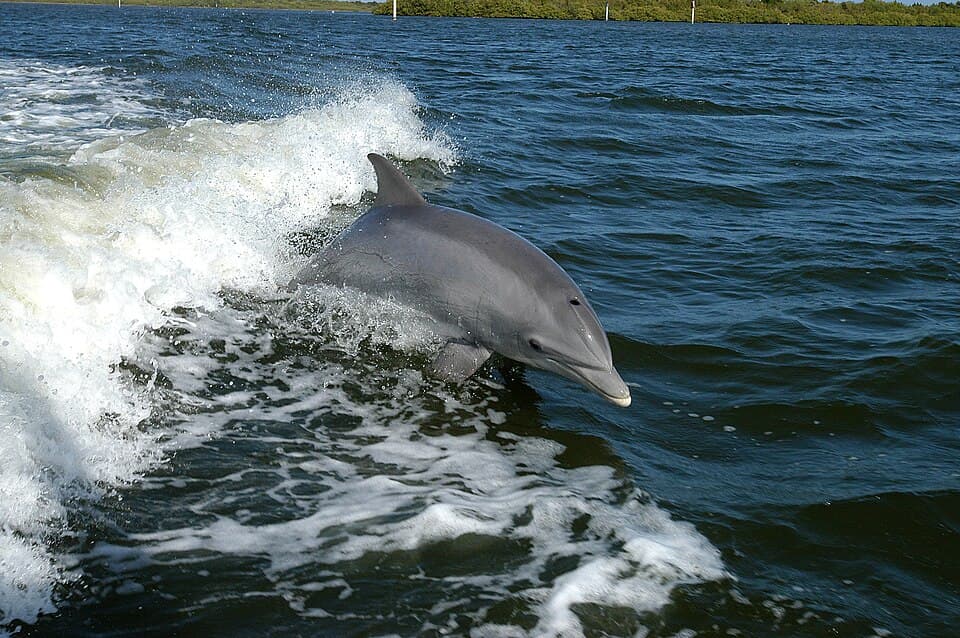
Photo: NASA · Public domain · via Wikimedia Commons
Overview
The bottlenose dolphin is one of the most widely-recognized and intelligent marine mammals, found in temperate and tropical oceans worldwide.
Appearance
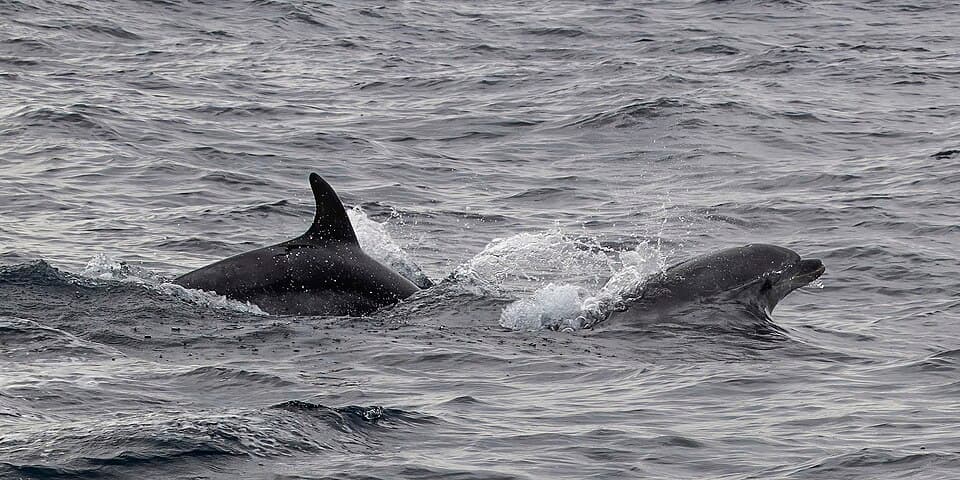
It has a sleek gray body, a curved dorsal fin, and a short, distinctively rounded snout resembling a bottle.
Habitat & Distribution
The bottlenose dolphin is found in ocean habitats.
Diet & Behavior
Diet: Carnivore — Meat-eating animals that hunt, scavenge, or fish for prey, ranging from big cats to snakes and birds of prey.
Dolphins live in social pods, use echolocation to hunt in murky or dark water, and are known for playful behavior including riding boat wakes.
Predators
- Shark
- Orca
Prey
- Fish
- Squid
- Crustaceans
Interesting Facts
- 1
Each dolphin develops a unique signature whistle, functioning like a name.
- 2
They sleep with one half of their brain at a time to keep breathing.
- 3
Dolphins can dive over 500 meters deep in short bursts.
Gallery
Bottlenose Dolphin FAQs
What does a bottlenose dolphin eat?
The bottlenose dolphin is a carnivore. Its diet includes fish, squid, crustaceans.
Where does the bottlenose dolphin live?
The bottlenose dolphin is found in ocean habitats across north america, europe, and asia.
Is the bottlenose dolphin endangered?
The bottlenose dolphin has a conservation status of Least Concern. Widespread and abundant species that are not currently at significant risk of extinction.
How long do bottlenose dolphins live?
A bottlenose dolphin's typical lifespan is 40–50 years in the wild.
How fast can a bottlenose dolphin run?
The bottlenose dolphin can reach speeds of up to 35 km/h.
How much does a bottlenose dolphin weigh?
An adult bottlenose dolphin typically weighs 150–650 kg.