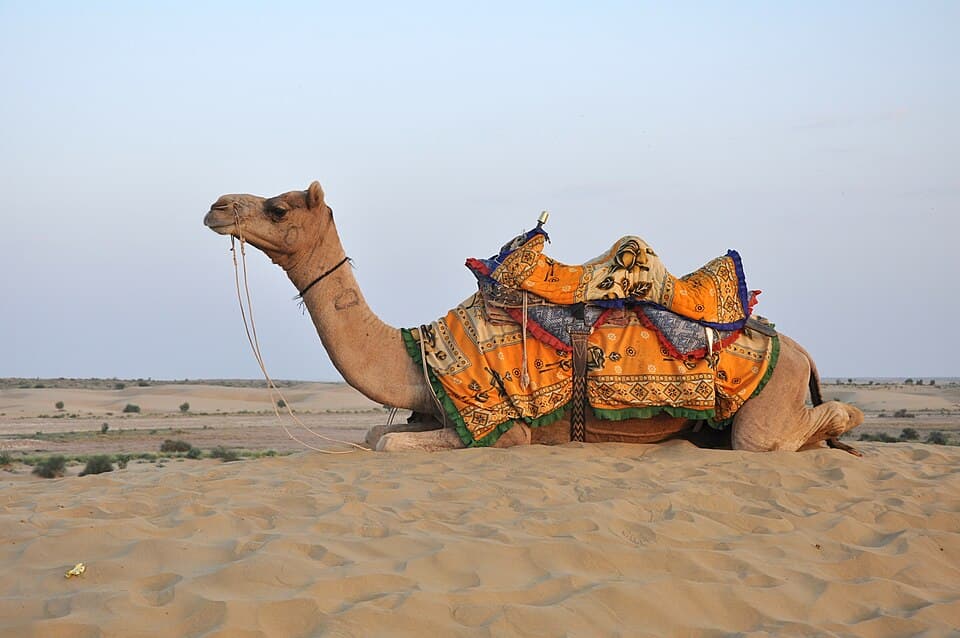
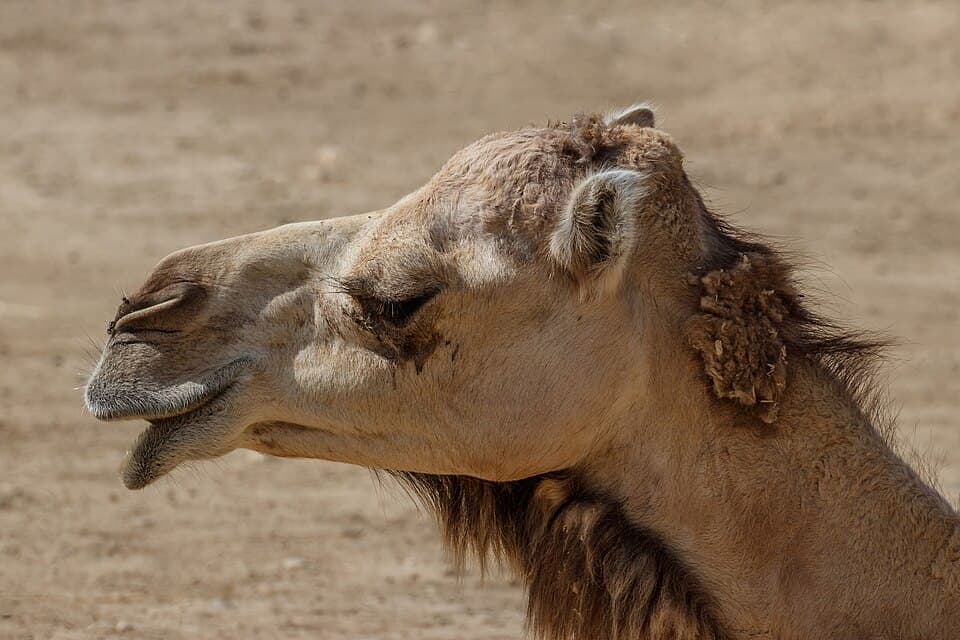
Photo: Aiwok · CC BY-SA 3.0 · via Wikimedia Commons
Overview
The dromedary, or one-humped camel, is a large desert mammal domesticated thousands of years ago and superbly adapted to surviving extreme heat and long stretches without water.
Appearance
It has a tall, sandy-brown body, long legs, a single fatty hump on its back, and thick eyelashes that protect its eyes from blowing sand.
Habitat & Distribution
The dromedary camel is found in desert habitats.
Diet & Behavior
Diet: Herbivore — Plant-eating animals that graze or browse on grasses, leaves, and other vegetation, from tiny insects to giant elephants.
Camels can go over a week without drinking water, tolerate body temperature swings that would be dangerous for most mammals, and travel in herds across arid landscapes.
Predators
- Wolf (young calves, historically)
Prey
This species does not prey on other animals.
Interesting Facts
- 1
A camel's hump stores fat, not water, which is metabolized for energy.
- 2
It can drink over 100 liters of water in about ten minutes.
- 3
Camels can close their nostrils completely to keep out blowing sand.
Gallery
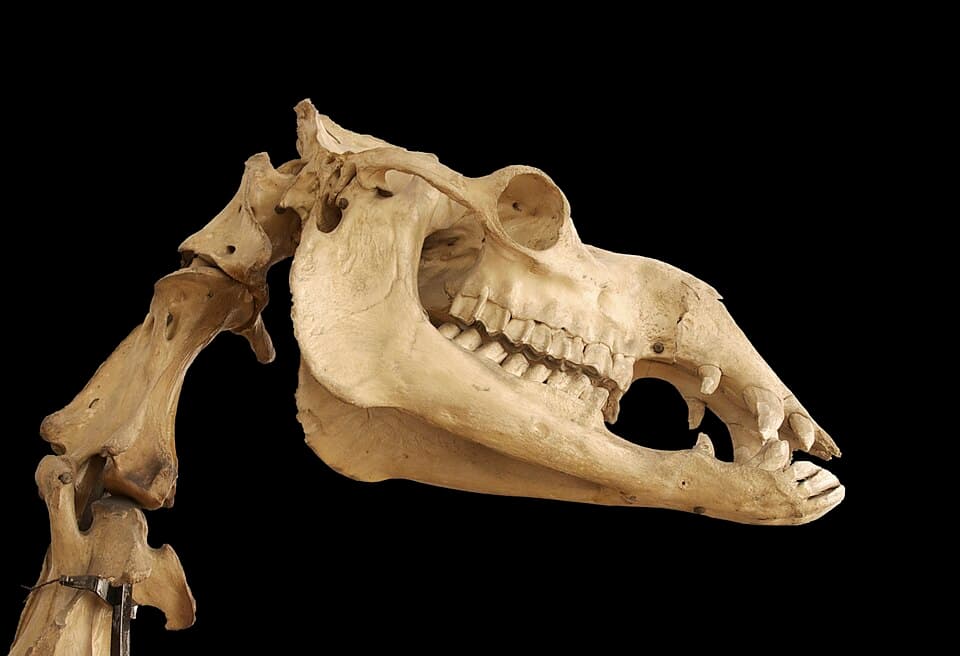
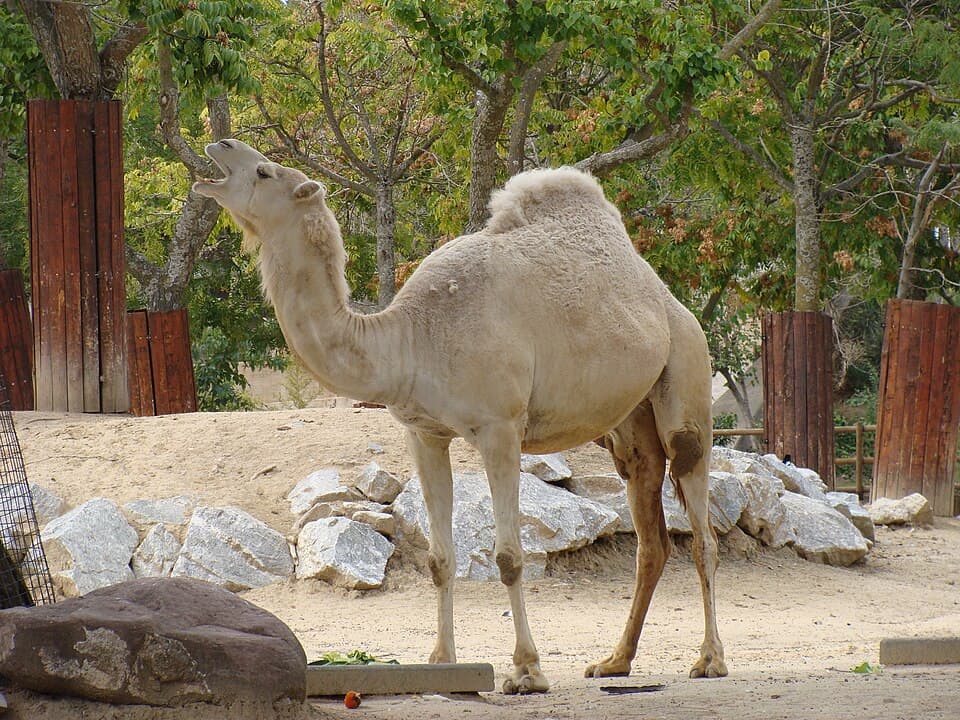
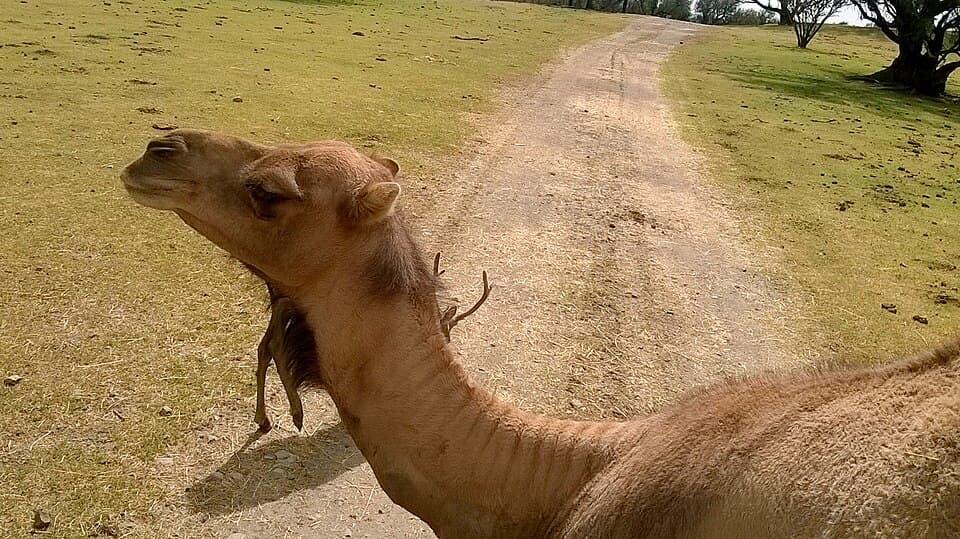
Dromedary Camel FAQs
What does a dromedary camel eat?
The dromedary camel is a herbivore. Plant-eating animals that graze or browse on grasses, leaves, and other vegetation, from tiny insects to giant elephants.
Where does the dromedary camel live?
The dromedary camel is found in desert habitats across africa and asia.
Is the dromedary camel endangered?
The dromedary camel has a conservation status of Least Concern. Widespread and abundant species that are not currently at significant risk of extinction.
How long do dromedary camels live?
A dromedary camel's typical lifespan is 40–50 years in the wild.
How fast can a dromedary camel run?
The dromedary camel can reach speeds of up to 65 km/h.
How much does a dromedary camel weigh?
An adult dromedary camel typically weighs 300–600 kg.