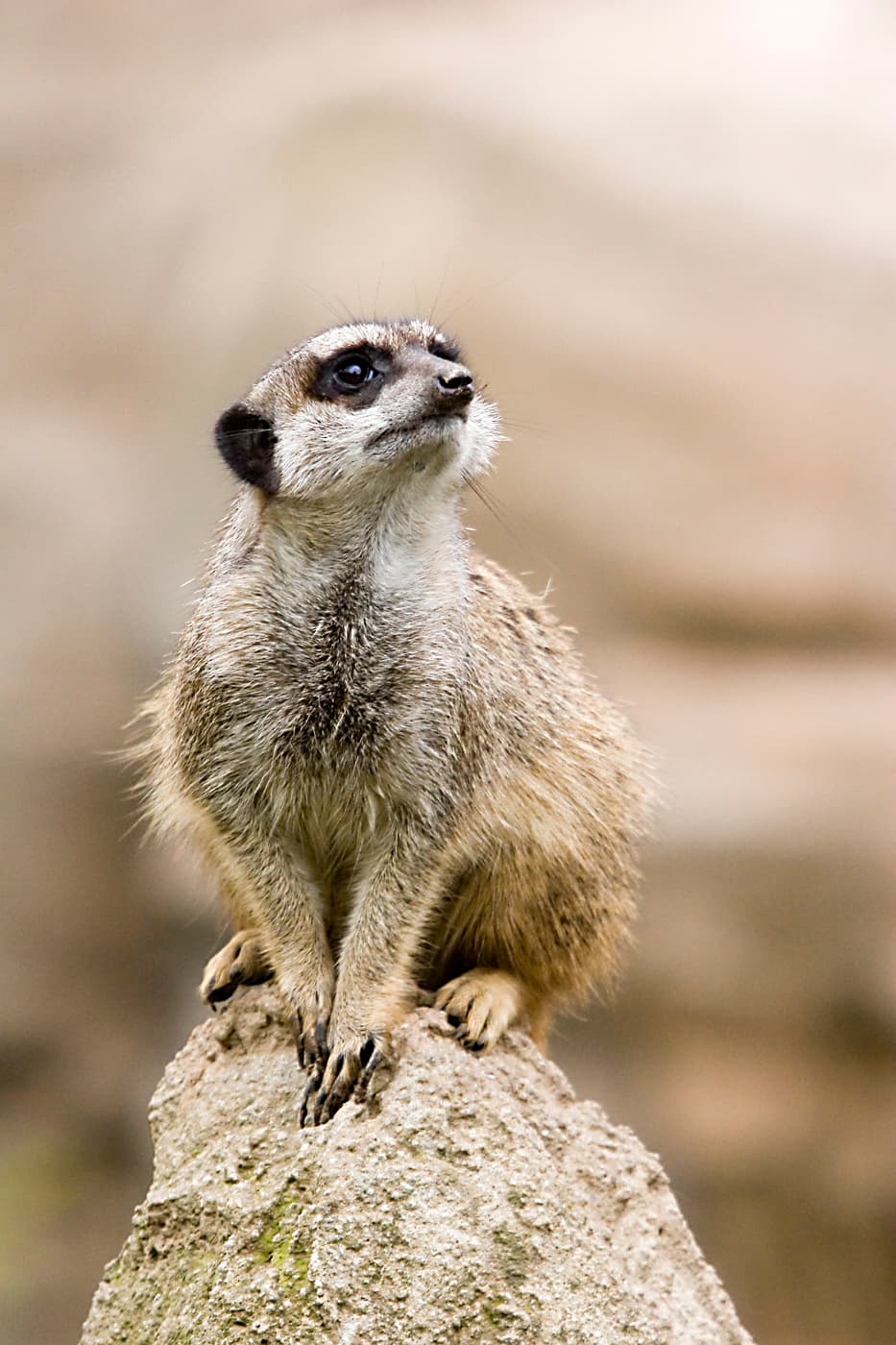
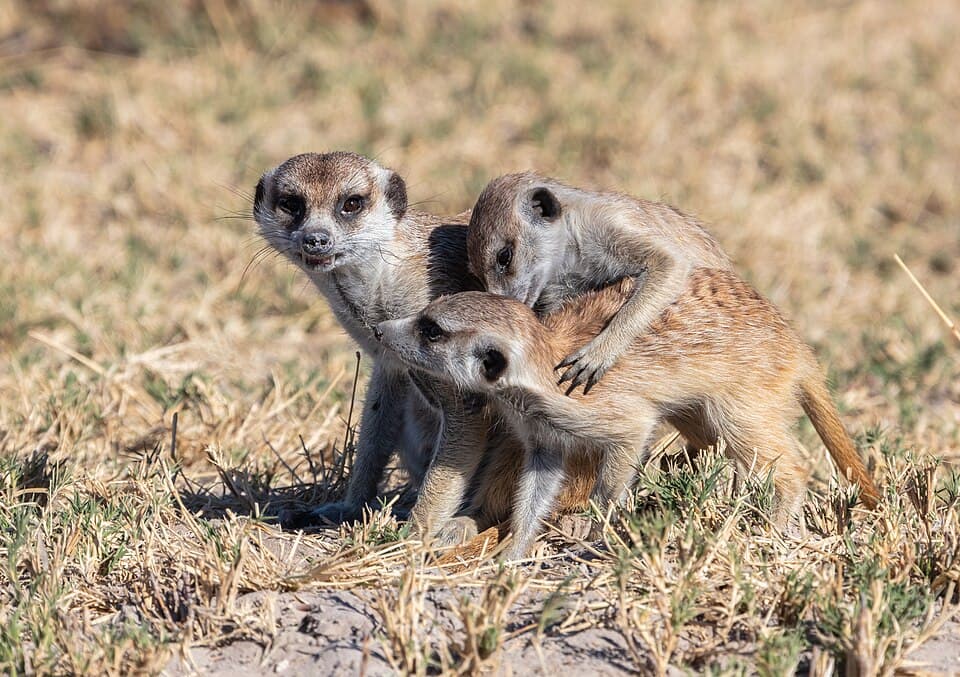
Photo: Olaf Leillinger · CC BY-SA 3.0 · via Wikimedia Commons
Overview
The meerkat is a small, highly social mongoose relative native to the deserts and grasslands of southern Africa, famous for standing upright on its hind legs to scan the horizon for predators. Living in tightly bonded family groups called mobs, meerkats rely on constant cooperation and vigilance to survive in an environment full of danger from the air and ground alike.
Appearance
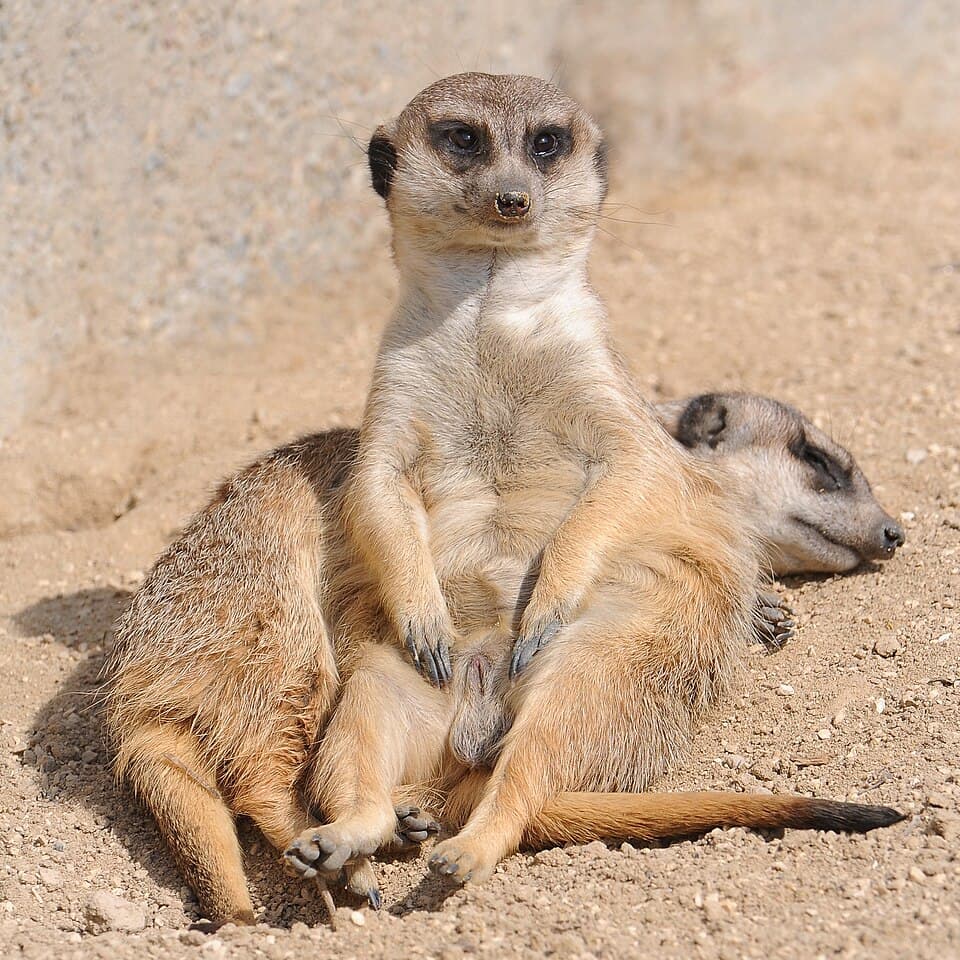
It has a slender body covered in tan to gray fur with dark bands across its back, dark patches around its eyes that function like natural sunglasses to reduce glare, and long, sharp claws adapted for digging. Its long tail helps it balance while standing upright on its hind legs.
Habitat & Distribution
The meerkat is found in desert, grassland habitats.
Diet & Behavior
Diet: Omnivore — Animals with flexible diets that eat both plants and animals, adapting to whatever food is available in their environment.
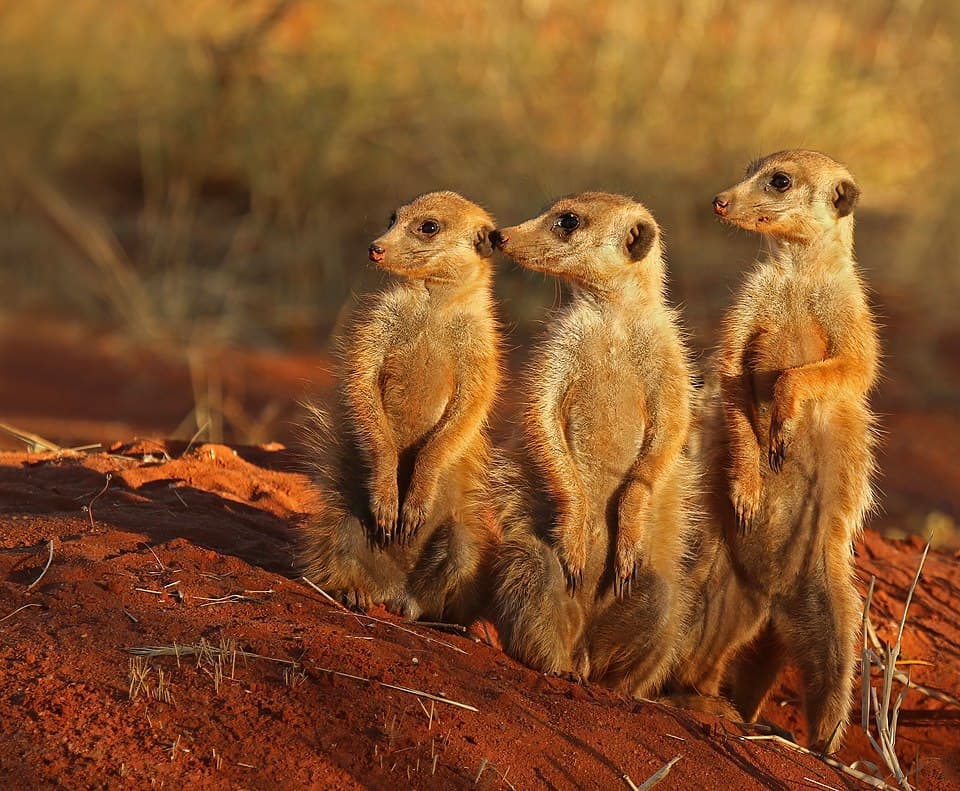
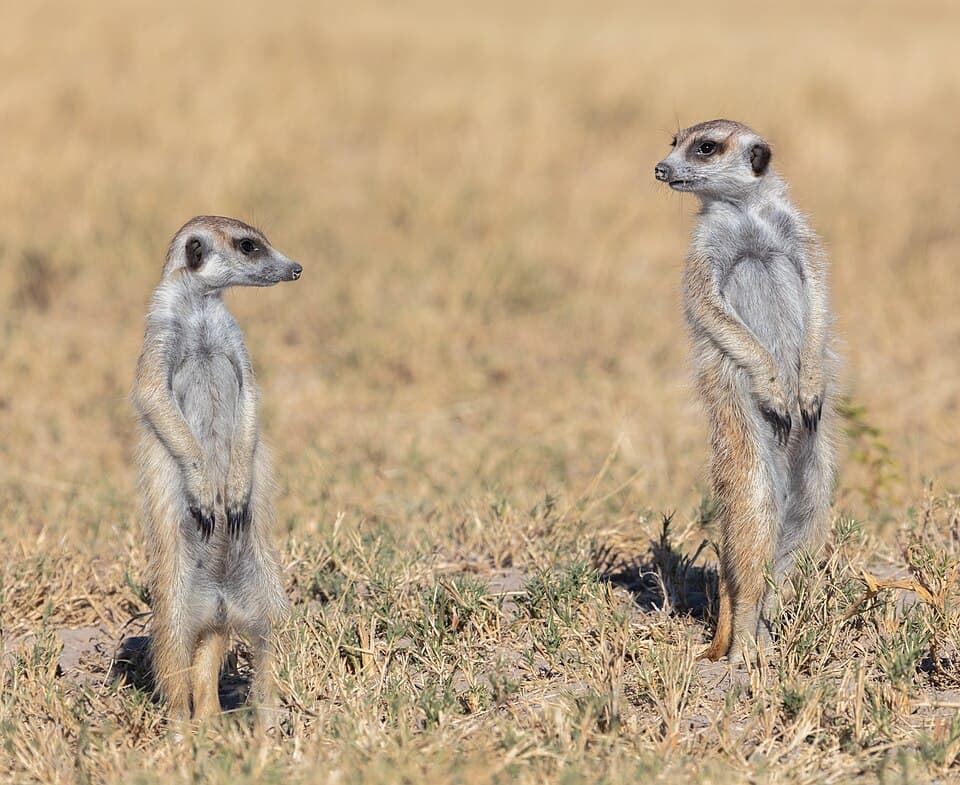
Meerkats live in cooperative groups of up to several dozen individuals, with dedicated members taking turns standing sentry duty on raised ground, watching for eagles, jackals, and snakes while the rest of the group forages. When a sentry spots danger, it gives a distinct alarm call, and the entire group can distinguish different calls for different types of threats, reacting differently to an aerial predator than a ground-based one.
Predators
- Eagles and other birds of prey
- Jackals
- Snakes
Prey
- Insects
- Scorpions
- Small reptiles
- Eggs
- Occasionally small mammals
Interesting Facts
- 1
Meerkats take turns acting as sentries, standing upright on raised ground to watch for predators while the rest of the group forages.
- 2
They have distinct alarm calls for different predators, and other meerkats react differently depending on whether the threat is from the air or ground.
- 3
The dark patches around a meerkat's eyes work like natural sunglasses, reducing glare from the sun while scanning the sky.
- 4
Meerkats are largely resistant to the venom of many scorpion species they hunt and eat.
- 5
A meerkat group, called a mob, can include several dozen individuals working together to raise young and watch for danger.
Gallery
Meerkat FAQs
Why do meerkats stand up on their hind legs?
Standing upright lets a meerkat see farther across the flat, open terrain it lives in, helping sentries spot approaching predators like eagles, jackals, or snakes before they get close to the group.
Are meerkats immune to scorpion stings?
Meerkats have a significant degree of resistance to the venom of many scorpion species they prey on, though it isn't complete immunity, and they still handle scorpions carefully, often biting off the stinger first.
Do meerkats live in groups?
Yes, meerkats are highly social animals that live in cooperative groups called mobs, sometimes including several dozen individuals that share duties like sentry watch and pup care.
What do meerkats eat?
Meerkats are omnivores that mainly eat insects and other invertebrates like scorpions, but also small reptiles, eggs, and occasionally plant matter.
What does a meerkat eat?
The meerkat is an omnivore. Animals with flexible diets that eat both plants and animals, adapting to whatever food is available in their environment.
Where does the meerkat live?
The meerkat is found in desert, grassland habitats across africa.
Is the meerkat endangered?
The meerkat has a conservation status of Least Concern. Widespread and abundant species that are not currently at significant risk of extinction.
How long do meerkats live?
A meerkat's typical lifespan is 8–14 years in the wild.
How much does a meerkat weigh?
An adult meerkat typically weighs 0.6–1 kg.