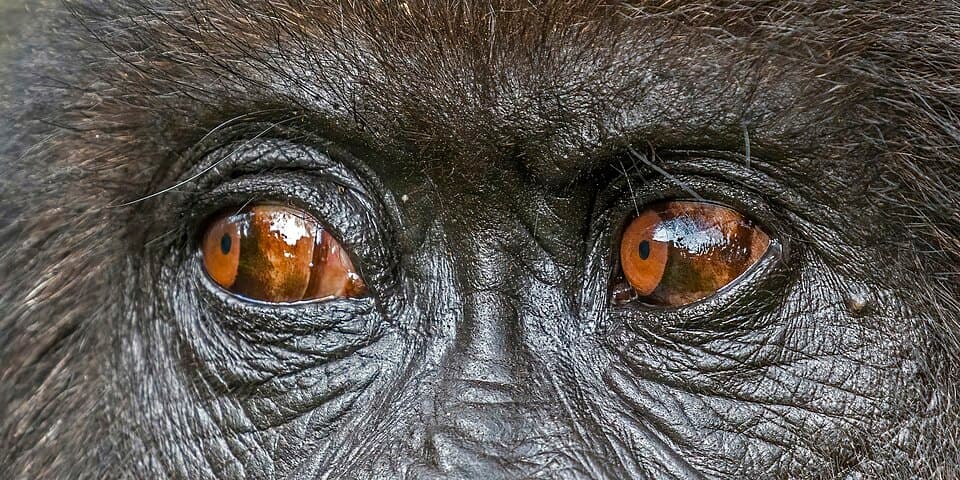
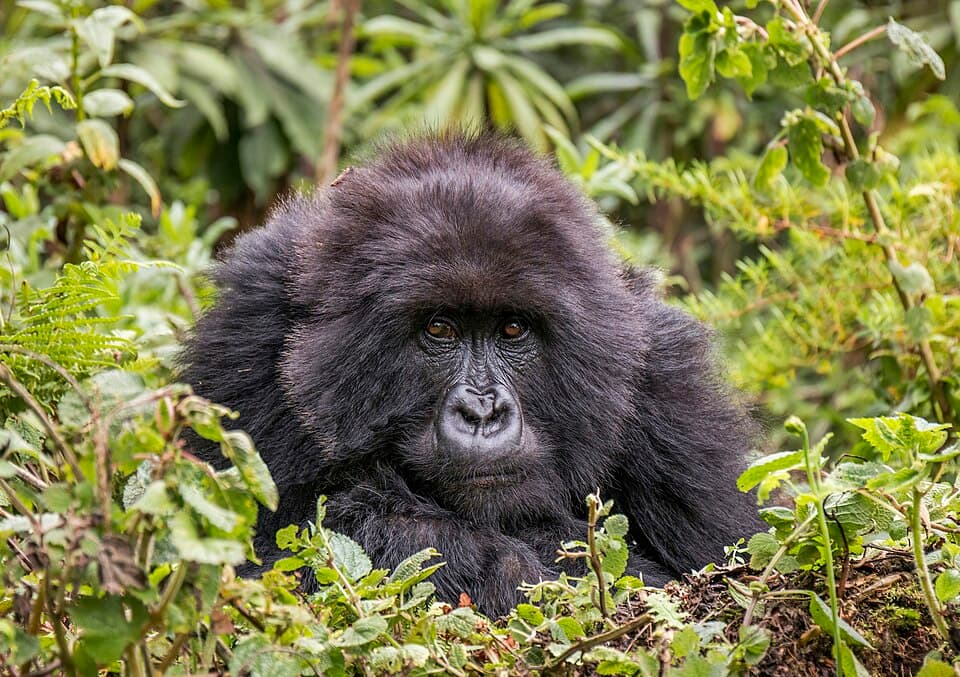
Photo: Charles J. Sharp · CC BY-SA 4.0 · via Wikimedia Commons
Overview
The mountain gorilla is a critically-studied great ape subspecies living in the misty forested slopes of the Virunga Mountains and Bwindi in central Africa, and one of conservation's most notable recovery stories.
Appearance
It has an exceptionally thick black coat adapted to cold mountain temperatures, a broad muscular chest, and — in mature males — a distinctive patch of silver fur across the back.
Habitat & Distribution
The mountain gorilla is found in mountain, rainforest habitats.
Diet & Behavior
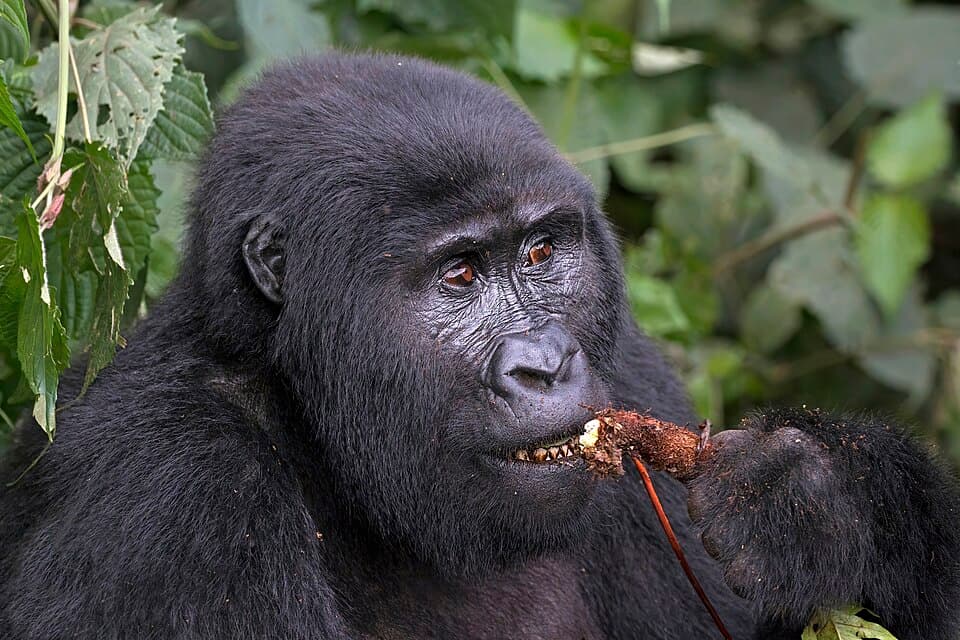
Diet: Herbivore — Plant-eating animals that graze or browse on grasses, leaves, and other vegetation, from tiny insects to giant elephants.
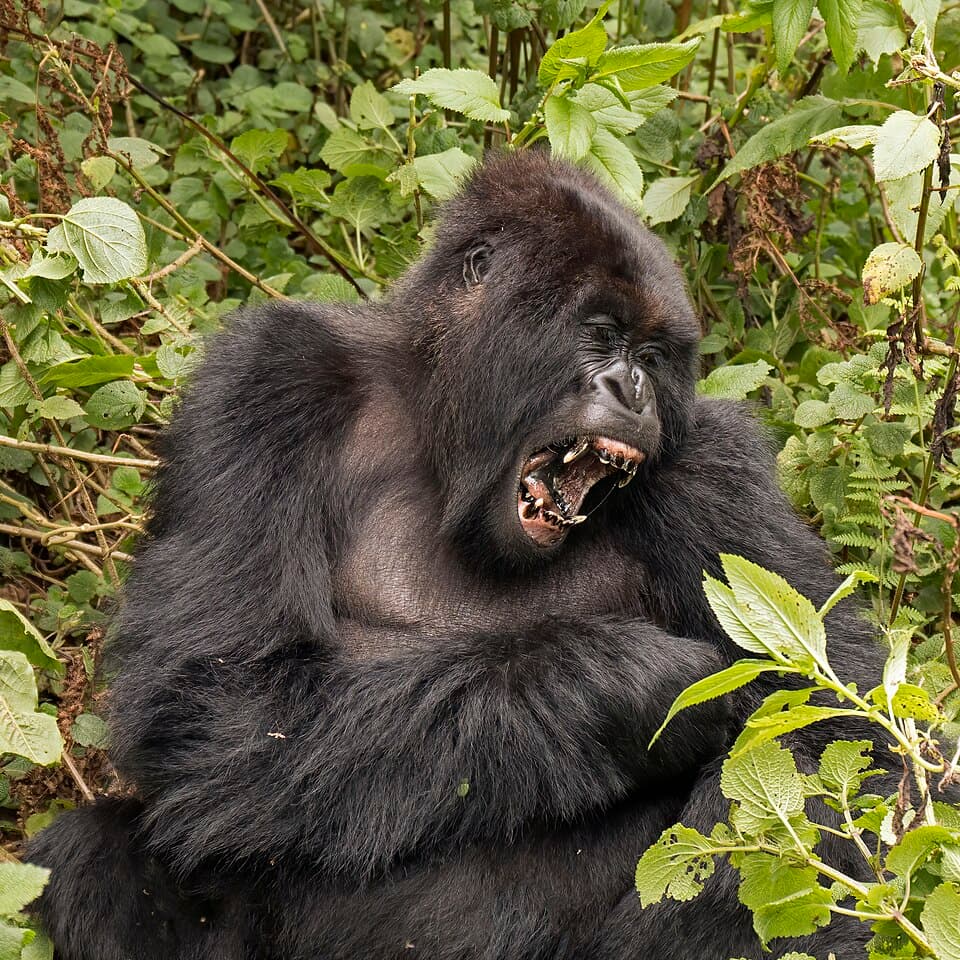
Mountain gorillas live in stable family troops led by a dominant silverback male, spend most of the day foraging and resting, and communicate through a range of vocalizations and chest-beating displays.
Predators
- Leopard (rarely)
Prey
This species does not prey on other animals.
Interesting Facts
- 1
Mountain gorilla numbers have slowly recovered thanks to decades of dedicated conservation work.
- 2
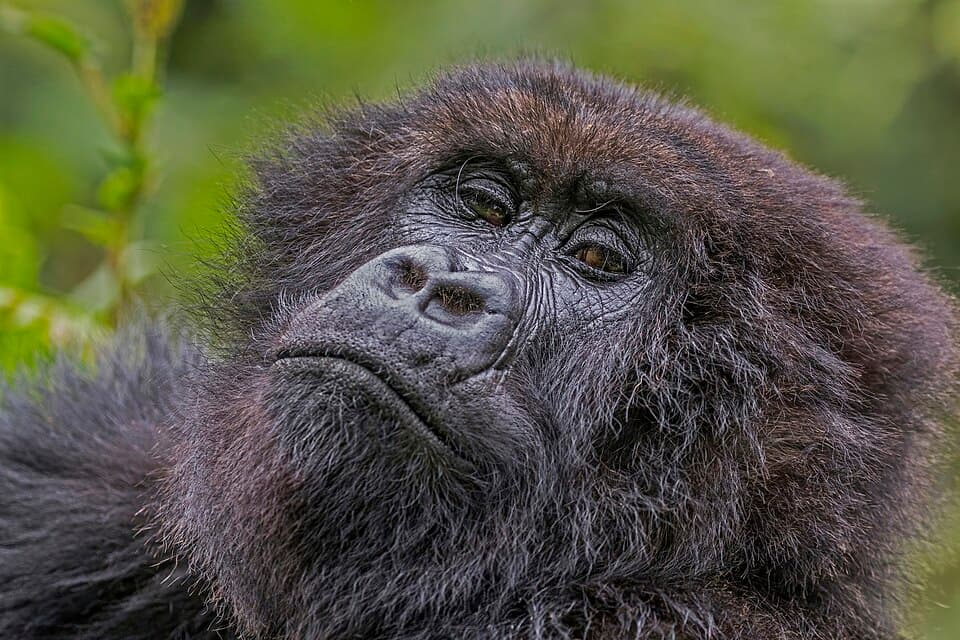
Each gorilla's nose print is as unique as a human fingerprint.
- 3
A dominant male is called a silverback for the patch of gray fur on his back.
Gallery
Mountain Gorilla FAQs
What does a mountain gorilla eat?
The mountain gorilla is a herbivore. Plant-eating animals that graze or browse on grasses, leaves, and other vegetation, from tiny insects to giant elephants.
Where does the mountain gorilla live?
The mountain gorilla is found in mountain, rainforest habitats across africa.
Is the mountain gorilla endangered?
The mountain gorilla has a conservation status of Endangered. Species facing a very high risk of extinction in the wild in the near future.
How long do mountain gorillas live?
A mountain gorilla's typical lifespan is 35–40 years in the wild.
How much does a mountain gorilla weigh?
An adult mountain gorilla typically weighs 70–220 kg.