Photo: derekkeats · CC BY-SA 2.0 · via Wikimedia Commons
Overview
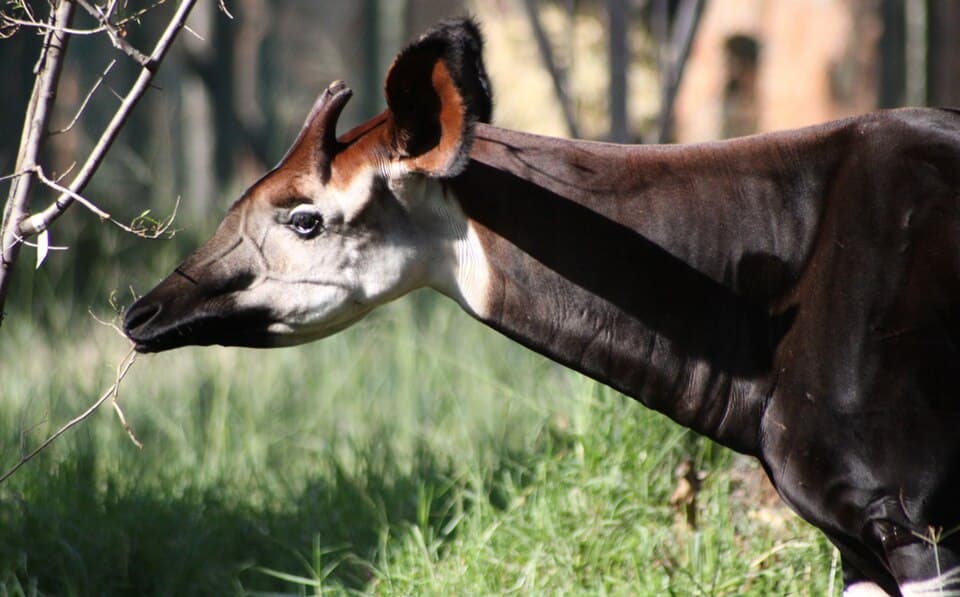
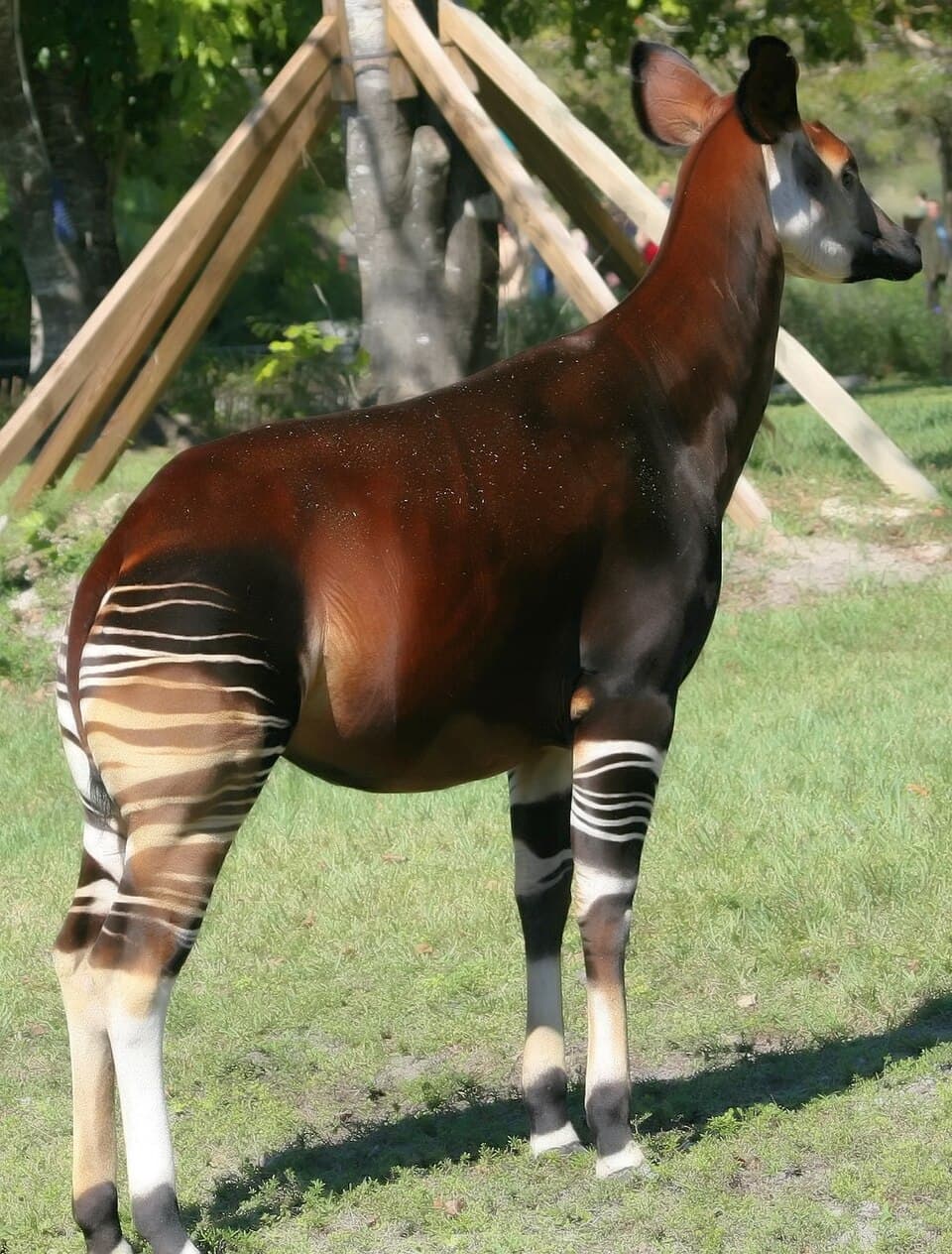
The okapi is a shy, elusive relative of the giraffe found only in the dense rainforests of the Democratic Republic of the Congo. Despite its zebra-striped legs, it is not related to zebras at all -- the stripes are thought to help camouflage it in dappled forest light and help calves follow their mother through dense vegetation.
Appearance
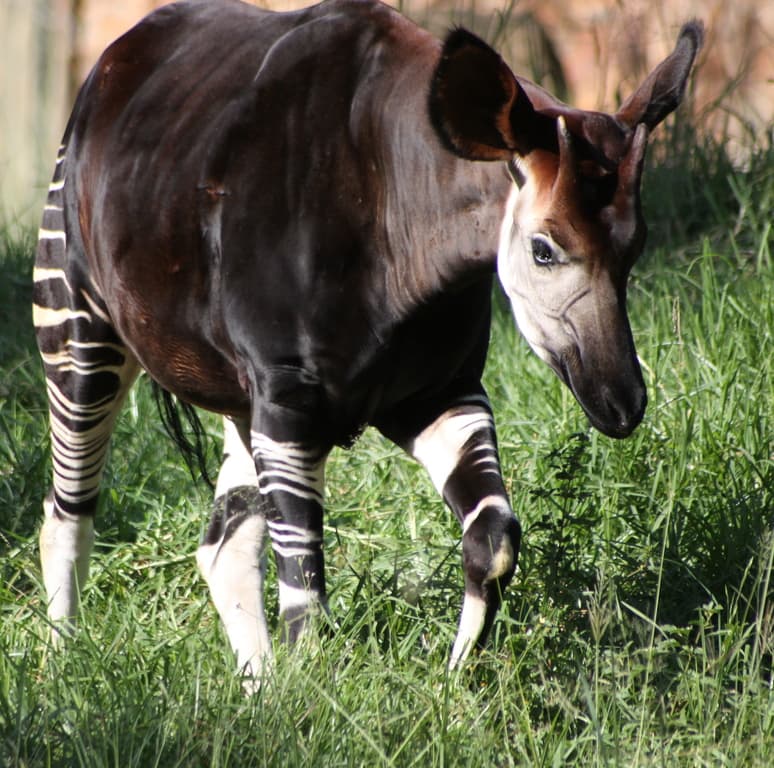
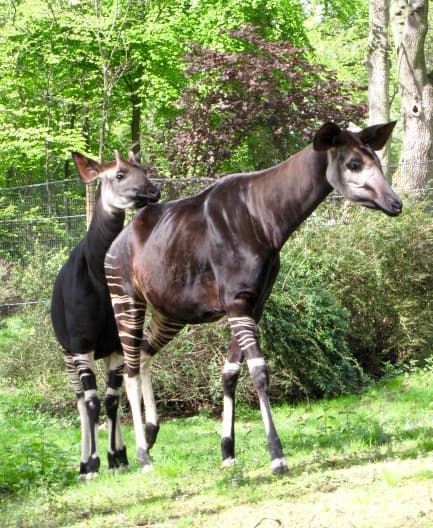
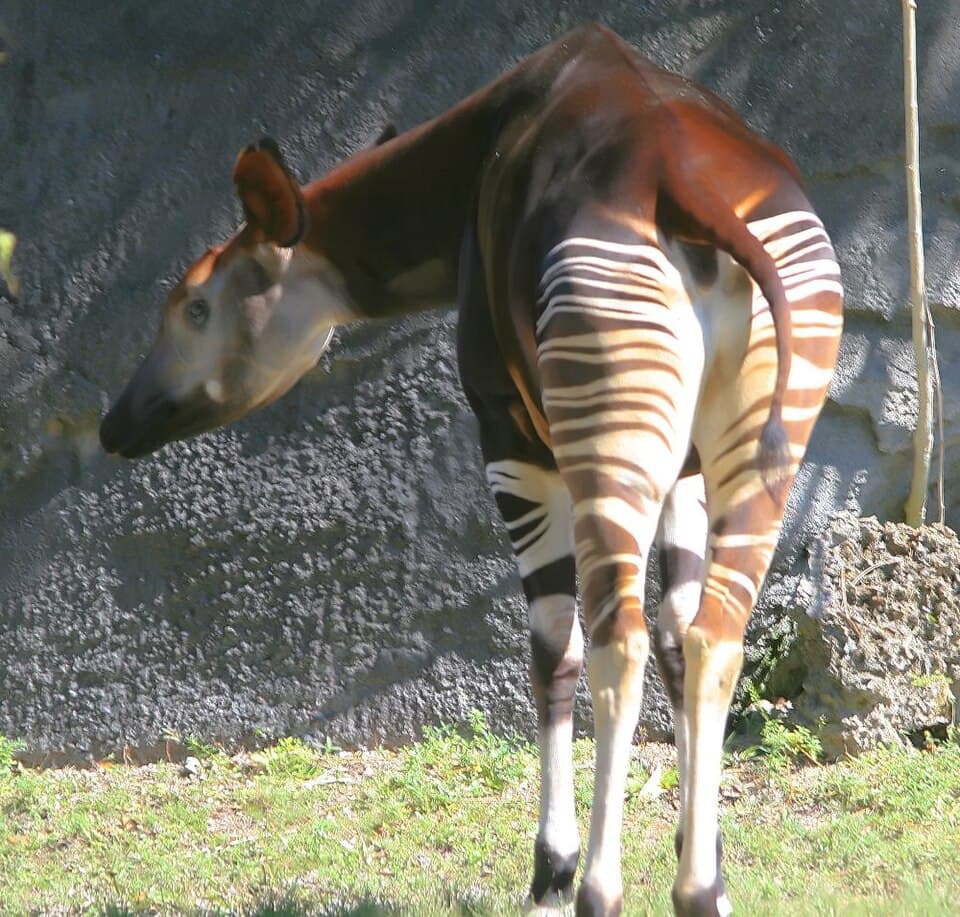
It has a deep reddish-brown velvety coat, horizontal white and black stripes on its legs and rump reminiscent of a zebra, and a long neck and large ears like its closest relative, the giraffe. Males have short, skin-covered horns called ossicones, similar to a giraffe's but smaller.
Habitat & Distribution
The okapi is found in rainforest habitats.
Diet & Behavior
Diet: Herbivore — Plant-eating animals that graze or browse on grasses, leaves, and other vegetation, from tiny insects to giant elephants.
Okapis are solitary, elusive animals that spend most of their time alone in dense rainforest, using an extremely long, prehensile tongue -- long enough to clean their own ears -- to strip leaves and buds from surrounding vegetation. They mark territory with scent glands on their feet and communicate using infrasound calls too low for humans to hear, a trait shared with their giraffe relatives.
Predators
- Leopards
Prey
This species does not prey on other animals.
Interesting Facts
- 1
The okapi's tongue is so long it can use it to clean its own eyes and ears.
- 2
Despite its zebra-like striped legs, its closest living relative is the giraffe, not the zebra.
- 3
It was unknown to Western science until the early 1900s, making it one of the last large mammals to be formally described.
- 4
Okapis communicate using infrasound calls too low in frequency for humans to hear.
- 5
Each okapi's stripe pattern is unique, similar to a human fingerprint.
Gallery
Okapi FAQs
Is the okapi related to a zebra?
No -- despite its striped legs, the okapi's closest living relative is actually the giraffe. The stripes are a case of convergent evolution, likely helping with camouflage rather than indicating any close relation to zebras.
Where do okapis live?
Okapis are found only in the dense rainforests of the Democratic Republic of the Congo in Central Africa, and nowhere else in the wild.
Why are okapis endangered?
Okapis are threatened by habitat loss from logging and human encroachment, as well as poaching and instability caused by armed conflict within their limited range.
When was the okapi discovered?
The okapi remained unknown to Western science until the early 1900s, despite being a large mammal, because its shy nature and dense rainforest habitat kept it hidden from outside observers for so long.
What does a okapi eat?
The okapi is a herbivore. Plant-eating animals that graze or browse on grasses, leaves, and other vegetation, from tiny insects to giant elephants.
Where does the okapi live?
The okapi is found in rainforest habitats across africa.
Is the okapi endangered?
The okapi has a conservation status of Endangered. Species facing a very high risk of extinction in the wild in the near future.
How long do okapis live?
A okapi's typical lifespan is 20–30 years in the wild.
How much does a okapi weigh?
An adult okapi typically weighs 200–350 kg.