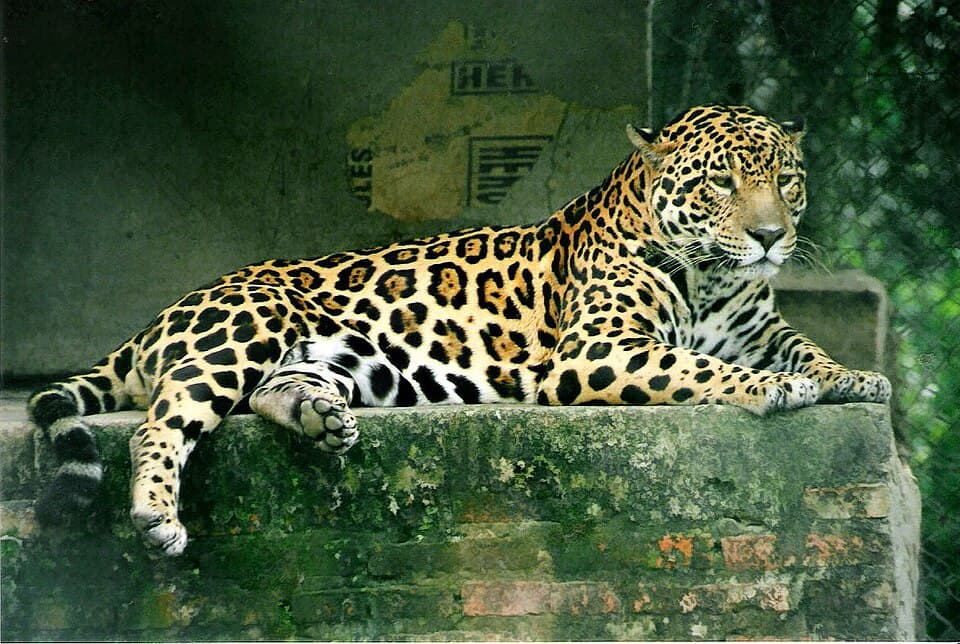
Photo: Lea Maimone · CC BY-SA 2.5 · via Wikimedia Commons
Overview
The jaguar is the largest big cat in the Americas and the only living member of the genus Panthera found in the New World, prowling the rainforests of Central and South America.
Appearance
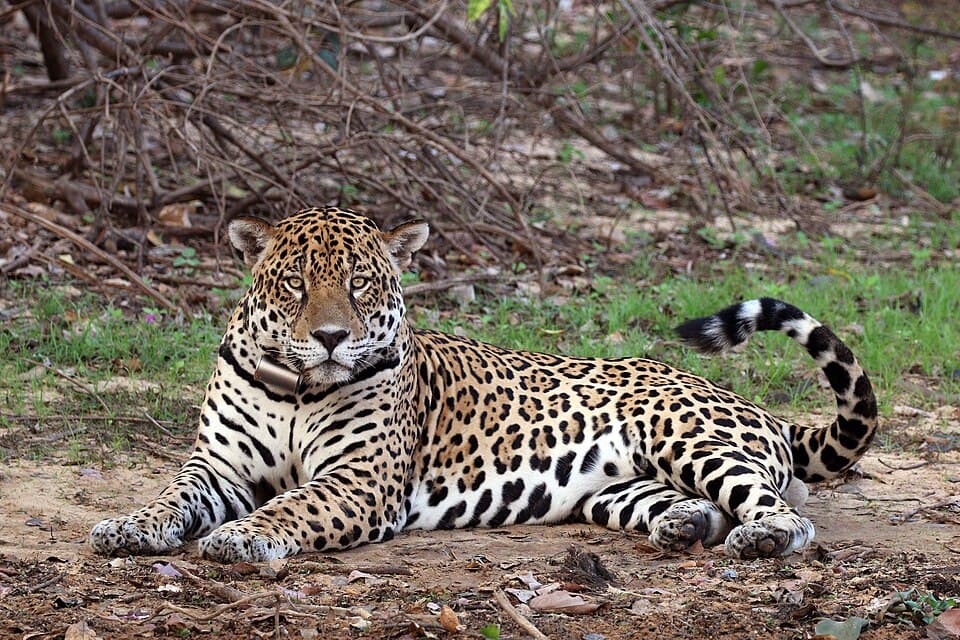
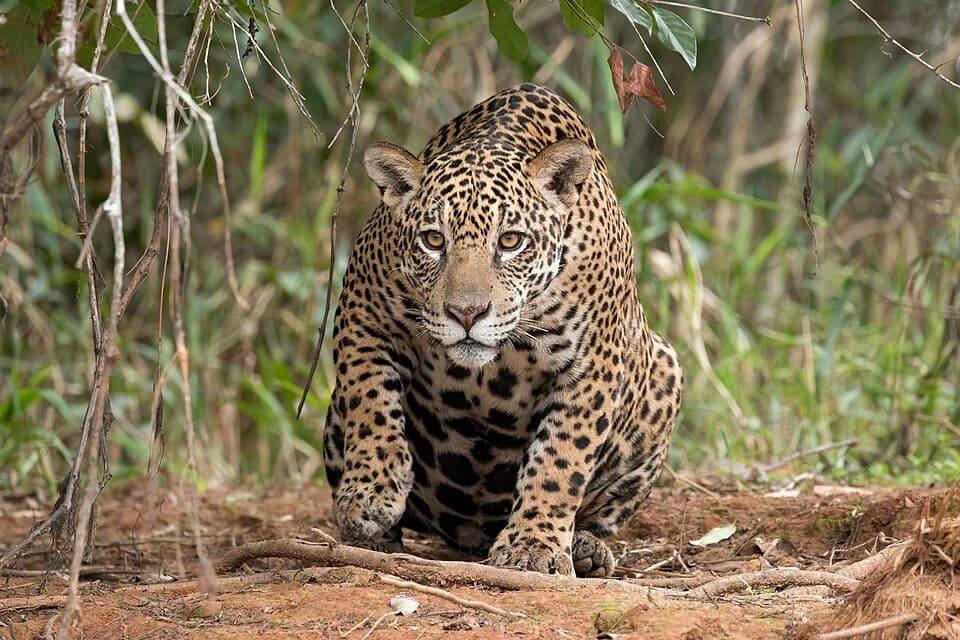
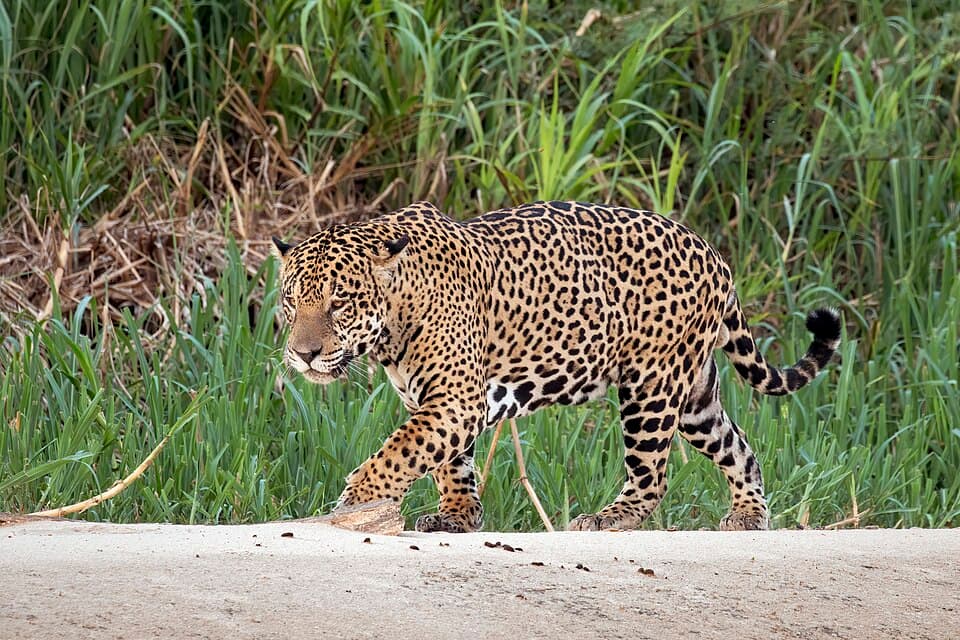
It has a muscular golden-yellow coat covered in distinctive rosette-shaped black spots with a dot in the center, denser and stockier than a leopard.
Habitat & Distribution
The jaguar is found in rainforest, wetlands habitats.
Diet & Behavior
Diet: Carnivore — Meat-eating animals that hunt, scavenge, or fish for prey, ranging from big cats to snakes and birds of prey.
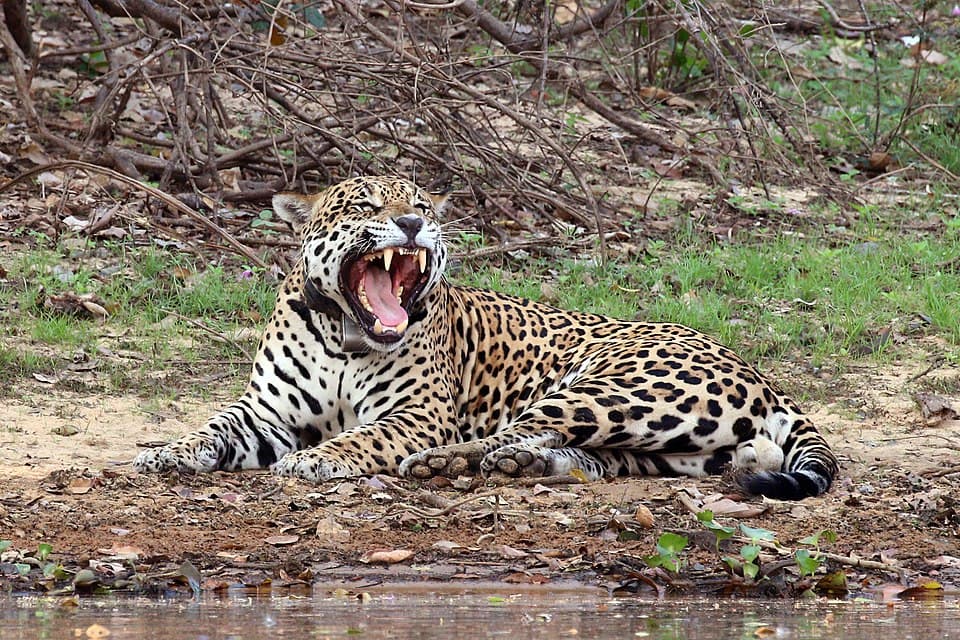
Unlike most big cats, jaguars are strong swimmers that readily enter water to hunt, and possess the strongest bite force relative to body size of any big cat, able to pierce turtle shells and crocodilian skulls.
Predators
- Humans
Prey
- Capybara
- Caiman
- Deer
- Peccary
Interesting Facts
- 1
A jaguar's bite is strong enough to pierce a turtle's shell or a caiman's skull.
- 2
Unlike most cats, jaguars actively enjoy swimming and often hunt in water.
- 3
Its name is thought to come from an indigenous word meaning 'he who kills with one leap'.
Gallery
Jaguar FAQs
What does a jaguar eat?
The jaguar is a carnivore. Its diet includes capybara, caiman, deer, peccary.
Where does the jaguar live?
The jaguar is found in rainforest, wetlands habitats across south america and north america.
Is the jaguar endangered?
The jaguar has a conservation status of Near Threatened. Species that may become threatened in the near future without continued conservation attention.
How long do jaguars live?
A jaguar's typical lifespan is 12–15 years in the wild.
How fast can a jaguar run?
The jaguar can reach speeds of up to 80 km/h.
How much does a jaguar weigh?
An adult jaguar typically weighs 56–96 kg.