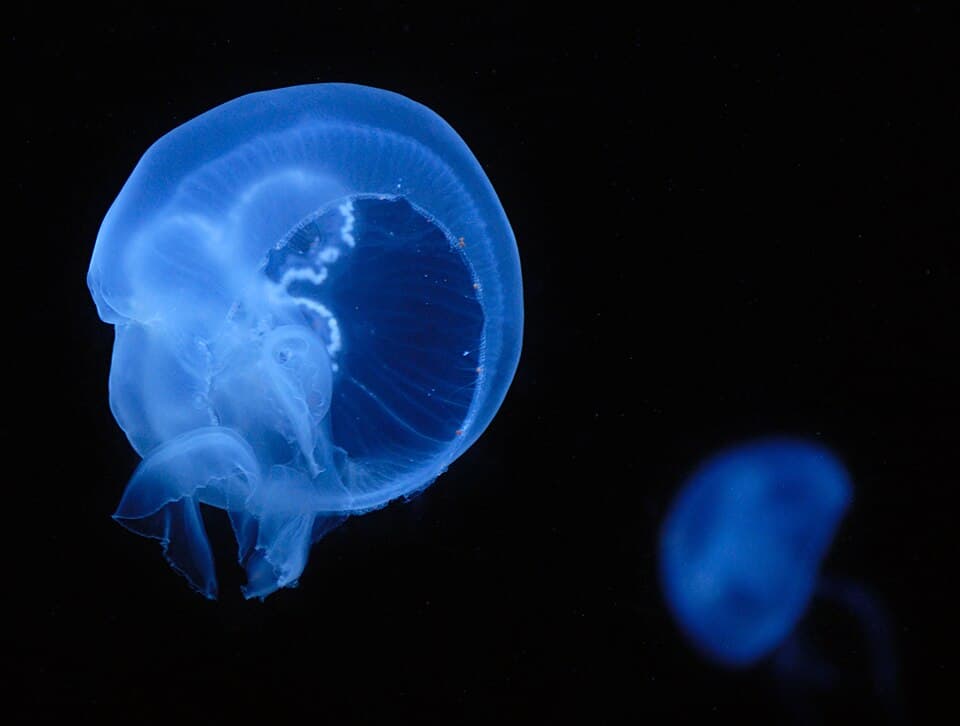
Photo: André Karwath aka Aka · CC BY-SA 2.5 · via Wikimedia Commons
Overview
The moon jellyfish is one of the most common and widely-distributed jellyfish species, drifting through coastal waters worldwide in large seasonal blooms.
Appearance
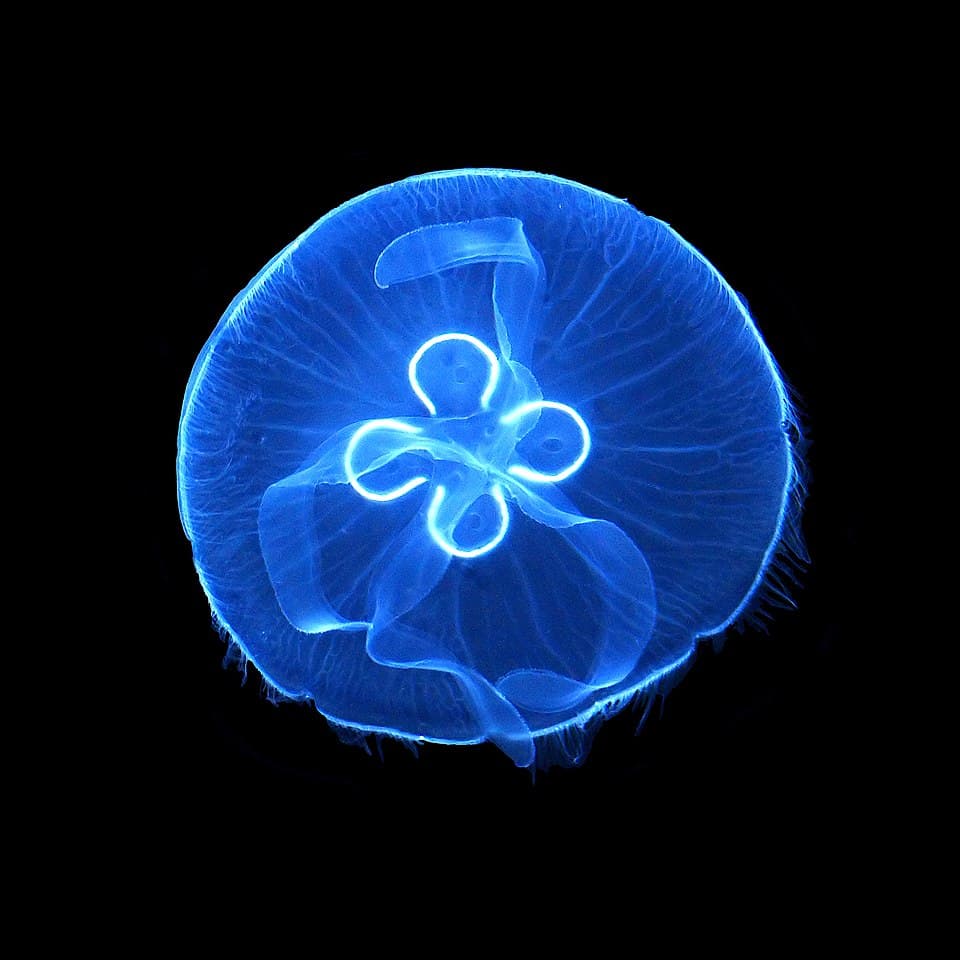
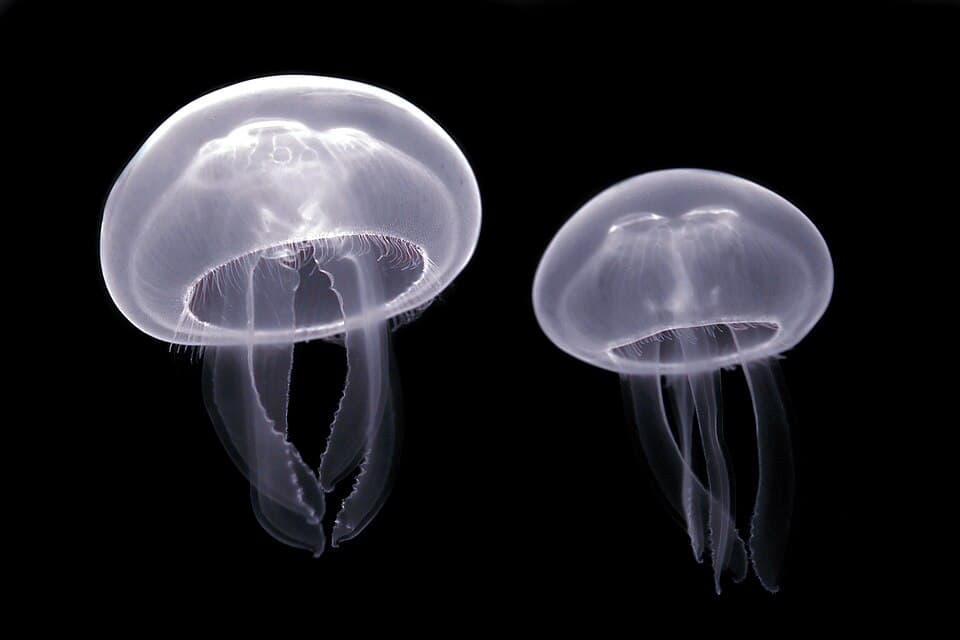
It has a translucent, saucer-shaped bell often tinged pale blue or pink, with four visible horseshoe-shaped reproductive organs and short fringed tentacles.
Habitat & Distribution
The moon jellyfish is found in ocean habitats.
Diet & Behavior
Diet: Carnivore — Meat-eating animals that hunt, scavenge, or fish for prey, ranging from big cats to snakes and birds of prey.
Moon jellyfish drift passively with ocean currents, pulsing their bell to move short distances, and feed by trapping plankton in mucus on their bell surface.
Predators
- Sea turtle
- Ocean sunfish
- Larger jellyfish
Prey
- Plankton
- Small fish
- Fish eggs
Interesting Facts
- 1
Moon jellyfish are made of roughly 95% water.
- 2
They have no brain, heart, or blood, only a simple nerve net.
- 3
Their sting is mild and generally harmless to humans.
Gallery

Moon Jellyfish FAQs
What does a moon jellyfish eat?
The moon jellyfish is a carnivore. Its diet includes plankton, small fish, fish eggs.
Where does the moon jellyfish live?
The moon jellyfish is found in ocean habitats across europe, north america, and asia.
Is the moon jellyfish endangered?
The moon jellyfish has a conservation status of Least Concern. Widespread and abundant species that are not currently at significant risk of extinction.
How long do moon jellyfishs live?
A moon jellyfish's typical lifespan is 0.5–2 years in the wild.
How much does a moon jellyfish weigh?
An adult moon jellyfish typically weighs 0.1–0.5 kg.