Overview
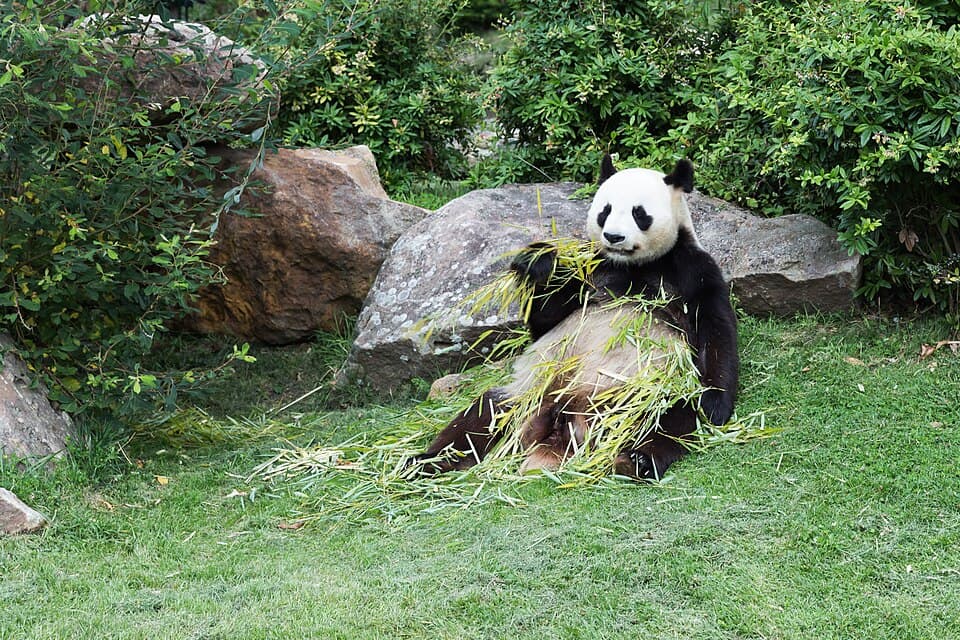
The giant panda is a bear native to a handful of mountain forest ranges in central China, primarily in Sichuan province, famous worldwide for a diet made up almost entirely of bamboo despite retaining the short digestive tract of a carnivore. Because that digestive system extracts relatively little energy from tough, fibrous bamboo, pandas must eat enormous quantities to survive, spending up to 12 hours a day feeding and consuming as much as 38kg of bamboo in a single day. Long a symbol of Chinese culture and a fixture of international 'panda diplomacy,' the species was reclassified from Endangered to Vulnerable by the IUCN in 2016 after decades of habitat protection and captive-breeding programs helped stabilize its wild population — one of conservation's clearer recent success stories, even as bamboo forest fragmentation remains an ongoing threat.
Appearance
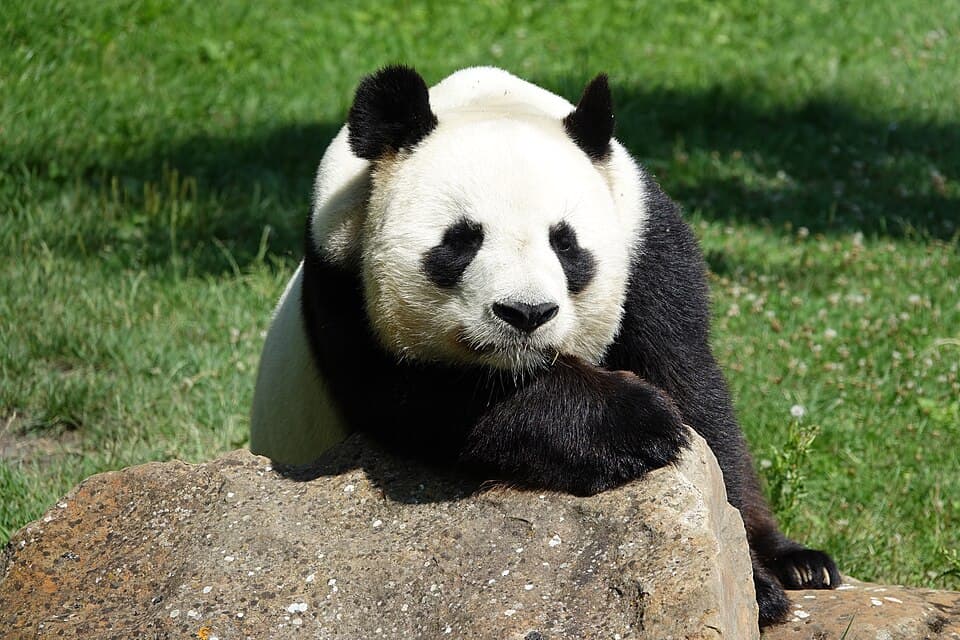
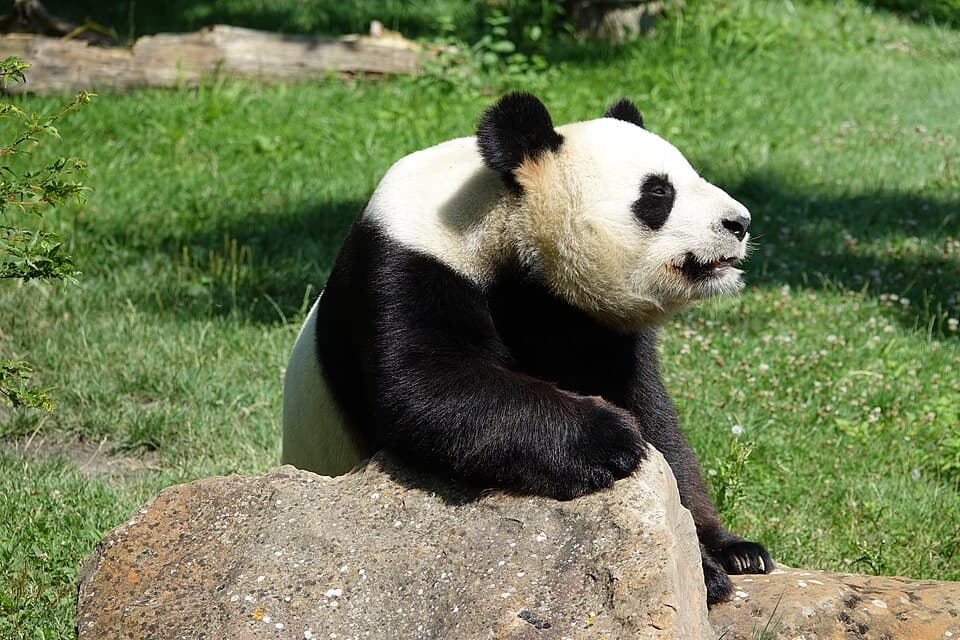
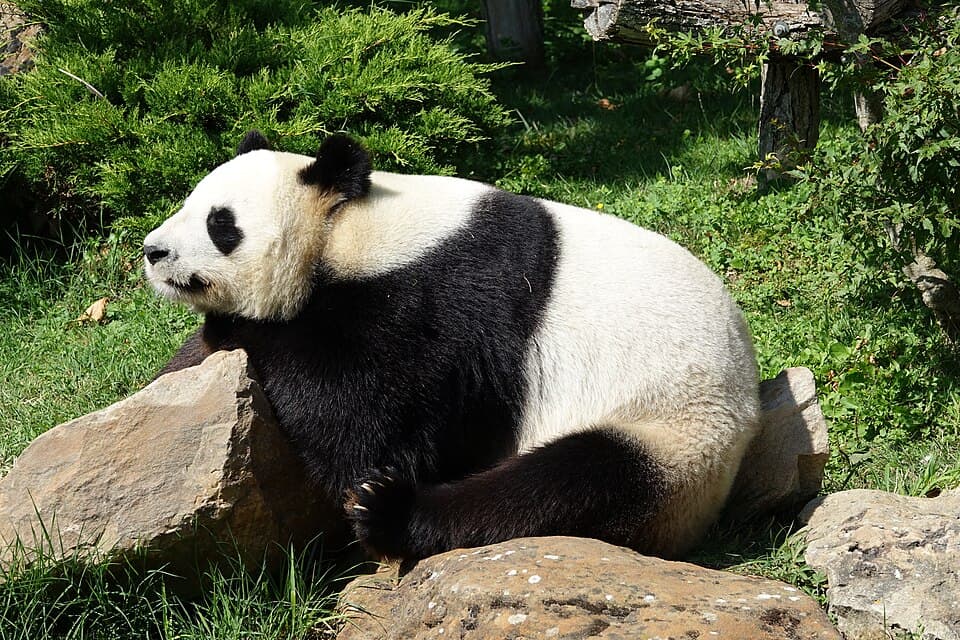
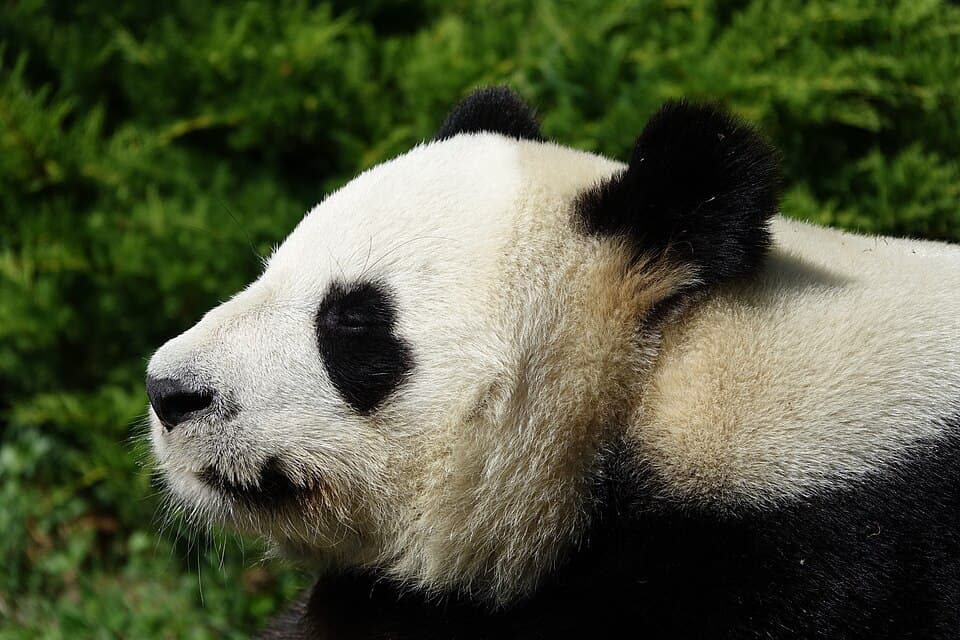
It has a distinctive black-and-white coat, with black patches around the eyes, ears, and across the shoulders and legs standing out against otherwise white fur — a pattern researchers believe serves multiple purposes, from camouflage in the dappled light and snow of its forest habitat to signaling aggression or ownership to other pandas at a distance. Adults typically weigh 70 to 125kg and measure roughly 1.2 to 1.9 meters in length. Its most distinctive anatomical feature is a modified wrist bone, sometimes called a 'pseudo-thumb,' which functions much like an opposable digit and lets it grip bamboo stalks with surprising precision despite lacking a true thumb.
Habitat & Distribution
The giant panda is found in forest, mountain habitats.
Diet & Behavior
Diet: Herbivore — Plant-eating animals that graze or browse on grasses, leaves, and other vegetation, from tiny insects to giant elephants.
Pandas spend most of their waking hours eating, are largely solitary outside of a brief breeding window each spring, and mark their forest territory with scent rather than actively defending it through confrontation. Reproduction is unusually difficult for the species: females are fertile for only two to three days a year, which was a major obstacle for early captive-breeding programs before hormone-monitoring techniques improved success rates. A newborn cub is astonishingly small relative to its mother — pink, blind, and roughly 1/900th of her body weight — and depends entirely on her care for its first year, since panda mothers raise cubs alone.
Predators
- Leopard
- Jackal (cubs)
Prey
This species does not prey on other animals.
Interesting Facts
- 1
A panda can eat up to 12 hours a day and consume 12–38kg of bamboo.
- 2
Despite eating mostly plants, a panda's digestive system is that of a carnivore.
- 3
Newborn pandas are pink, blind, and roughly the size of a stick of butter.
- 4
China has loaned pandas to zoos worldwide for decades as a form of soft-power diplomacy known as 'panda diplomacy.'
- 5
In 2016, the IUCN reclassified giant pandas from Endangered to Vulnerable — one of conservation's clearer recent success stories.
Gallery
Giant Panda FAQs
Why do pandas eat bamboo despite having a carnivore's digestive system?
Giant pandas evolved from bear ancestors that were carnivorous, and their digestive tract is still short and simple like a meat-eater's, extracting relatively little energy from tough plant fiber. To compensate, they eat huge volumes of bamboo — up to 38kg a day — and spend most of their waking hours feeding.
Are giant pandas still endangered?
No — the IUCN reclassified giant pandas from Endangered to Vulnerable in 2016, after decades of habitat protection and captive-breeding programs helped their wild population grow. They still face ongoing threats from bamboo forest fragmentation.
Where do giant pandas live in the wild?
Wild giant pandas are found only in a handful of mountain forest ranges in central China, primarily in Sichuan province, at elevations where bamboo grows abundantly.
Why are panda cubs so small at birth?
Giant panda cubs are born after a very short gestation relative to the mother's size, at roughly 1/900th of her body weight — pink, blind, and hairless. This unusual size gap is one of the most extreme birth-weight ratios of any placental mammal.
What does a giant panda eat?
The giant panda is a herbivore. Plant-eating animals that graze or browse on grasses, leaves, and other vegetation, from tiny insects to giant elephants.
Where does the giant panda live?
The giant panda is found in forest, mountain habitats across asia.
Is the giant panda endangered?
The giant panda has a conservation status of Vulnerable. Species facing a high risk of extinction in the wild due to habitat loss, hunting, or other pressures.
How long do giant pandas live?
A giant panda's typical lifespan is 20–30 years in the wild.
How much does a giant panda weigh?
An adult giant panda typically weighs 70–125 kg.