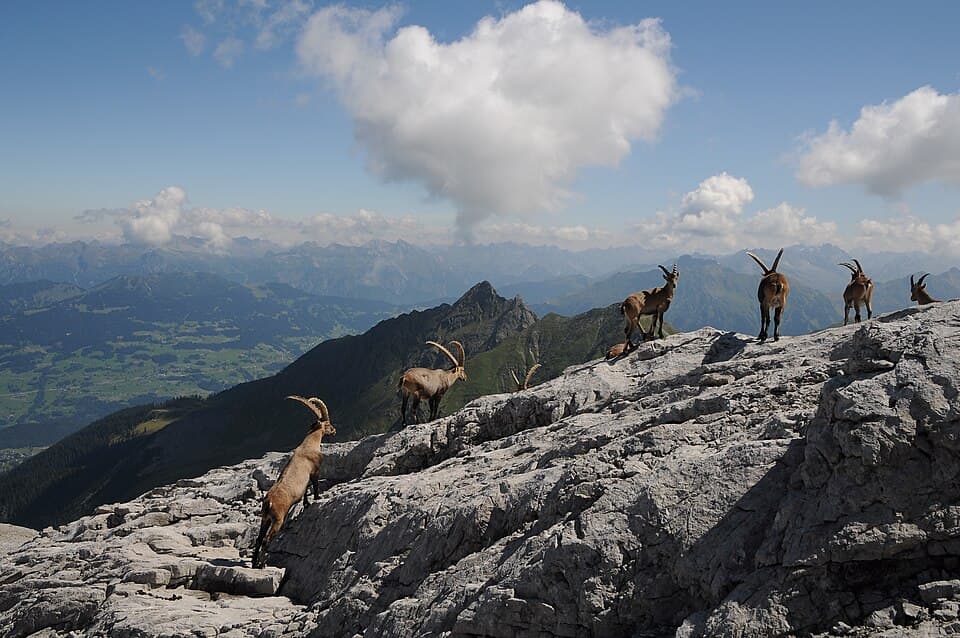
Photo: böhringer friedrich · CC BY-SA 2.5 · via Wikimedia Commons
Overview
The Alpine ibex is a wild goat species famous for its massive, ridged, backward-curving horns and remarkable ability to scale near-vertical cliff faces in the mountains of the European Alps. Once hunted to near extinction, the entire modern population descends from a small group protected in a single Italian nature reserve in the 19th century.
Appearance
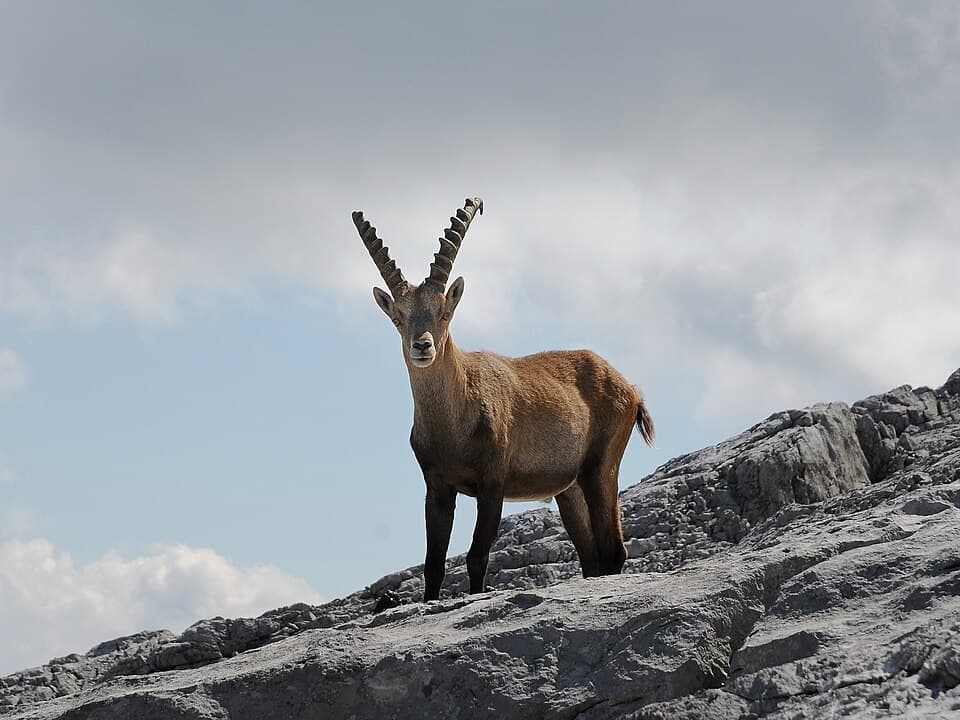
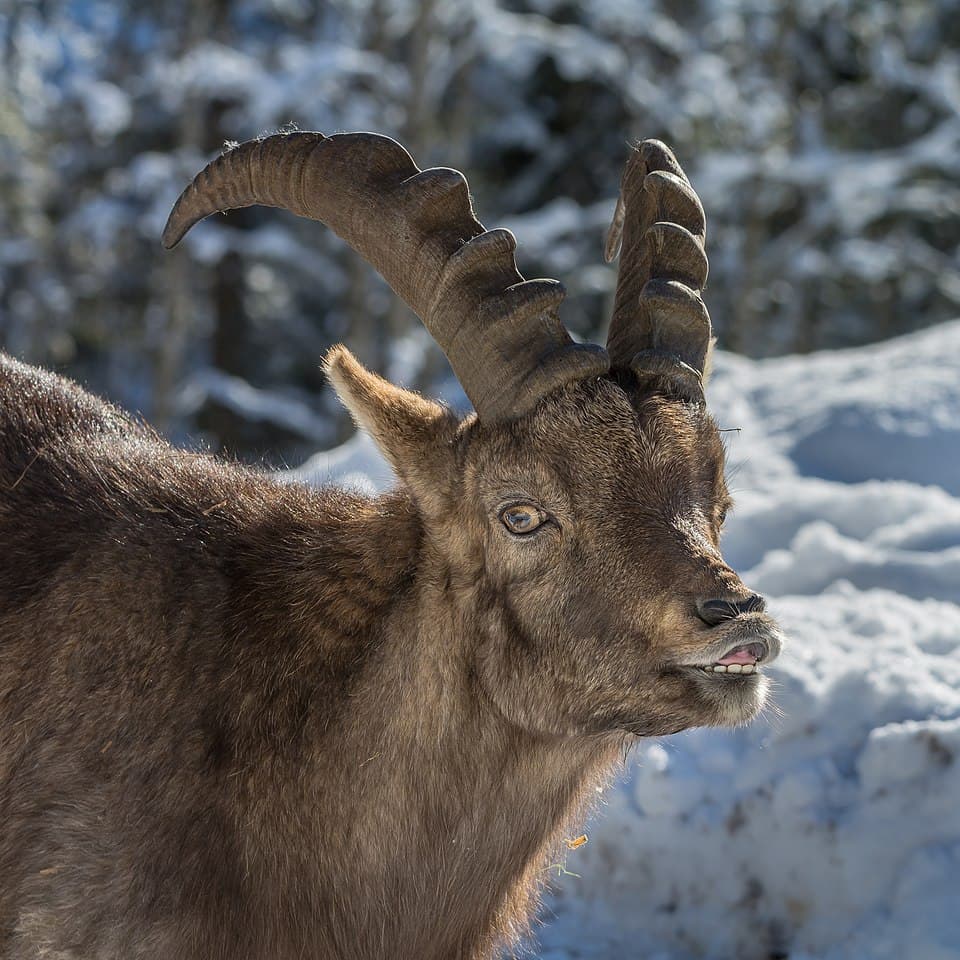
Males carry enormous curved horns that can grow over a meter long, ringed with pronounced ridges that researchers use to estimate age, while females have much shorter, thinner horns. Its compact, muscular body and specialized hooves, with a hard outer rim and soft, grippy center, are built for climbing steep, rocky terrain most other large mammals couldn't safely navigate.
Habitat & Distribution
The ibex is found in mountain habitats.
Diet & Behavior
Diet: Herbivore — Plant-eating animals that graze or browse on grasses, leaves, and other vegetation, from tiny insects to giant elephants.
Ibex are exceptional climbers, capable of scaling near-vertical dam walls and cliff faces to reach mineral deposits or escape predators, a skill that has made footage of the behavior widely shared online. Males compete for mating rights through dramatic head-butting clashes during the autumn rut, using their massive horns to test each other's strength.
Predators
- Wolves
- Golden eagles (young)
- Lynx
Prey
This species does not prey on other animals.
Interesting Facts
- 1
Ibex are capable of climbing near-vertical surfaces, including dam walls, to reach mineral-rich rock.
- 2
A male's horns can grow over a meter long and are ringed with growth marks researchers use to estimate its age.
- 3
Every Alpine ibex alive today descends from a small population protected in Italy's Gran Paradiso National Park after the species was hunted to near extinction.
- 4
Their hooves have a hard outer rim and a soft, grippy center, giving them exceptional traction on steep rock.
- 5
Males compete for mates through dramatic head-butting battles during the autumn breeding season.
Gallery
Ibex FAQs
Why do ibex climb such steep terrain?
Ibex climb steep cliffs and even dam walls to reach mineral deposits in the rock that supplement their diet, and steep terrain also helps them evade predators that can't follow them onto such precarious footing.
How did the Alpine ibex almost go extinct?
Centuries of hunting for its meat, horns, and body parts once believed to have medicinal properties reduced the Alpine ibex to a single surviving population, protected in what is now Italy's Gran Paradiso National Park.
How big are an ibex's horns?
A mature male's horns can grow to over a meter in length, ridged with growth rings that researchers use to estimate the animal's age.
What do ibex eat?
Ibex are herbivores that graze on alpine grasses, herbs, and shrubs found on the mountain slopes and meadows where they live.
What does a ibex eat?
The ibex is a herbivore. Plant-eating animals that graze or browse on grasses, leaves, and other vegetation, from tiny insects to giant elephants.
Where does the ibex live?
The ibex is found in mountain habitats across europe.
Is the ibex endangered?
The ibex has a conservation status of Least Concern. Widespread and abundant species that are not currently at significant risk of extinction.
How long do ibexs live?
A ibex's typical lifespan is 14–22 years in the wild.
How much does a ibex weigh?
An adult ibex typically weighs 40–120 kg.