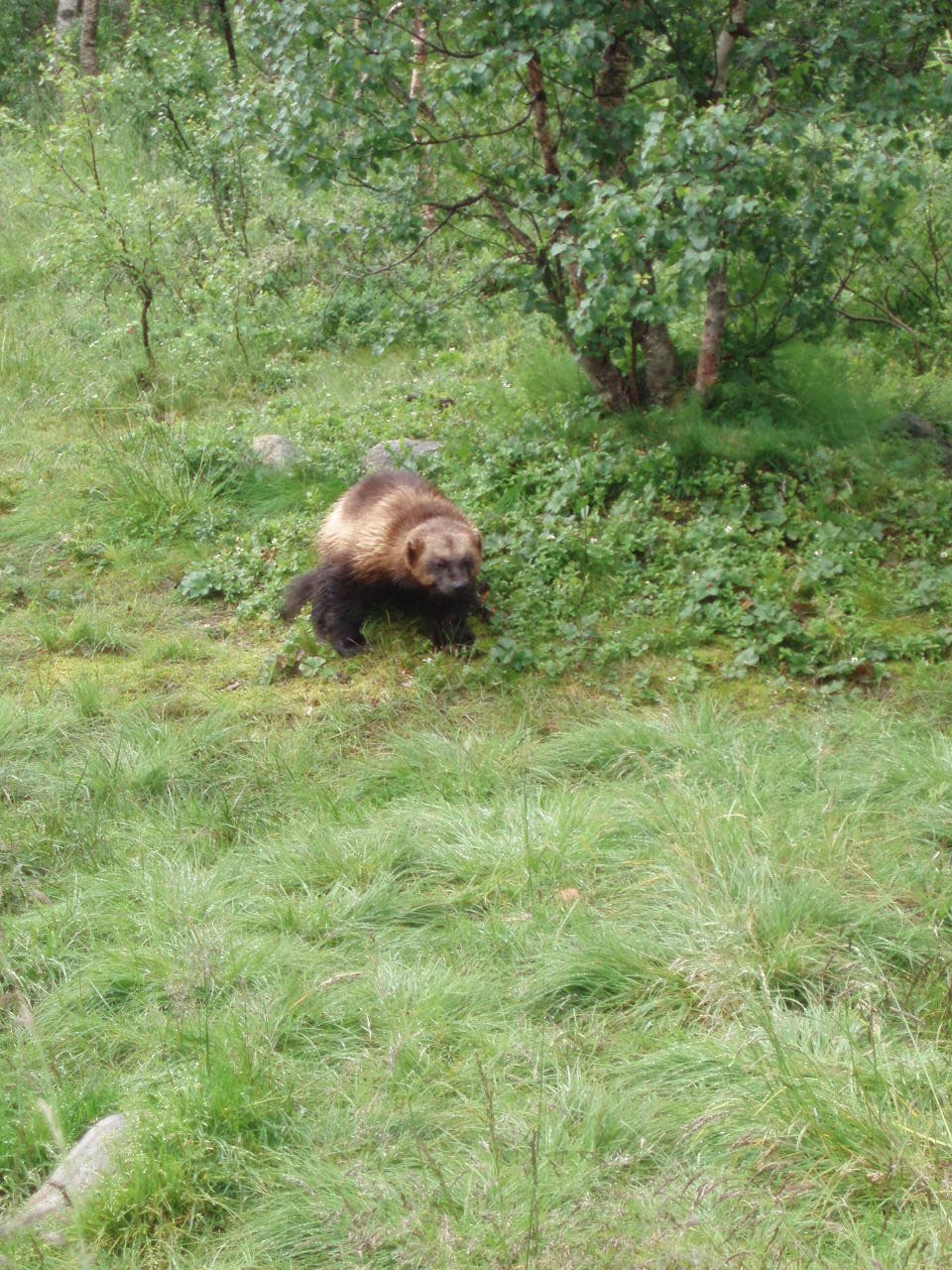
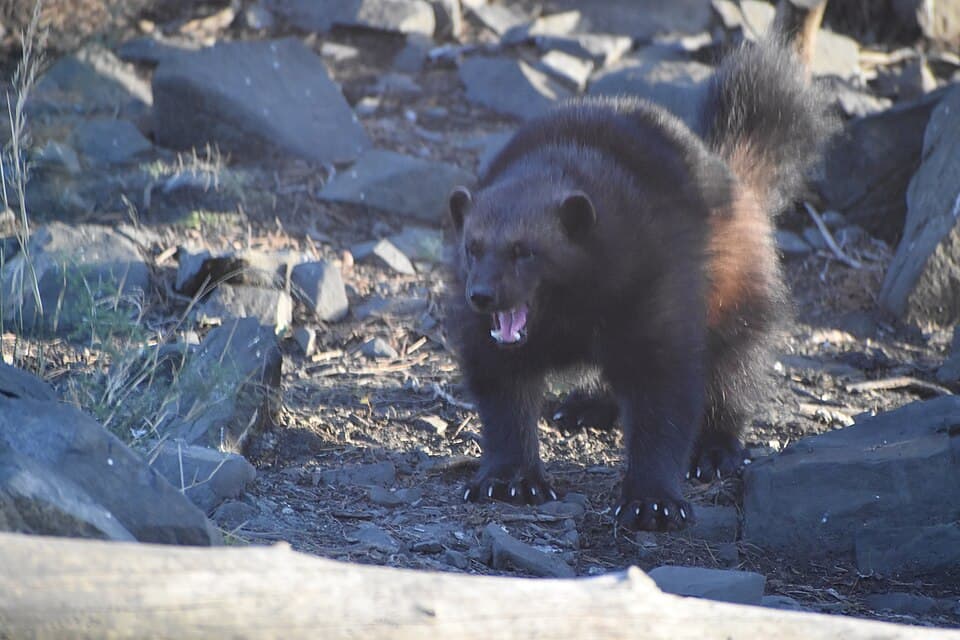
Photo: Hans-Petter Fjeld · CC BY-SA 2.5 · via Wikimedia Commons
Overview
The wolverine is the largest land-dwelling member of the weasel family, a solitary and famously tenacious predator and scavenger of far northern forests and tundra. Despite its bear-like appearance, it is much smaller than its reputation suggests, roughly the size of a medium dog, but is capable of driving much larger animals like wolves away from a carcass.
Appearance
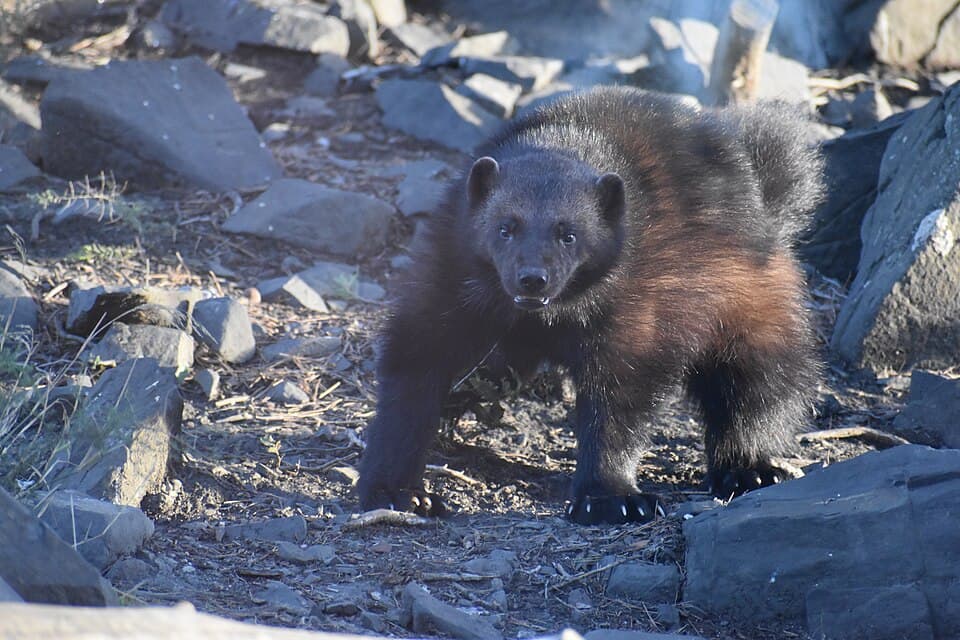
It has a stocky, muscular body covered in thick, oily dark brown fur with lighter tan stripes running along its sides, short legs, and large paws with curved claws suited to digging through snow and climbing. Its fur is notably frost-resistant, which made it historically valued for lining cold-weather clothing hoods.
Habitat & Distribution
The wolverine is found in forest, arctic, mountain habitats.
Diet & Behavior
Diet: Carnivore — Meat-eating animals that hunt, scavenge, or fish for prey, ranging from big cats to snakes and birds of prey.
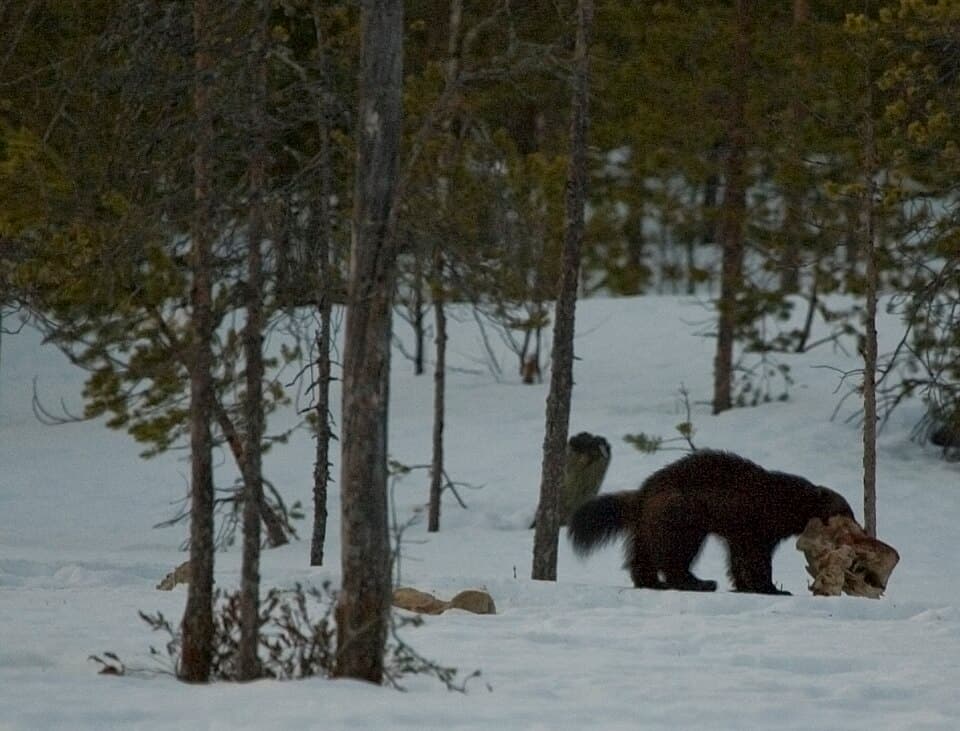
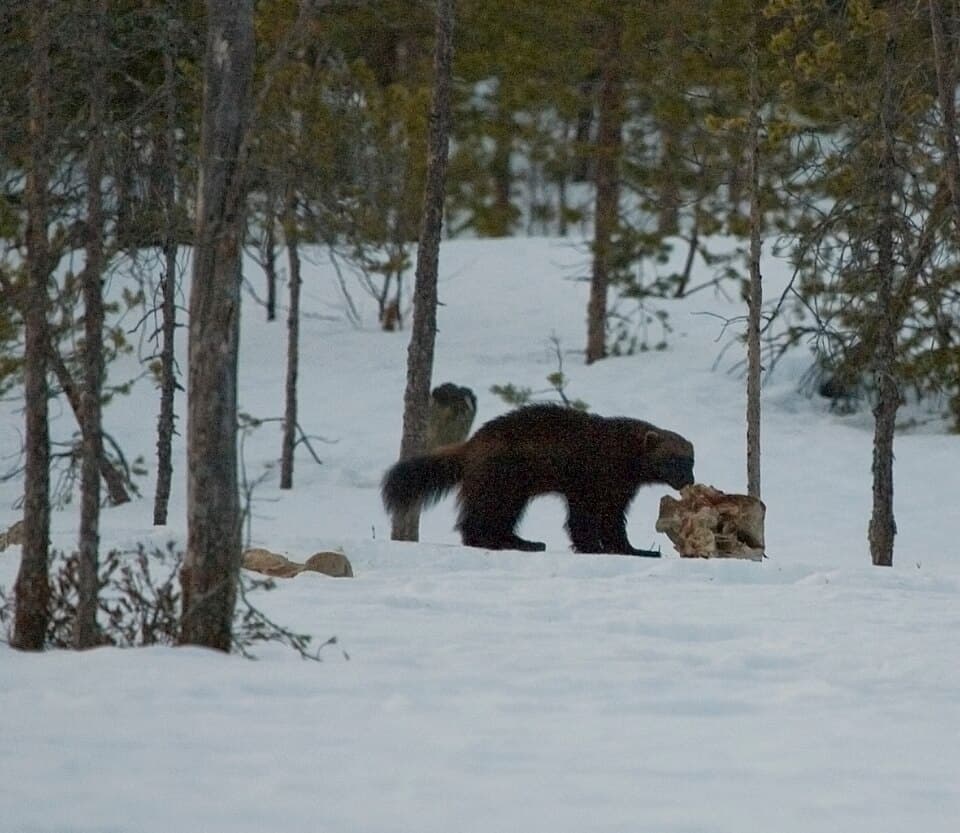
Wolverines are solitary animals that roam enormous home ranges in search of food, using an extremely powerful sense of smell to locate carrion buried under deep snow. They are known for remarkable strength and tenacity relative to their size, capable of taking down prey as large as caribou when weakened by deep snow, and famously willing to defend a kill even against much larger predators.
Predators
- Wolves
- Bears
- Humans
Prey
- Carrion
- Small mammals
- Birds
- Occasionally larger prey like caribou
Interesting Facts
- 1
Despite its bear-like look, the wolverine is actually the largest land-dwelling member of the weasel family.
- 2
A single wolverine can roam a home range covering hundreds of square kilometers in search of food.
- 3
Its fur resists frost, which historically made it valued for lining the hoods of cold-weather clothing.
- 4
Wolverines have been known to drive wolves and even bears away from a carcass despite being much smaller.
- 5
They can smell carrion buried under several meters of snow, letting them find food other predators can't detect.
Gallery
Wolverine FAQs
Is a wolverine related to a bear?
No -- despite its bear-like appearance, the wolverine is actually the largest land-dwelling member of the weasel family, more closely related to otters and badgers than to bears.
How strong is a wolverine really?
Wolverines are famously strong and tenacious relative to their size, capable of driving much larger animals like wolves away from a kill and even taking down prey many times their own weight when conditions favor them.
Where do wolverines live?
Wolverines live across the far northern forests, mountains, and tundra of North America, Europe, and Asia, favoring remote, cold regions with deep, persistent snow.
What do wolverines eat?
Wolverines are opportunistic carnivores that mainly scavenge carrion, especially in winter, but also hunt small mammals and birds and occasionally take down larger prey weakened by deep snow.
What does a wolverine eat?
The wolverine is a carnivore. Its diet includes carrion, small mammals, birds, occasionally larger prey like caribou.
Where does the wolverine live?
The wolverine is found in forest, arctic, mountain habitats across north america, europe, and asia.
Is the wolverine endangered?
The wolverine has a conservation status of Least Concern. Widespread and abundant species that are not currently at significant risk of extinction.
How long do wolverines live?
A wolverine's typical lifespan is 7–12 years in the wild.
How much does a wolverine weigh?
An adult wolverine typically weighs 9–25 kg.