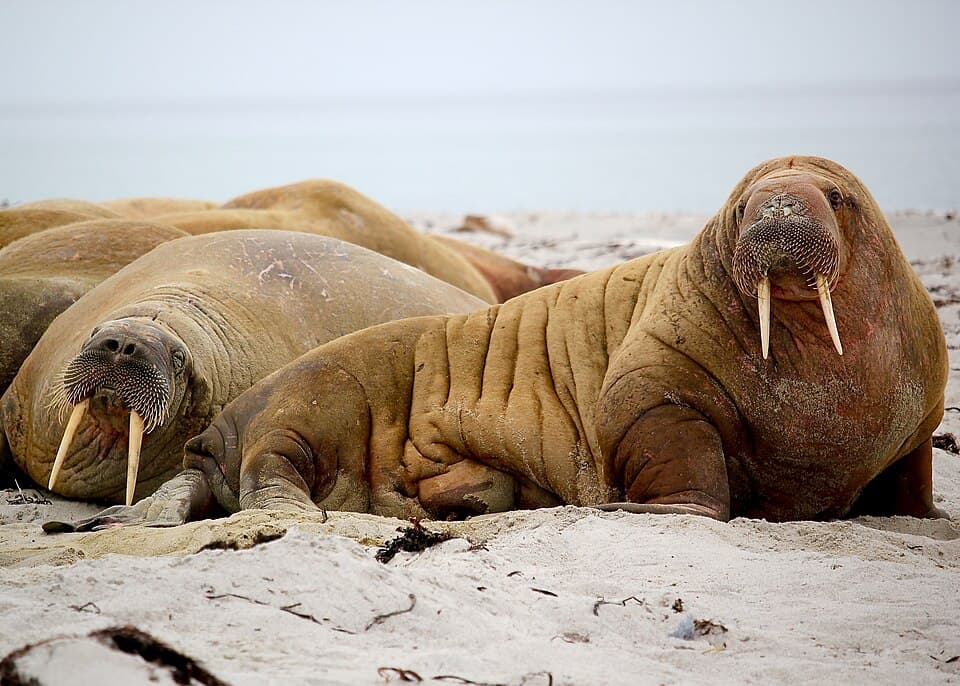
Photo: Jay Ruzesky · CC0 · via Wikimedia Commons
Overview
The walrus is a massive Arctic marine mammal easily identified by its long ivory tusks, thick blubber layer, and distinctive whiskered snout.
Appearance
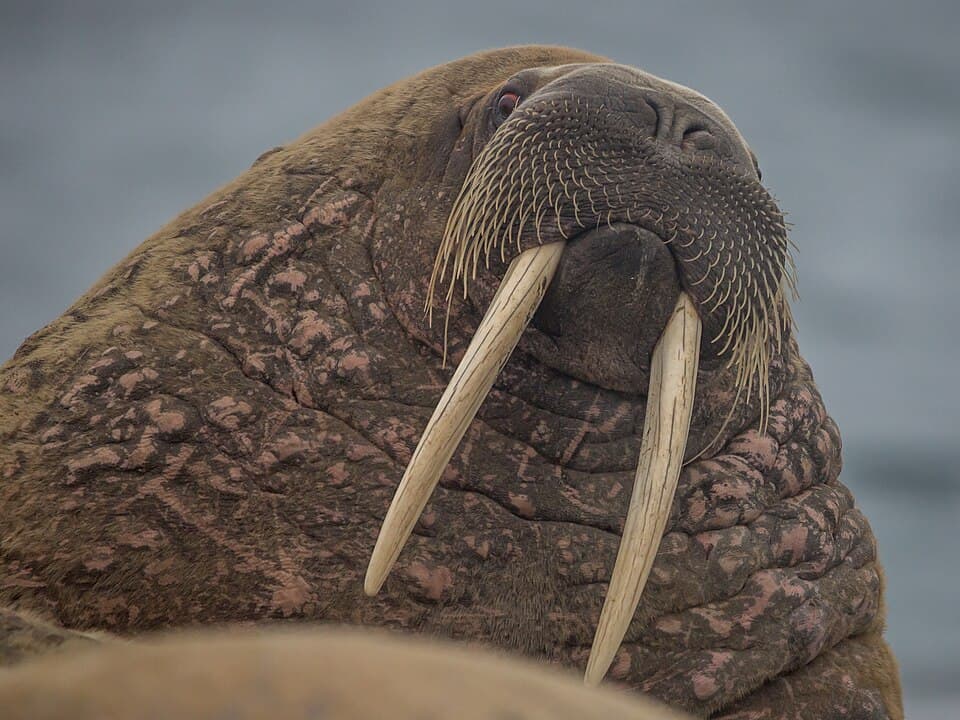
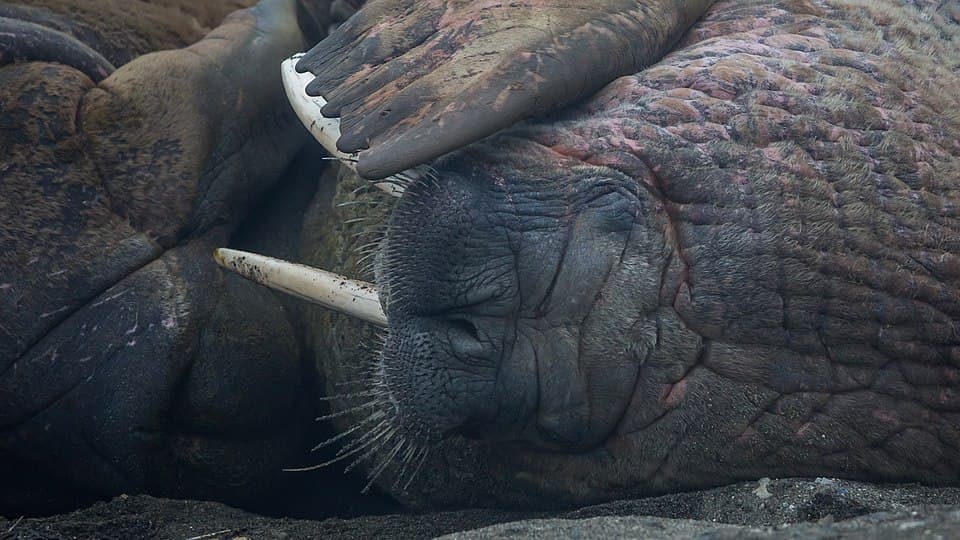
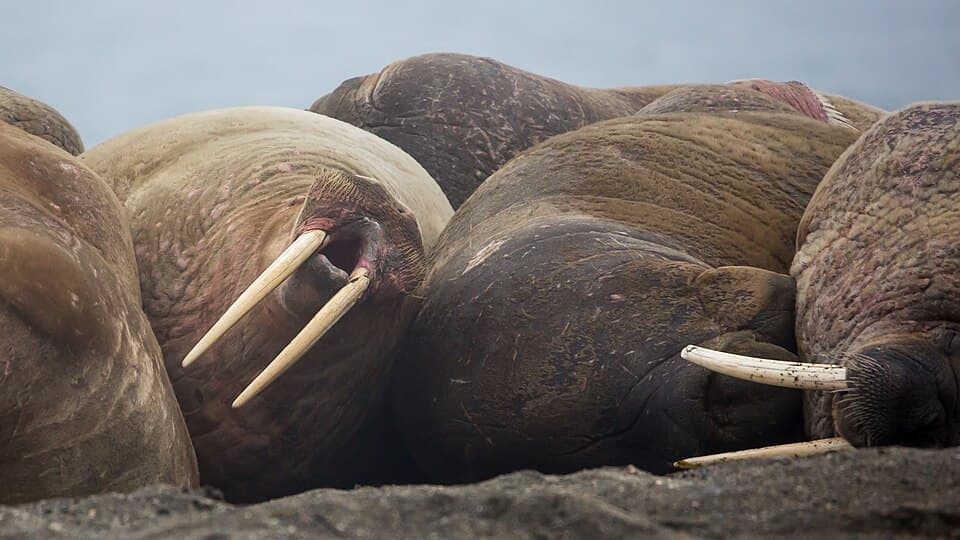
It has a thick, wrinkled brown-pink body, long white tusks present in both sexes, and a broad muzzle covered in stiff whiskers.
Habitat & Distribution
The walrus is found in arctic, ocean habitats.
Diet & Behavior
Diet: Carnivore — Meat-eating animals that hunt, scavenge, or fish for prey, ranging from big cats to snakes and birds of prey.
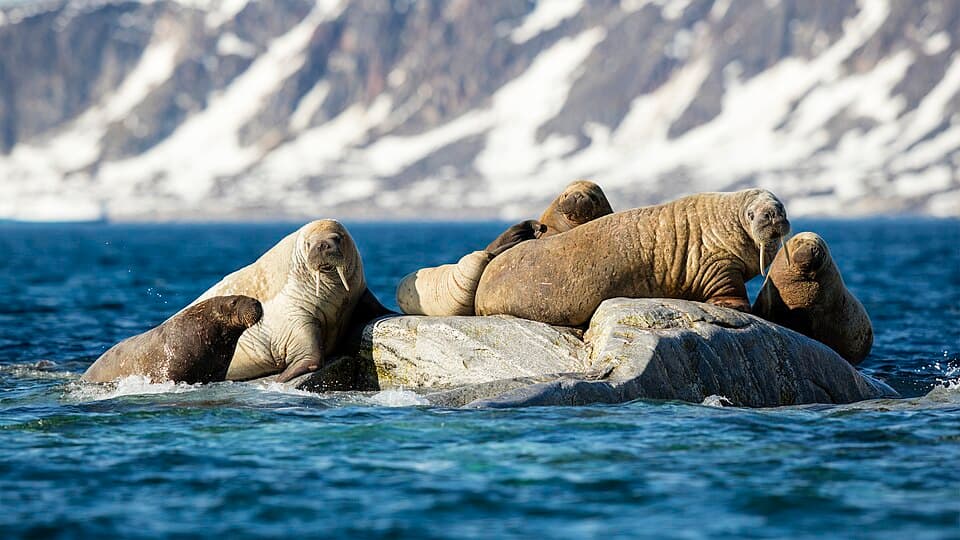
Walruses use their sensitive whiskers to locate shellfish on the dark seafloor, and haul out onto ice or rocky shores in large, noisy social groups.
Predators
- Orca
- Polar bear
Prey
- Clams
- Mussels
- Snails
Interesting Facts
- 1
Both male and female walruses grow long tusks, which are actually elongated canine teeth.
- 2
Sensitive whiskers, called vibrissae, help it find shellfish buried in the dark seafloor.
- 3
Walruses can slow their heart rate to withstand icy Arctic water.
Gallery
Walrus FAQs
What does a walrus eat?
The walrus is a carnivore. Its diet includes clams, mussels, snails.
Where does the walrus live?
The walrus is found in arctic, ocean habitats across north america, europe, and asia.
Is the walrus endangered?
The walrus has a conservation status of Vulnerable. Species facing a high risk of extinction in the wild due to habitat loss, hunting, or other pressures.
How long do walruss live?
A walrus's typical lifespan is 20–30 years in the wild.
How much does a walrus weigh?
An adult walrus typically weighs 800–1,700 kg.