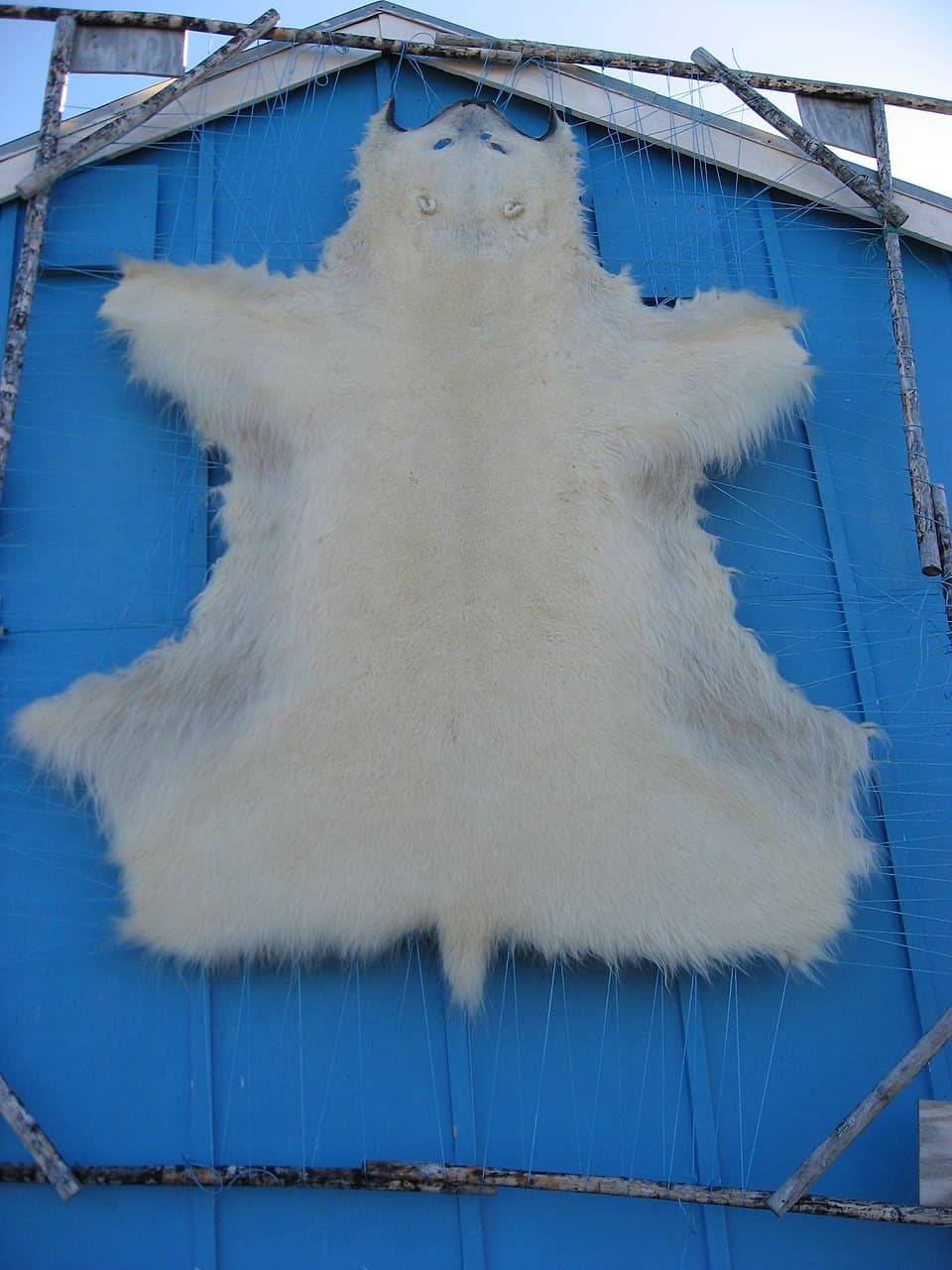
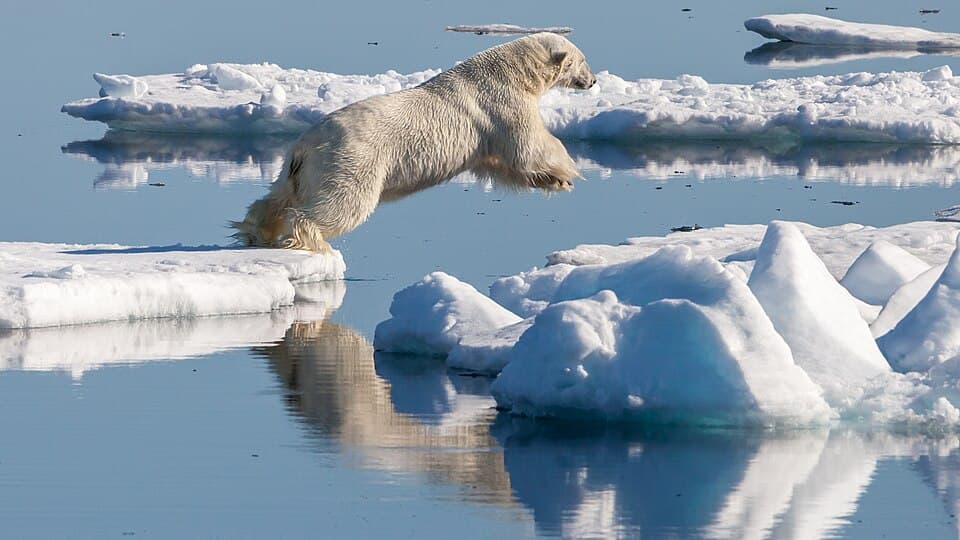
Photo: Kim Hansen · CC BY-SA 3.0 · via Wikimedia Commons
Overview
The polar bear is the largest land carnivore on Earth, superbly adapted to hunting seals across the sea ice of the Arctic Circle.
Appearance
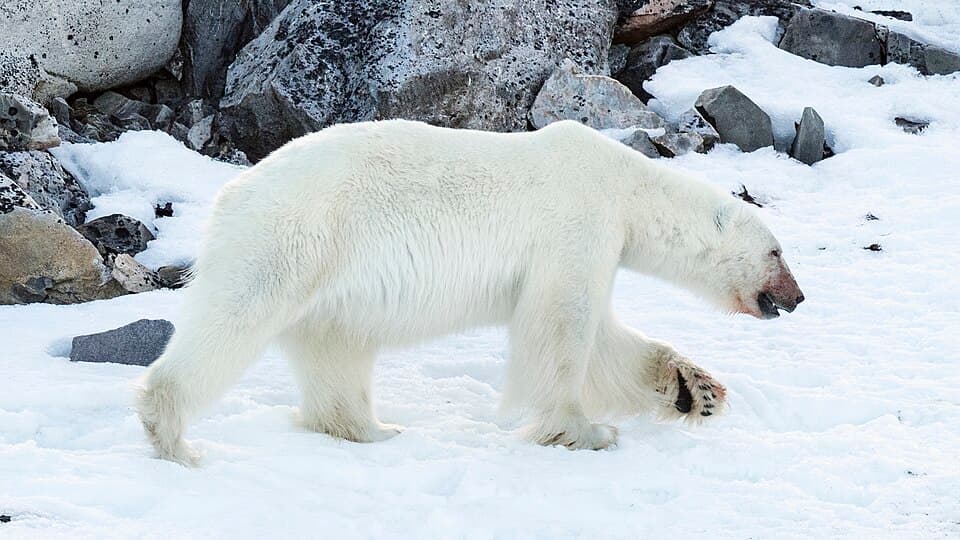
It has a thick coat of water-repellent fur that appears white but is actually translucent, concealing black skin underneath that helps absorb heat.
Habitat & Distribution
The polar bear is found in arctic, ocean habitats.
Diet & Behavior
Diet: Carnivore — Meat-eating animals that hunt, scavenge, or fish for prey, ranging from big cats to snakes and birds of prey.
Polar bears are powerful swimmers capable of covering long distances in open water, and rely almost entirely on sea ice as a platform to hunt seals.
Predators
- None (apex predator)
Prey
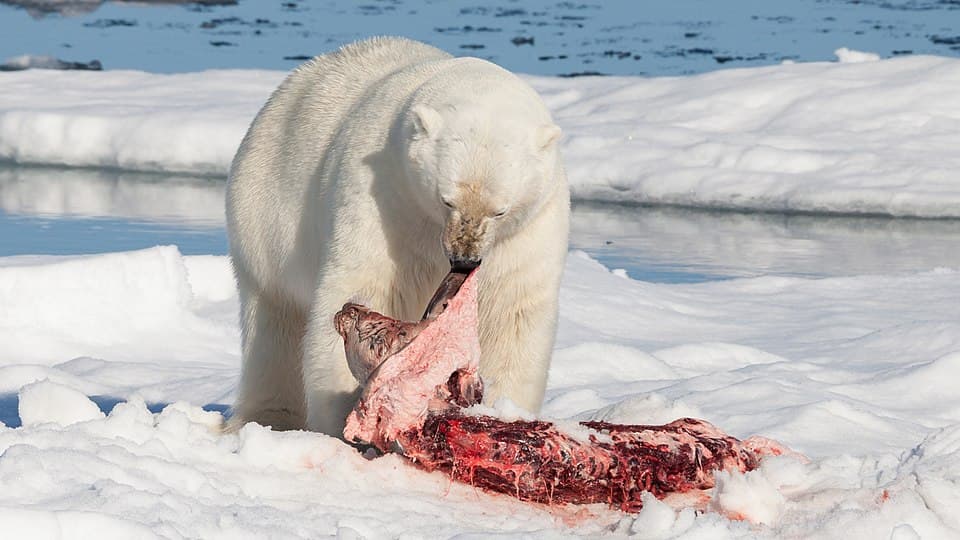
- Seal
- Fish
- Carrion
Interesting Facts
- 1
A polar bear's fur is translucent, not white — it only appears white by scattering light.
- 2
Underneath its fur, a polar bear's skin is actually black.
- 3
It can smell a seal's breathing hole in the ice from over a kilometer away.
Gallery
Polar Bear FAQs
What does a polar bear eat?
The polar bear is a carnivore. Its diet includes seal, fish, carrion.
Where does the polar bear live?
The polar bear is found in arctic, ocean habitats across north america, europe, and asia.
Is the polar bear endangered?
The polar bear has a conservation status of Vulnerable. Species facing a high risk of extinction in the wild due to habitat loss, hunting, or other pressures.
How long do polar bears live?
A polar bear's typical lifespan is 20–30 years in the wild.
How fast can a polar bear run?
The polar bear can reach speeds of up to 40 km/h.
How much does a polar bear weigh?
An adult polar bear typically weighs 300–700 kg.