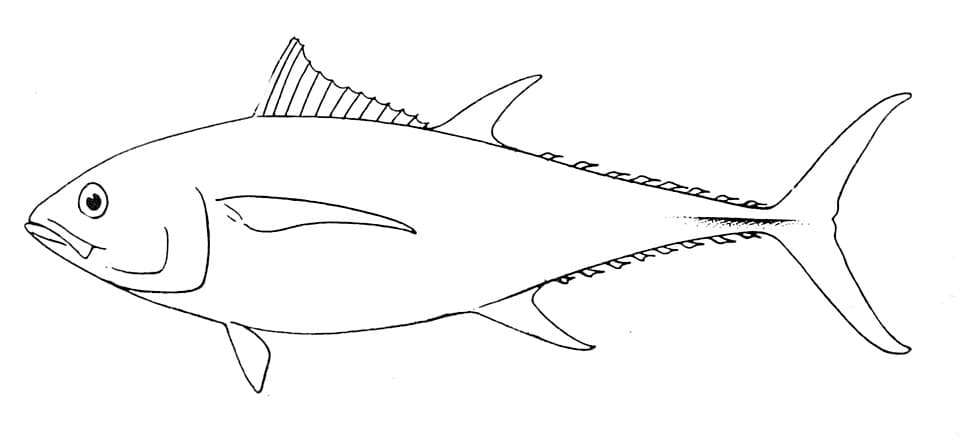
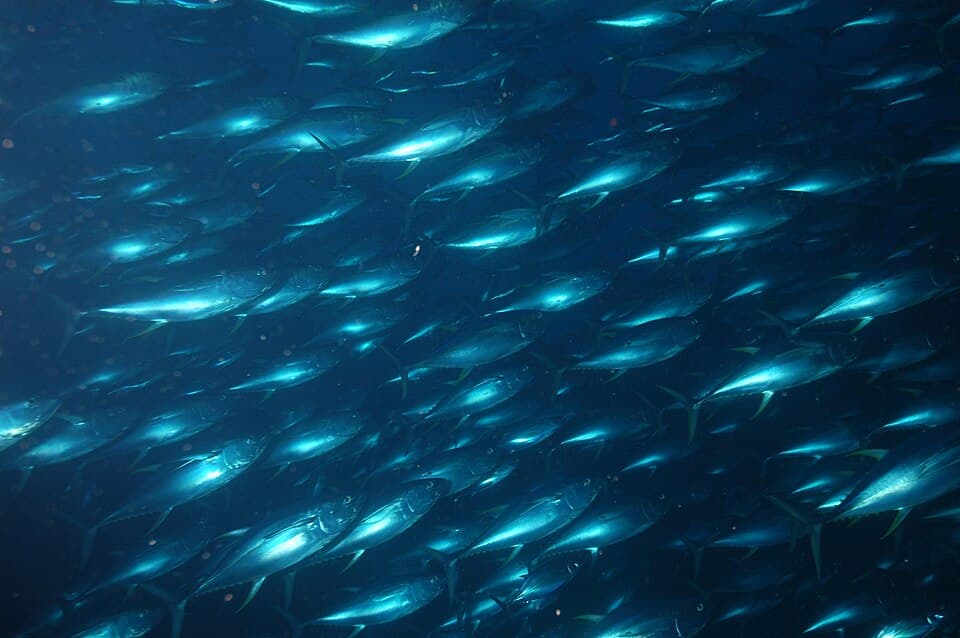
Photo: Unknown authorUnknown author · Public domain · via Wikimedia Commons
Overview
The yellowfin tuna is a large, fast-swimming fish found in tropical and subtropical waters across the world's oceans, prized both as one of the ocean's most powerful predators and as one of the most commercially important fish species for human consumption. Its name comes from the bright yellow coloring of its dorsal and anal fins, which become especially long and dramatic in mature adults.
Appearance
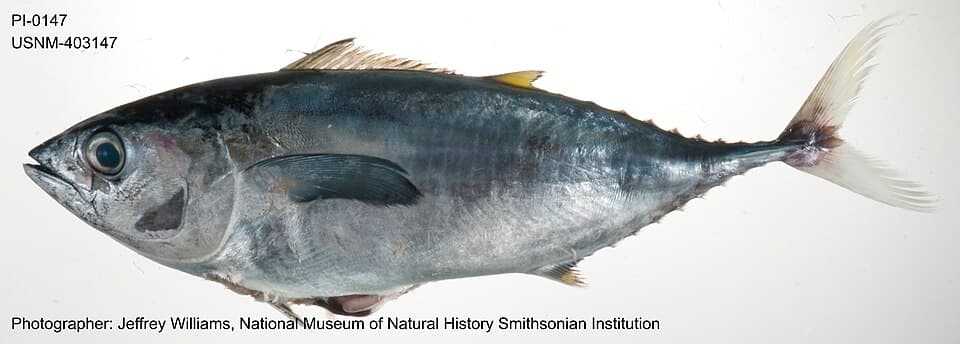
It has a streamlined, torpedo-shaped body built for speed, a metallic blue back fading to silver on the belly, and long, bright yellow dorsal and anal fins that sweep back nearly to the tail in large adults. A row of small yellow finlets runs along its back and belly between the main fins and tail.
Habitat & Distribution
The yellowfin tuna is found in ocean habitats.
Diet & Behavior
Diet: Carnivore — Meat-eating animals that hunt, scavenge, or fish for prey, ranging from big cats to snakes and birds of prey.
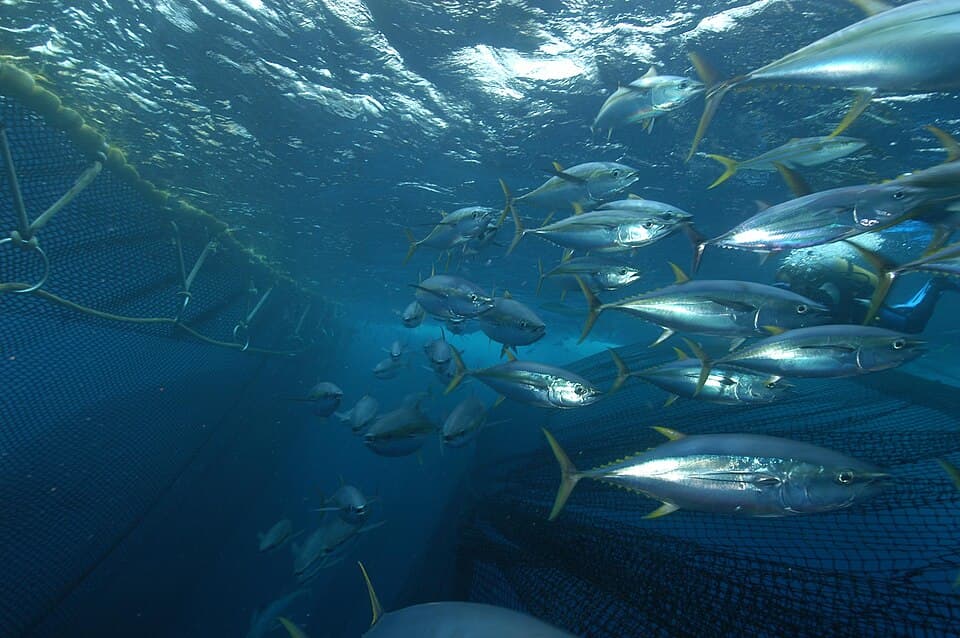
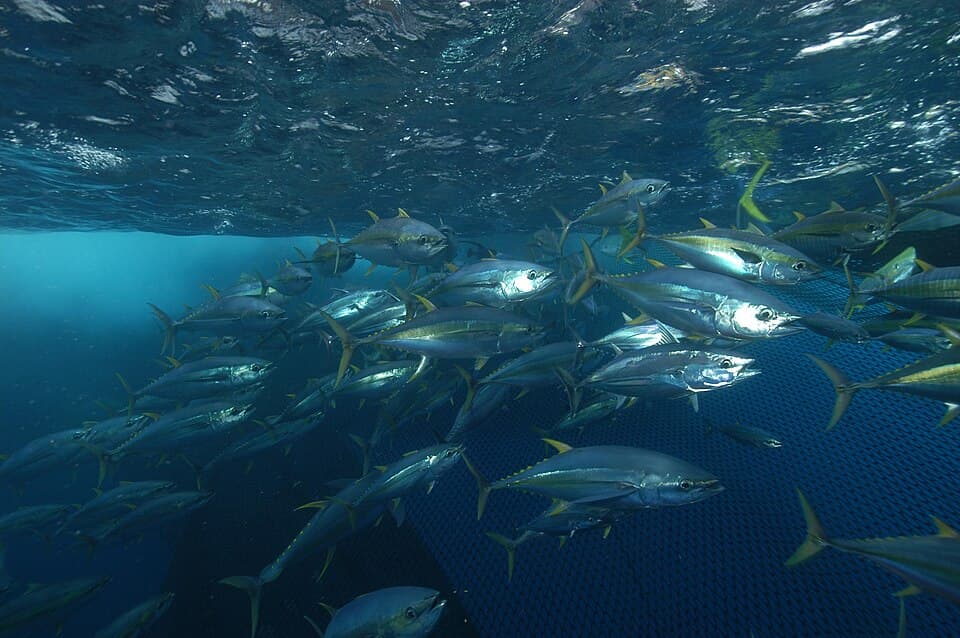
Yellowfin tuna are powerful, fast-swimming predators that often travel in large schools, sometimes mixed with other tuna species or associating with dolphins and floating debris, a behavior long exploited by commercial fishing fleets. They are constantly swimming, since like other tuna they must keep water moving over their gills to breathe, and are capable of short bursts of speed among the fastest of any fish.
Predators
- Sharks
- Billfish
- Larger tuna
- Humans
Prey
- Smaller fish
- Squid
- Crustaceans
Interesting Facts
- 1
Yellowfin tuna can swim in short bursts at speeds up to 70km/h, among the fastest of any fish.
- 2
Like other tuna species, it must swim constantly to keep oxygen-rich water flowing over its gills.
- 3
Its long, bright yellow fins, which give the species its name, become especially dramatic and elongated in mature adults.
- 4
Yellowfin tuna are found in tropical and subtropical waters across the Atlantic, Pacific, and Indian Oceans.
- 5
It's one of the most commercially important fish species in the world, widely used in sushi, sashimi, and canned tuna products.
Gallery
Yellowfin Tuna FAQs
How fast can a yellowfin tuna swim?
Yellowfin tuna can reach burst speeds of around 70km/h, making them one of the fastest fish in the ocean.
Why do tuna need to keep swimming?
Yellowfin tuna, like other tuna species, rely on forward motion to push oxygen-rich water over their gills, meaning they must swim continuously throughout their lives to breathe.
Why is the yellowfin tuna near threatened?
Heavy commercial fishing pressure to meet global demand for sushi, sashimi, and canned tuna has significantly reduced yellowfin tuna populations in parts of their range, leading to its Near Threatened classification.
What do yellowfin tuna eat?
Yellowfin tuna are active predators that feed on smaller fish, squid, and crustaceans, hunting using their speed and keen eyesight.
What does a yellowfin tuna eat?
The yellowfin tuna is a carnivore. Its diet includes smaller fish, squid, crustaceans.
Where does the yellowfin tuna live?
The yellowfin tuna is found in ocean habitats across africa, asia, north america, south america, and australia.
Is the yellowfin tuna endangered?
The yellowfin tuna has a conservation status of Near Threatened. Species that may become threatened in the near future without continued conservation attention.
How long do yellowfin tunas live?
A yellowfin tuna's typical lifespan is 6–9 years in the wild.
How fast can a yellowfin tuna run?
The yellowfin tuna can reach speeds of up to 70 km/h.
How much does a yellowfin tuna weigh?
An adult yellowfin tuna typically weighs 40–200 kg.