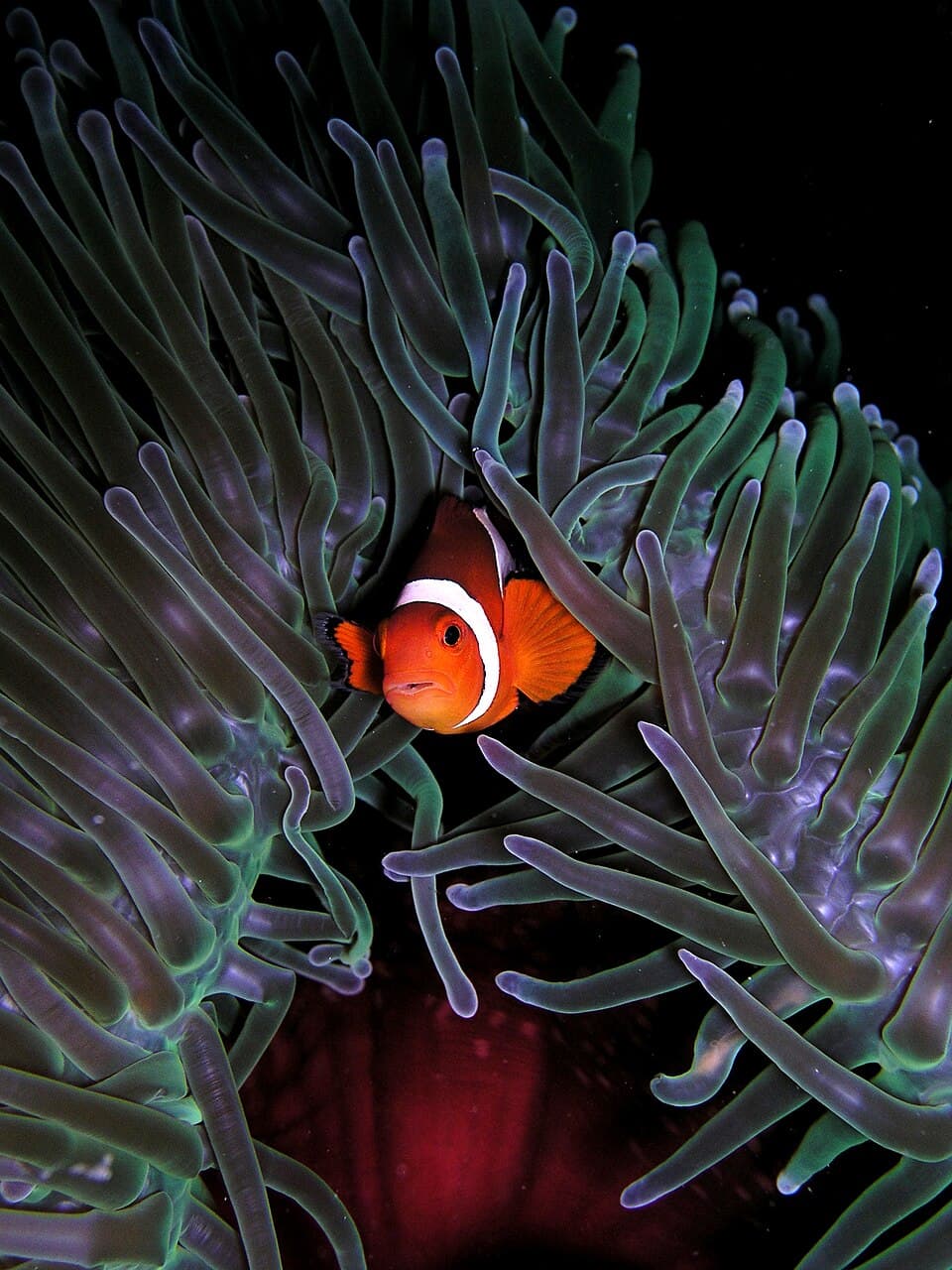
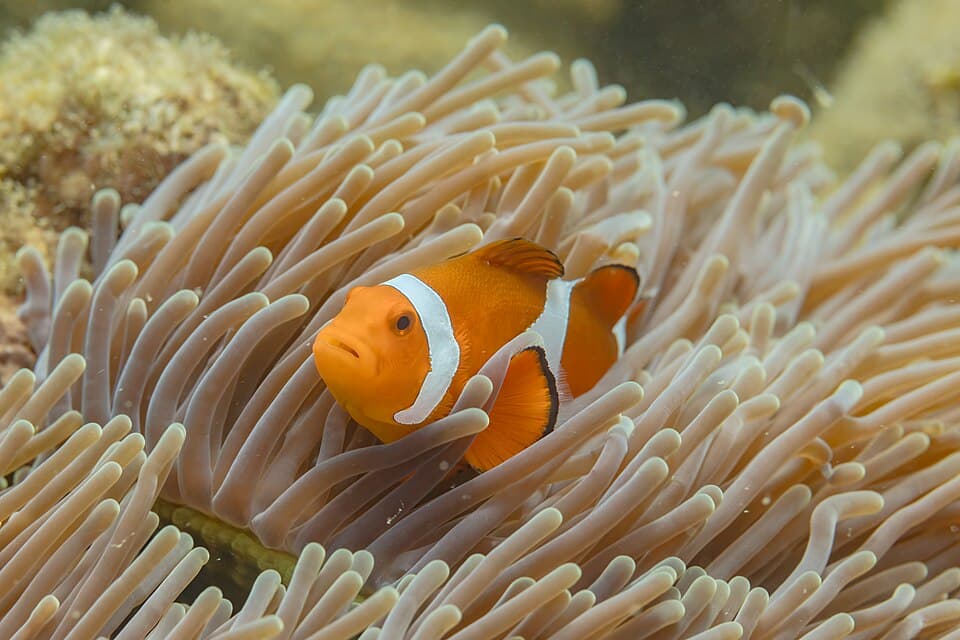
Photo: Nhobgood Nick Hobgood · CC BY-SA 3.0 · via Wikimedia Commons
Overview
The clownfish is a small, brightly-colored reef fish famous for its symbiotic relationship with sea anemones, whose stinging tentacles it is immune to.
Appearance
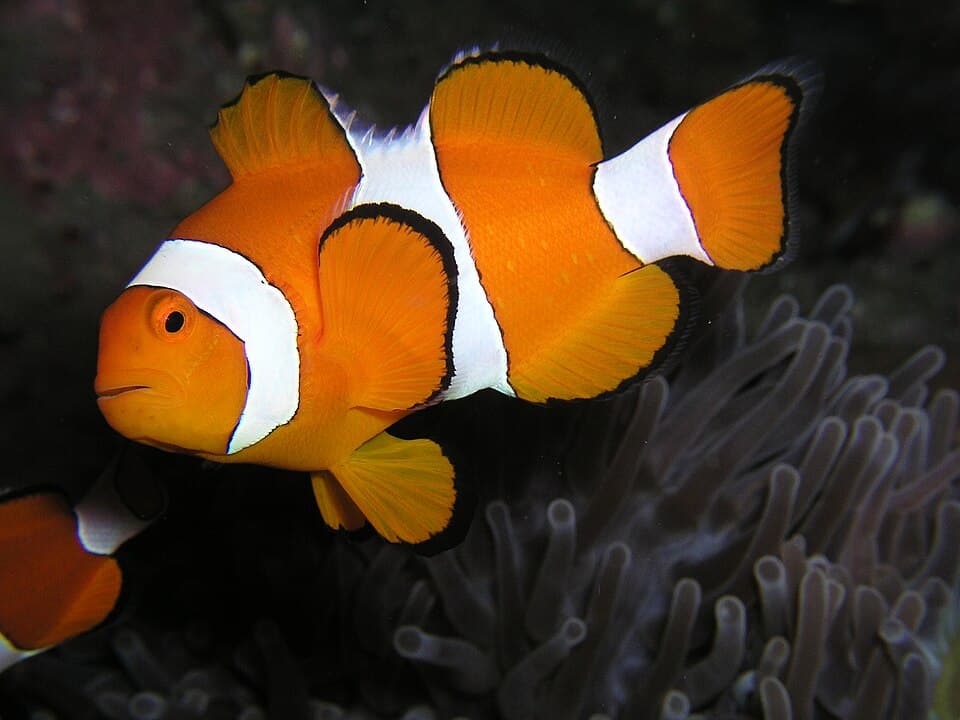
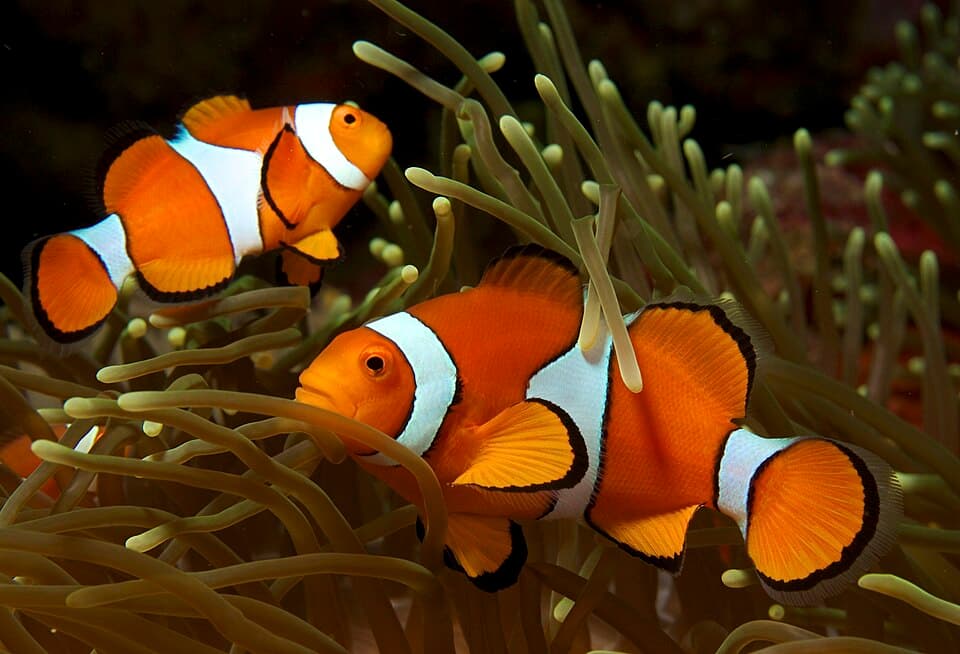
It has a rounded orange body marked with three bold white bands outlined in black.
Habitat & Distribution
The clownfish is found in ocean habitats.
Diet & Behavior
Diet: Omnivore — Animals with flexible diets that eat both plants and animals, adapting to whatever food is available in their environment.
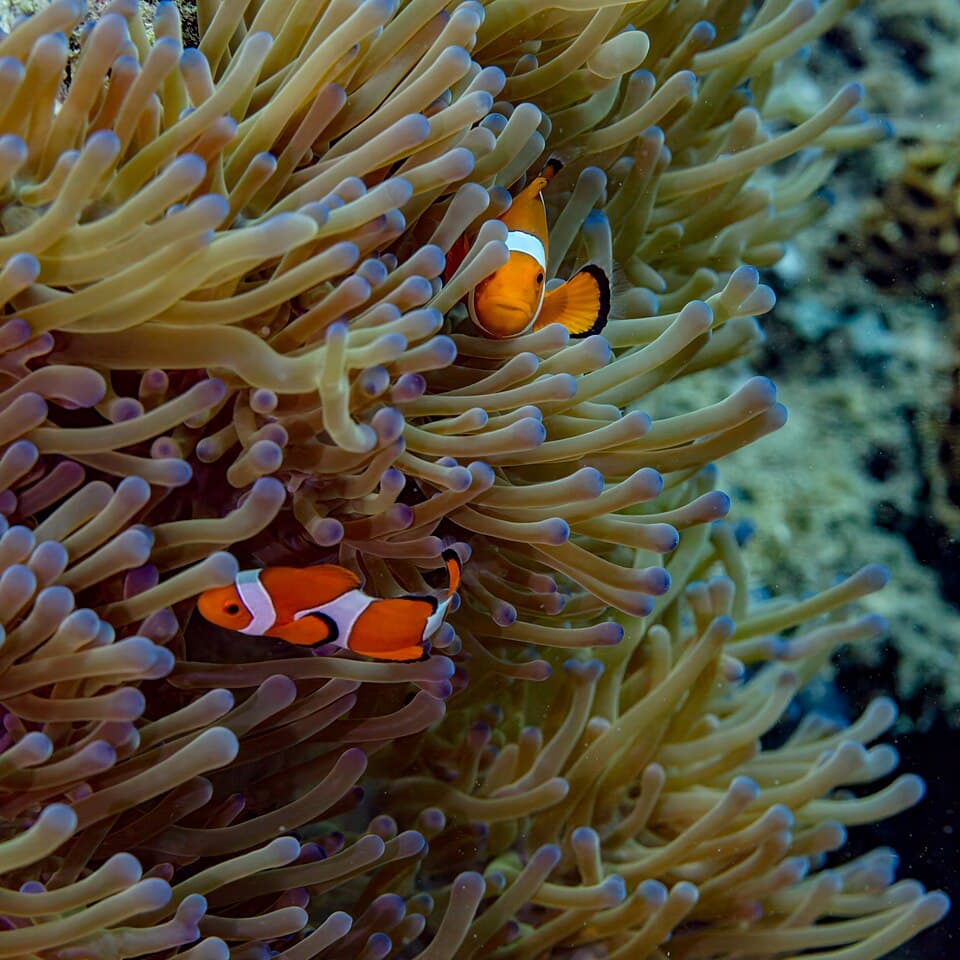
Clownfish live in small groups within a single host anemone, are protected from predators by the anemone's sting, and are all born male — the largest fish in a group becomes female.
Predators
- Larger reef fish
Prey
- Algae
- Zooplankton
- Small invertebrates
Interesting Facts
- 1
A special mucus coating protects clownfish from their host anemone's sting.
- 2
Every clownfish is born male and can change sex later in life.
- 3
They rarely stray more than a few meters from their home anemone.
Gallery
Clownfish FAQs
What does a clownfish eat?
The clownfish is an omnivore. Animals with flexible diets that eat both plants and animals, adapting to whatever food is available in their environment.
Where does the clownfish live?
The clownfish is found in ocean habitats across asia and australia.
Is the clownfish endangered?
The clownfish has a conservation status of Least Concern. Widespread and abundant species that are not currently at significant risk of extinction.
How long do clownfishs live?
A clownfish's typical lifespan is 6–10 years in the wild.
How much does a clownfish weigh?
An adult clownfish typically weighs 0.02–0.25 kg.