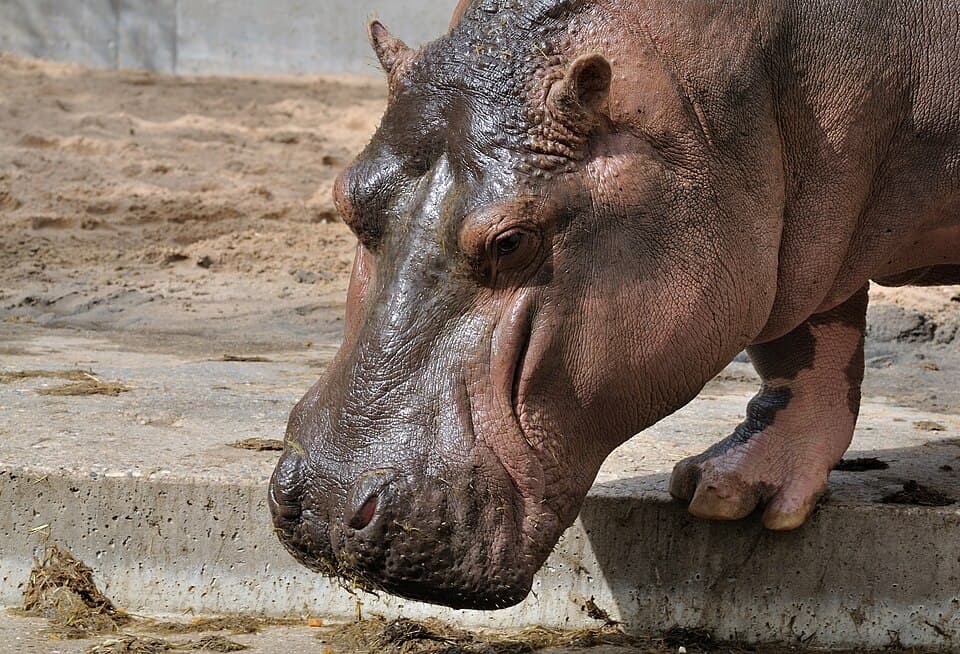
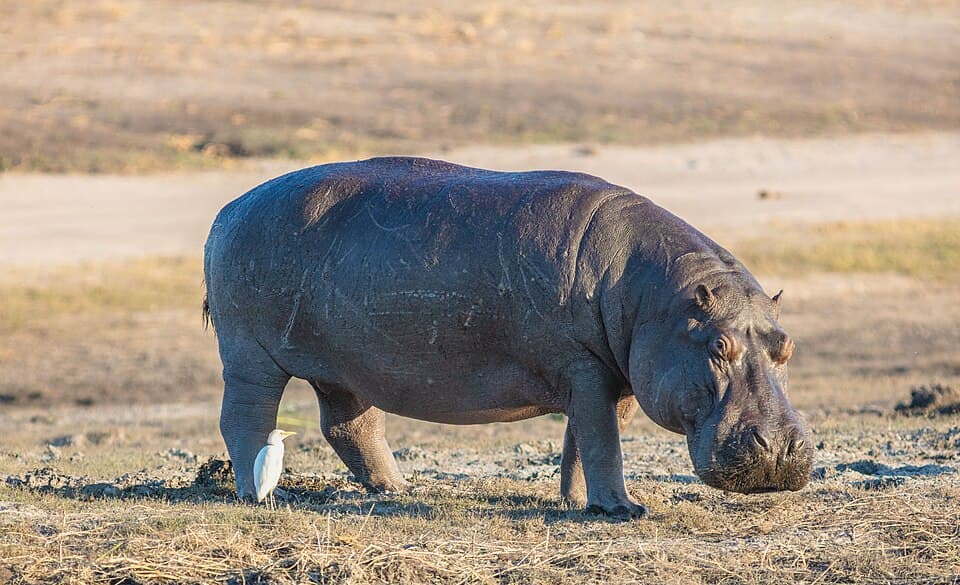
Photo: Quartl · CC BY-SA 3.0 · via Wikimedia Commons
Overview
The hippopotamus is one of the largest land mammals, spending most of the day submerged in African rivers and lakes to keep its huge body cool.
Appearance
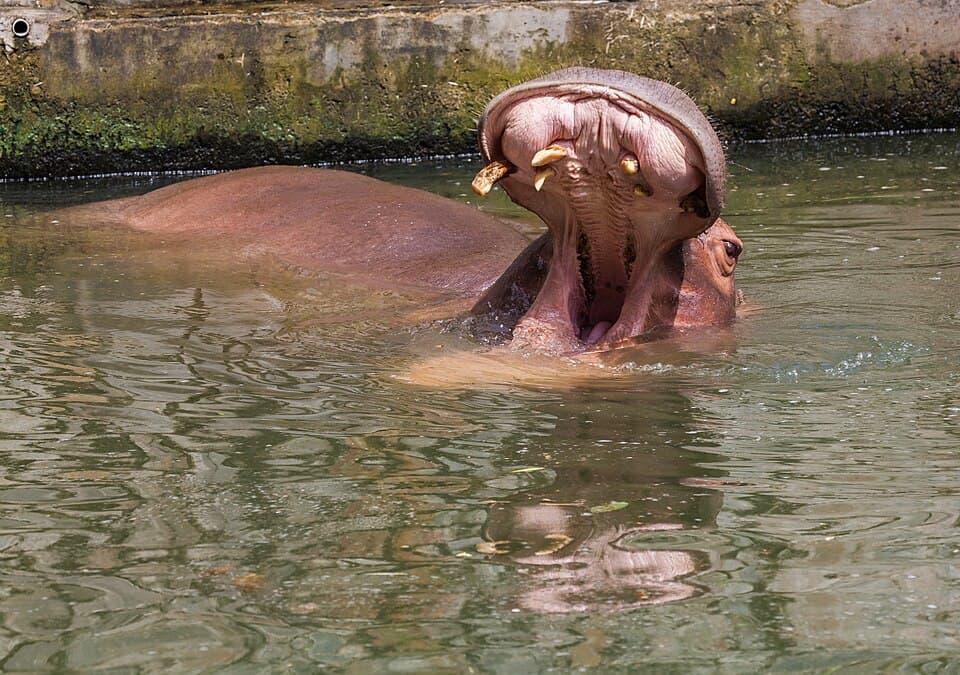
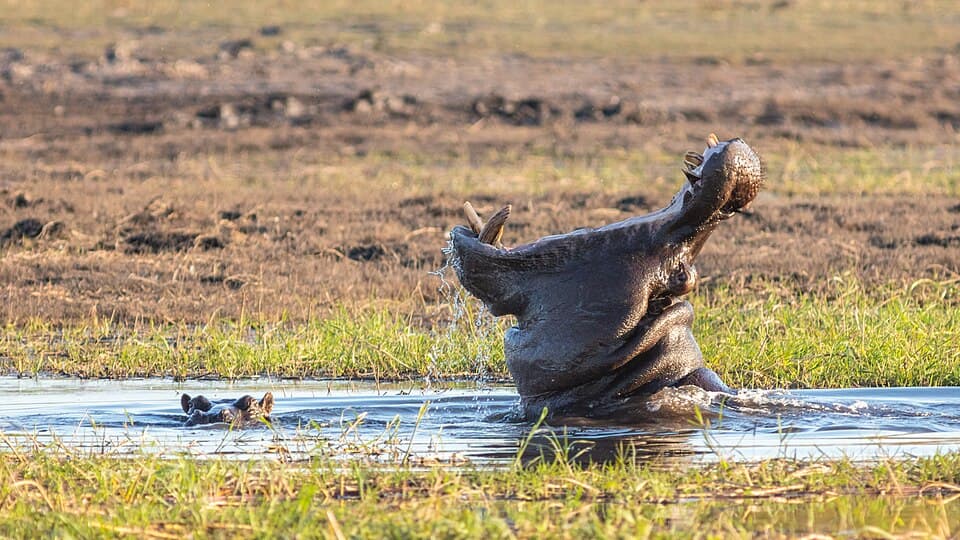
It has an enormous barrel-shaped grayish body, short stubby legs, and a wide mouth capable of opening to 150 degrees, revealing long tusk-like canine teeth.
Habitat & Distribution
The hippopotamus is found in wetlands, grassland habitats.
Diet & Behavior
Diet: Herbivore — Plant-eating animals that graze or browse on grasses, leaves, and other vegetation, from tiny insects to giant elephants.
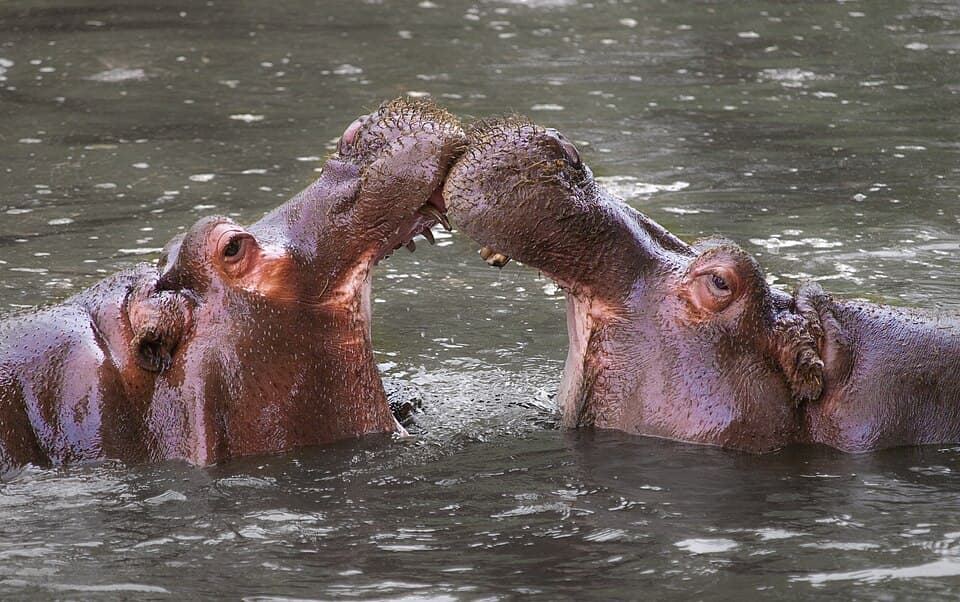
Hippos are highly territorial and aggressive in water, emerge at night to graze on land, and secrete a natural reddish oily substance that acts as sunscreen.
Predators
- Lion (calves)
- Crocodile (calves)
Prey
This species does not prey on other animals.
Interesting Facts
- 1
Despite their size, hippos can outrun a human on land over short distances.
- 2
Their skin secretes a natural reddish 'blood sweat' that protects against sun and infection.
- 3
Hippos are considered one of the most dangerous large animals in Africa.
Gallery
Hippopotamus FAQs
What does a hippopotamus eat?
The hippopotamus is a herbivore. Plant-eating animals that graze or browse on grasses, leaves, and other vegetation, from tiny insects to giant elephants.
Where does the hippopotamus live?
The hippopotamus is found in wetlands, grassland habitats across africa.
Is the hippopotamus endangered?
The hippopotamus has a conservation status of Vulnerable. Species facing a high risk of extinction in the wild due to habitat loss, hunting, or other pressures.
How long do hippopotamuss live?
A hippopotamus's typical lifespan is 40–50 years in the wild.
How fast can a hippopotamus run?
The hippopotamus can reach speeds of up to 30 km/h.
How much does a hippopotamus weigh?
An adult hippopotamus typically weighs 1,300–3,200 kg.