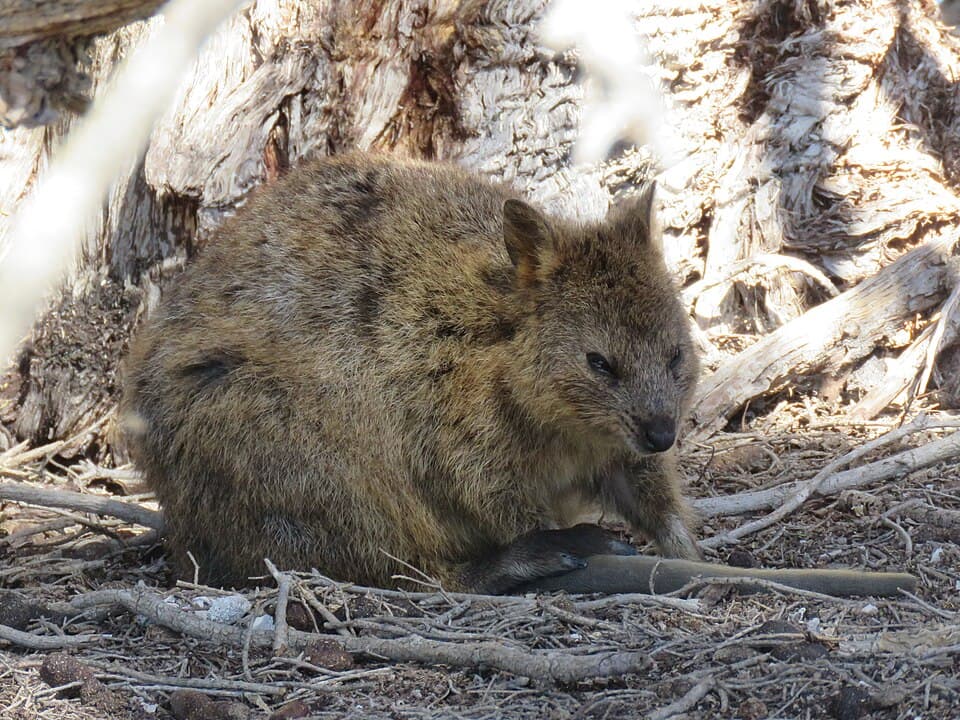
Photo: May Wong · CC BY 2.0 · via Wikimedia Commons
Overview
The quokka is a small macropod, part of the same broad family as kangaroos and wallabies, found in a few fragmented pockets on mainland southwest Australia and, in far greater numbers, on a handful of predator-free islands off Western Australia. It is widely nicknamed 'the world's happiest animal' online for a permanent smile-like expression created by the shape of its mouth, which has made it a popular subject for tourist selfies on Rottnest Island, its best-known stronghold. Despite that island abundance, quokkas are classified as Vulnerable overall, since introduced predators like foxes and cats have devastated the harder-to-protect mainland population over the past century.
Appearance
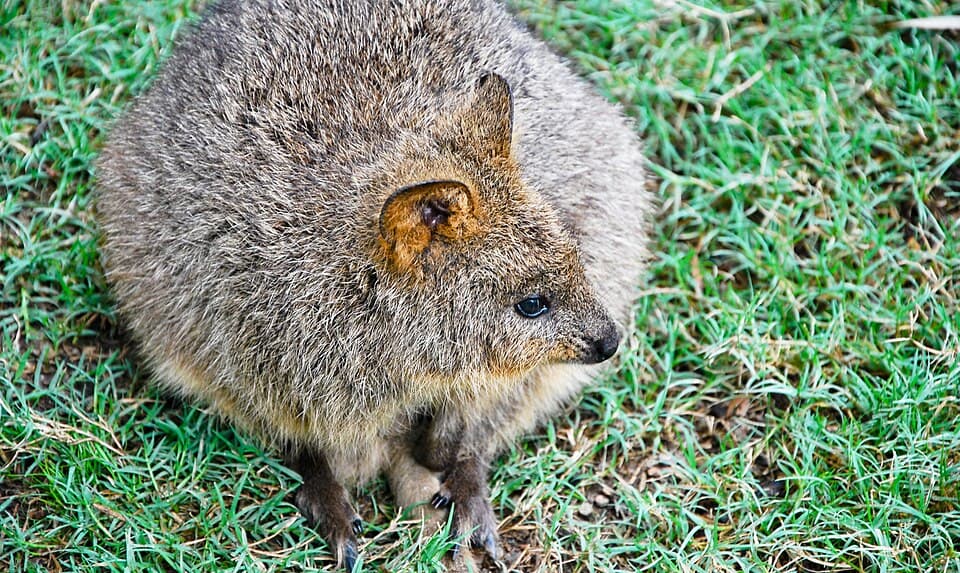
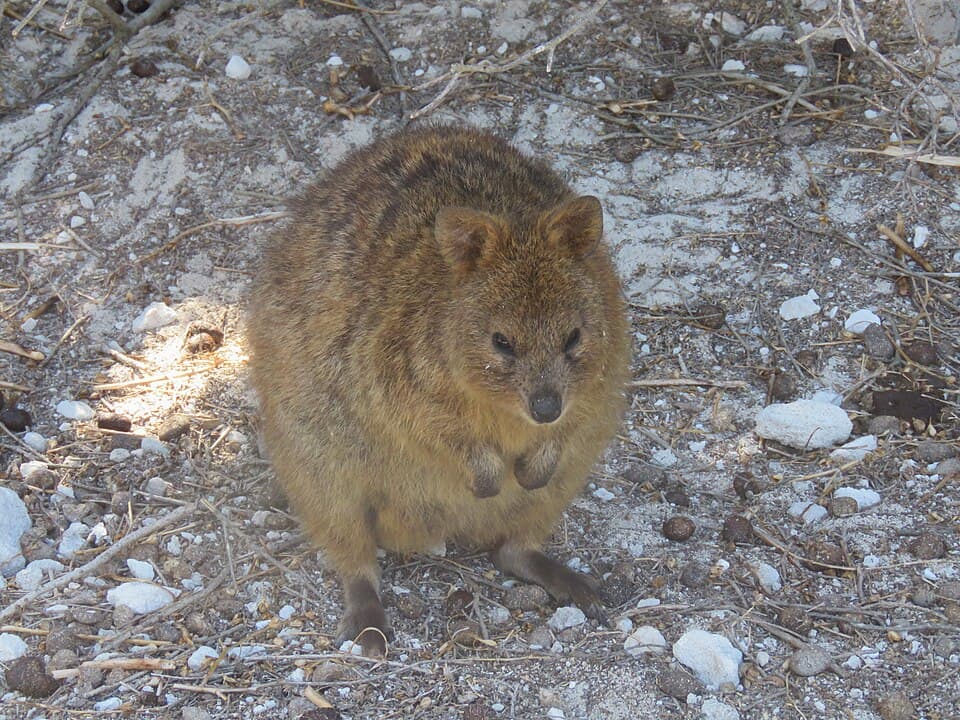
It has a compact, round body covered in coarse brown-gray fur, small rounded ears, and a short, thick tail that is unusually stubby for a macropod. Adults typically weigh just 2.5 to 5kg and measure 40 to 54cm in body length, making them far smaller than most of their kangaroo and wallaby relatives. Like other macropods, it moves primarily by hopping on strong hind legs, using its shorter front limbs mainly for feeding and grooming.
Habitat & Distribution
The quokka is found in forest, grassland habitats.
Diet & Behavior
Diet: Herbivore — Plant-eating animals that graze or browse on grasses, leaves, and other vegetation, from tiny insects to giant elephants.
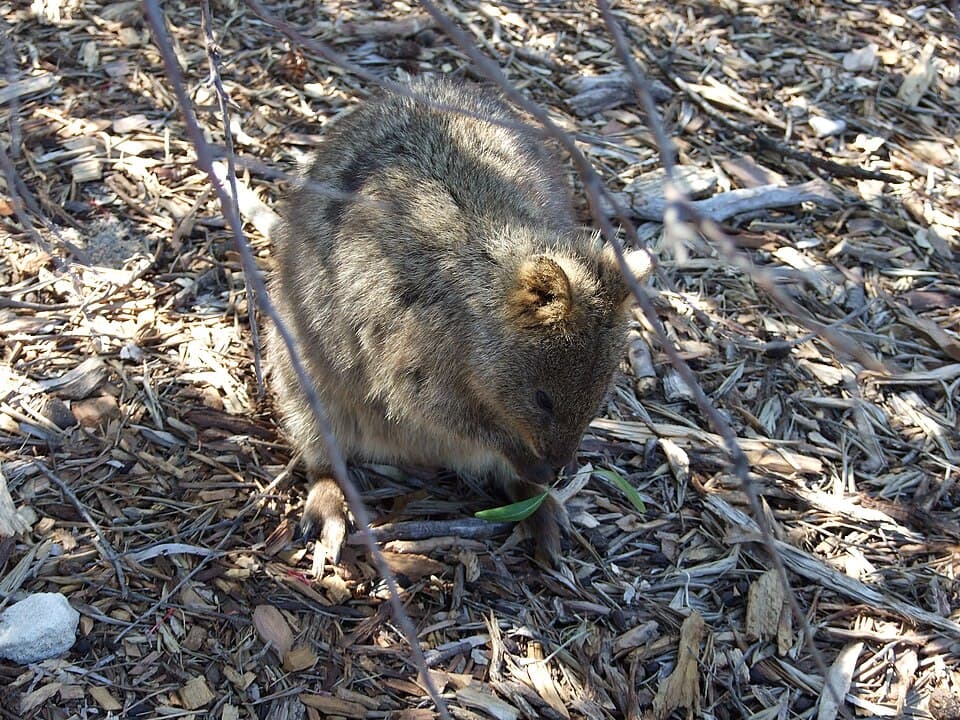
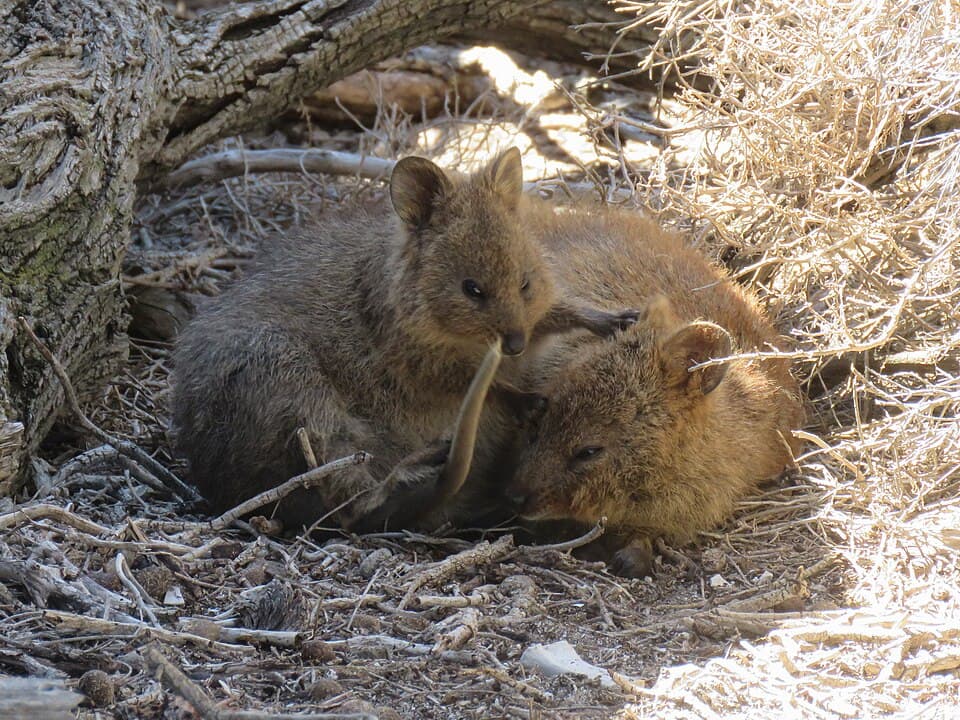
Quokkas are mostly nocturnal or active at dawn and dusk, resting in shaded vegetation during the heat of the day and emerging to browse on native grasses, leaves, and bark once temperatures cool. They live in small social groups and, having evolved for thousands of years on predator-free islands, show little fear of humans there — a trait that made them internet-famous but that Rottnest Island authorities now actively discourage visitors from testing, since touching or feeding quokkas is prohibited and can carry a fine. Like several other macropods, quokkas can survive extended periods without drinking fresh water, drawing most of the moisture they need directly from the vegetation they eat.
Predators
- Fox
- Cat (introduced predators)
Prey
This species does not prey on other animals.
Interesting Facts
- 1
Quokkas are often called the 'world's happiest animal' due to their upturned mouth.
- 2
They can climb small trees and shrubs to reach food.
- 3
Rottnest Island, named after them by Dutch explorers who mistook them for giant rats, is their best-known stronghold.
- 4
Quokkas can go without drinking water for long stretches, getting most of the moisture they need from the plants they eat.
- 5
Touching or feeding a quokka on Rottnest Island is against the law and can result in a fine, to protect both the animals and visitors.
Gallery
Quokka FAQs
Why are quokkas called the 'world's happiest animal'?
The nickname comes from the natural shape of a quokka's mouth, which curves upward into what looks like a permanent smile — combined with their fearless, approachable behavior around humans on predator-free islands, it's made them a favorite subject for tourist selfies.
Are quokkas dangerous?
Quokkas are small, herbivorous, and generally not dangerous, though like any wild animal they can bite or scratch if provoked. Rottnest Island prohibits touching or feeding them, both to protect visitors and to keep the quokkas from becoming dependent on human food.
Where can you see quokkas in the wild?
The most reliable place to see quokkas is Rottnest Island off the coast of Western Australia, where a predator-free environment has allowed a large, easily observed population to thrive. Smaller, harder-to-find populations also survive on the Australian mainland and on Bald Island.
Why are quokkas vulnerable if Rottnest Island has so many?
The island population is stable specifically because it's free of foxes and cats, but the mainland population has declined sharply due to those introduced predators along with habitat loss, which is why the species as a whole is still classified as Vulnerable.
What does a quokka eat?
The quokka is a herbivore. Plant-eating animals that graze or browse on grasses, leaves, and other vegetation, from tiny insects to giant elephants.
Where does the quokka live?
The quokka is found in forest, grassland habitats across australia.
Is the quokka endangered?
The quokka has a conservation status of Vulnerable. Species facing a high risk of extinction in the wild due to habitat loss, hunting, or other pressures.
How long do quokkas live?
A quokka's typical lifespan is 10–13 years in the wild.
How much does a quokka weigh?
An adult quokka typically weighs 2.5–5 kg.