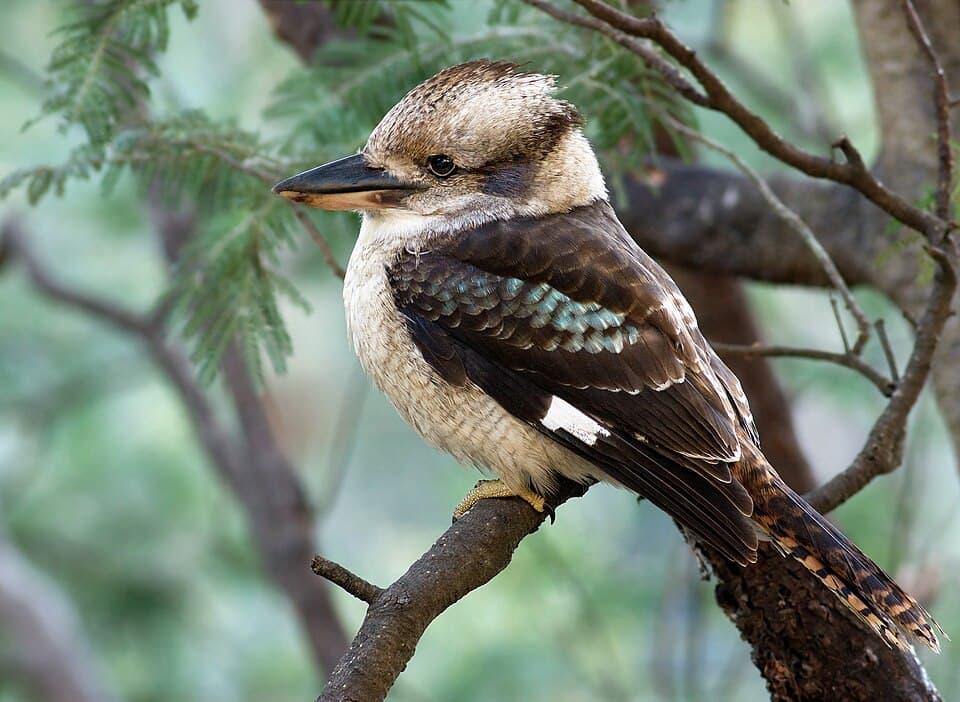
Photo: JJ Harrison (https://www.jjharrison.com.au/) · CC BY-SA 3.0 · via Wikimedia Commons
Overview
The laughing kookaburra is the largest member of the kingfisher family, famous for a call that sounds remarkably like raucous human laughter, often used to establish territory at dawn and dusk. Native to eastern Australia, it's one of the country's most recognizable and culturally iconic birds.
Appearance
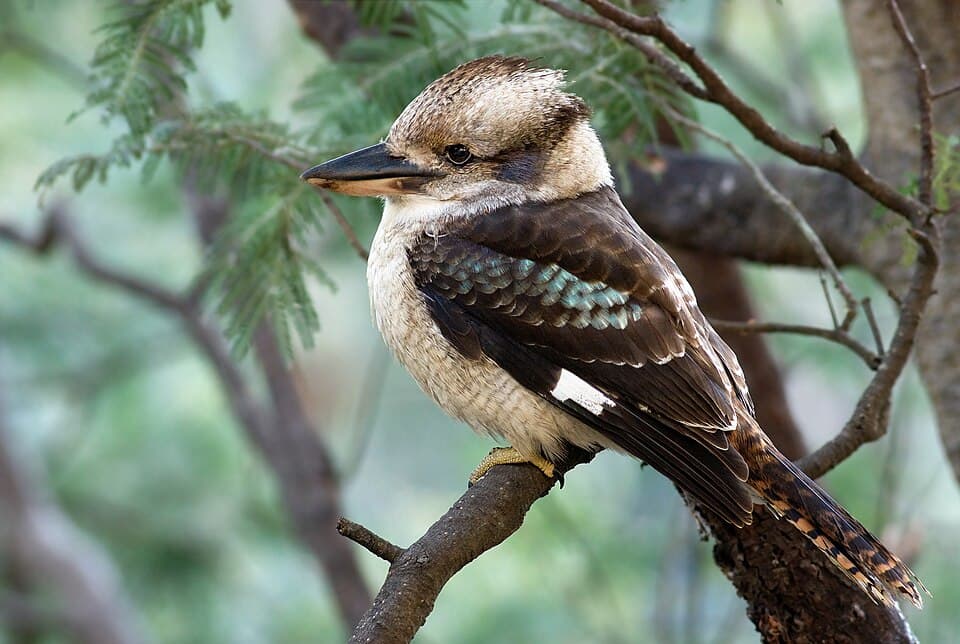
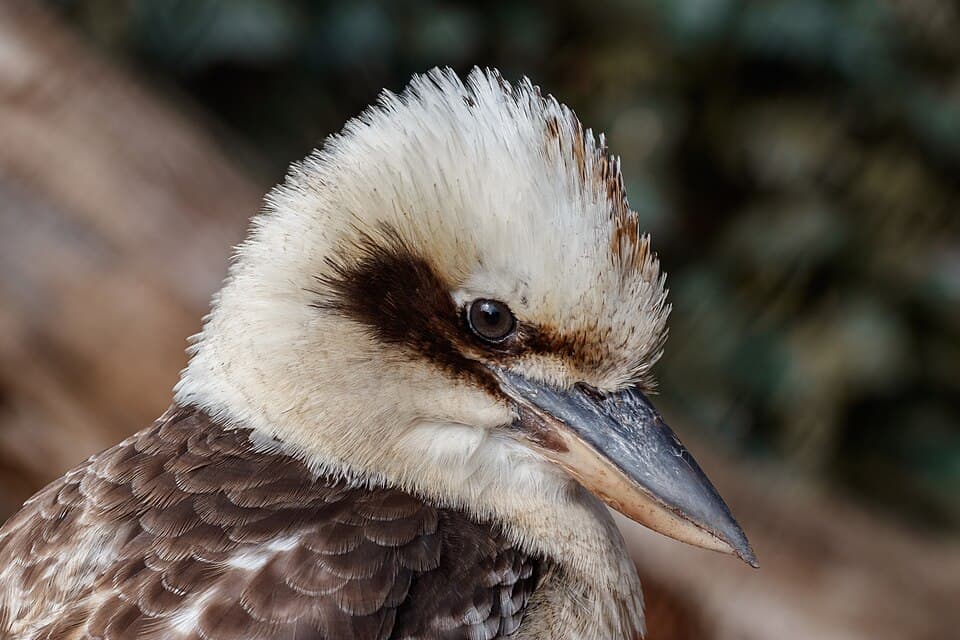
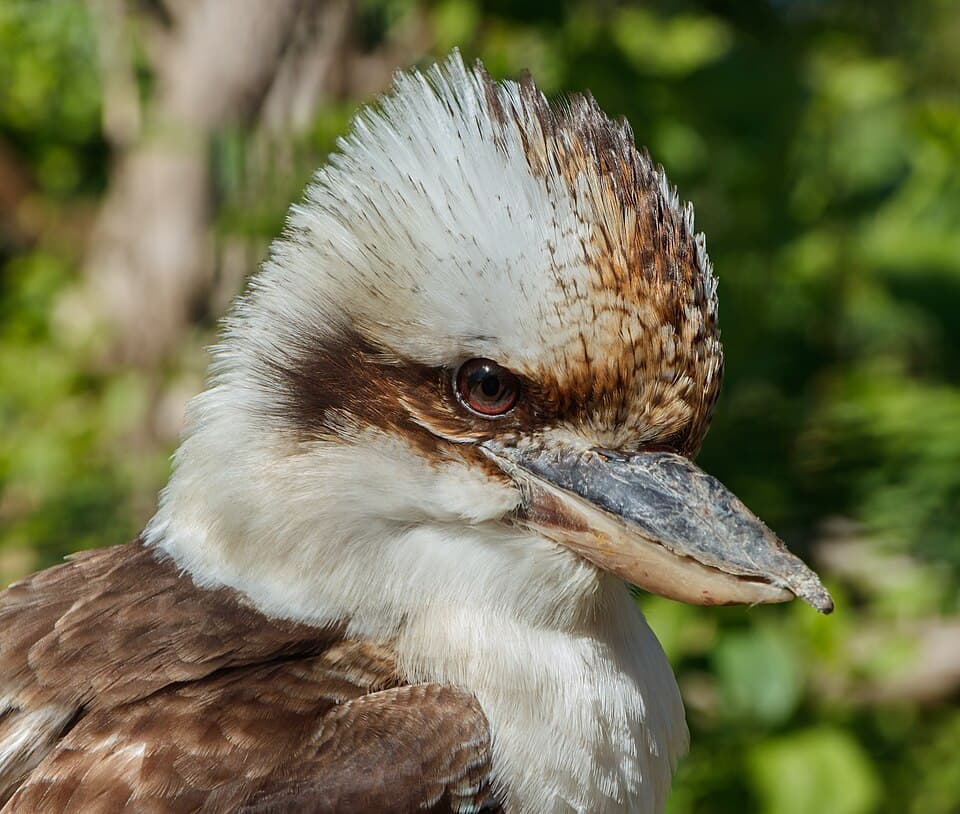
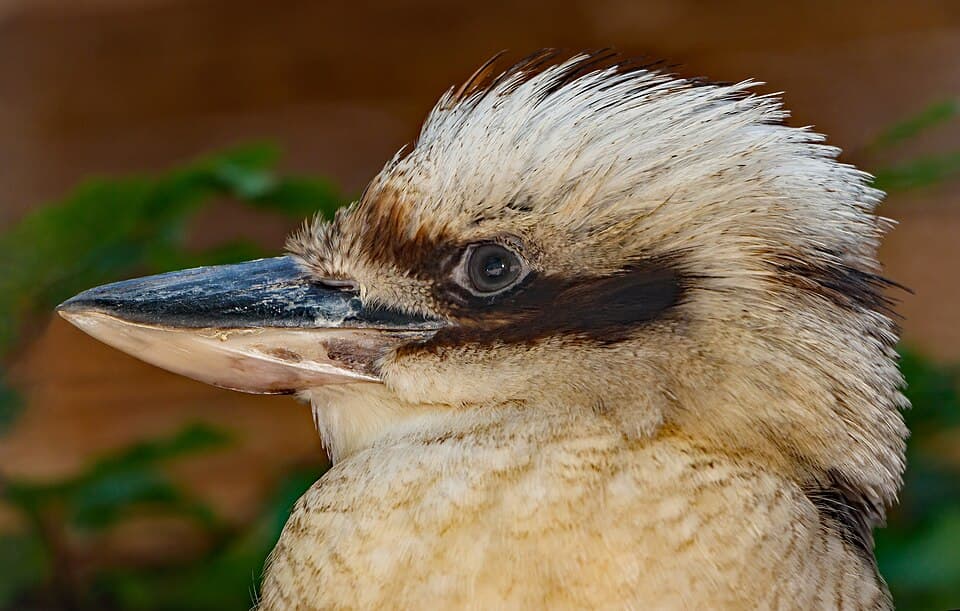
It has a stocky body, a large head, and an oversized, dagger-like bill relative to its size, with mostly brown and white plumage marked by a dark stripe through the eye and blue patches on the wings. Unlike most kingfishers, it lives in dry woodland far from water rather than hunting along riverbanks.
Habitat & Distribution
The laughing kookaburra is found in forest, grassland habitats.
Diet & Behavior
Diet: Carnivore — Meat-eating animals that hunt, scavenge, or fish for prey, ranging from big cats to snakes and birds of prey.
Kookaburras hunt by perching quietly and watching for movement before swooping down to snatch prey directly off the ground, then often beating it against a branch to kill or soften it before eating. They live in cooperative family groups, with older offspring from previous broods helping their parents raise and feed the newest chicks, a behavior known as cooperative breeding.
Predators
- Large birds of prey
- Snakes (chicks and eggs)
- Introduced cats
Prey
- Insects
- Small reptiles
- Small mammals
- Frogs
- Occasionally small birds
Interesting Facts
- 1
The kookaburra's famous laughing call is actually a territorial signal, often performed as a group chorus at dawn and dusk.
- 2
It's the largest member of the kingfisher family, despite living far from water in dry woodland.
- 3
Kookaburra family groups practice cooperative breeding, with older siblings helping raise the newest chicks.
- 4
It kills prey like snakes and lizards by repeatedly beating them against a branch before eating.
- 5
The kookaburra's laugh has been used as a stock sound effect in countless jungle scenes in films, despite the bird being native only to Australia and New Guinea.
Gallery
Laughing Kookaburra FAQs
Why does the kookaburra 'laugh'?
The kookaburra's call, which sounds like raucous laughter, is primarily a territorial signal used to announce ownership of an area, often performed by family groups together at dawn and dusk.
What does a kookaburra eat?
Kookaburras are carnivores that eat insects, small reptiles including snakes, small mammals, and frogs, typically hunting by watching from a perch and swooping down on prey.
Do kookaburras live near water like other kingfishers?
No -- unlike most kingfishers, laughing kookaburras live in dry woodland and forest, often far from any water source, and hunt land-based prey rather than fish.
Do kookaburras live in family groups?
Yes, kookaburras practice cooperative breeding, where older offspring from previous years stay with their parents and help feed and defend the newest chicks.
What does a laughing kookaburra eat?
The laughing kookaburra is a carnivore. Its diet includes insects, small reptiles, small mammals, frogs.
Where does the laughing kookaburra live?
The laughing kookaburra is found in forest, grassland habitats across australia.
Is the laughing kookaburra endangered?
The laughing kookaburra has a conservation status of Least Concern. Widespread and abundant species that are not currently at significant risk of extinction.
How long do laughing kookaburras live?
A laughing kookaburra's typical lifespan is 12–20 years in the wild.
How much does a laughing kookaburra weigh?
An adult laughing kookaburra typically weighs 0.3–0.5 kg.