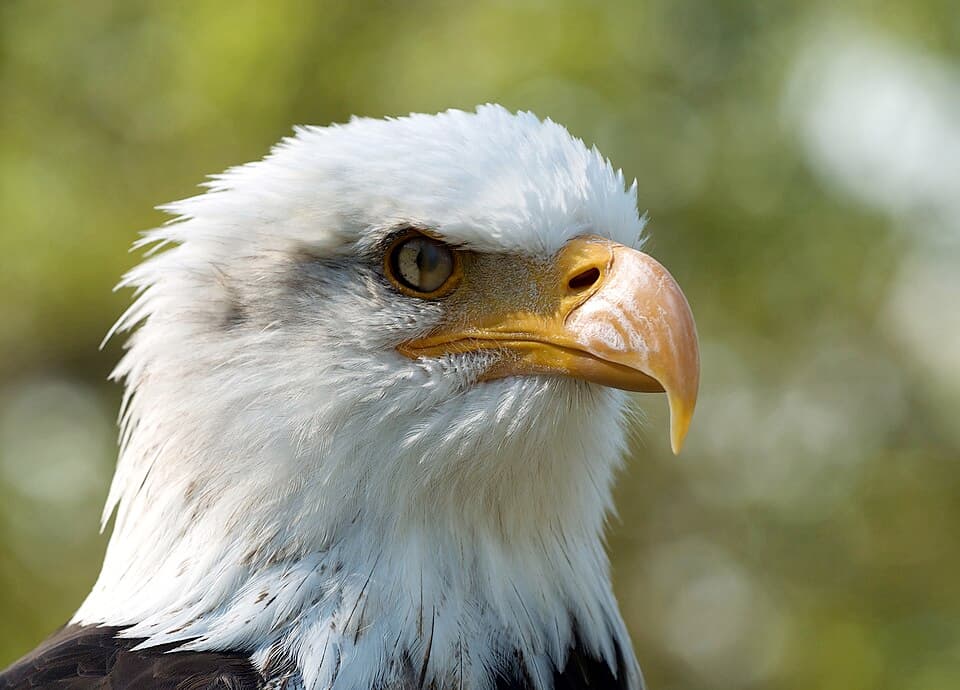
Photo: Jörg Hempel · CC BY-SA 3.0 de · via Wikimedia Commons
Overview
The bald eagle is a large bird of prey and the national bird of the United States, typically found near large bodies of open water with an abundant fish supply, from Alaska and Canada down through the contiguous United States. The species was once endangered in the U.S. due to hunting, habitat loss, and the pesticide DDT, which thinned its eggshells and caused widespread breeding failures; after DDT was banned and decades of conservation effort, bald eagle populations recovered enough for the species to be removed from the U.S. endangered species list in 2007.
Appearance
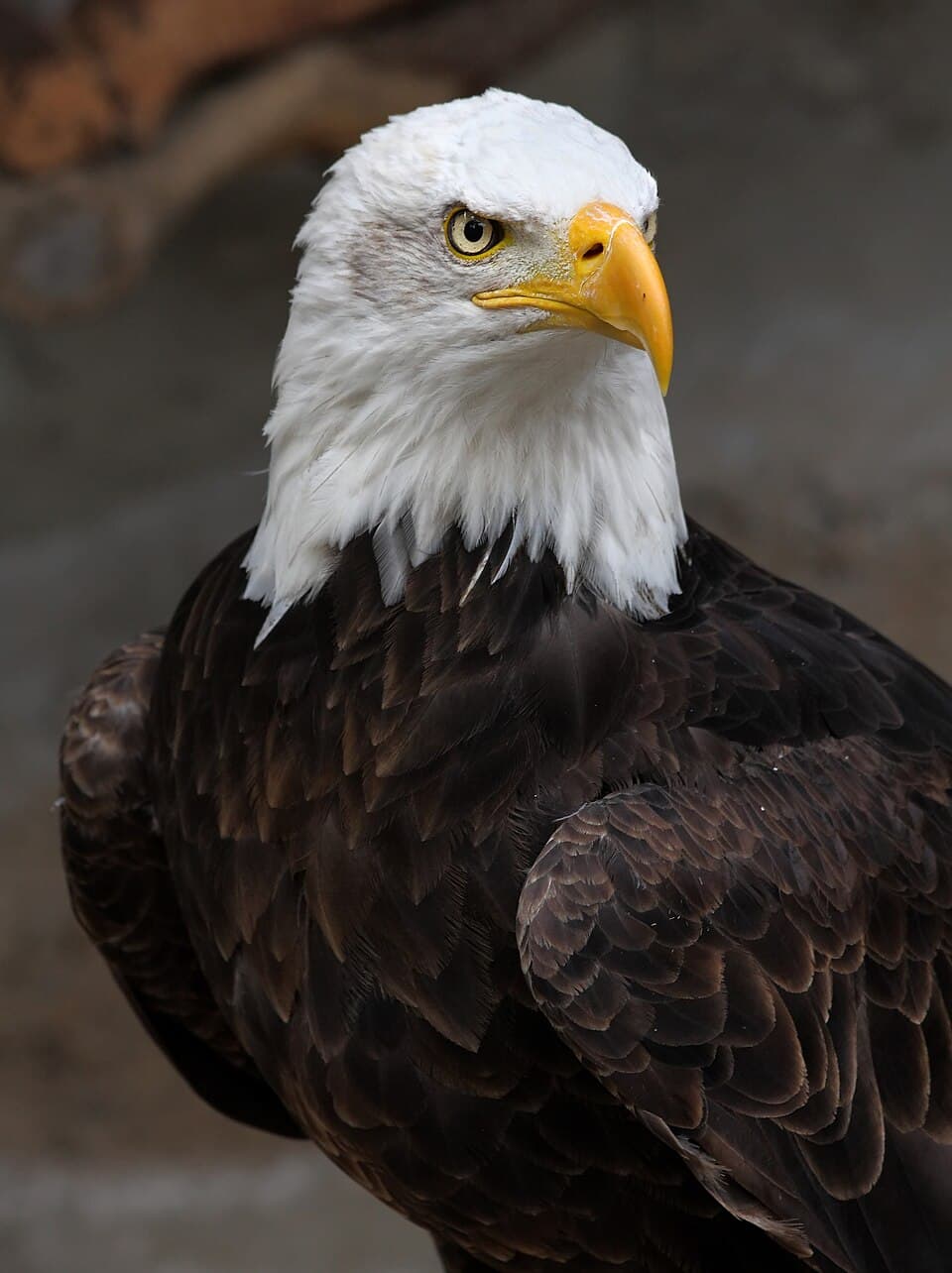
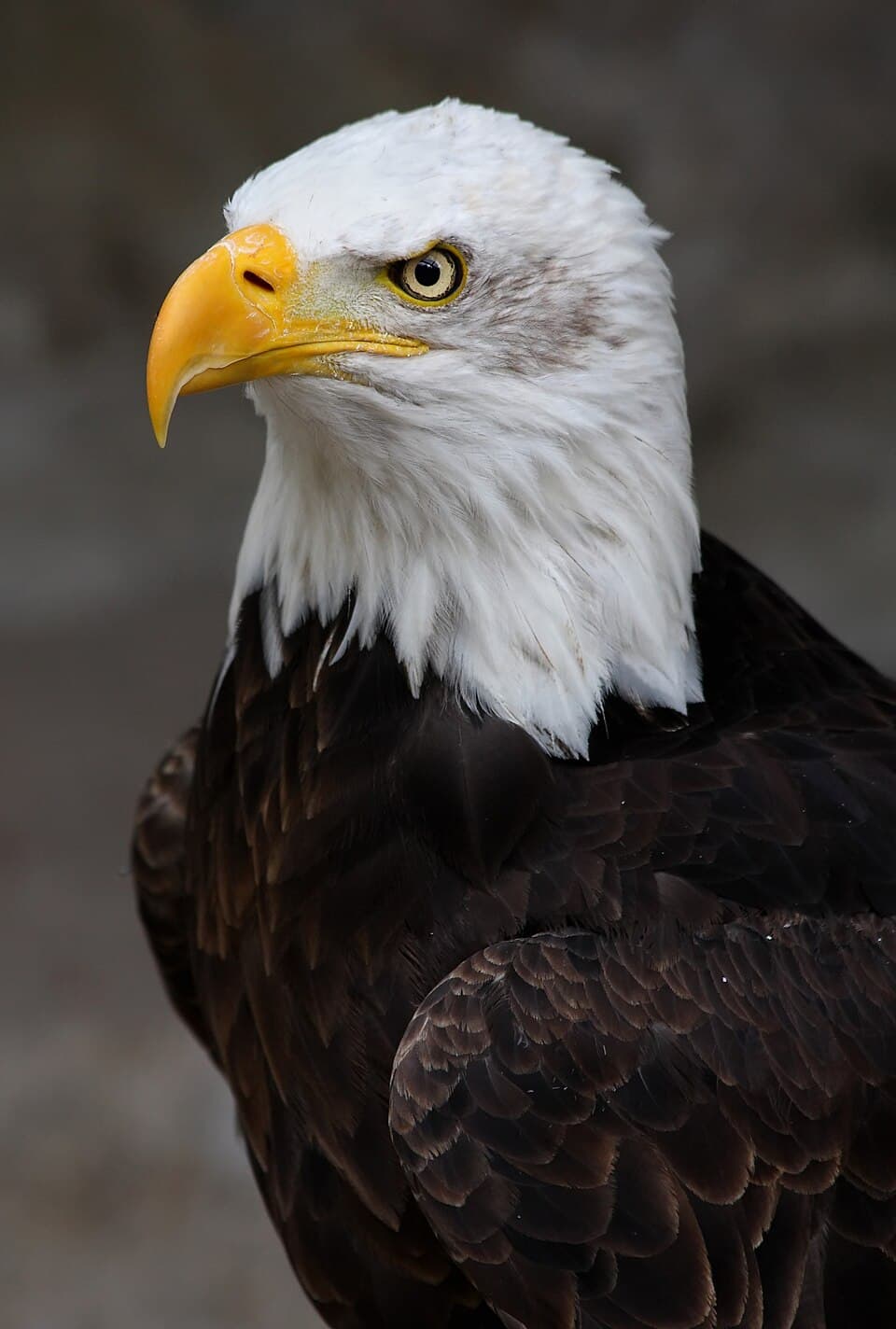
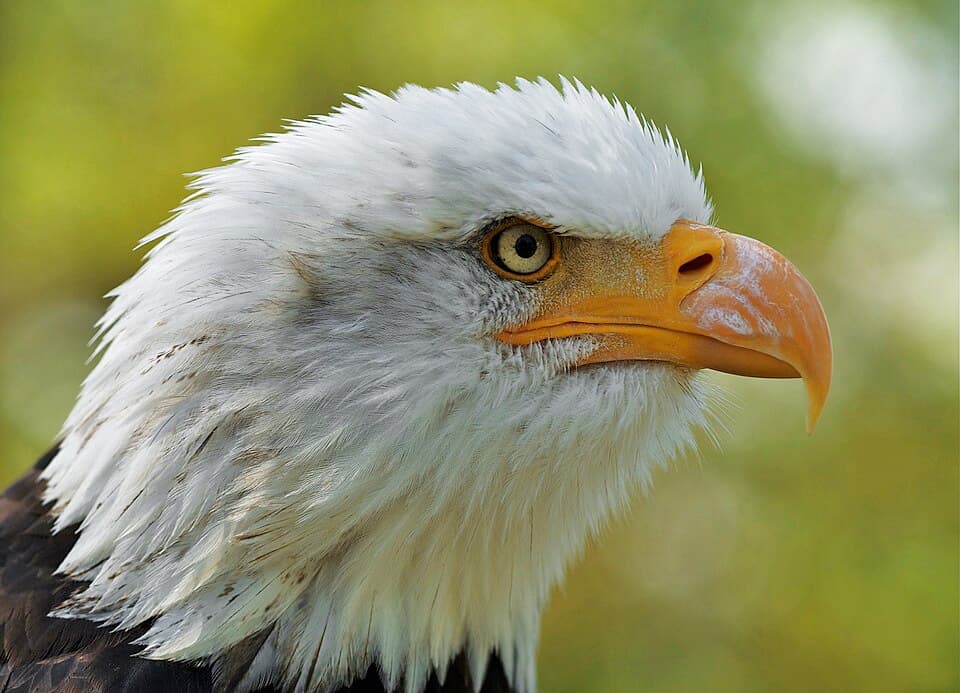
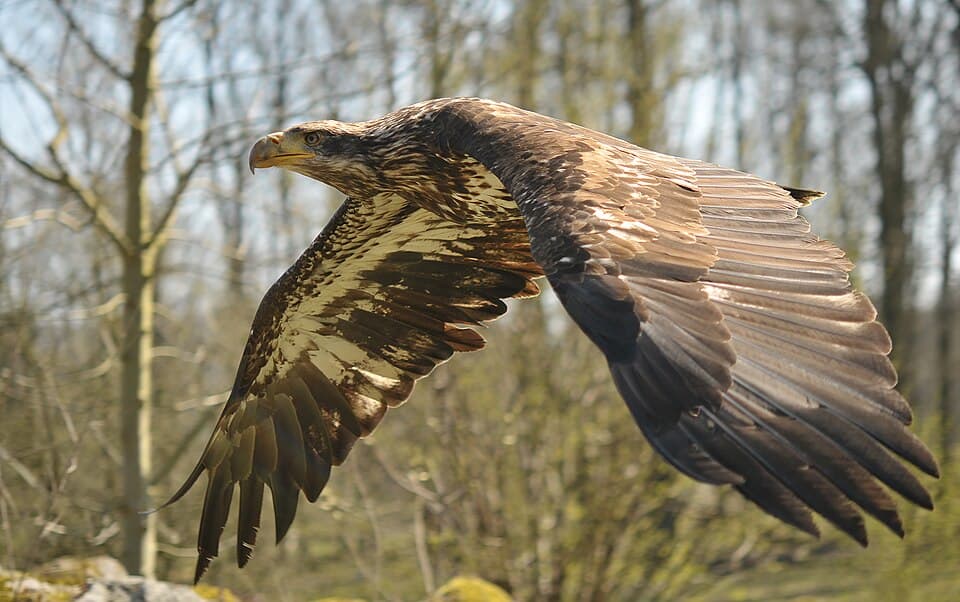
Adults have a distinctive white head and tail contrasting with a dark brown body and wings, a hooked yellow beak, and piercing yellow eyes, with a wingspan that can reach up to 2.3 meters (7.5 feet). Juveniles look completely different, with mottled brown plumage all over and a dark beak, and don't develop the adult's white head and tail until they reach sexual maturity at around four to five years old.
Habitat & Distribution
The bald eagle is found in forest, wetlands habitats.
Diet & Behavior
Diet: Carnivore — Meat-eating animals that hunt, scavenge, or fish for prey, ranging from big cats to snakes and birds of prey.
Bald eagles are powerful fliers that soar on thermal air currents, hunt mainly by sight with eyesight several times sharper than a human's, and build some of the largest tree nests of any bird species, reusing and adding to the same nest for years. They typically mate for life and perform a dramatic courtship display in which a pair locks talons in midair and free-falls together in a spinning cartwheel before separating. Though skilled hunters in their own right, bald eagles are also known to steal fish caught by other birds, particularly ospreys, rather than catching every meal themselves.
Predators
- Great horned owl (eggs/chicks)
Prey
- Fish
- Waterfowl
- Small mammals
Interesting Facts
- 1
Bald eagles aren't actually bald — their name comes from an old word meaning 'white-headed'.
- 2
Their nests can weigh over 900kg and be used for decades.
- 3
A bald eagle's grip is roughly ten times stronger than a human hand.
- 4
Bald eagles were removed from the U.S. endangered species list in 2007 after decades of recovery efforts, following a dramatic population decline caused by the pesticide DDT.
- 5
A mated pair performs a dramatic courtship display, locking talons in midair and cartwheeling toward the ground before letting go.
- 6
Juveniles don't develop their iconic white head and tail until they reach sexual maturity at around four to five years old.
Gallery
Bald Eagle FAQs
Were bald eagles ever endangered?
Yes — bald eagle populations crashed in the mid-20th century due to hunting, habitat loss, and the pesticide DDT, which caused eggshells to thin and break. After DDT was banned and legal protections were put in place, the species recovered enough to be removed from the U.S. endangered species list in 2007.
How good is a bald eagle's eyesight?
A bald eagle's eyesight is estimated to be several times sharper than a human's, letting it spot fish near the water's surface from high in the air.
Do bald eagles mate for life?
Yes — bald eagles typically form long-term pair bonds and mate for life, returning to and reusing the same nest site together year after year.
What do bald eagles eat?
Bald eagles primarily eat fish, which they catch by swooping down and grabbing them with their talons, though they also prey on waterfowl and small mammals and will scavenge or steal food from other birds.
What does a bald eagle eat?
The bald eagle is a carnivore. Its diet includes fish, waterfowl, small mammals.
Where does the bald eagle live?
The bald eagle is found in forest, wetlands habitats across north america.
Is the bald eagle endangered?
The bald eagle has a conservation status of Least Concern. Widespread and abundant species that are not currently at significant risk of extinction.
How long do bald eagles live?
A bald eagle's typical lifespan is 20–30 years in the wild.
How fast can a bald eagle run?
The bald eagle can reach speeds of up to 160 km/h.
How much does a bald eagle weigh?
An adult bald eagle typically weighs 3–6.3 kg.