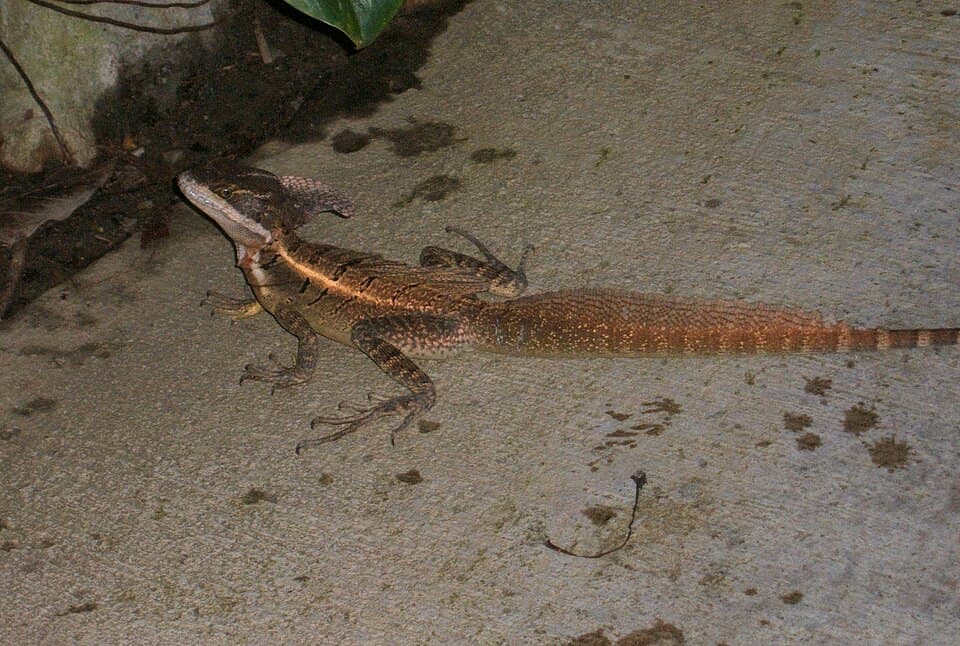
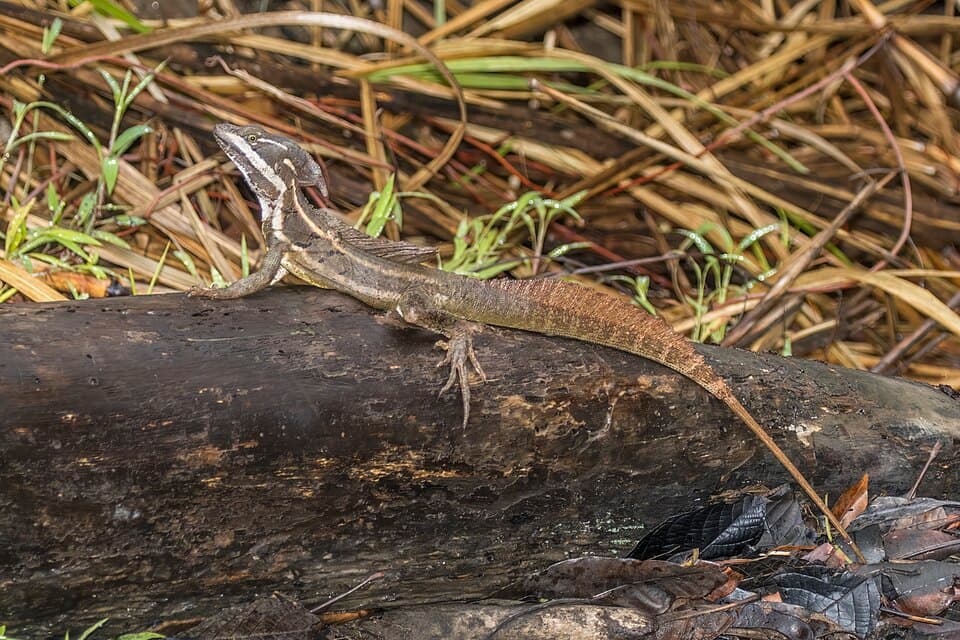
Photo: C. Horwitz, uploaded with help of her husband Steven G. Johnson · CC BY-SA 3.0 · via Wikimedia Commons
Overview
The basilisk lizard, nicknamed the 'Jesus Christ lizard,' is famous for its remarkable ability to run upright across the surface of water for short distances without sinking. Native to the rainforests of Central and northern South America, it relies on this unusual skill primarily to escape predators.
Appearance
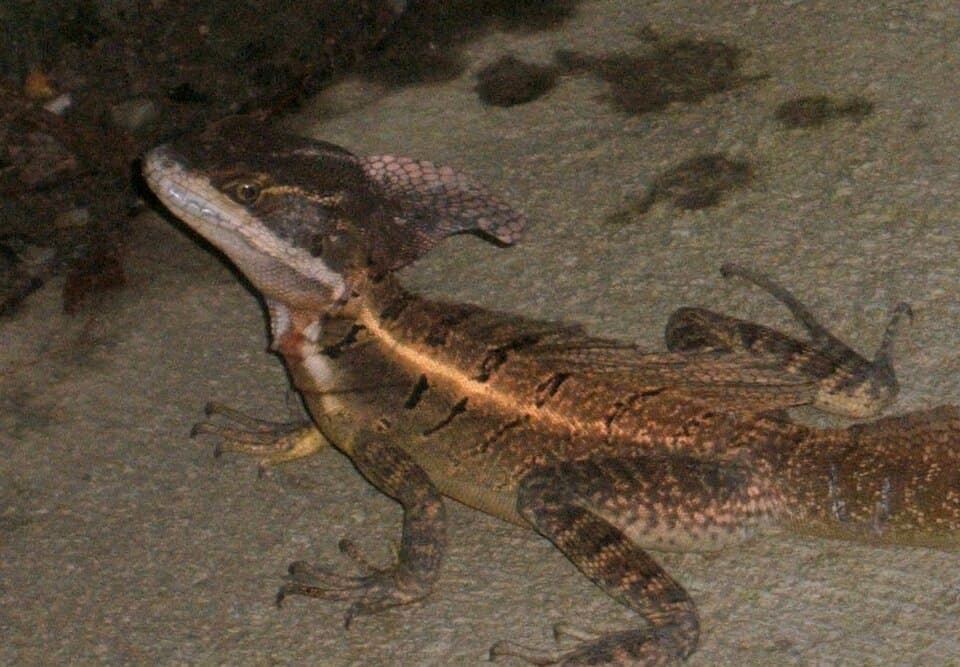
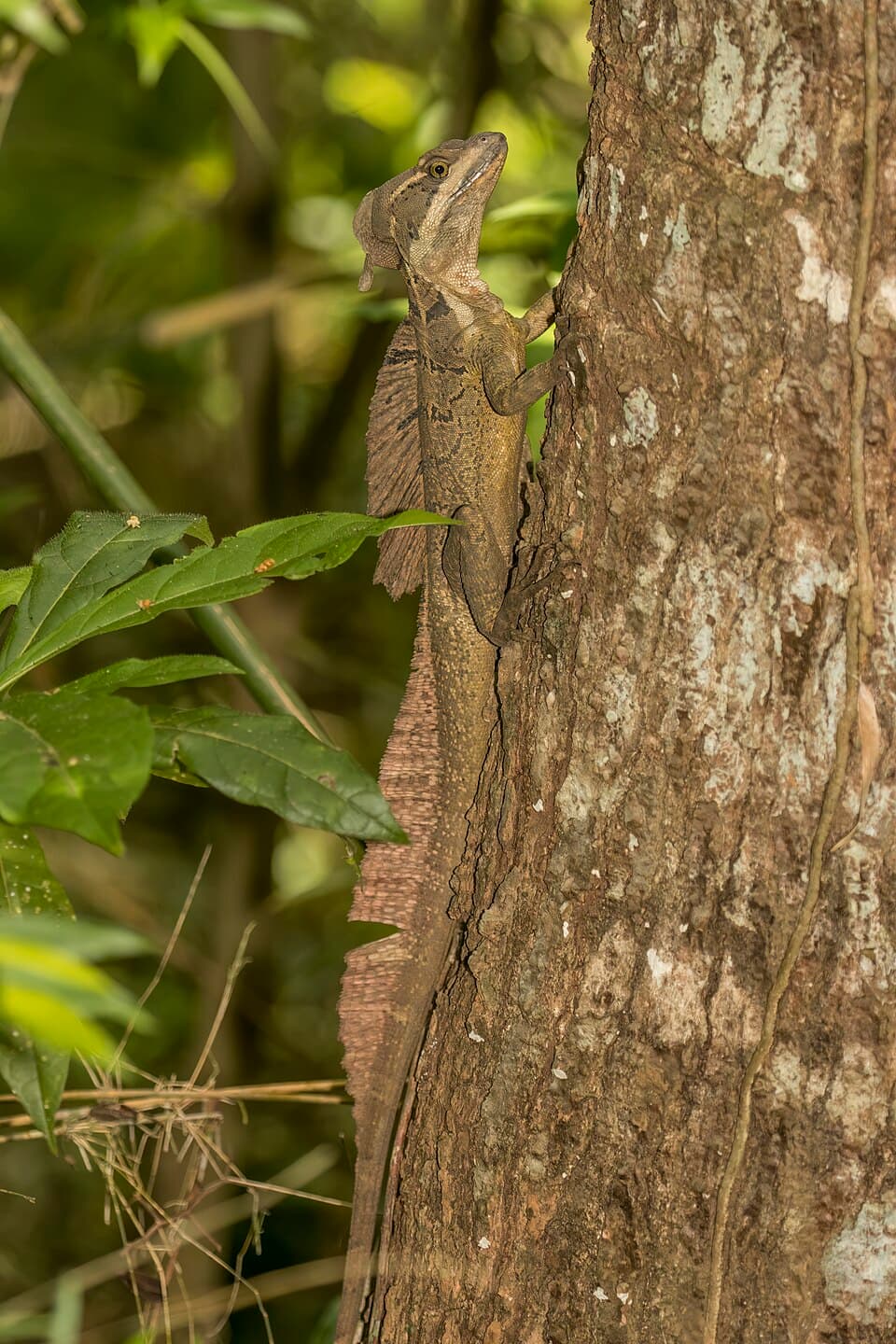
It has a slender body, a long tail making up much of its total length, and prominent crests running along its head, back, and tail, especially pronounced in adult males. Its hind feet have long toes fringed with flaps of skin that unfold to increase surface area, a key part of its water-running ability.
Habitat & Distribution
The basilisk lizard is found in rainforest, wetlands habitats.
Diet & Behavior
Diet: Omnivore — Animals with flexible diets that eat both plants and animals, adapting to whatever food is available in their environment.
When startled, a basilisk lizard can sprint across the surface of water on its hind legs, using rapid leg movements and its fringed toes to slap the water fast enough to create tiny air pockets that briefly support its weight before it sinks. It can sustain this remarkable trick for several meters before dropping into the water and swimming normally, and juveniles, being lighter, can run even farther than adults.
Predators
- Snakes
- Birds of prey
- Larger reptiles
Prey
- Insects
- Small invertebrates
- Small vertebrates
- Fruit
- Flowers
Interesting Facts
- 1
The basilisk lizard's nickname, the 'Jesus Christ lizard,' comes directly from its ability to run across the surface of water.
- 2
Fringed scales on its hind toes unfold underwater to increase surface area, helping it stay atop the water briefly while sprinting.
- 3
Lighter juvenile basilisks can run farther across water than heavier adults, since their weight-to-surface-area ratio is more favorable.
- 4
It's an omnivore, eating everything from insects and small vertebrates to fruit and flowers.
- 5
Once it slows down or sinks, a basilisk lizard is also a capable swimmer, able to stay submerged for extended periods to evade a predator.
Gallery
Basilisk Lizard FAQs
How does the basilisk lizard run on water?
It uses rapid leg strokes combined with fringed scales on its hind toes that unfold to slap the water's surface, creating small air pockets that briefly support its weight before it sinks -- letting it sprint several meters across water before swimming normally.
Why is it called the 'Jesus Christ lizard'?
The nickname comes directly from its famous ability to run upright across the surface of water without sinking, at least for a short distance.
What does a basilisk lizard eat?
Basilisk lizards are omnivores, eating insects, small invertebrates, small vertebrates, and plant matter including fruit and flowers.
Where do basilisk lizards live?
Basilisk lizards are native to the rainforests of Central America and parts of northern South America, usually found near rivers, streams, and other bodies of water.
What does a basilisk lizard eat?
The basilisk lizard is an omnivore. Animals with flexible diets that eat both plants and animals, adapting to whatever food is available in their environment.
Where does the basilisk lizard live?
The basilisk lizard is found in rainforest, wetlands habitats across south america and north america.
Is the basilisk lizard endangered?
The basilisk lizard has a conservation status of Least Concern. Widespread and abundant species that are not currently at significant risk of extinction.
How long do basilisk lizards live?
A basilisk lizard's typical lifespan is 7–10 years in the wild.
How much does a basilisk lizard weigh?
An adult basilisk lizard typically weighs 0.2–0.6 kg.