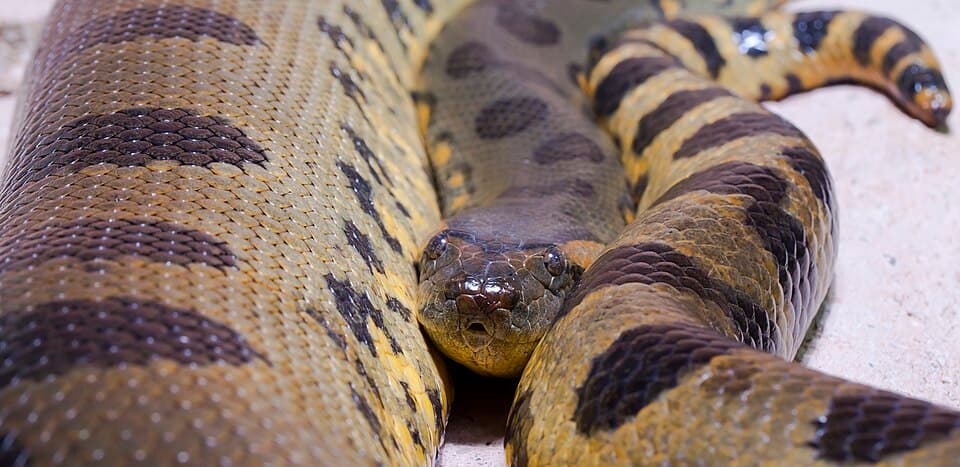
Photo: Diego Delso · CC BY-SA 3.0 · via Wikimedia Commons
Overview
The green anaconda is the heaviest snake species in the world, a massive non-venomous constrictor found in the swamps, rivers, and flooded grasslands of South America. Unlike many large snakes, it spends much of its time submerged in water, where its bulk is supported and it can ambush prey coming to drink.
Appearance
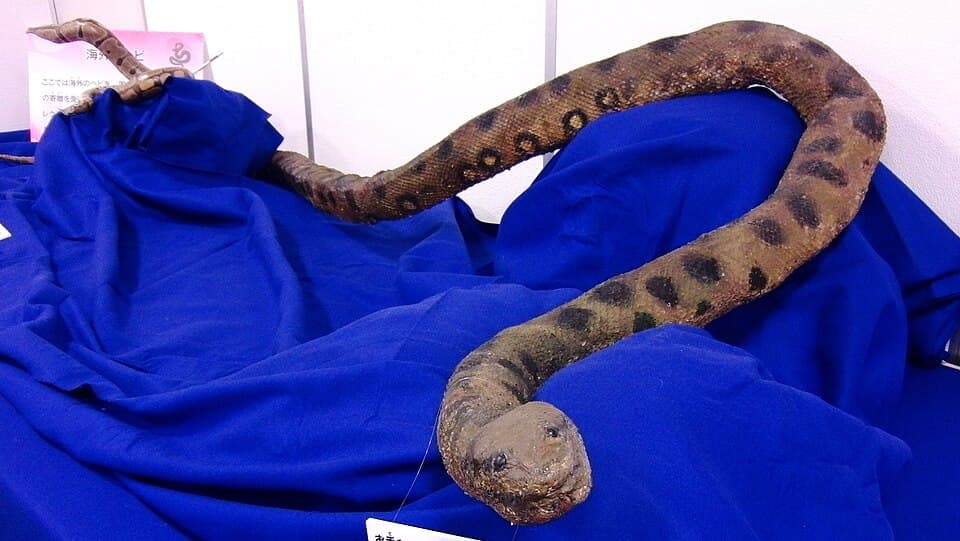
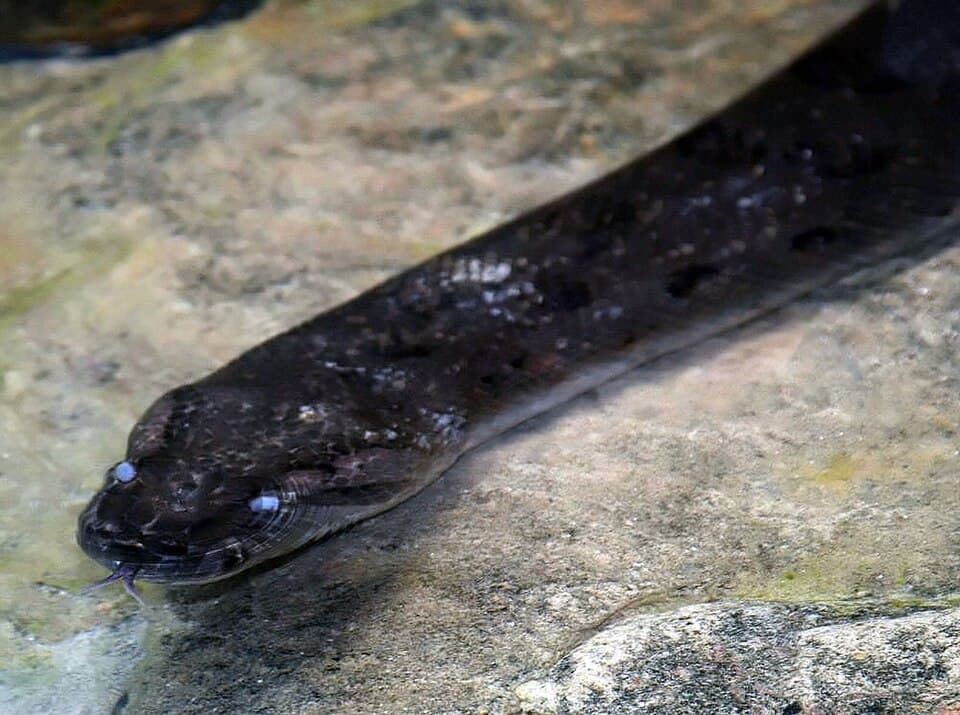
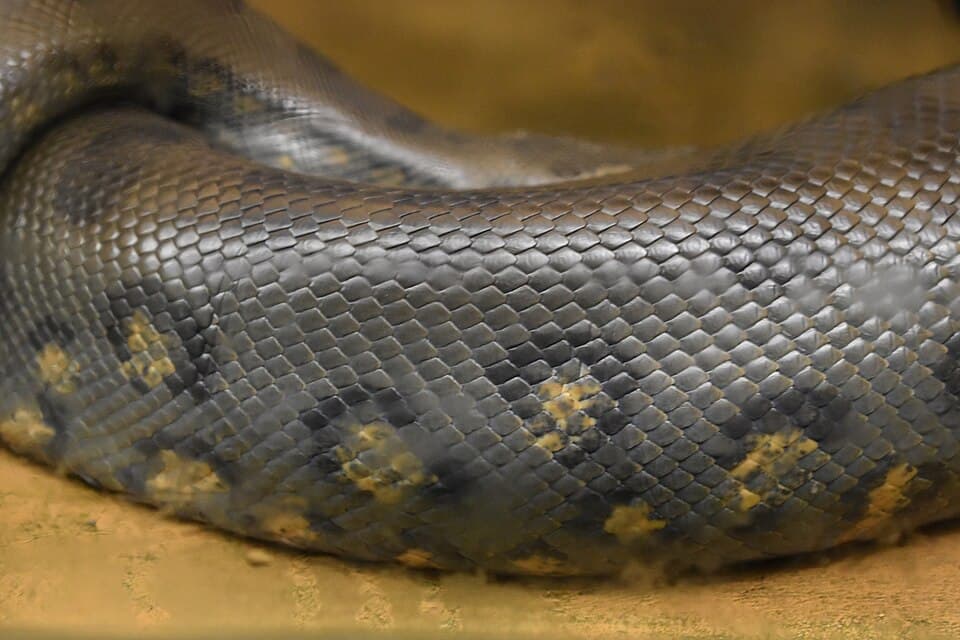
It has an enormously thick, muscular body covered in dark green to olive-brown scales patterned with black oval blotches, small eyes and nostrils positioned high on its head to allow it to see and breathe while mostly submerged, and no venom or fangs. Females are considerably larger and heavier than males, an unusual size difference among snakes.
Habitat & Distribution
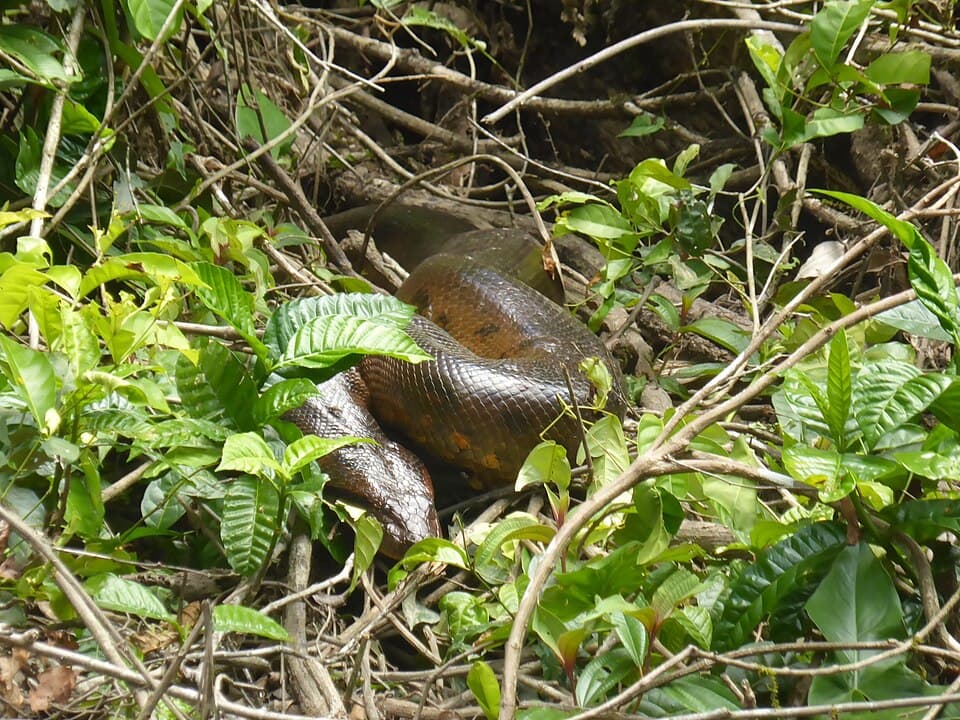
The green anaconda is found in rainforest, wetlands habitats.
Diet & Behavior
Diet: Carnivore — Meat-eating animals that hunt, scavenge, or fish for prey, ranging from big cats to snakes and birds of prey.
Green anacondas hunt primarily by ambush, lying motionless in water or dense vegetation before striking and wrapping around prey in powerful coils that tighten with each exhale the prey takes, eventually cutting off blood flow rather than crushing bones. After a large meal, an anaconda can go weeks or even months without needing to eat again, conserving energy by remaining largely inactive during digestion.
Predators
- Jaguars
- Caimans (young or smaller individuals)
- Humans
Prey
- Capybaras
- Deer
- Birds
- Fish
- Caimans
Interesting Facts
- 1
The green anaconda is the heaviest snake species in the world, with large females weighing close to 100kg.
- 2
Female green anacondas are significantly larger than males, an unusual pattern among snakes.
- 3
It kills prey through constriction, tightening its coils with each breath the prey exhales until blood flow stops, rather than by crushing bones.
- 4
After a large meal, a green anaconda can go weeks or months without eating again.
- 5
It spends much of its life in water, where its considerable bulk is easier to support than on land.
Gallery
Green Anaconda FAQs
Is the green anaconda venomous?
No -- the green anaconda has no venom or fangs. It's a constrictor that kills prey by wrapping around it and tightening its coils until blood flow stops.
How big can a green anaconda get?
Green anacondas typically grow 3 to 6 meters long, with large females weighing close to 100kg, making it the heaviest snake species in the world by weight.
Why do green anacondas spend so much time in water?
Water helps support the anaconda's enormous bulk more easily than land does, and it also provides an effective ambush position for catching prey that comes to drink or cross the water.
What do green anacondas eat?
Green anacondas eat a wide variety of prey including capybaras, deer, birds, fish, and even caimans, using constriction to subdue animals much larger than many other snake species could handle.
What does a green anaconda eat?
The green anaconda is a carnivore. Its diet includes capybaras, deer, birds, fish.
Where does the green anaconda live?
The green anaconda is found in rainforest, wetlands habitats across south america.
Is the green anaconda endangered?
The green anaconda has a conservation status of Least Concern. Widespread and abundant species that are not currently at significant risk of extinction.
How long do green anacondas live?
A green anaconda's typical lifespan is 10–30 years in the wild.
How much does a green anaconda weigh?
An adult green anaconda typically weighs 30–97 kg.