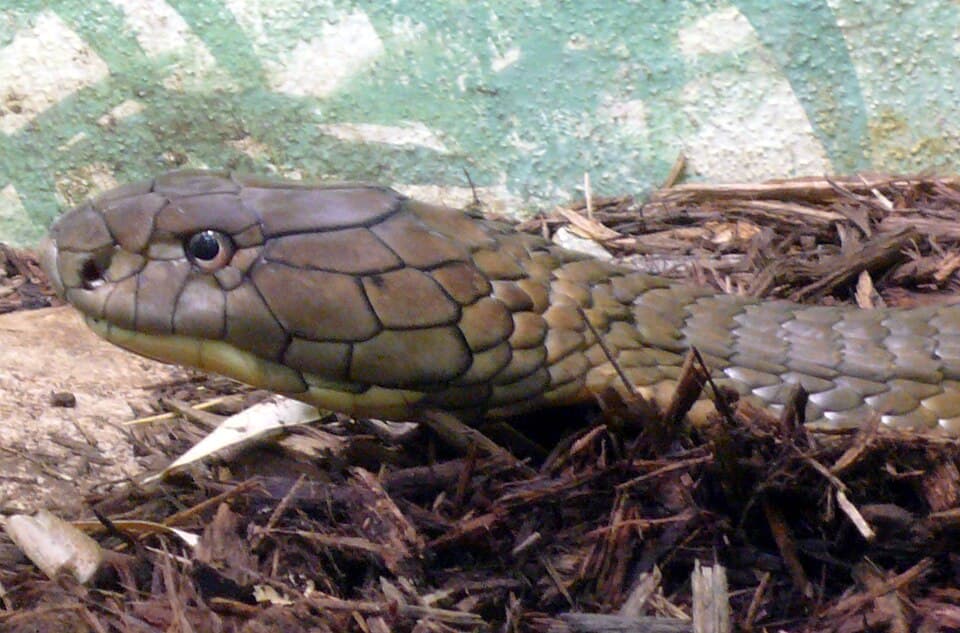
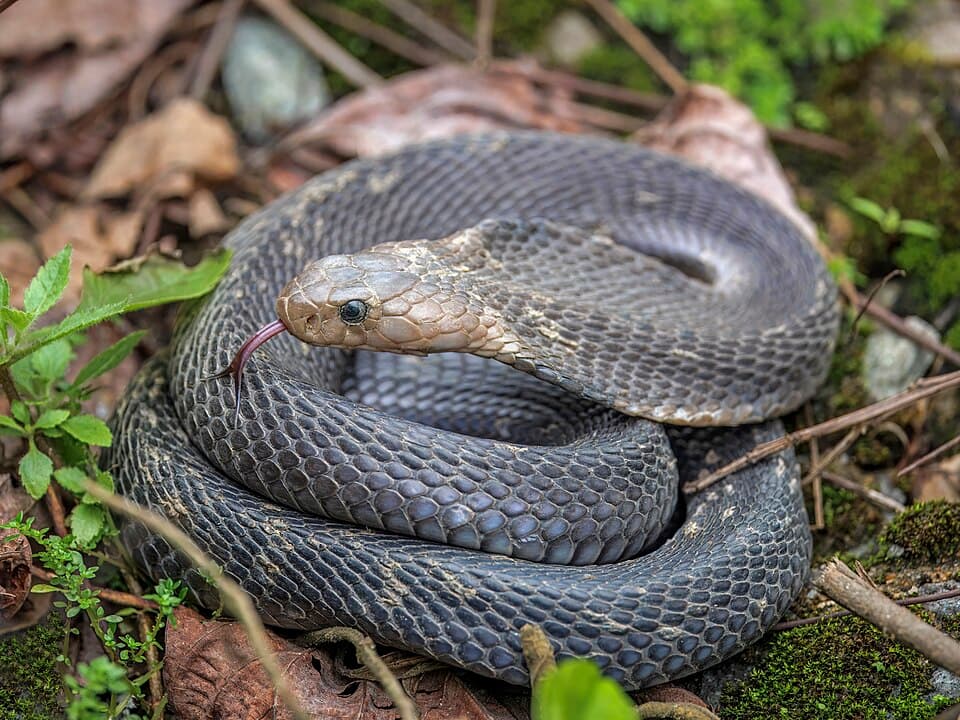
Photo: TimVickers · Public domain · via Wikimedia Commons
Overview
The king cobra is the world's longest venomous snake, found across the forests, bamboo thickets, and mangrove swamps of South and Southeast Asia, from India and southern China to the Philippines and Indonesia. It is unusual among snakes for building and guarding a nest for its eggs, and despite its size and reputation, it is a shy, diurnal hunter that generally avoids humans rather than confronting them.
Appearance
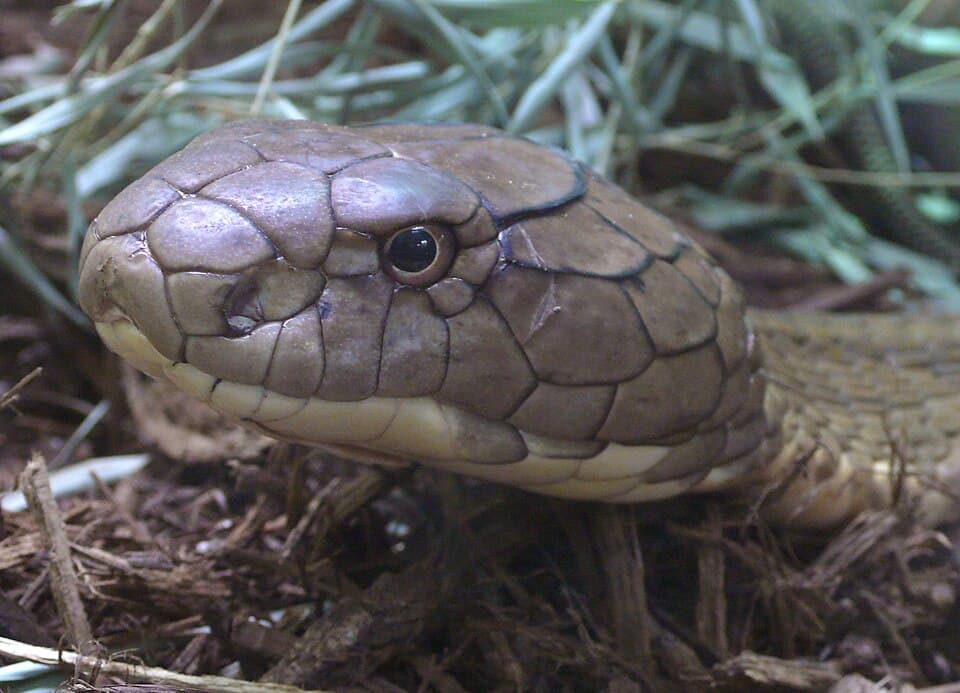
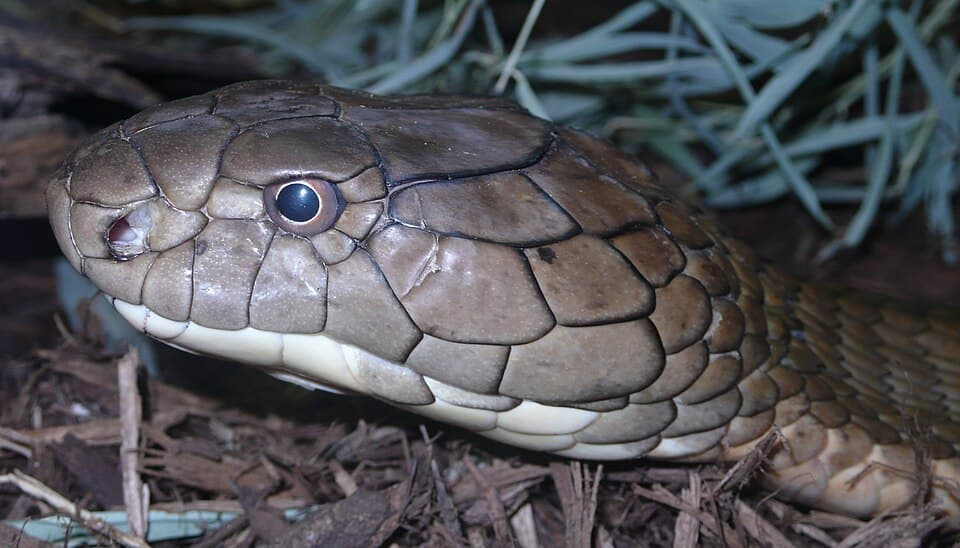
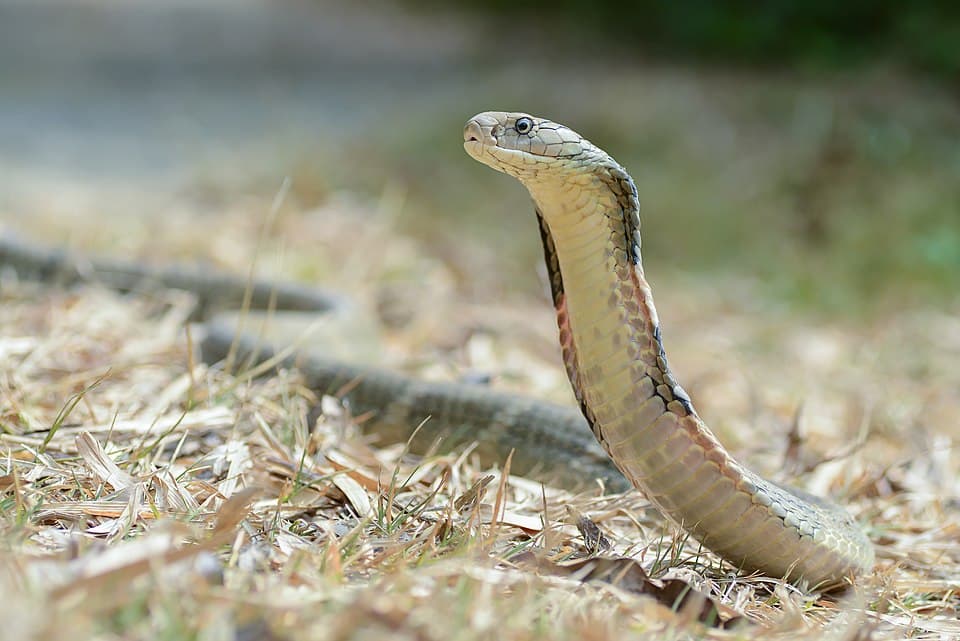
It has an olive-green to black body, often with faint yellow or white crossbands, a distinctive hood formed by elongated neck ribs that flares when threatened, and pale, cream-colored underparts. It can raise roughly a third of its body off the ground when rearing up, bringing it close to eye level with an adult human, and it sheds its smooth, glossy scales regularly as it grows.
Habitat & Distribution
The king cobra is found in rainforest, forest habitats.
Diet & Behavior
Diet: Carnivore — Meat-eating animals that hunt, scavenge, or fish for prey, ranging from big cats to snakes and birds of prey.
King cobras are diurnal, primarily hunting other snakes — including other venomous species — as well as large lizards, relying on keen eyesight and a strong sense of smell through their forked tongue. When threatened, they raise the front of the body, spread their hood, and produce a distinctive low, growl-like hiss unlike the higher-pitched hiss of most other snakes. They are one of the only snake species known to build and actively guard a nest, with the female coiling near her eggs for two to three months until they hatch.
Predators
- Mongoose
- Large birds of prey
Prey
- Other snakes
- Lizards
- Rodents
Interesting Facts
- 1
A single bite can deliver enough venom to kill an elephant.
- 2
It's the only snake species known to build a nest for its eggs.
- 3
It primarily preys on other snakes, including venomous species.
- 4
Its scientific name, Ophiophagus hannah, literally means "snake-eater."
- 5
When rearing up to defend itself, it can reach roughly a third of its body length off the ground — tall enough to meet an adult human at eye level.
- 6
It produces a distinctive low, growl-like hiss when threatened, rather than the higher-pitched hiss typical of most other snakes.
Gallery
King Cobra FAQs
Is the king cobra the most venomous snake in the world?
No — several other species, such as the inland taipan, have more potent venom drop for drop. What makes the king cobra especially dangerous is the sheer volume of venom it can deliver in a single bite, enough to be life-threatening even to very large animals.
Where do king cobras live?
King cobras are found across South and Southeast Asia, including India, southern China, and parts of the Philippines and Indonesia, typically in dense forests, bamboo thickets, and mangrove swamps near water.
Do king cobras attack humans?
King cobras generally avoid humans and prefer to retreat when possible. Most bites happen when a snake is startled, cornered, or defending its nest, rather than through unprovoked aggression.
How long do king cobras live?
In the wild, king cobras typically live around 17 to 20 years.
What does a king cobra eat?
The king cobra is a carnivore. Its diet includes other snakes, lizards, rodents.
Where does the king cobra live?
The king cobra is found in rainforest, forest habitats across asia.
Is the king cobra endangered?
The king cobra has a conservation status of Vulnerable. Species facing a high risk of extinction in the wild due to habitat loss, hunting, or other pressures.
How long do king cobras live?
A king cobra's typical lifespan is 17–20 years in the wild.
How fast can a king cobra run?
The king cobra can reach speeds of up to 19 km/h.
How much does a king cobra weigh?
An adult king cobra typically weighs 6–9 kg.