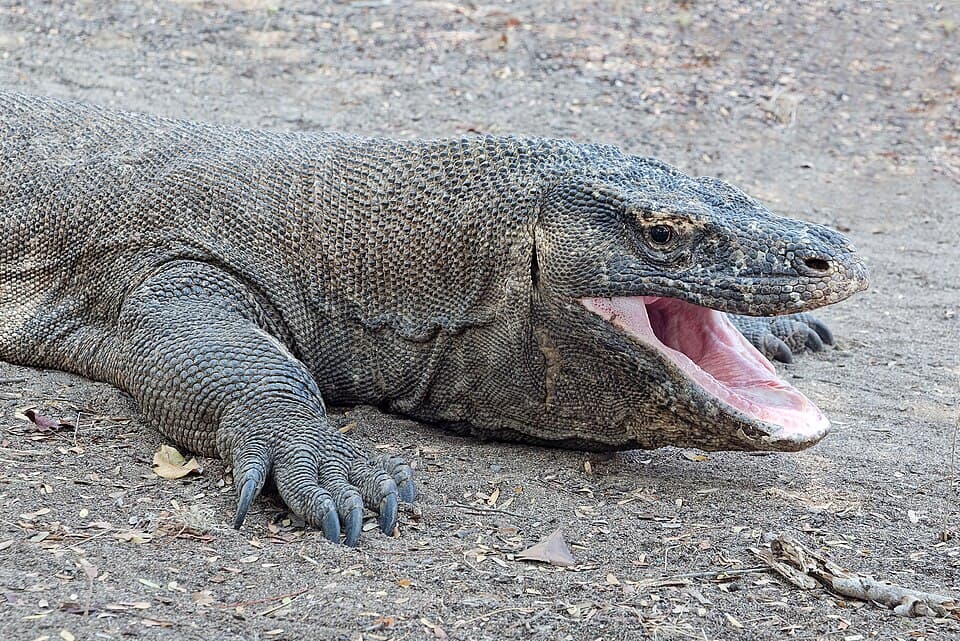
Photo: Charles J. Sharp · CC BY-SA 4.0 · via Wikimedia Commons
Overview
The Komodo dragon is the largest living lizard species in the world, found only on a handful of Indonesian islands including Komodo, Rinca, and Flores. A powerful apex predator, it can take down prey as large as water buffalo using a combination of a powerful bite, sharp serrated teeth, and a toxic bite that impairs its victim.
Appearance
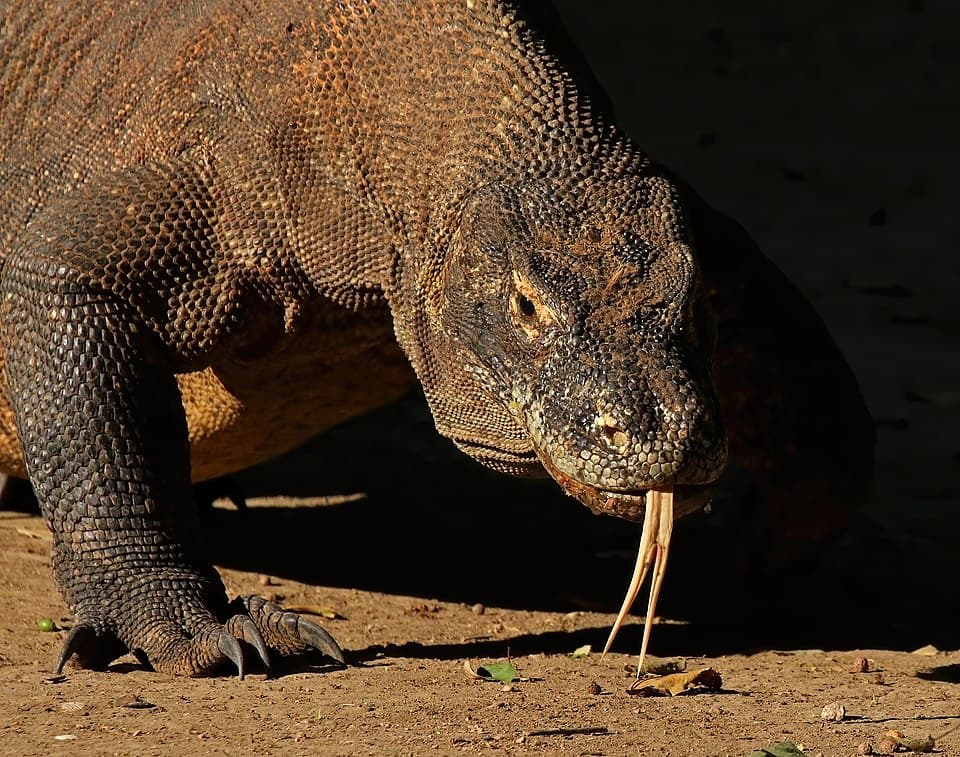
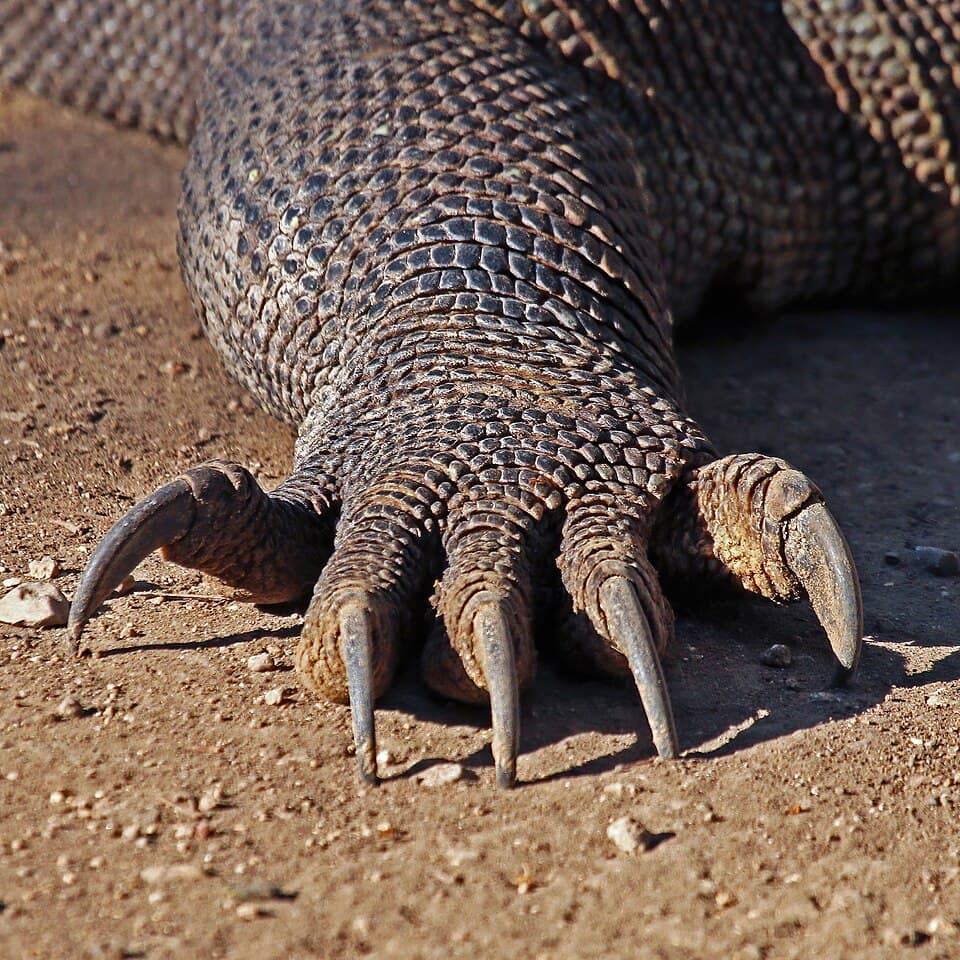
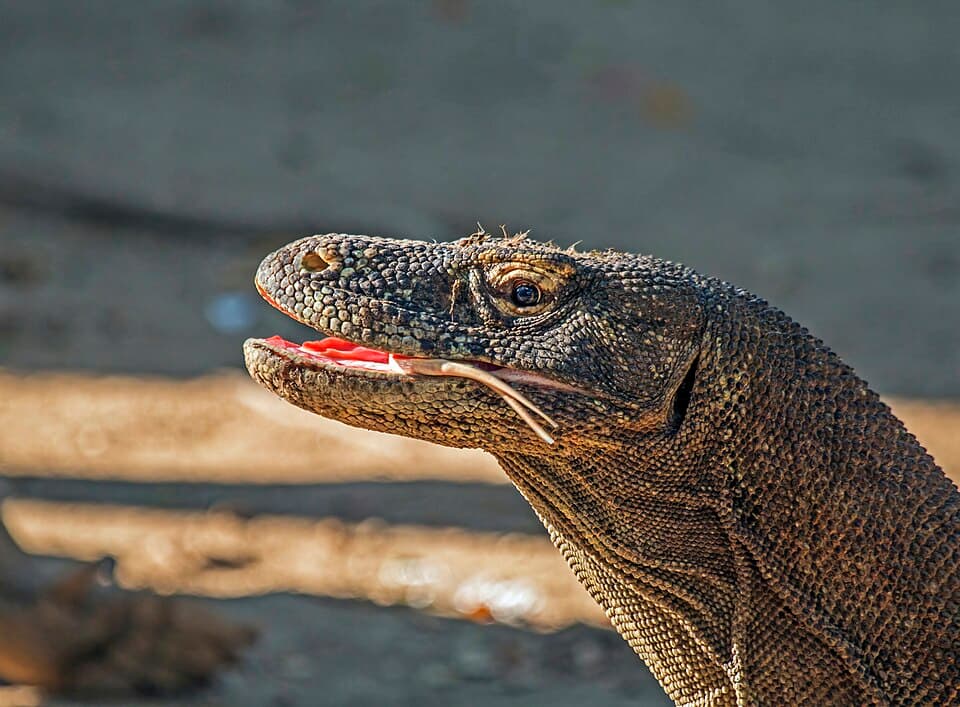
It has a long, muscular body covered in tough, armored scales, powerful clawed limbs, and a long, forked yellow tongue used to detect scent particles in the air, much like a snake. Its bite is lined with curved, serrated teeth designed for tearing flesh, and its saliva contains venom that affects blood clotting and blood pressure in prey.
Habitat & Distribution
The komodo dragon is found in grassland, forest habitats.
Diet & Behavior
Diet: Carnivore — Meat-eating animals that hunt, scavenge, or fish for prey, ranging from big cats to snakes and birds of prey.
Komodo dragons are patient ambush predators, capable of remaining motionless for long periods before launching a powerful, fast strike at passing prey. After delivering a bite, a dragon may follow a wounded animal for hours or even days, using its acute sense of smell to track the effects of its venom and bacteria-laden saliva until the prey succumbs.
Predators
- Adult Komodo dragons occasionally prey on juveniles
Prey
- Deer
- Wild boar
- Water buffalo
- Smaller Komodo dragons
- Carrion
Interesting Facts
- 1
The Komodo dragon is the largest living lizard species on Earth, reaching up to 3 meters in length.
- 2
Its bite delivers venom that affects blood clotting and blood pressure, weakening prey even after the initial attack.
- 3
Young Komodo dragons spend much of their early life in trees to avoid being eaten by adults of their own species.
- 4
It can detect carrion from several kilometers away using its long, forked tongue to sense scent particles in the air.
- 5
Komodo dragons are found naturally on only a handful of Indonesian islands and nowhere else in the wild.
Gallery
Komodo Dragon FAQs
Is a Komodo dragon's bite venomous?
Yes -- Komodo dragon saliva contains venom that impairs blood clotting and lowers blood pressure in its prey, working alongside its serrated teeth and powerful bite to weaken and eventually bring down large animals.
How big is a Komodo dragon?
Komodo dragons are the largest living lizard species, with adults reaching up to 3 meters in length and weighing as much as 70 to 90kg.
Where do Komodo dragons live?
Komodo dragons are found only in the wild on a small number of Indonesian islands, including Komodo, Rinca, Flores, and Gili Motang.
Why are Komodo dragons endangered?
Komodo dragons are threatened by a combination of habitat loss, declining prey populations, and rising sea levels linked to climate change, which threatens to shrink the low-lying island habitats they depend on.
What does a komodo dragon eat?
The komodo dragon is a carnivore. Its diet includes deer, wild boar, water buffalo, smaller komodo dragons.
Where does the komodo dragon live?
The komodo dragon is found in grassland, forest habitats across asia.
Is the komodo dragon endangered?
The komodo dragon has a conservation status of Endangered. Species facing a very high risk of extinction in the wild in the near future.
How long do komodo dragons live?
A komodo dragon's typical lifespan is 30–50 years in the wild.
How much does a komodo dragon weigh?
An adult komodo dragon typically weighs 70–90 kg.