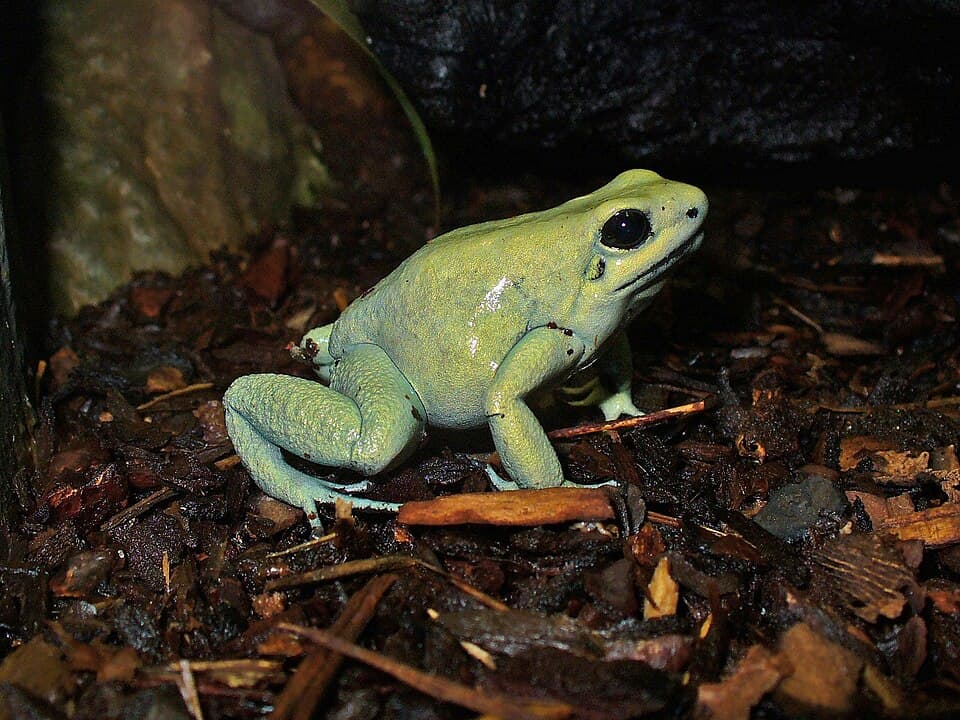
Photo: H. Zell · CC BY-SA 3.0 · via Wikimedia Commons
Overview
The golden poison frog is widely regarded as the most toxic animal on Earth by weight, native to a small stretch of Colombian rainforest.
Appearance
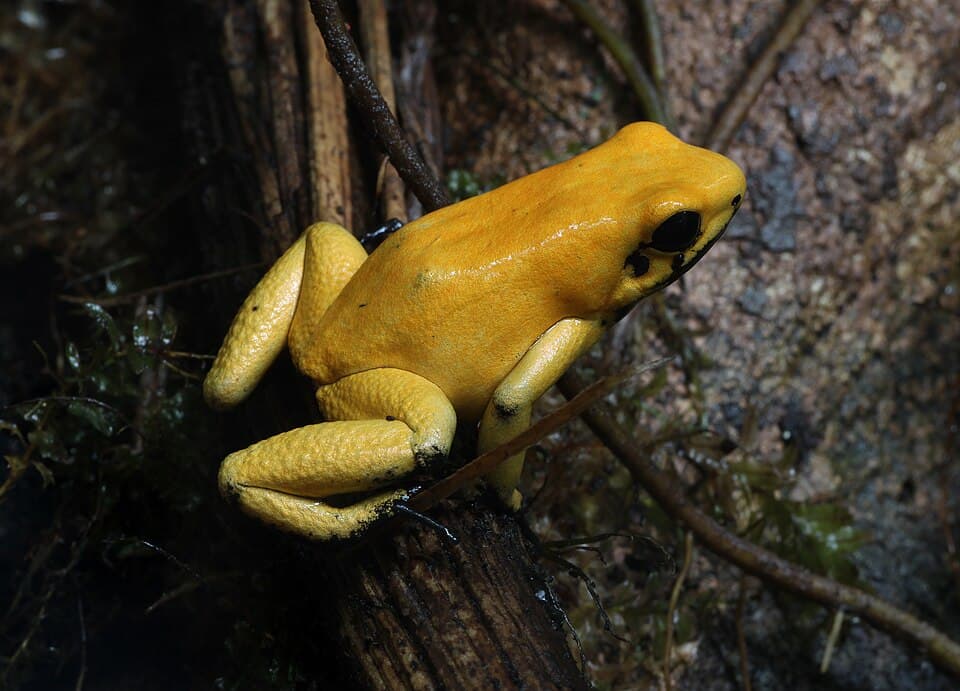
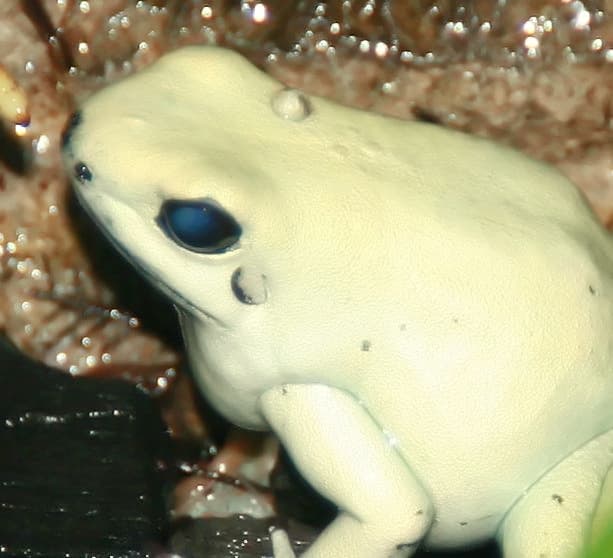
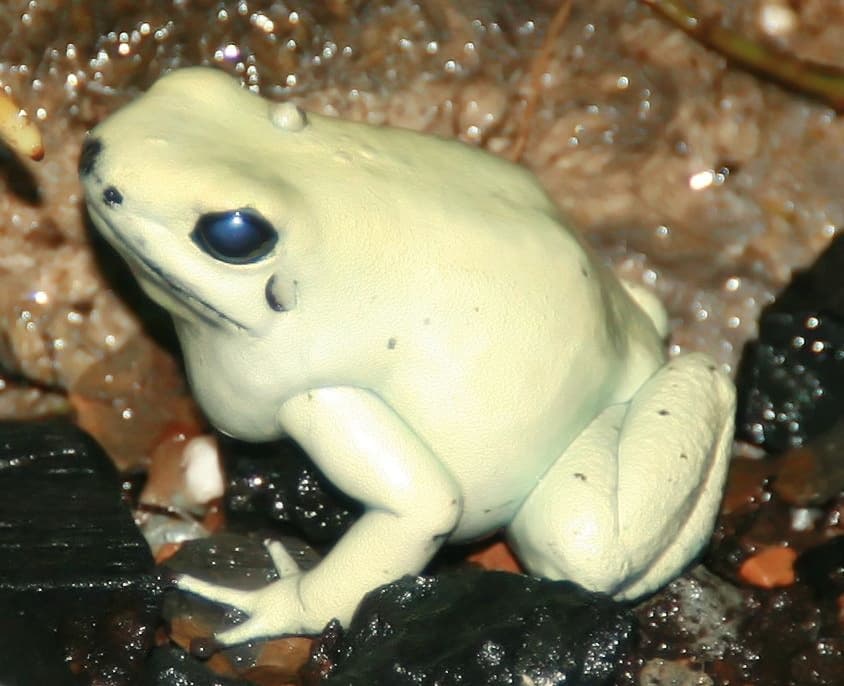
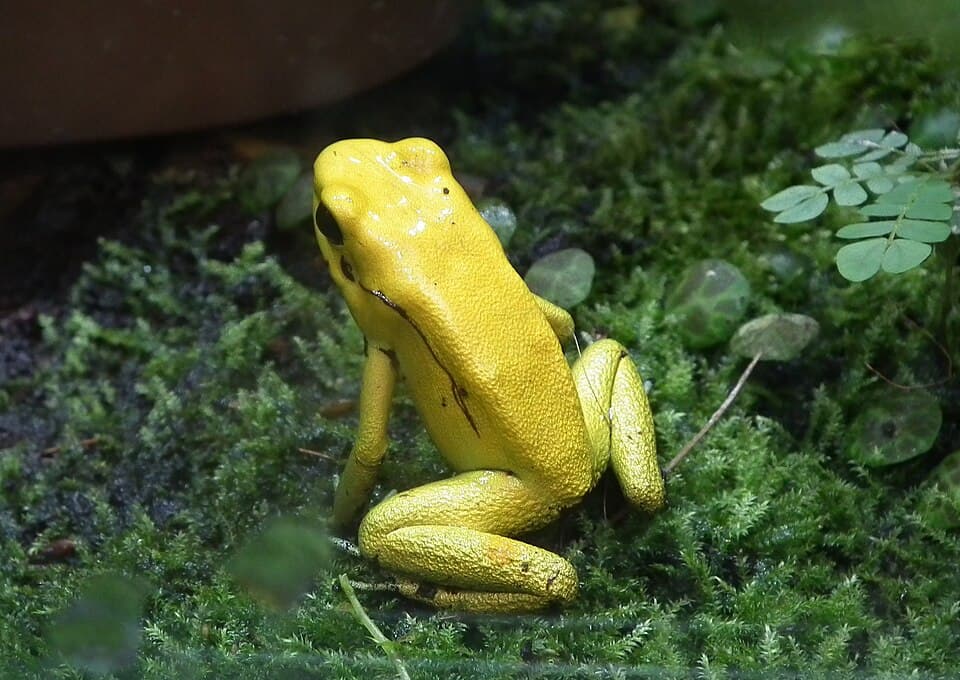
It has a small, slender body covered in vivid solid yellow, orange, or pale green skin that warns predators of its toxicity.
Habitat & Distribution
The golden poison frog is found in rainforest habitats.
Diet & Behavior
Diet: Carnivore — Meat-eating animals that hunt, scavenge, or fish for prey, ranging from big cats to snakes and birds of prey.
Unusually for a poisonous animal, it is active during the day, relying on its bright color rather than camouflage to deter predators.
Predators
- Fire-bellied snake (immune to its toxin)
Prey
- Ants
- Termites
- Small insects
Interesting Facts
- 1
A single frog carries enough toxin to potentially kill ten adult humans.
- 2
It doesn't produce the toxin itself — it comes from its wild insect diet.
- 3
Local Emberá people historically used its toxin to coat blow-dart tips.
Gallery
Golden Poison Frog FAQs
What does a golden poison frog eat?
The golden poison frog is a carnivore. Its diet includes ants, termites, small insects.
Where does the golden poison frog live?
The golden poison frog is found in rainforest habitats across south america.
Is the golden poison frog endangered?
The golden poison frog has a conservation status of Endangered. Species facing a very high risk of extinction in the wild in the near future.
How long do golden poison frogs live?
A golden poison frog's typical lifespan is 5–10 years in the wild.
How much does a golden poison frog weigh?
An adult golden poison frog typically weighs 0.001–0.03 kg.