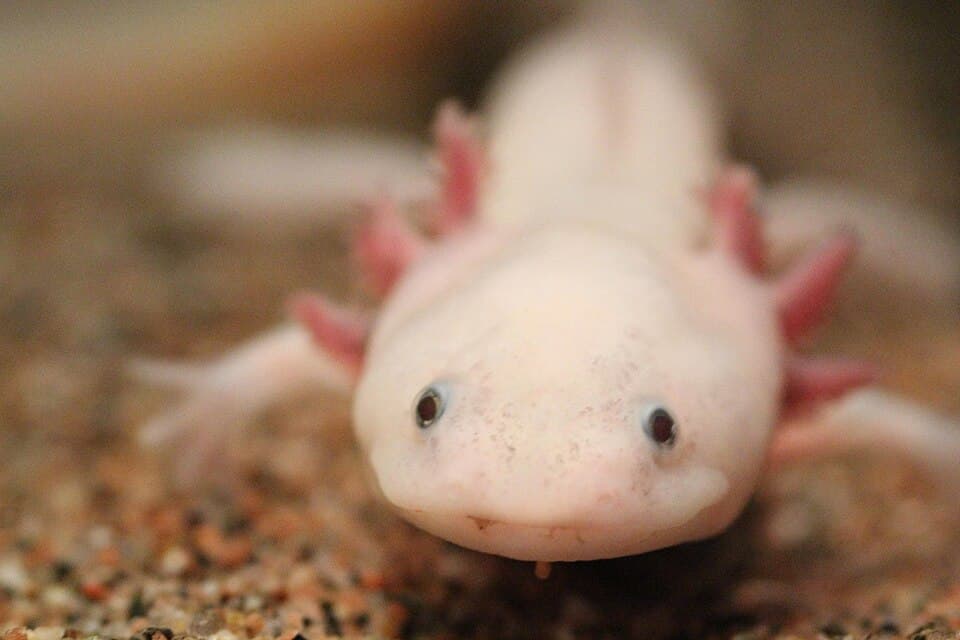
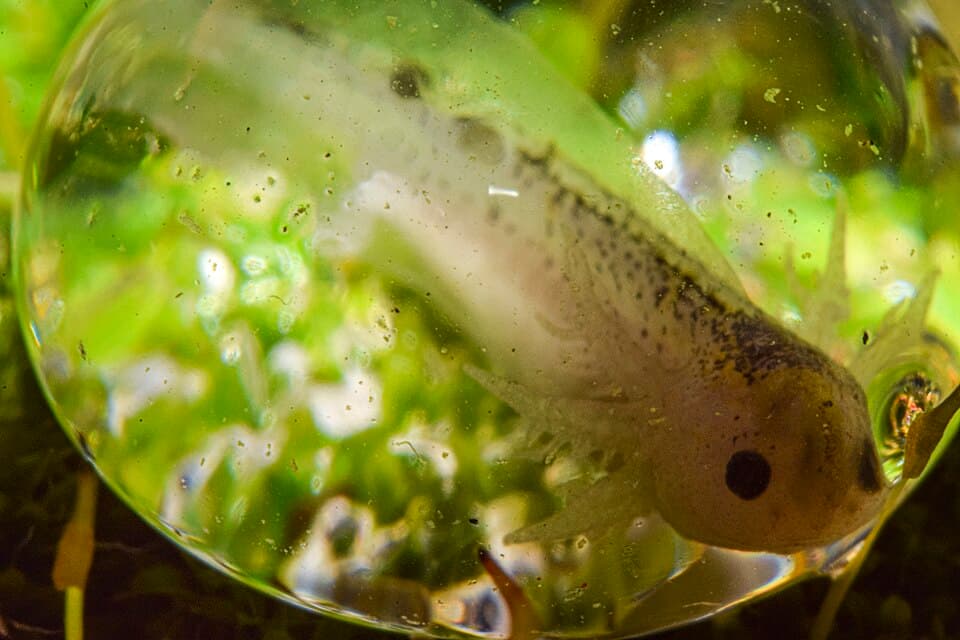
Photo: Ruben Undheim from Trondheim, Norway · CC BY-SA 2.0 · via Wikimedia Commons
Overview
The axolotl is a remarkable salamander from a single lake system in Mexico that never fully undergoes metamorphosis, instead retaining its larval, gilled form and living its entire life underwater. This permanent juvenile state, called neoteny, along with its extraordinary ability to regrow lost limbs, organs, and even parts of its brain, has made it one of the most studied animals in modern regenerative biology research.
Appearance
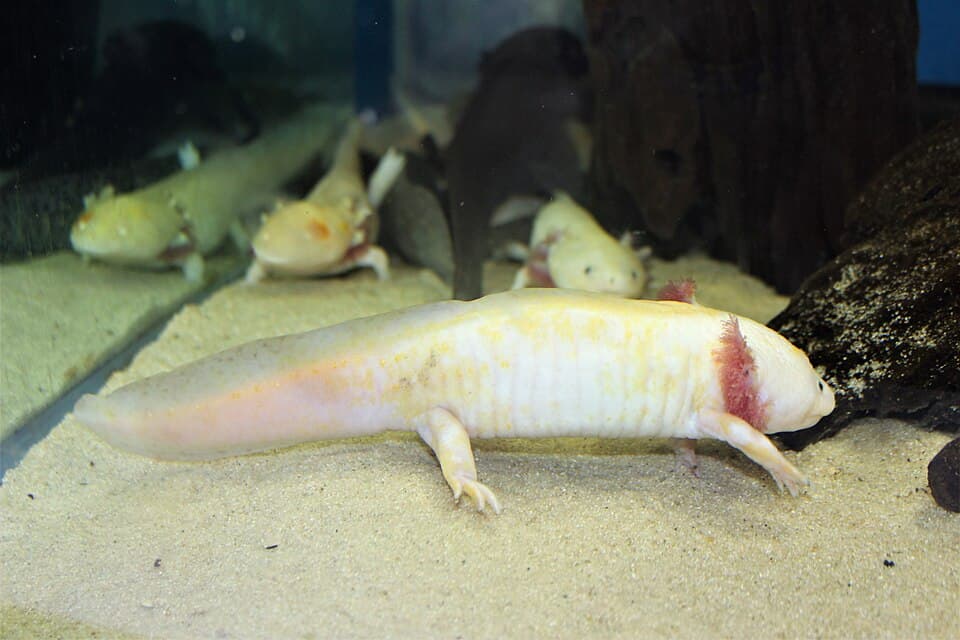
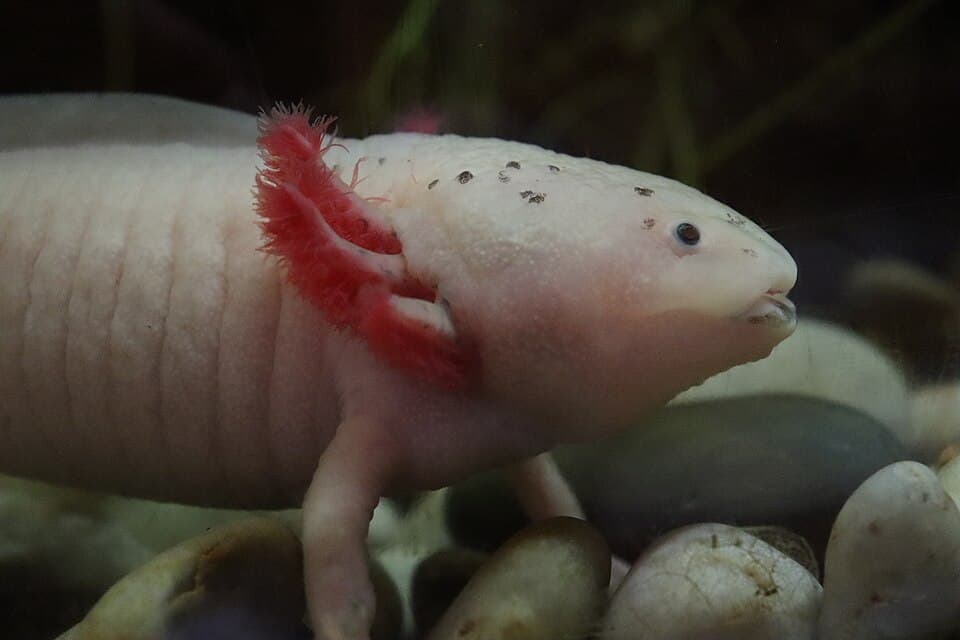
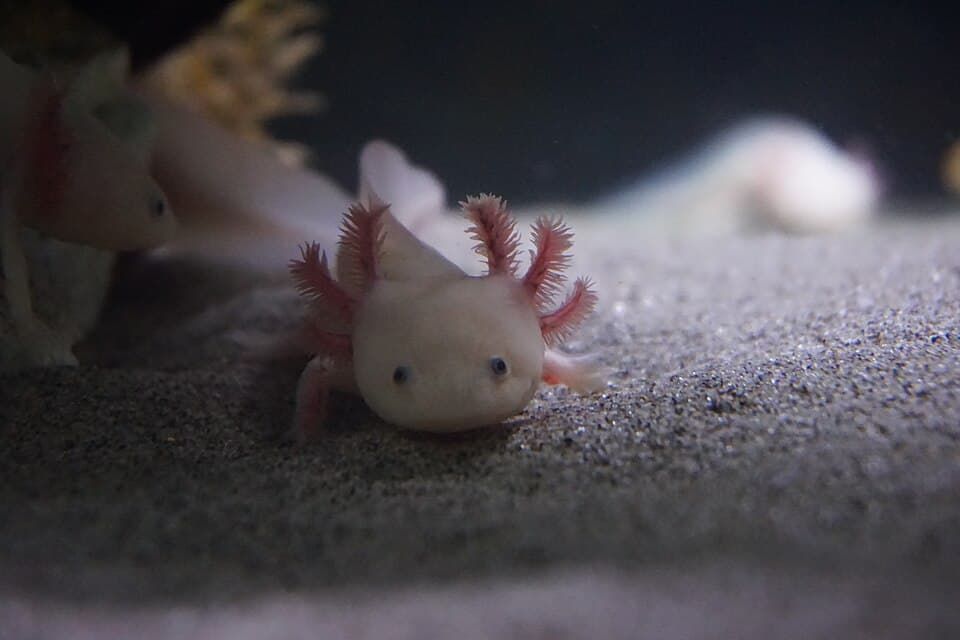
It has a wide, smiling-looking mouth, small underdeveloped eyes, feathery external gills branching from either side of its head, and a long tail fin running down its back, unlike land-dwelling salamanders that lose these features after metamorphosis. Wild axolotls are typically dark mottled brown or black, though selectively bred varieties including pale pink and white forms are common in captivity.
Habitat & Distribution
The axolotl is found in wetlands habitats.
Diet & Behavior
Diet: Carnivore — Meat-eating animals that hunt, scavenge, or fish for prey, ranging from big cats to snakes and birds of prey.
Axolotls spend their entire lives in water, breathing primarily through their external gills rather than developing lungs suited to life on land like most salamanders do. They are capable of fully regenerating lost limbs, damaged spinal cord tissue, and even portions of the heart and brain, regrowing complete, functional structures rather than simple scar tissue, a level of regeneration far beyond what most vertebrates can achieve.
Predators
- Large fish (introduced)
- Herons
- Humans (habitat impact)
Prey
- Small fish
- Insects
- Worms
- Mollusks
Interesting Facts
- 1
Axolotls never undergo full metamorphosis, remaining in their gilled, aquatic larval form for their entire lives.
- 2
They can fully regenerate lost limbs, spinal cord tissue, and even parts of the heart and brain.
- 3
In the wild, axolotls survive naturally in only a single lake system near Mexico City, making them critically endangered.
- 4
Their remarkable regenerative abilities have made them one of the most important species in modern medical research.
- 5
Axolotls are named after an Aztec god associated with lightning and death, reflecting their long cultural significance in Mexico.
Gallery
Axolotl FAQs
Why don't axolotls turn into land salamanders?
Axolotls exhibit a trait called neoteny, meaning they reach sexual maturity while retaining their aquatic larval features, like external gills, instead of undergoing full metamorphosis into a land-dwelling adult form the way most salamanders do.
Can axolotls really regrow body parts?
Yes -- axolotls can fully regenerate lost limbs, damaged spinal cord tissue, and even portions of the heart and brain, regrowing complete, functional structures rather than just scar tissue, a level of regeneration exceptional even among salamanders.
Why are axolotls critically endangered?
Wild axolotls survive naturally in only a single, heavily degraded lake system near Mexico City, threatened by water pollution, habitat loss, and introduced predatory fish, despite the species being common in captivity worldwide.
Do axolotls breathe air?
Axolotls primarily breathe through their external feathery gills and can also absorb some oxygen through their skin, though they can also gulp air at the surface as a supplemental way to breathe.
What does a axolotl eat?
The axolotl is a carnivore. Its diet includes small fish, insects, worms, mollusks.
Where does the axolotl live?
The axolotl is found in wetlands habitats across north america.
Is the axolotl endangered?
The axolotl has a conservation status of Critically Endangered. Species facing an extremely high risk of extinction, often down to only a handful of populations left in the wild.
How long do axolotls live?
A axolotl's typical lifespan is 10–15 years in the wild.
How much does a axolotl weigh?
An adult axolotl typically weighs 0.06–0.3 kg.