
Photo: kiwikki · CC BY-SA 4.0 · via Wikimedia Commons
Overview
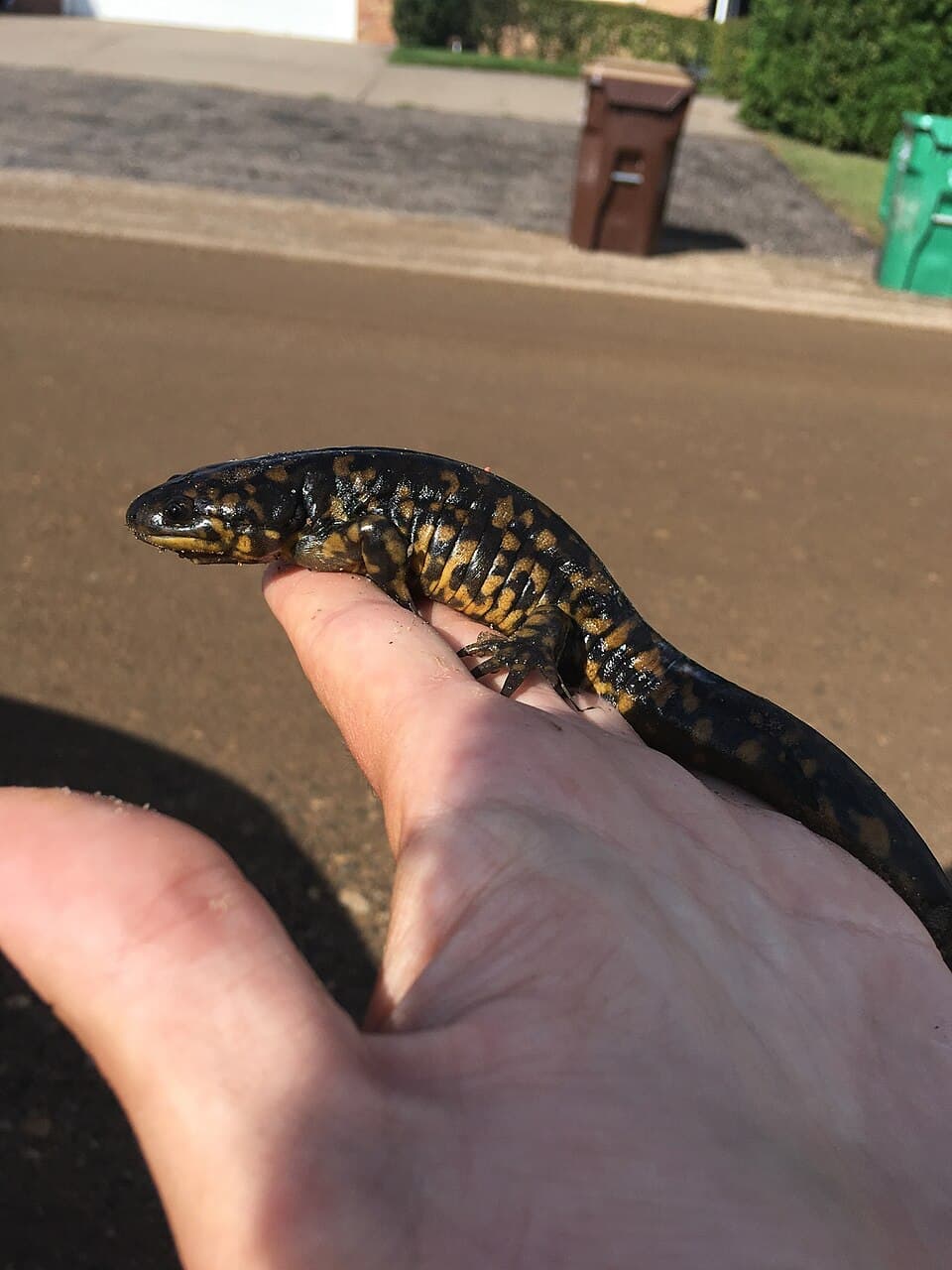
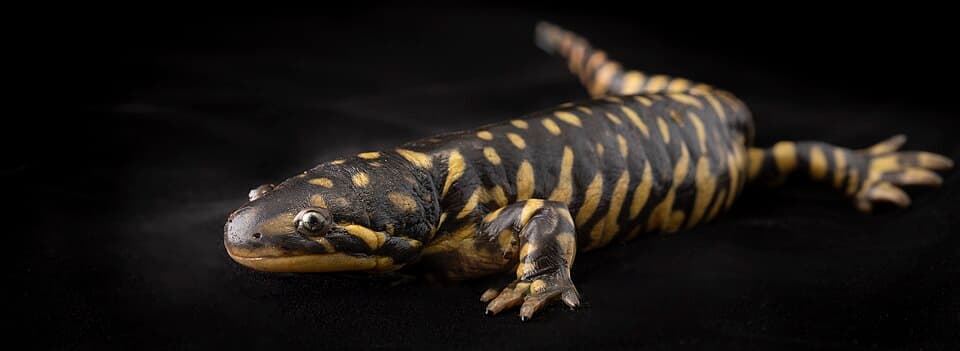
The tiger salamander is one of the largest land-dwelling salamanders in North America, named for the yellow or olive blotches and stripes marking its dark body. Most of its life is spent hidden underground in burrows, either ones it digs itself or ones abandoned by other animals, only emerging at night or during its brief breeding season.
Appearance
It has a stout, thick body with a broad head and small eyes, and coloring that ranges from olive-yellow blotches on black to more uniform dark brown depending on the population. Adults typically grow 15 to 33cm long, making them noticeably larger and bulkier than most other salamander species.
Habitat & Distribution
The tiger salamander is found in forest, grassland, wetlands habitats.
Diet & Behavior
Diet: Carnivore — Meat-eating animals that hunt, scavenge, or fish for prey, ranging from big cats to snakes and birds of prey.
Tiger salamanders are almost entirely nocturnal and fossorial, spending the vast majority of their lives in underground burrows and surfacing mainly to breed in temporary ponds after heavy rain. Some populations of tiger salamander larvae develop into permanently aquatic, gilled adults instead of the typical land-dwelling form, a rare condition called neoteny that lets them stay and reproduce in the water where they hatched.
Predators
- Snakes
- Birds of prey
- Raccoons
Prey
- Insects
- Earthworms
- Small amphibians
Interesting Facts
- 1
Tiger salamanders can live for over a decade, spending nearly all of that time hidden underground in burrows.
- 2
Some individuals never fully metamorphose into land-dwelling adults, instead keeping their gills and staying aquatic for life -- a condition called neoteny.
- 3
They are one of the largest terrestrial salamander species in North America, reaching up to 33cm in length.
- 4
Tiger salamanders can use their own burrows or take over burrows dug by other animals like gophers.
- 5
They breed explosively after spring rains, sometimes migrating to breeding ponds in large numbers on a single rainy night.
Gallery


Tiger Salamander FAQs
Where do tiger salamanders live?
Tiger salamanders are found across much of North America, spending most of their lives underground in burrows in forests, grasslands, and wetland edges, only surfacing at night or to breed.
What do tiger salamanders eat?
Tiger salamanders are carnivores that eat insects, earthworms, and other small invertebrates, and larger individuals will also eat small amphibians.
Are tiger salamanders dangerous?
No -- tiger salamanders are not dangerous to humans. Like many amphibians, their skin secretes mild toxins as a defense against predators, but they pose no real threat to people.
Why do some tiger salamanders keep their gills as adults?
A small percentage of tiger salamanders undergo neoteny, a condition where they reach sexual maturity while still in their aquatic, gilled larval form instead of transforming into a land-dwelling adult -- letting them live and reproduce entirely in water.
What does a tiger salamander eat?
The tiger salamander is a carnivore. Its diet includes insects, earthworms, small amphibians.
Where does the tiger salamander live?
The tiger salamander is found in forest, grassland, wetlands habitats across north america.
Is the tiger salamander endangered?
The tiger salamander has a conservation status of Least Concern. Widespread and abundant species that are not currently at significant risk of extinction.
How long do tiger salamanders live?
A tiger salamander's typical lifespan is 10–16 years in the wild.
How much does a tiger salamander weigh?
An adult tiger salamander typically weighs 0.06–0.23 kg.