Photo: Unknown · CC BY-SA 3.0 · via Wikimedia Commons
Overview
Triceratops was one of the last non-avian dinosaurs to exist before the mass extinction event 66 million years ago, instantly recognizable by the massive bony frill extending from the back of its skull and the three prominent horns on its face. It lived across what is now western North America, sharing its environment with predators like Tyrannosaurus rex.
Appearance
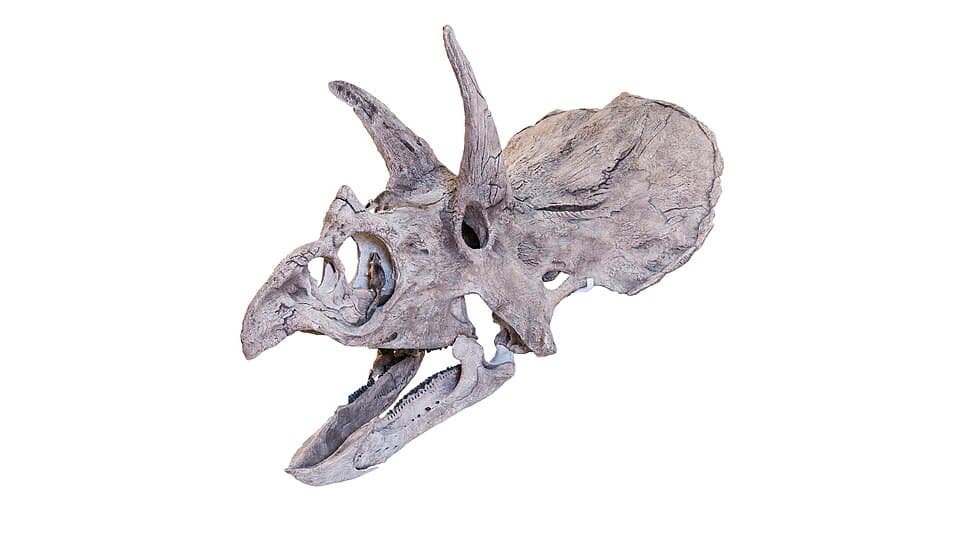
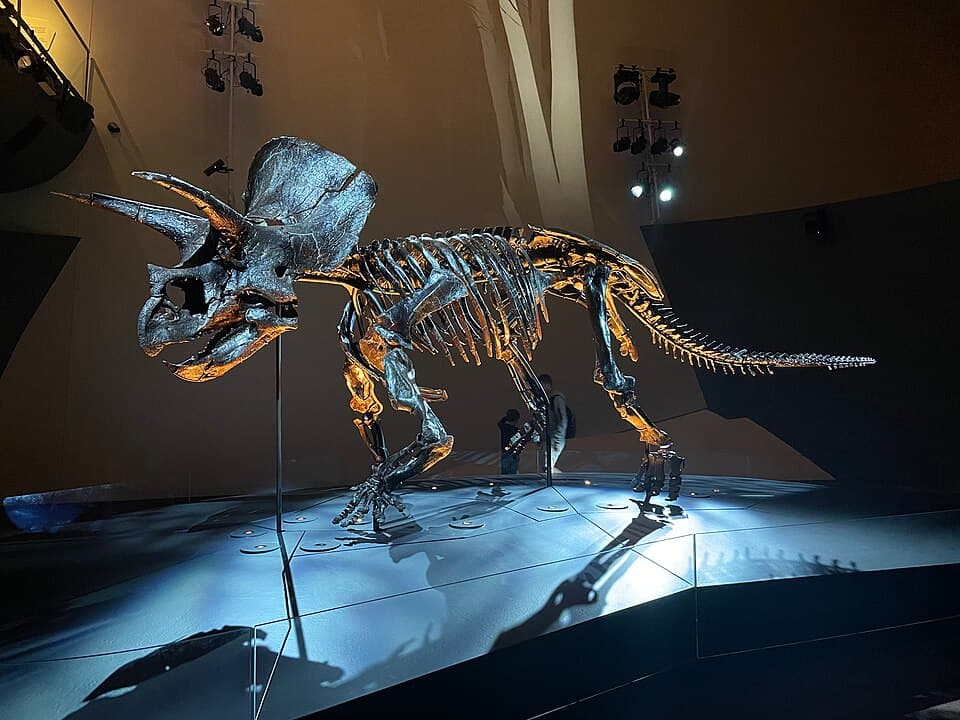
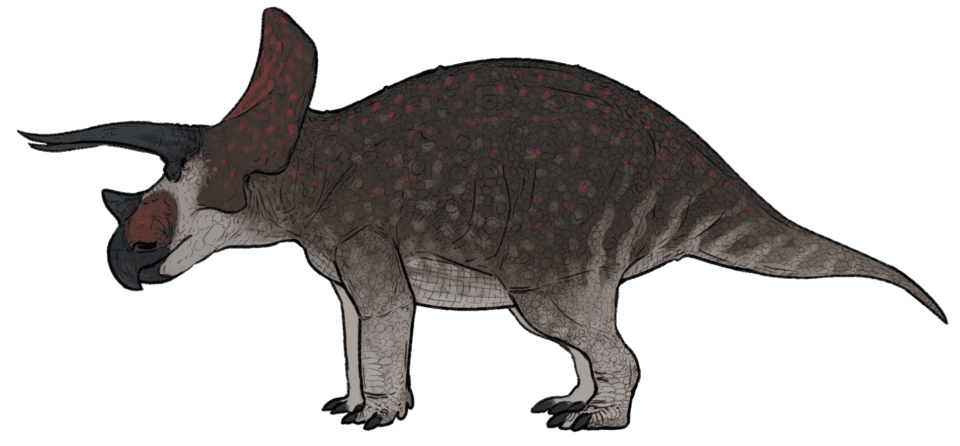
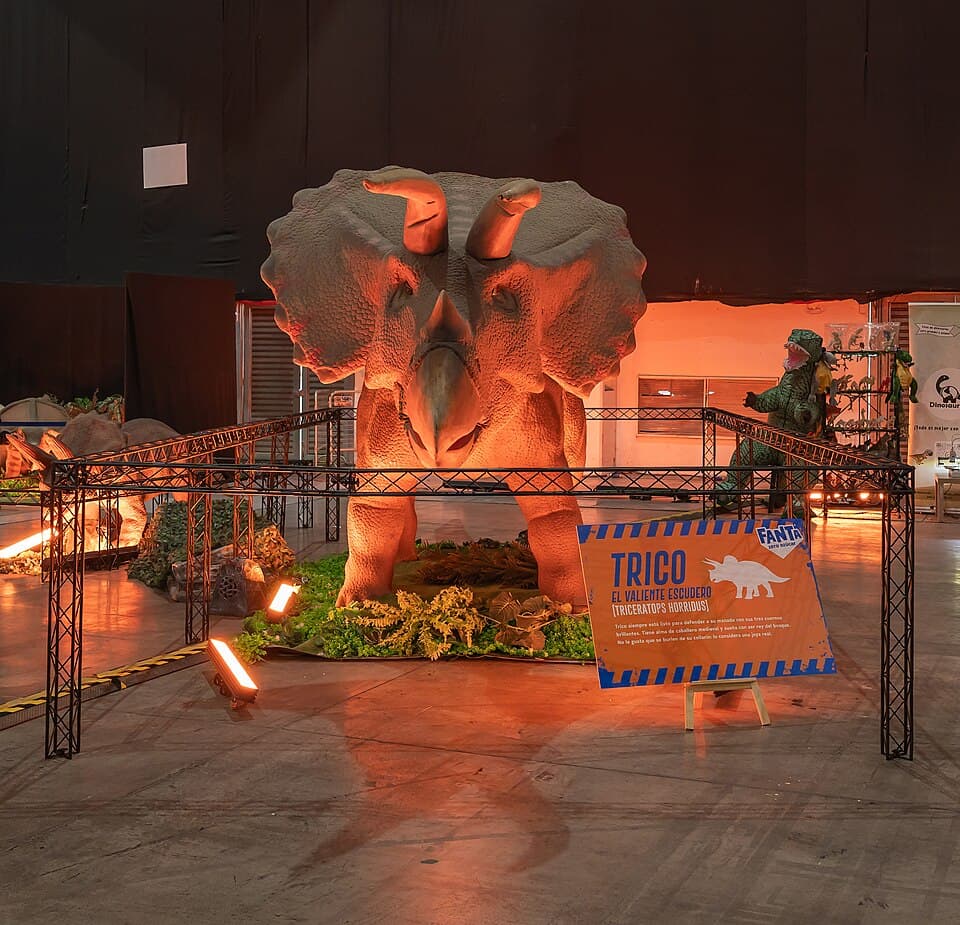
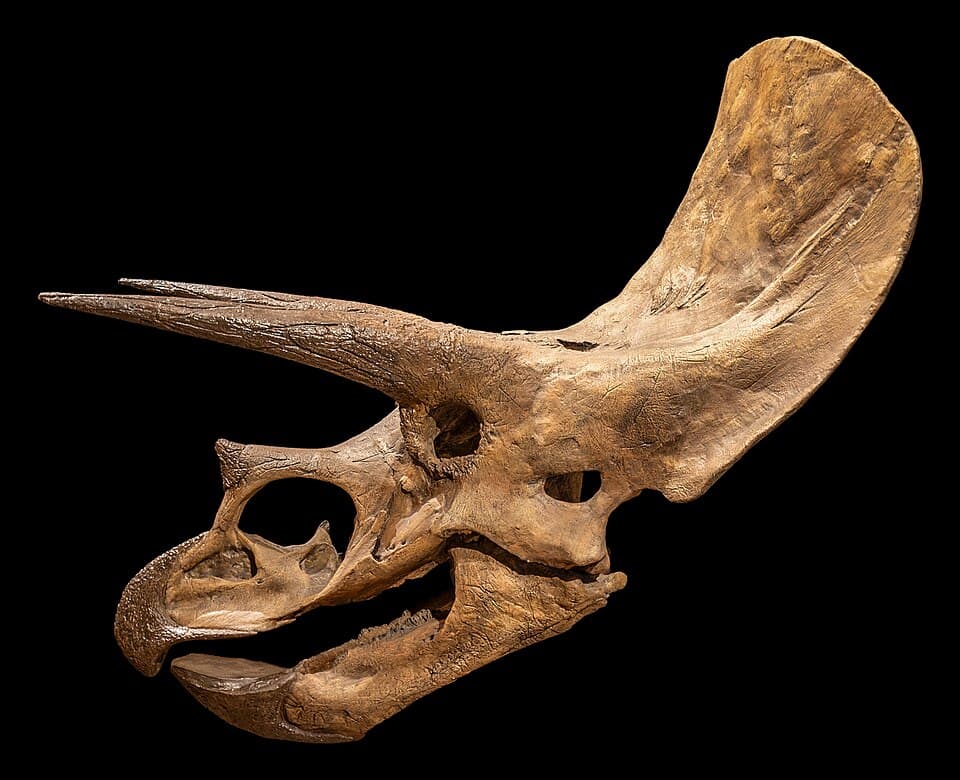
It had a large, bulky, four-legged body, a beak-like mouth suited for cropping tough vegetation, and a distinctive skull featuring two long brow horns above the eyes, a shorter horn on the snout, and a wide bony frill extending back over the neck. The frill may have served multiple purposes, from protecting the neck to signaling age or fitness to rivals and potential mates.
Habitat & Distribution
The triceratops is found in grassland, forest habitats.
Diet & Behavior
Diet: Herbivore — Plant-eating animals that graze or browse on grasses, leaves, and other vegetation, from tiny insects to giant elephants.
Triceratops was a herbivore that likely fed on low-growing plants using its sharp beak and rows of grinding cheek teeth adapted for processing tough, fibrous vegetation. Fossil evidence, including healed injuries on frills and horns, suggests Triceratops individuals sometimes engaged in horn-to-horn combat, possibly over territory or mates, similar to how modern horned mammals compete today.
Predators
- Tyrannosaurus rex
Prey
This species does not prey on other animals.
Interesting Facts
- 1
Triceratops lived right up until the mass extinction event that wiped out the non-avian dinosaurs 66 million years ago.
- 2
Fossilized frills and horns showing healed injuries suggest Triceratops individuals sometimes fought each other.
- 3
Its skull, including the frill, could measure up to 2 meters long, among the largest skulls of any land animal that has ever lived.
- 4
Despite the name meaning 'three-horned face,' scientists still debate the exact purpose of its horns and frill.
- 5
Triceratops shared its environment with Tyrannosaurus rex, and fossil evidence including bite marks suggests the two species did interact.
Gallery
Triceratops FAQs
What does the name Triceratops mean?
Triceratops means 'three-horned face,' referring to the two long brow horns and one shorter nose horn that defined its distinctive skull.
Did Triceratops fight each other?
Fossil evidence, including healed puncture wounds on frills and horns, suggests Triceratops individuals likely engaged in combat with each other, possibly over territory or mates, similar to competition seen in modern horned animals.
What did Triceratops eat?
Triceratops was a herbivore, using its sharp beak and rows of grinding teeth to feed on low-growing plants and tough vegetation.
When did Triceratops go extinct?
Triceratops was among the last non-avian dinosaurs, living right up until the mass extinction event approximately 66 million years ago that ended the age of dinosaurs.
What does a triceratops eat?
The triceratops is a herbivore. Plant-eating animals that graze or browse on grasses, leaves, and other vegetation, from tiny insects to giant elephants.
Where does the triceratops live?
The triceratops is found in grassland, forest habitats across north america.
Is the triceratops endangered?
The triceratops has a conservation status of Extinct. Species with no known living individuals remaining, lost forever from the wild.
How long do triceratopss live?
A triceratops's typical lifespan is 20–30 years in the wild.
How much does a triceratops weigh?
An adult triceratops typically weighs 6,000–12,000 kg.