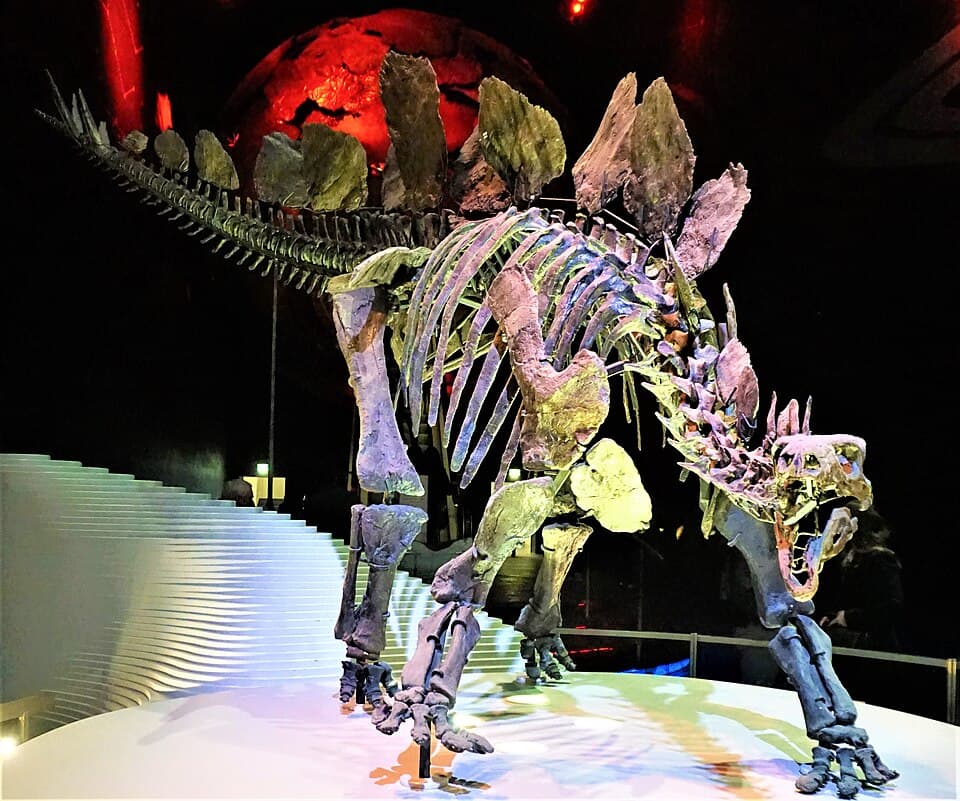
Photo: Joyofmuseums · CC BY-SA 4.0 · via Wikimedia Commons
Overview
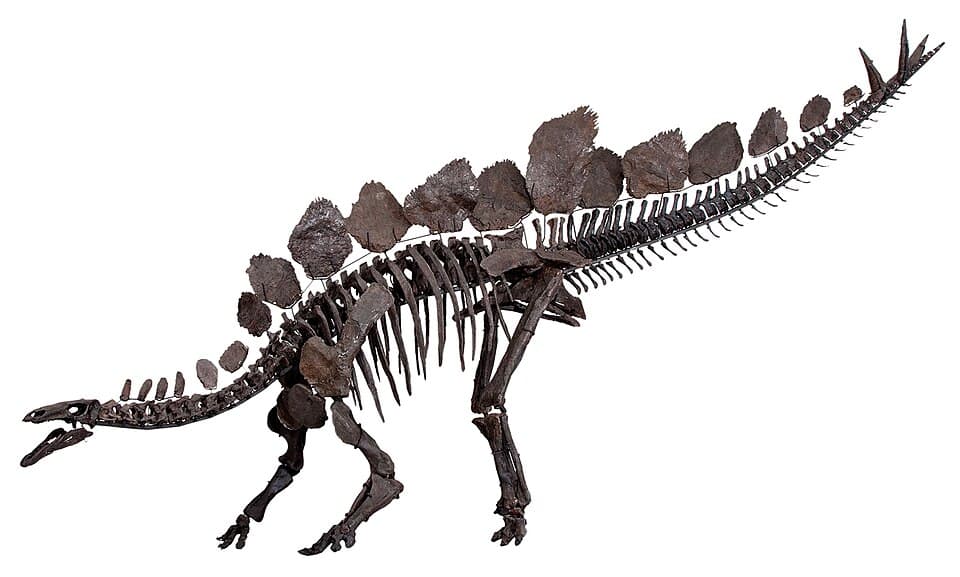
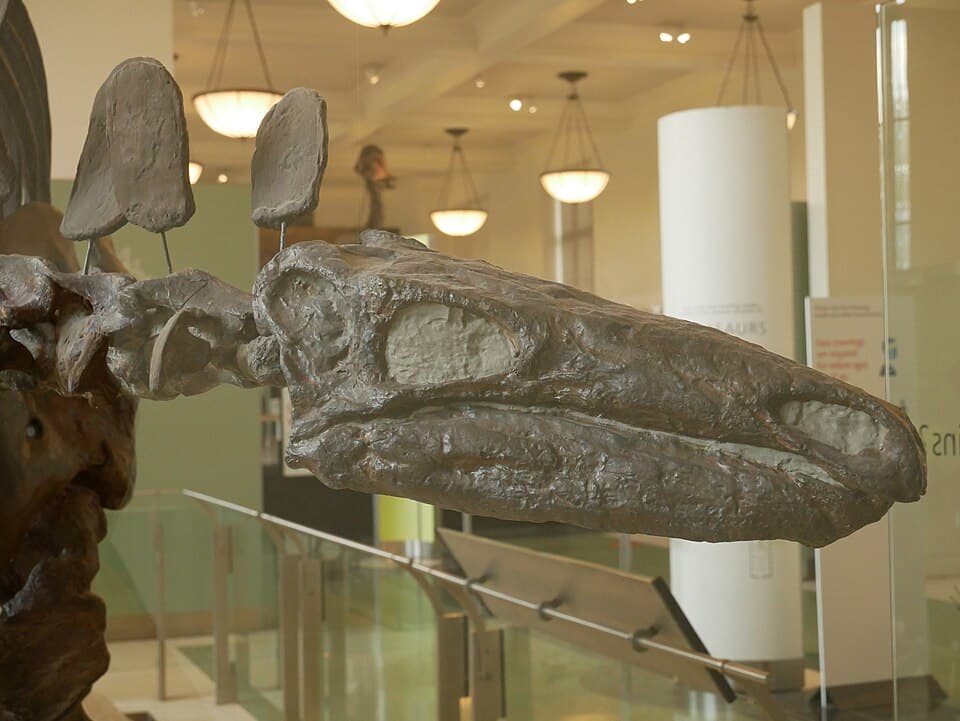
Stegosaurus is one of the most recognizable dinosaurs ever discovered, instantly identifiable by the row of large, upright bony plates running along its back and the sharp spikes at the end of its tail. Despite its considerable size, it had a remarkably small, low-slung head with a brain roughly the size of a walnut relative to its huge body.
Appearance
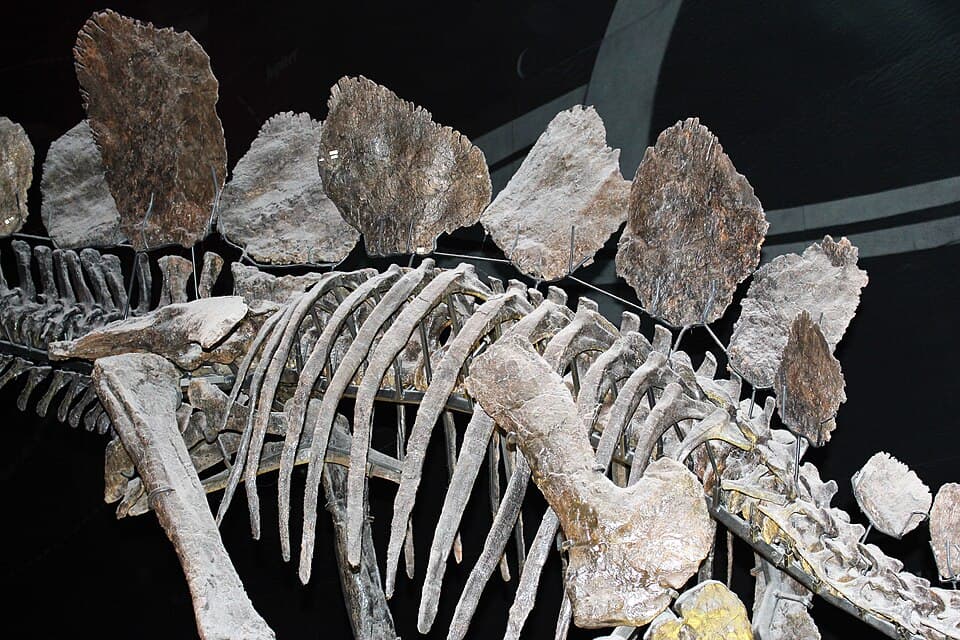
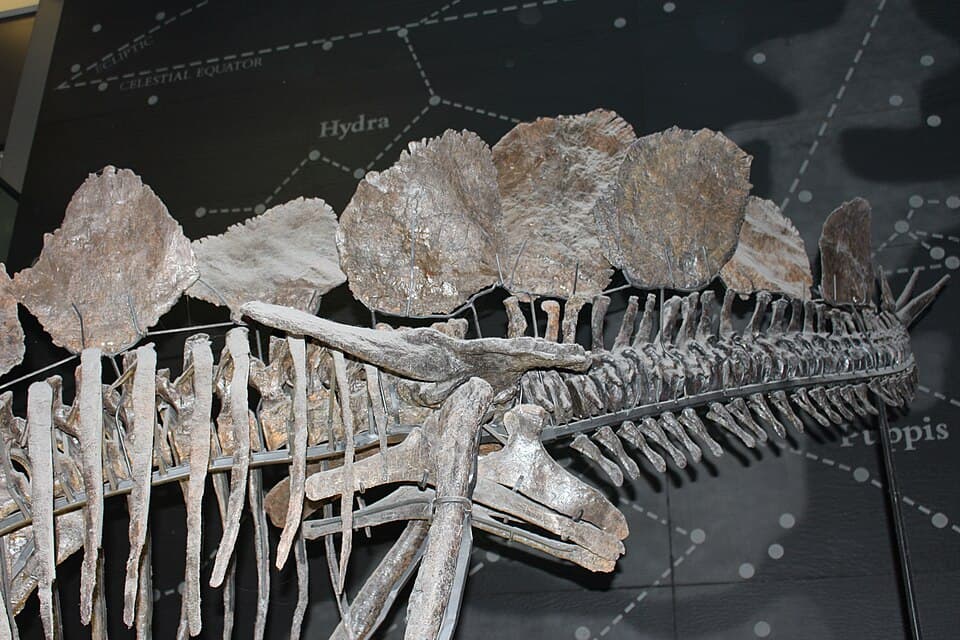
It had a large, heavy body carried low on four sturdy legs, with the hind legs notably longer than the front, giving its back a distinctive arched profile. A double row of large, upright bony plates ran along its spine from neck to tail, ending in two pairs of sharp spikes known as a thagomizer, likely used as a defensive weapon against predators.
Habitat & Distribution
The stegosaurus is found in grassland, forest habitats.
Diet & Behavior
Diet: Herbivore — Plant-eating animals that graze or browse on grasses, leaves, and other vegetation, from tiny insects to giant elephants.
Stegosaurus was a slow-moving herbivore that fed on low-growing ferns, cycads, and other plants within reach of its low head, since its build wasn't suited to rearing up to reach tall vegetation easily. When threatened, it likely defended itself by swinging its spiked tail with considerable force, a formidable deterrent supported by fossil evidence of Stegosaurus-inflicted puncture wounds found on predator fossils.
Predators
- Allosaurus
Prey
This species does not prey on other animals.
Interesting Facts
- 1
Stegosaurus had a brain roughly the size of a walnut, remarkably small relative to its massive body.
- 2
The spiked end of its tail, called a thagomizer, was likely swung as a defensive weapon against predators.
- 3
Fossil evidence of a predator's tailbone with a matching puncture wound supports the idea that Stegosaurus actually used its tail spikes in combat.
- 4
Scientists still debate the exact purpose of its iconic back plates, with theories ranging from defense to temperature regulation to visual display.
- 5
Its hind legs were notably longer than its front legs, giving it a distinctive arched-back posture.
Gallery
Stegosaurus FAQs
What were Stegosaurus's back plates for?
Scientists aren't entirely certain -- leading theories suggest the plates may have helped regulate body temperature, served as a defensive feature, or were primarily used for visual display to attract mates or intimidate rivals.
How did Stegosaurus defend itself?
Stegosaurus likely defended itself by swinging its spiked tail, called a thagomizer, at attacking predators -- a fossilized predator tailbone with a matching puncture wound supports this as a real defensive weapon.
How smart was a Stegosaurus?
Not very, by modern standards -- Stegosaurus had a brain roughly the size of a walnut, extremely small relative to its large body size, even accounting for the fact that brain-to-body ratios varied significantly across dinosaur species.
What did Stegosaurus eat?
Stegosaurus was a herbivore that fed on low-growing plants like ferns and cycads, using its small, beaked mouth suited to cropping vegetation rather than chewing it extensively.
What does a stegosaurus eat?
The stegosaurus is a herbivore. Plant-eating animals that graze or browse on grasses, leaves, and other vegetation, from tiny insects to giant elephants.
Where does the stegosaurus live?
The stegosaurus is found in grassland, forest habitats across north america.
Is the stegosaurus endangered?
The stegosaurus has a conservation status of Extinct. Species with no known living individuals remaining, lost forever from the wild.
How long do stegosauruss live?
A stegosaurus's typical lifespan is 20–30 years in the wild.
How much does a stegosaurus weigh?
An adult stegosaurus typically weighs 3,000–5,000 kg.