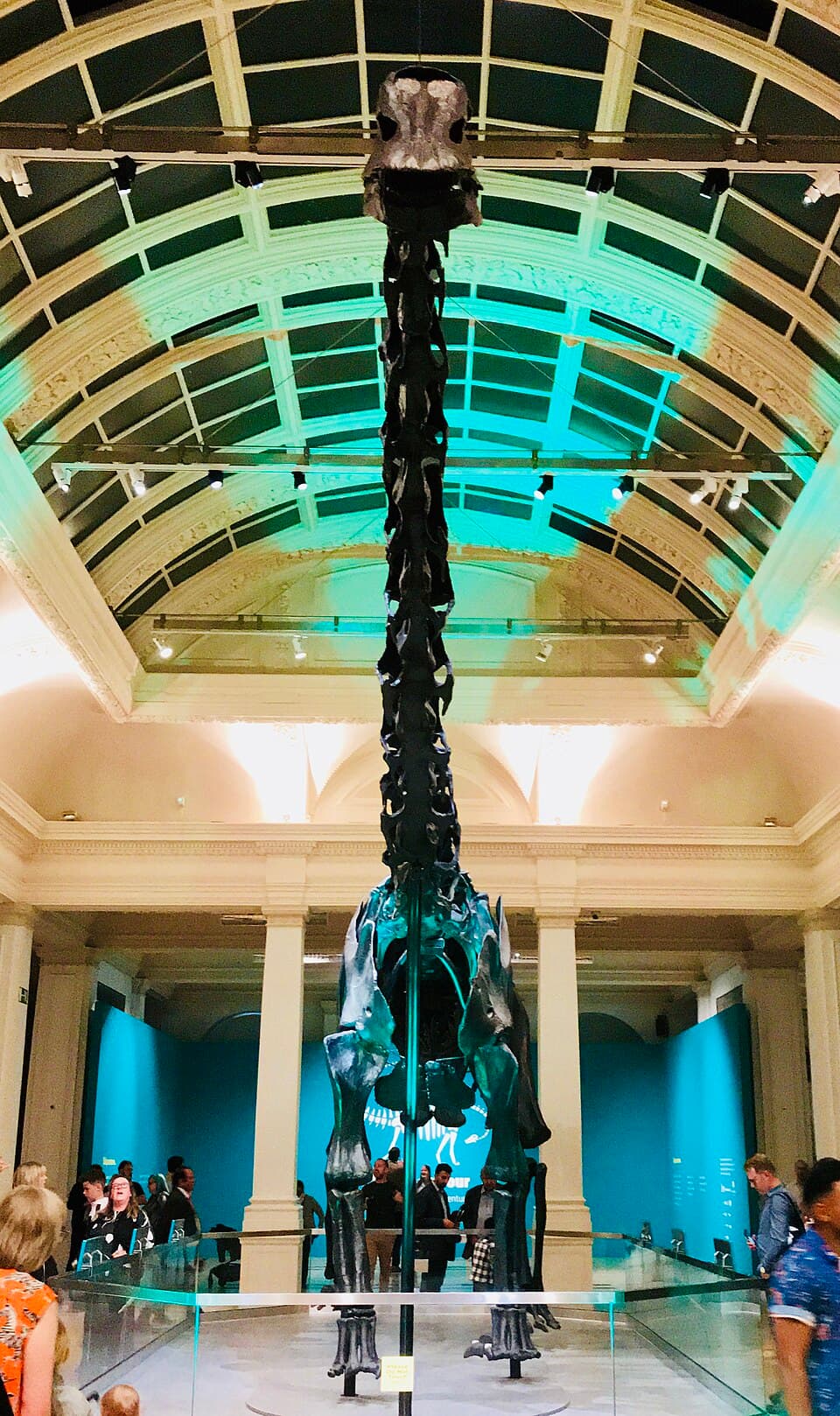
Photo: CarlDurose · CC BY-SA 4.0 · via Wikimedia Commons
Overview
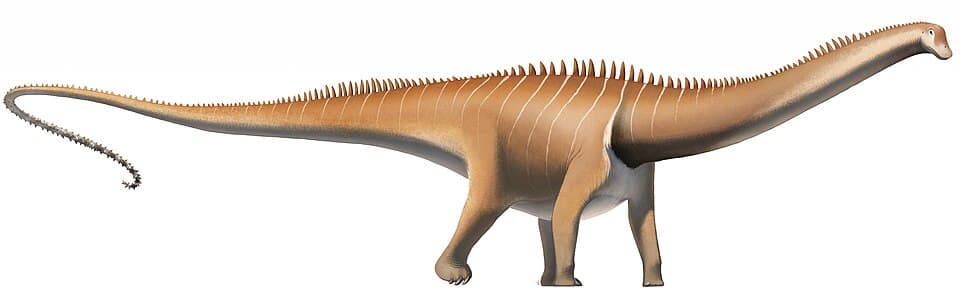
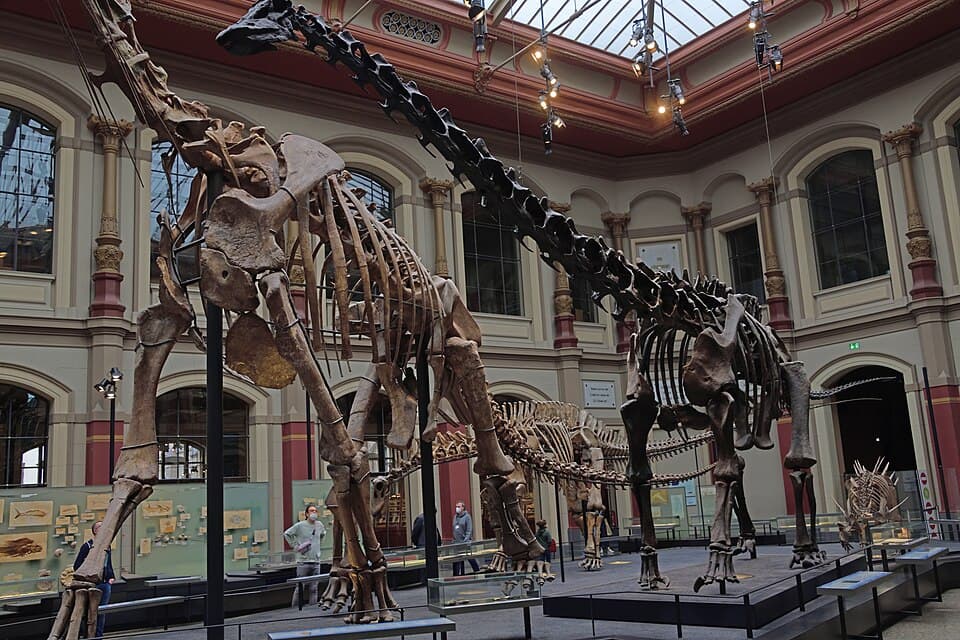
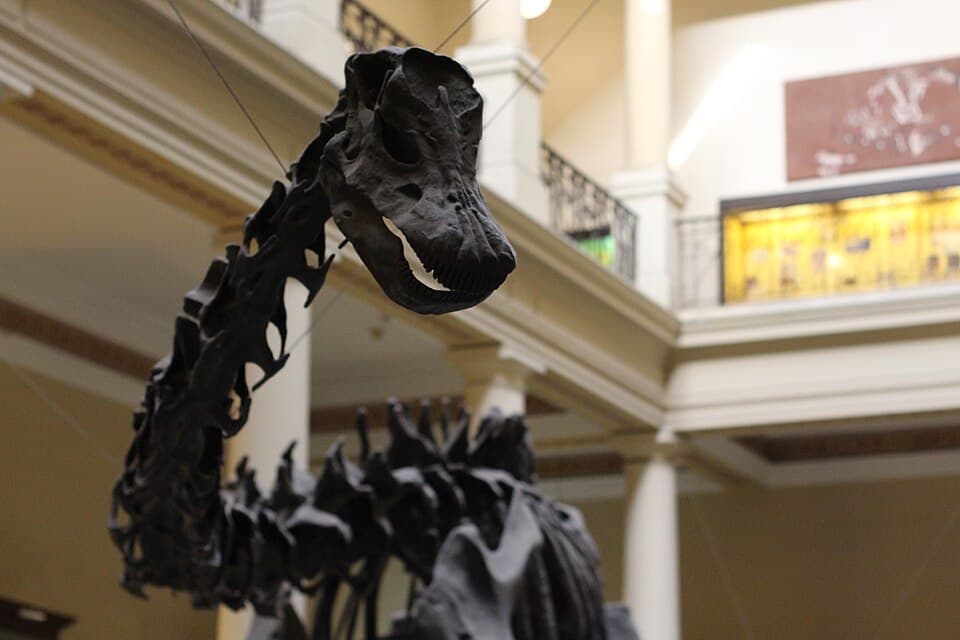
Diplodocus was one of the longest dinosaurs to ever walk the Earth, an enormous long-necked, long-tailed herbivore that roamed what is now western North America during the Late Jurassic period. Despite its massive length, it was relatively lightly built for its size, with a skeleton adapted to minimize weight while still supporting its huge frame.
Appearance
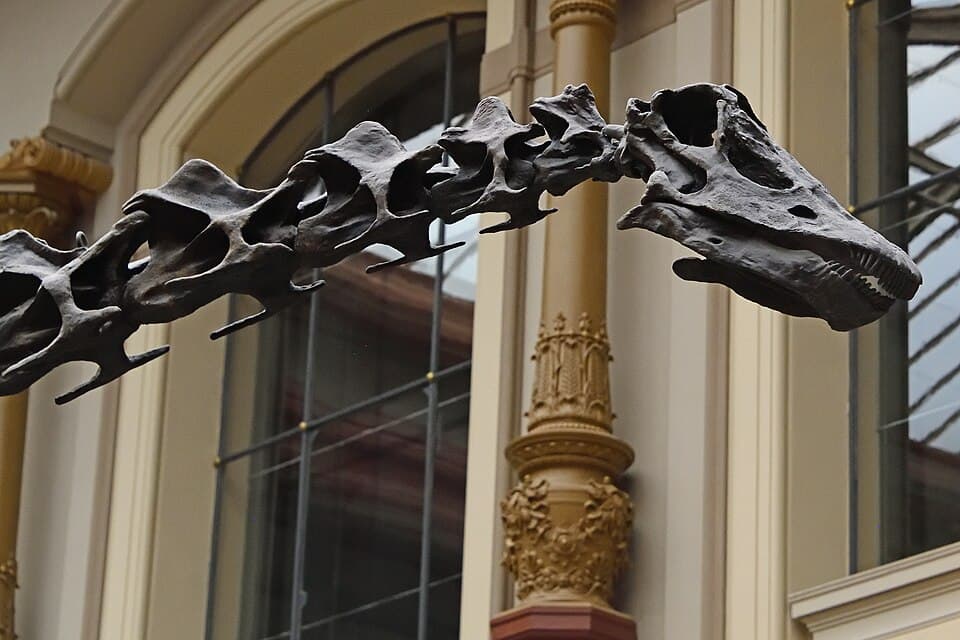
It had an extremely long neck and an even longer, whip-like tail, together making up the majority of its total body length, a small head with peg-like teeth suited for stripping leaves, and four sturdy, pillar-like legs. Its tail may have contained roughly 80 vertebrae, and some paleontologists have suggested it could have been cracked like a whip to produce a loud sonic boom, though this remains debated.
Habitat & Distribution
The diplodocus is found in grassland, forest habitats.
Diet & Behavior
Diet: Herbivore — Plant-eating animals that graze or browse on grasses, leaves, and other vegetation, from tiny insects to giant elephants.
Diplodocus was a herbivore that likely used its long neck to browse on vegetation over a wide area without needing to move its massive body, stripping leaves from branches using rows of narrow, peg-like teeth. It probably traveled in herds for at least part of its life, based on trackway evidence showing multiple sauropods moving together, and its enormous size alone would have offered significant protection from most predators once fully grown.
Predators
- Allosaurus (likely preyed on young or weak individuals)
Prey
This species does not prey on other animals.
Interesting Facts
- 1
Diplodocus was one of the longest dinosaurs known, with some individuals estimated to reach over 30 meters in length.
- 2
Its whip-like tail may have contained around 80 individual vertebrae, more than almost any other dinosaur.
- 3
Some scientists have suggested Diplodocus could crack its tail like a whip fast enough to break the sound barrier, though this idea remains debated.
- 4
Despite its huge size, Diplodocus had a relatively light, air-filled skeleton that helped reduce its overall body weight.
- 5
Its peg-like teeth were suited only for stripping leaves, not chewing, meaning it likely swallowed plant matter whole.
Gallery
Diplodocus FAQs
How long was a Diplodocus?
Diplodocus was one of the longest known dinosaurs, with some individuals estimated to have reached over 30 meters from head to tail, though much of that length was its extremely long neck and tail.
Could Diplodocus really crack its tail like a whip?
Some researchers have proposed that Diplodocus could snap its long tail fast enough to produce a sonic boom, similar to a bullwhip, though this remains a debated and unconfirmed hypothesis rather than settled fact.
What did Diplodocus eat?
Diplodocus was a herbivore that used its long neck and peg-like teeth to strip leaves and vegetation from plants, likely swallowing much of its food whole rather than chewing it.
How much did a Diplodocus weigh?
Diplodocus is estimated to have weighed between 10 and 16 tonnes, though it had a comparatively lightweight, air-filled skeleton relative to its enormous length.
What does a diplodocus eat?
The diplodocus is a herbivore. Plant-eating animals that graze or browse on grasses, leaves, and other vegetation, from tiny insects to giant elephants.
Where does the diplodocus live?
The diplodocus is found in grassland, forest habitats across north america.
Is the diplodocus endangered?
The diplodocus has a conservation status of Extinct. Species with no known living individuals remaining, lost forever from the wild.
How long do diplodocuss live?
A diplodocus's typical lifespan is 70–100 years in the wild.
How much does a diplodocus weigh?
An adult diplodocus typically weighs 10,000–16,000 kg.