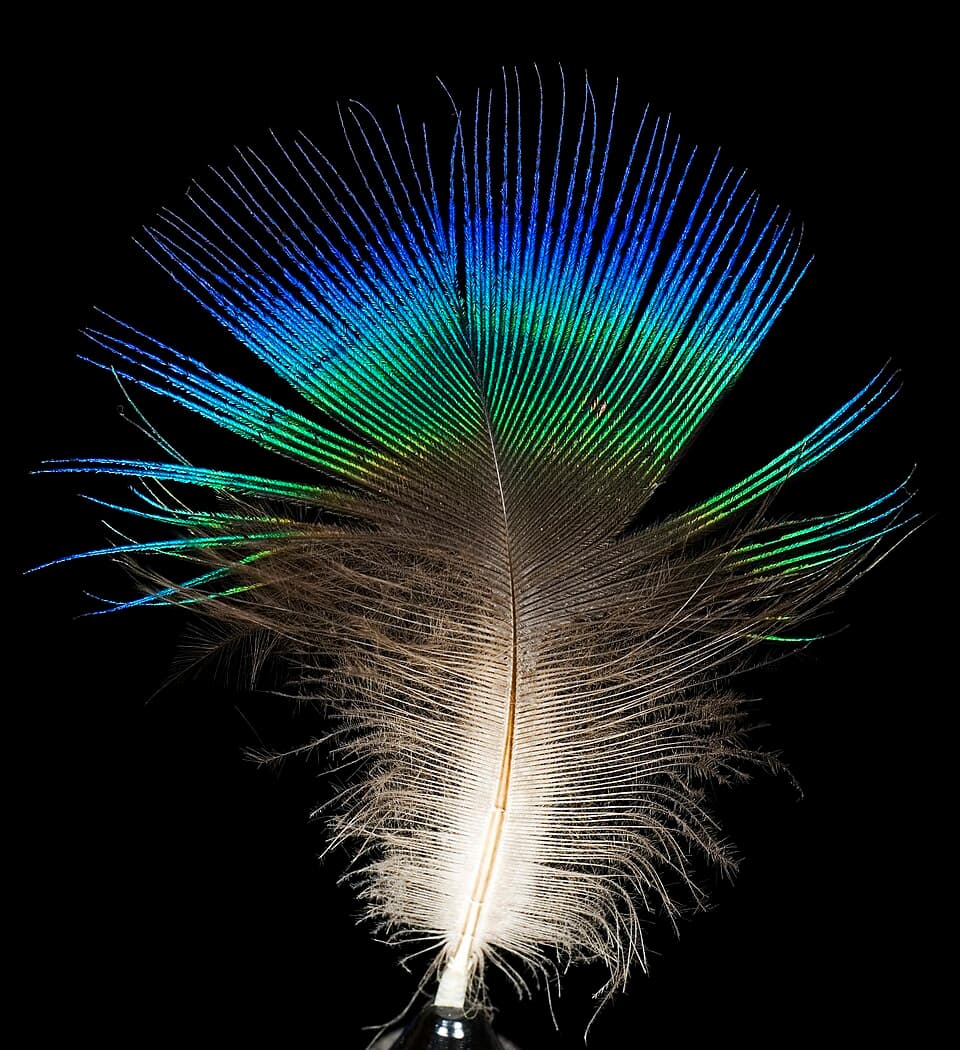
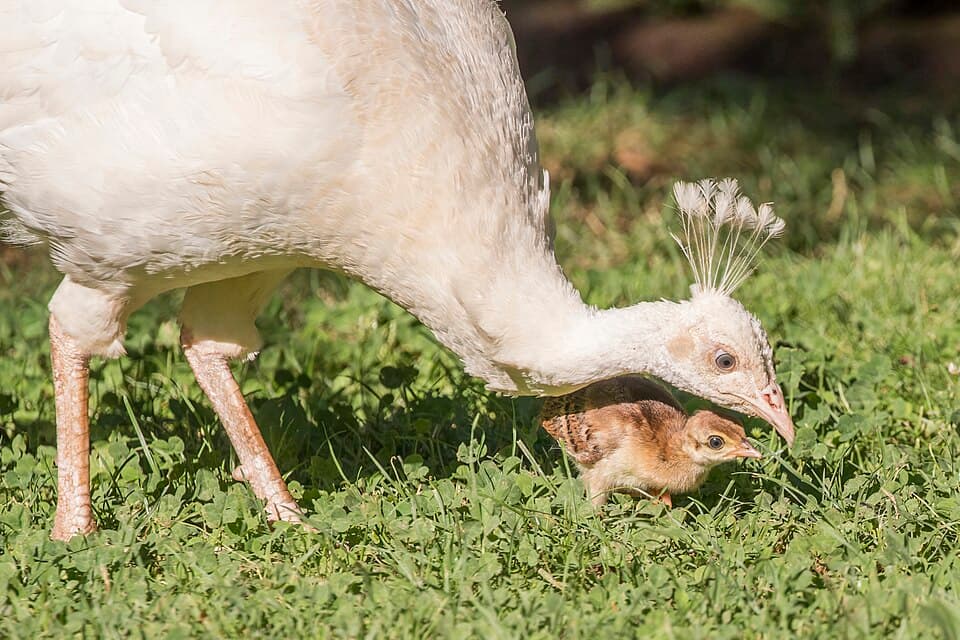
Photo: MichaelMaggs · CC BY-SA 3.0 · via Wikimedia Commons
Overview
The Indian peafowl, commonly called a peacock, is a large ground-dwelling bird native to South Asia, world-famous for the male's spectacular iridescent tail display.
Appearance
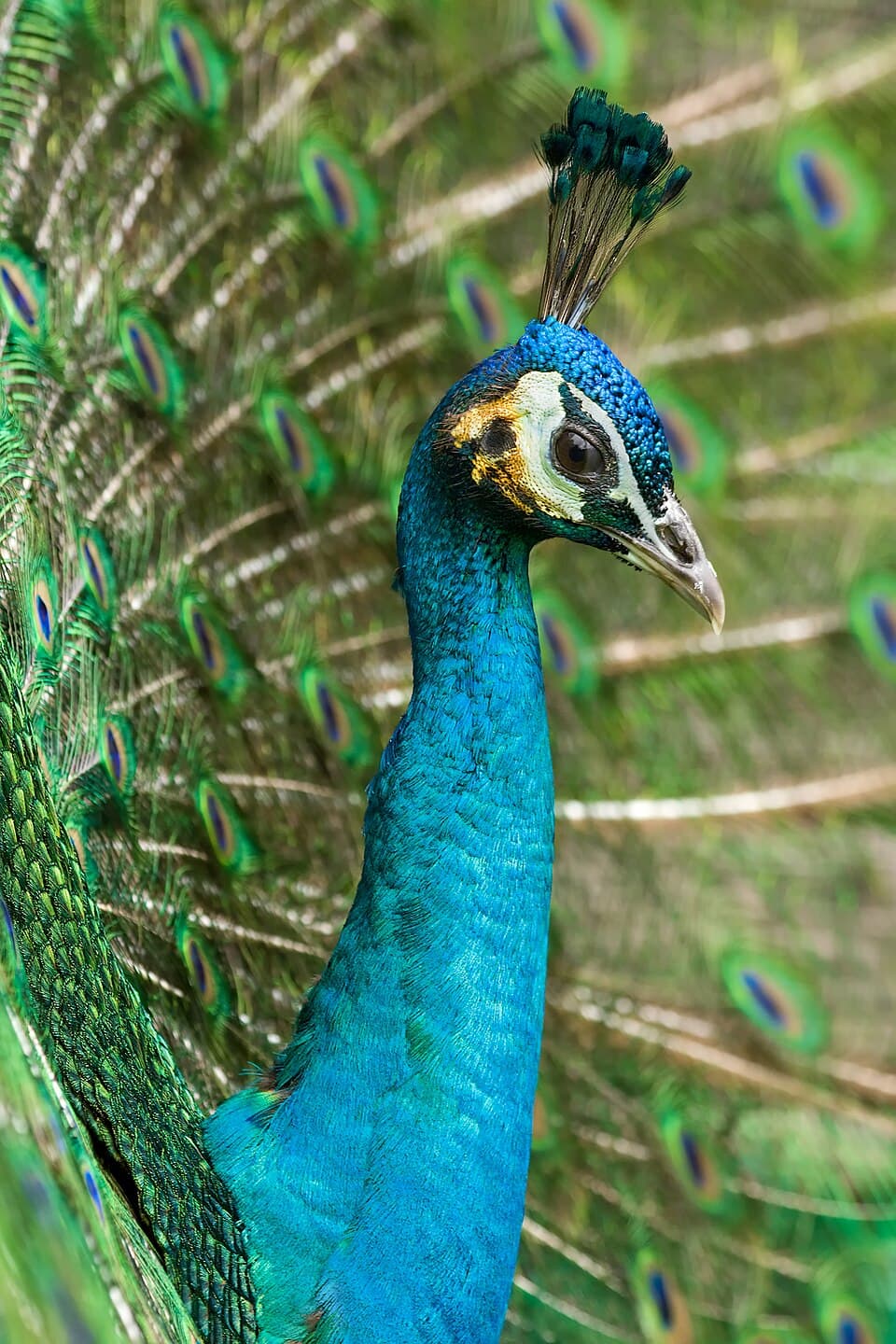
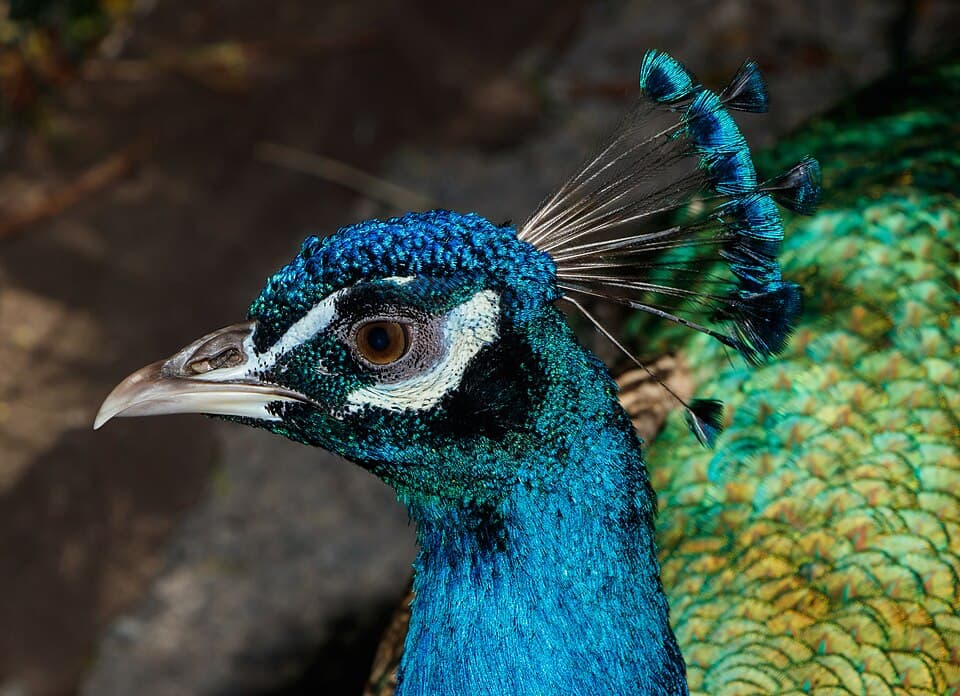
Males have a vivid blue neck and an enormous train of iridescent green-and-bronze tail feathers marked with eye-like spots, while females are a duller brown and cream.
Habitat & Distribution
The indian peafowl is found in forest, grassland habitats.
Diet & Behavior
Diet: Omnivore — Animals with flexible diets that eat both plants and animals, adapting to whatever food is available in their environment.
Males fan their elaborate train and shake it in a rattling courtship display to attract females, who choose mates based on train size and symmetry.
Predators
- Tiger
- Leopard
- Jackal
Prey
This species does not prey on other animals.
Interesting Facts
- 1
The colorful 'tail' males display is actually made of elongated upper tail covert feathers.
- 2
Peacock feather colors come partly from microscopic structures that bend light, not just pigment.
- 3
Females choose mates based largely on the size and symmetry of the male's train.
Gallery
Indian Peafowl FAQs
What does a indian peafowl eat?
The indian peafowl is an omnivore. Animals with flexible diets that eat both plants and animals, adapting to whatever food is available in their environment.
Where does the indian peafowl live?
The indian peafowl is found in forest, grassland habitats across asia.
Is the indian peafowl endangered?
The indian peafowl has a conservation status of Least Concern. Widespread and abundant species that are not currently at significant risk of extinction.
How long do indian peafowls live?
A indian peafowl's typical lifespan is 15–20 years in the wild.
How much does a indian peafowl weigh?
An adult indian peafowl typically weighs 2.7–6 kg.