Photo: Didier Descouens · CC BY-SA 4.0 · via Wikimedia Commons
Overview
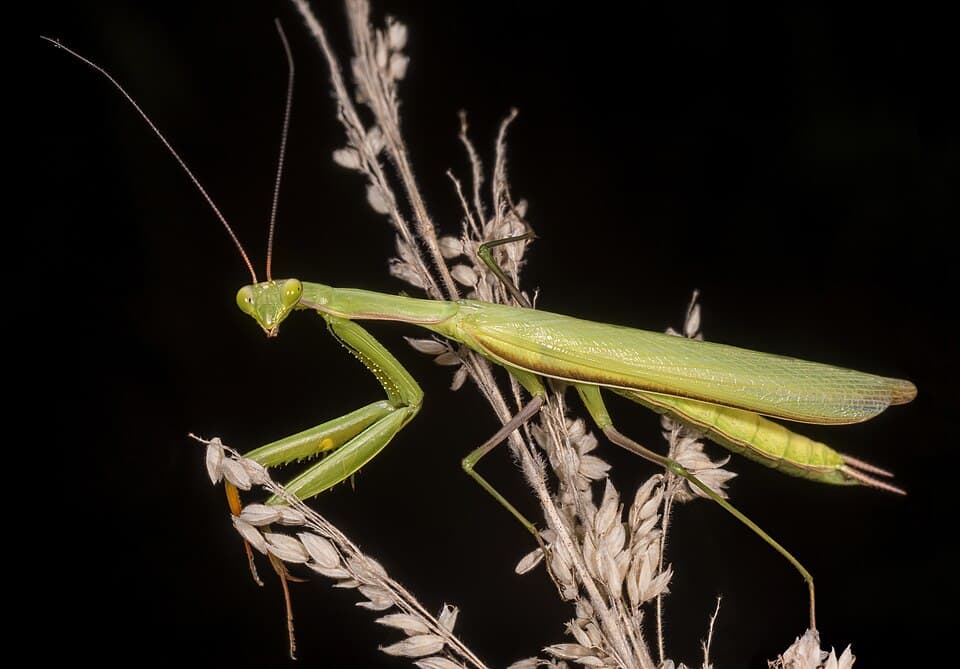
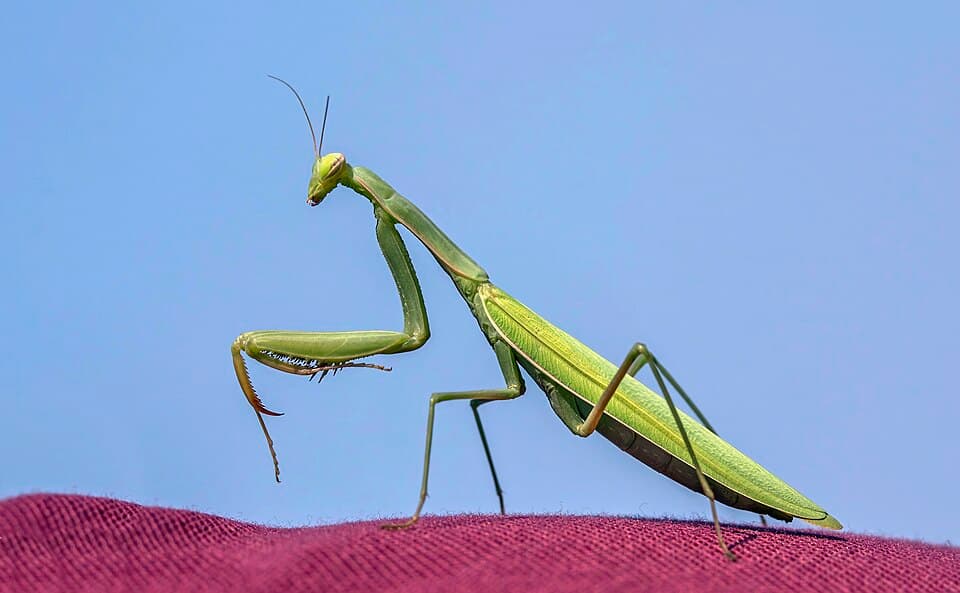
The praying mantis is an ambush predator instantly recognizable by its front legs held together as if in prayer, folded and spiked for snatching prey in a lightning-fast strike. Its triangular head can rotate nearly 180 degrees, giving it an almost unmatched field of view among insects for spotting movement.
Appearance
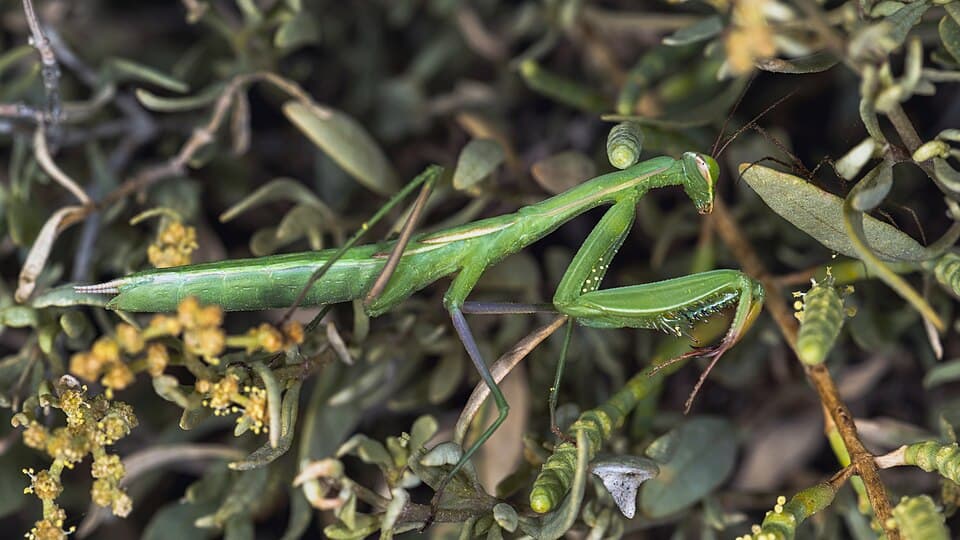
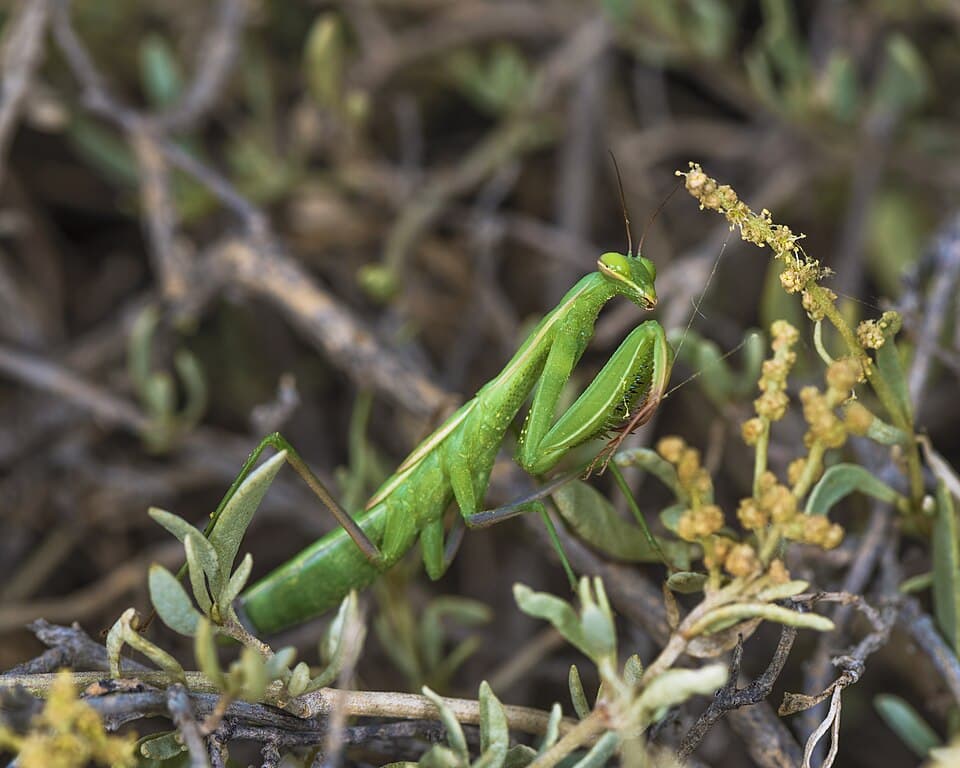
It has an elongated green or brown body built for camouflage among leaves and stems, large compound eyes set on a mobile triangular head, and modified forelegs lined with spines that snap shut to trap prey. Females are typically noticeably larger and heavier-bodied than males.
Habitat & Distribution
The praying mantis is found in grassland, forest habitats.
Diet & Behavior
Diet: Carnivore — Meat-eating animals that hunt, scavenge, or fish for prey, ranging from big cats to snakes and birds of prey.
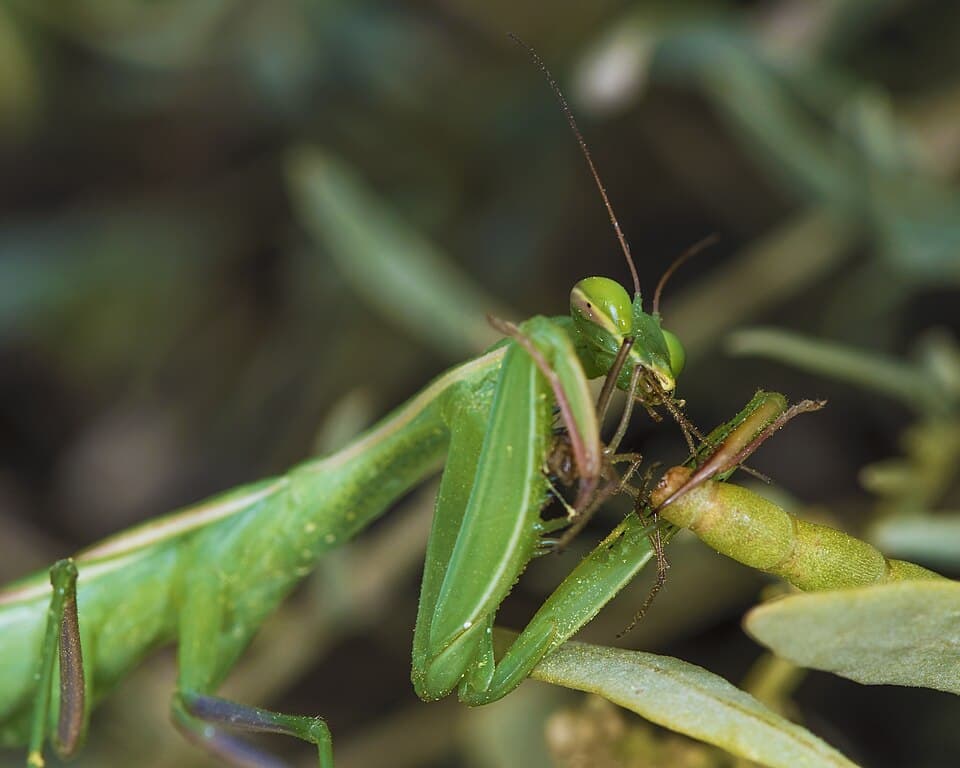
A praying mantis hunts by remaining almost perfectly still, relying on camouflage to go unnoticed until prey wanders within striking range, then lashing out its forelegs in a fraction of a second. It's also one of the few insects known to be capable of stereoscopic depth perception, using both eyes together to judge the exact distance to prey before striking.
Predators
- Birds
- Bats
- Spiders
- Frogs
Prey
- Insects
- Small lizards
- Occasionally small birds or frogs
Interesting Facts
- 1
A praying mantis can rotate its head nearly 180 degrees, an unusual ability among insects.
- 2
It is one of the few insects known to have true stereoscopic vision, letting it judge distance with both eyes at once.
- 3
Its front legs snap shut on prey in a fraction of a second, among the fastest strikes in the insect world.
- 4
Female mantises are sometimes known to eat their male mate after or even during mating, though this doesn't happen in every encounter.
- 5
Despite its fearsome hunting style, the praying mantis poses no threat to humans and cannot bite or sting people.
Gallery
Praying Mantis FAQs
Do praying mantises bite or sting?
Praying mantises can bite if handled roughly, but they have no venom or stinger and pose no real danger to humans. Their powerful forelegs are built for catching insect prey, not defending against people.
Why do female praying mantises sometimes eat their mate?
Sexual cannibalism does occur in some praying mantis species and populations, though it's far from universal. Researchers think it may sometimes provide the female with extra nutrition to support egg production, but many matings occur without it happening at all.
What does a praying mantis eat?
Praying mantises are ambush predators that primarily eat other insects, though larger species have been known to occasionally catch small lizards, frogs, or even hummingbirds.
Why does a mantis hold its front legs together?
Its forelegs are folded in a resting position that looks like prayer, but they're actually held ready to snap outward and grab prey the instant it comes within range.
What does a praying mantis eat?
The praying mantis is a carnivore. Its diet includes insects, small lizards, occasionally small birds or frogs.
Where does the praying mantis live?
The praying mantis is found in grassland, forest habitats across europe, africa, and asia.
Is the praying mantis endangered?
The praying mantis has a conservation status of Least Concern. Widespread and abundant species that are not currently at significant risk of extinction.
How long do praying mantiss live?
A praying mantis's typical lifespan is 0.5–1 years in the wild.
How much does a praying mantis weigh?
An adult praying mantis typically weighs 0.0005–0.003 kg.