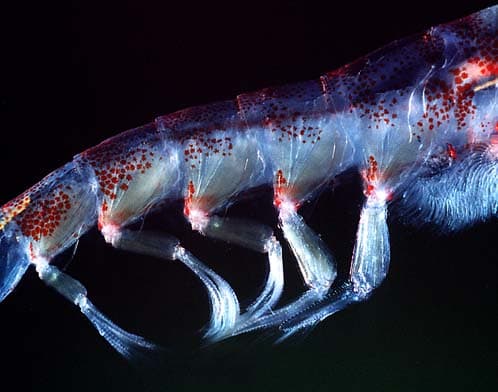
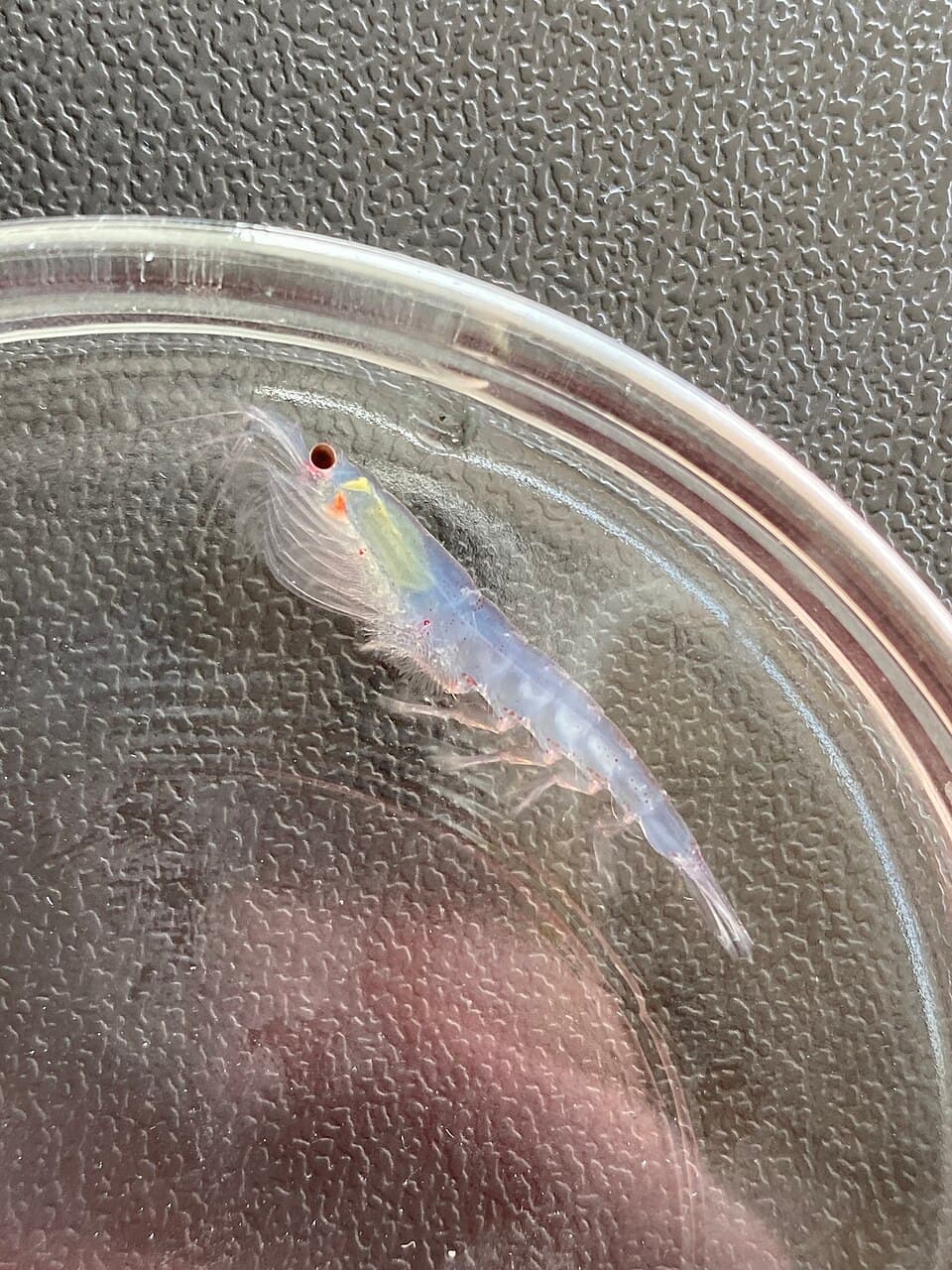
Photo: Image by User:Uwe kils · CC BY-SA 3.0 · via Wikimedia Commons
Overview
Antarctic krill is a small, shrimp-like crustacean that forms the foundation of the entire Antarctic food web, supporting whales, seals, penguins, and countless fish species. Despite its tiny individual size, its total biomass is estimated to be one of the largest of any animal species on Earth, gathering in massive swarms that can stretch for kilometers and be seen from space.
Appearance
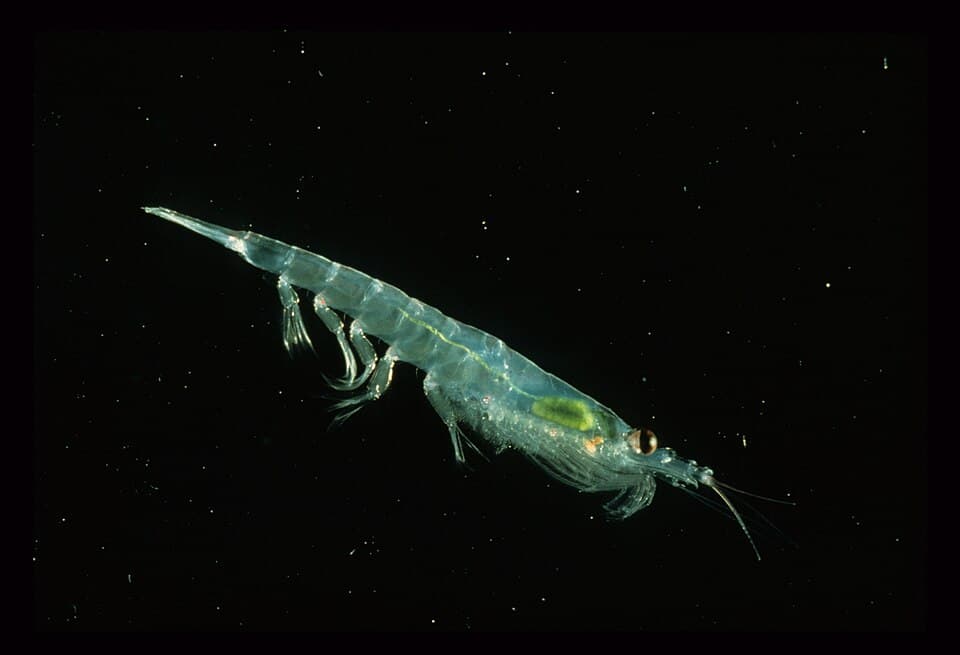
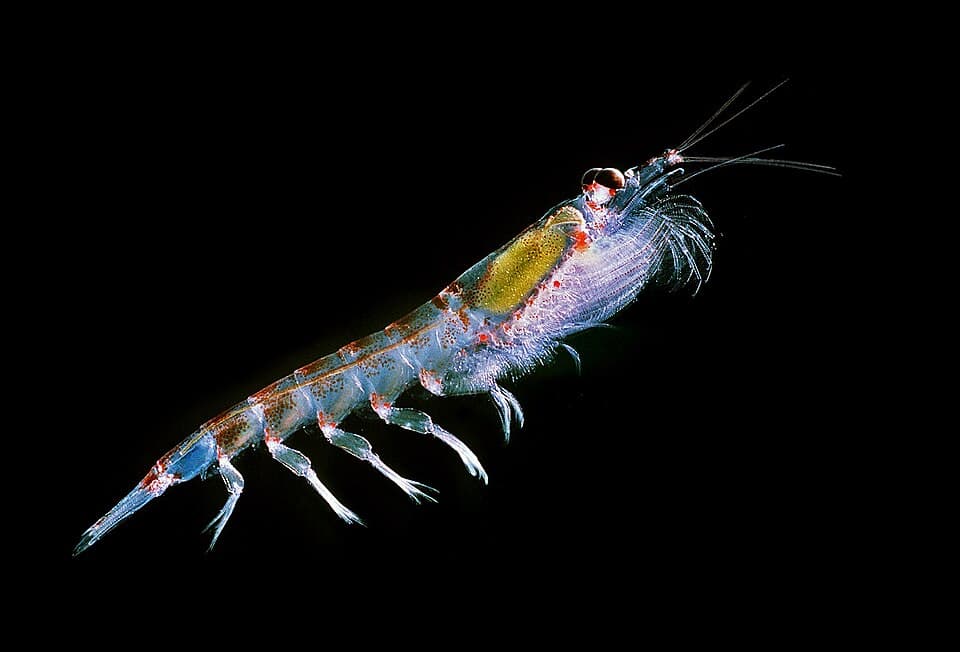
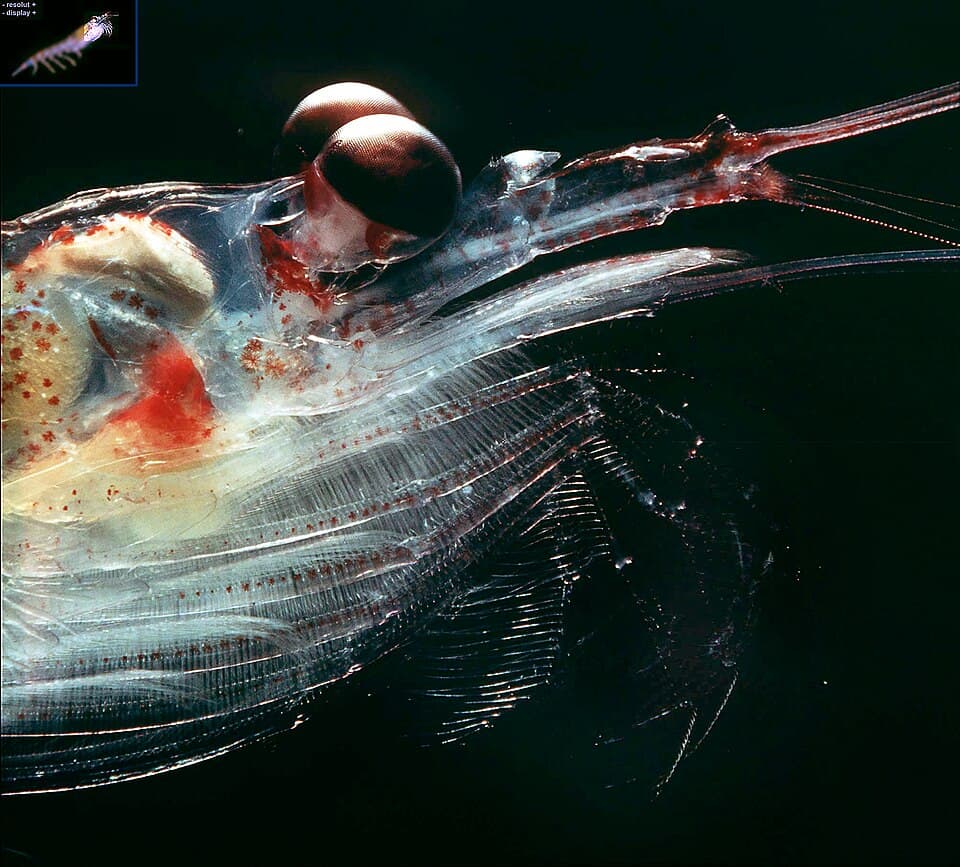
It has a small, translucent, segmented body with large black eyes and bioluminescent organs along its underside that produce a faint greenish light. Its body is nearly transparent except for its digestive tract and eyes, which are visible through its shell.
Habitat & Distribution
The antarctic krill is found in arctic, ocean habitats.
Diet & Behavior
Diet: Herbivore — Plant-eating animals that graze or browse on grasses, leaves, and other vegetation, from tiny insects to giant elephants.
Antarctic krill gather in enormous swarms containing potentially millions of individuals, a behavior that offers some protection from predators through sheer numbers while also making the swarm an easy target for filter-feeding animals like baleen whales. During the harsh Antarctic winter, when food is scarce, krill can shrink their own body size and reduce their metabolism dramatically to survive on limited energy reserves.
Predators
- Baleen whales
- Seals
- Penguins
- Fish
- Squid
Prey
- Phytoplankton
- Algae
- Occasionally small zooplankton
Interesting Facts
- 1
Antarctic krill swarms can be so massive they're visible from satellites in space.
- 2
Its total biomass is estimated to be among the largest of any single animal species on Earth, despite each individual being only a few centimeters long.
- 3
During long Antarctic winters, krill can actually shrink their own body size to survive on limited food.
- 4
It has light-producing organs on its underside that create a faint greenish glow, a trait called bioluminescence.
- 5
Nearly every major Antarctic predator, from whales to penguins to seals, depends directly or indirectly on krill for food.
Gallery
Antarctic Krill FAQs
Why is Antarctic krill so important?
Antarctic krill forms the base of the Antarctic food web, directly or indirectly supporting nearly every major predator in the ecosystem, including baleen whales, seals, penguins, and many fish species.
How big are Antarctic krill swarms?
Krill swarms can contain potentially millions of individuals and stretch for kilometers, occasionally becoming large and dense enough to be visible from satellites in space.
Can krill really shrink their own bodies?
Yes -- during the food-scarce Antarctic winter, krill can shrink their body size and reduce their metabolic rate, an unusual survival strategy that helps them conserve energy until food becomes abundant again.
What do Antarctic krill eat?
Antarctic krill primarily eat phytoplankton and algae, which they filter from the water, particularly algae growing on the underside of sea ice.
What does a antarctic krill eat?
The antarctic krill is a herbivore. Plant-eating animals that graze or browse on grasses, leaves, and other vegetation, from tiny insects to giant elephants.
Where does the antarctic krill live?
The antarctic krill is found in arctic, ocean habitats across antarctica.
Is the antarctic krill endangered?
The antarctic krill has a conservation status of Least Concern. Widespread and abundant species that are not currently at significant risk of extinction.
How long do antarctic krills live?
A antarctic krill's typical lifespan is 5–10 years in the wild.
How much does a antarctic krill weigh?
An adult antarctic krill typically weighs 0.001–0.002 kg.