Animals with Horns
Animals that grow horns for defense, display, or dominance contests.
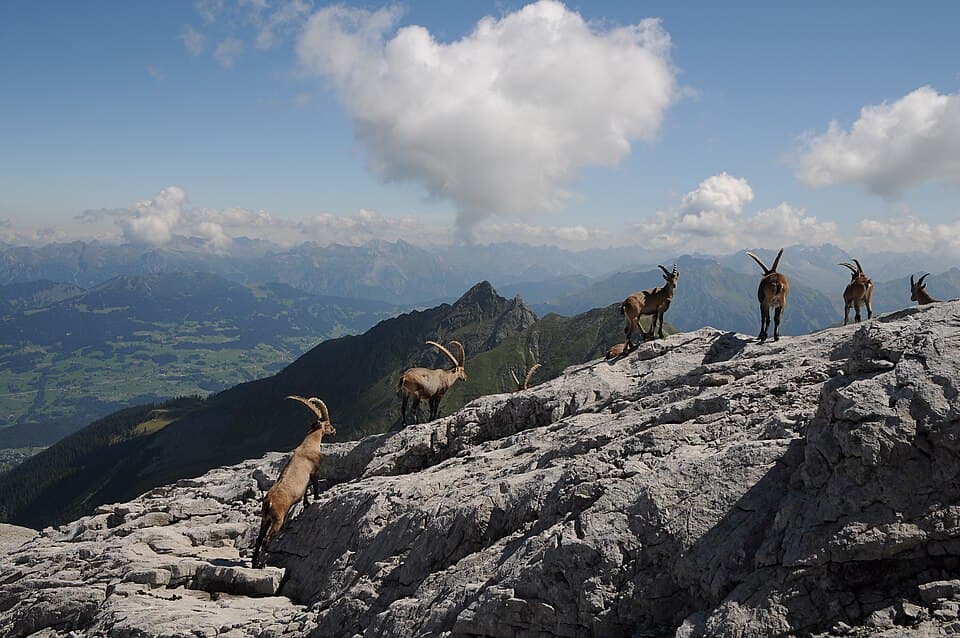
Ibex
Capra ibex
MammalThe Alpine ibex is a wild goat species famous for its massive, ridged, backward-curving horns and remarkable ability to scale near-vertical cliff faces in the mountains of the European Alps. Once hunted to near extinction, the entire modern population descends from a small group protected in a single Italian nature reserve in the 19th century.
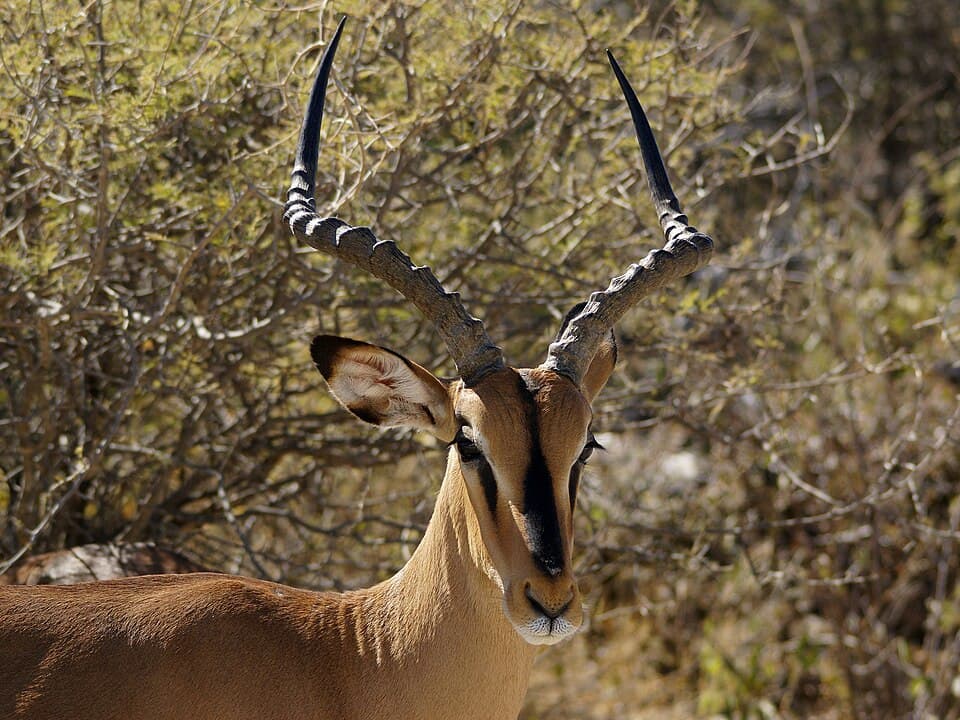
Impala
Aepyceros melampus
MammalThe impala is a medium-sized antelope found across eastern and southern African savannas, famous for its explosive leaping ability when startled.
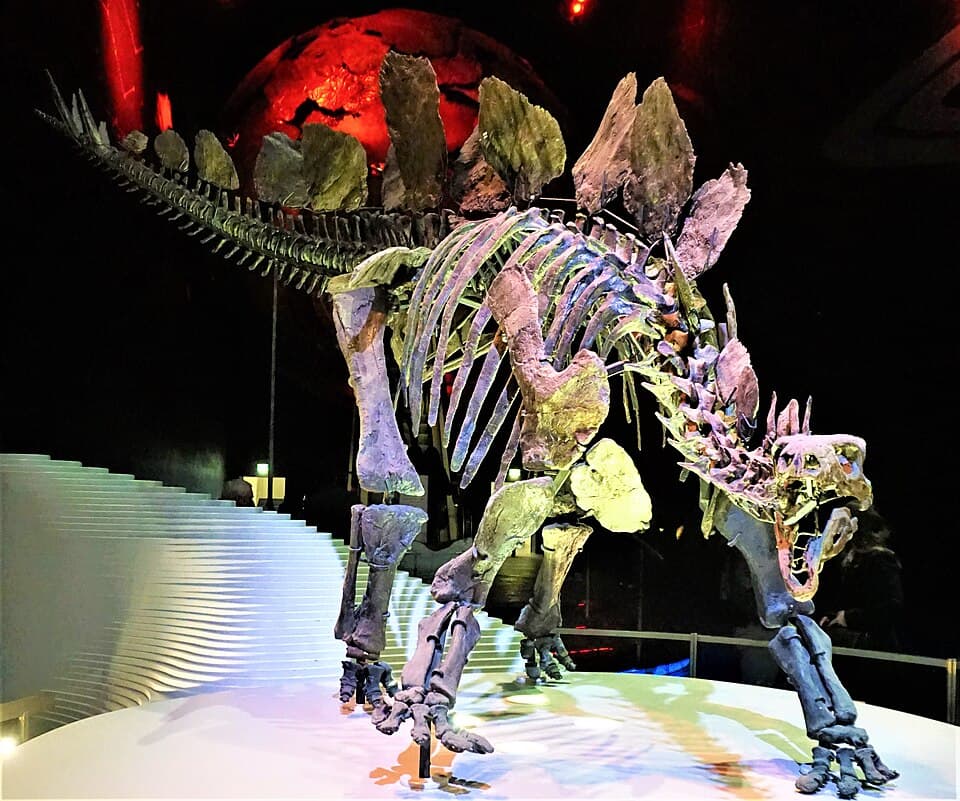
Stegosaurus
Stegosaurus stenops
DinosaurStegosaurus is one of the most recognizable dinosaurs ever discovered, instantly identifiable by the row of large, upright bony plates running along its back and the sharp spikes at the end of its tail. Despite its considerable size, it had a remarkably small, low-slung head with a brain roughly the size of a walnut relative to its huge body.
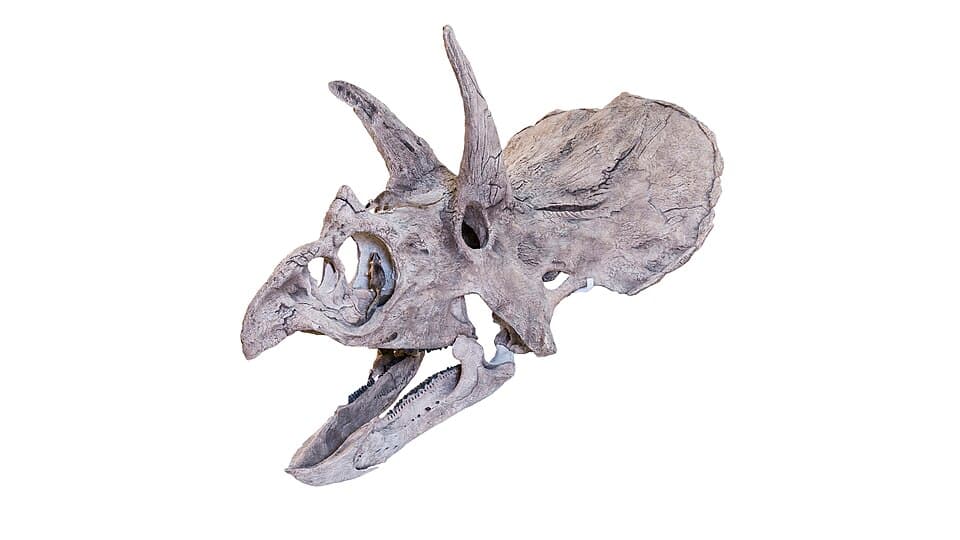
Triceratops
Triceratops horridus
DinosaurTriceratops was one of the last non-avian dinosaurs to exist before the mass extinction event 66 million years ago, instantly recognizable by the massive bony frill extending from the back of its skull and the three prominent horns on its face. It lived across what is now western North America, sharing its environment with predators like Tyrannosaurus rex.
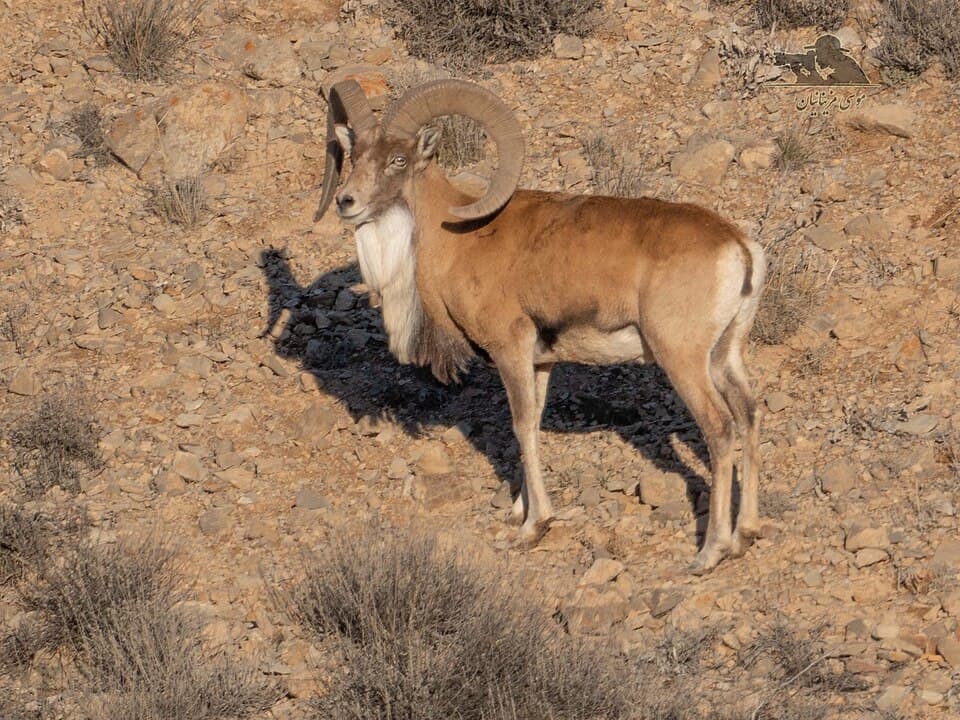
Urial
Ovis vignei
MammalThe urial is a wild sheep species native to the dry hills and mountains of Central and South Asia, recognized by the male's large curling horns.
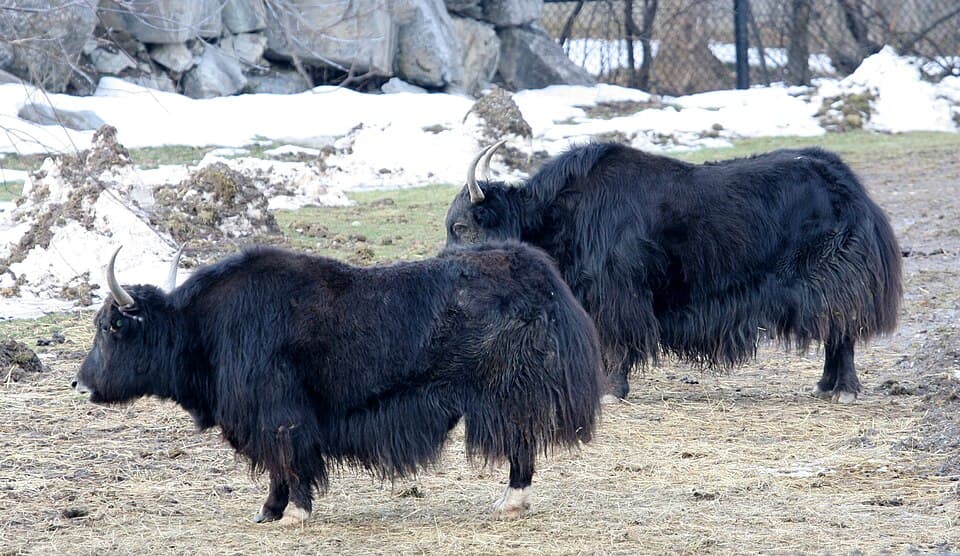
Yak
Bos grunniens
MammalThe yak is a large, long-haired bovine adapted to the extreme cold and thin air of the high Himalayan plateau, able to live at altitudes above 4,000 meters (13,000 feet) that few other large mammals can tolerate. Most yaks today are domesticated and have been kept for thousands of years across Tibet, Nepal, and the surrounding mountains as a source of milk, meat, wool, and transport, while small wild populations still survive on the remote Tibetan Plateau.
Animals with Horns FAQs
How many animals with horns are listed here?
This page currently features 6 species, and more are added regularly as the dataset grows.
What is the most popular animal in this list?
Triceratops is currently the most popular animal in Animals with Horns.
Are any of these animals endangered?
Yes — 2 of the 6 species listed are classified as vulnerable, endangered, or critically endangered.
Explore Other Collections
Cute Animals
The most undeniably adorable animals in our catalog.
Smart Animals
Animals known for problem-solving, tool use, and complex social behavior.
Dangerous Animals
Animals capable of seriously harming other animals — or humans.
Fast Animals
Animals built for speed, whether sprinting, swimming, or flying.
Slow Animals
Animals that get by without needing to move quickly at all.
Flying Animals
Animals equipped with wings for powered flight.
Swimming Animals
Animals built for a life spent largely in the water.
Striped Animals
Animals patterned with bold stripes, from camouflage to warning coloration.