Flying Animals
True powered flight — as opposed to the passive gliding used by flying squirrels and some lizards — has evolved independently just a handful of times across the history of life on Earth: first in insects more than 300 million years ago, later in the now-extinct pterosaurs, and eventually in birds and bats, the only two groups of living vertebrates capable of true flight. Wing shape reflects how each species actually uses the air: broad, wide wings suit birds of prey that soar for long stretches on rising air currents, while short, rounded wings favor tight, fast turns through dense forest, and long, narrow wings favor sustained, energy-efficient direct flight over open water or land. Achieving flight demands a distinctive set of adaptations, from the hollow, lightweight bones and powerful chest muscles of birds to the modified, elongated finger bones that support a bat's wing membrane.
Flight vs. Gliding: What's the Difference
True powered flight, which requires generating thrust through wing-beats, is a much rarer evolutionary achievement than gliding, where an animal uses aerodynamic surfaces simply to slow and control a fall rather than to climb or sustain level flight. Flying squirrels, sugar gliders, and several lizard and frog species have evolved gliding membranes independently, letting them cover impressive horizontal distances between trees, but none of them can take off from level ground or gain altitude under their own power the way a bird, bat, or flying insect can. This distinction matters ecologically too: true fliers can search for food, migrate, and escape predators across far greater ranges than gliders, which remain tied to elevated starting points like tree branches.
How Wings Generate Lift
Flight depends on generating enough lift to counteract gravity, which flying animals achieve by moving air across a wing shaped so that air travels faster over the curved upper surface than the flatter lower surface, creating a pressure difference that pushes the wing upward. Unlike a fixed-wing aircraft, most flying animals also generate thrust with the same wings used for lift, angling and flexing them through each wingbeat to push air backward and pull the body forward — a far more complex aerodynamic problem than an airplane's separated lift-and-thrust design, and one that took evolution tens of millions of years to refine independently in insects, pterosaurs, birds, and bats.
Migration and the Endurance Side of Flight
Not all flying animals are built for speed — many are built for endurance instead, covering extraordinary distances during seasonal migration by minimizing energy cost rather than maximizing velocity. Migratory birds exploit rising columns of warm air called thermals to gain altitude for free, and some species fly in V-formation partly because trailing birds can save meaningful energy riding the wingtip vortex of the bird ahead. Bats, by contrast, are mostly non-migratory or migrate over much shorter distances, relying instead on hibernation or seasonal movement to more localized roosting sites to cope with lean winter months when flying insects, their primary food source, become scarce.

Common Vampire Bat
Desmodus rotundus
MammalThe common vampire bat is one of only three bat species that feeds exclusively on blood, mainly targeting livestock across Latin America under cover of darkness.
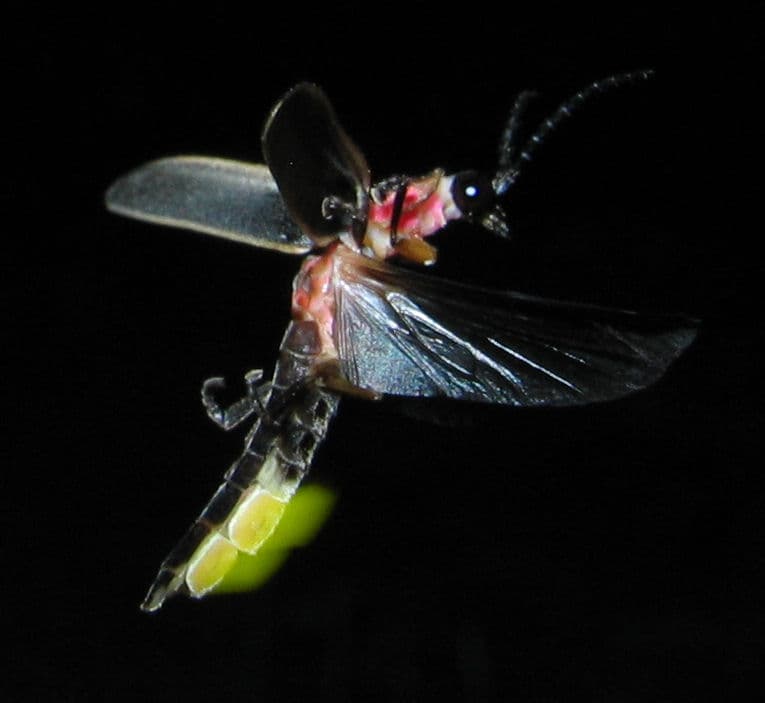
Firefly
Photinus pyralis
InsectThe firefly is a soft-bodied beetle famous for its ability to produce light through a chemical reaction in its abdomen, a phenomenon called bioluminescence used mainly to attract mates on warm summer evenings. Despite the name, it isn't a fly at all -- it's a beetle, most closely related to click beetles and other Coleoptera.
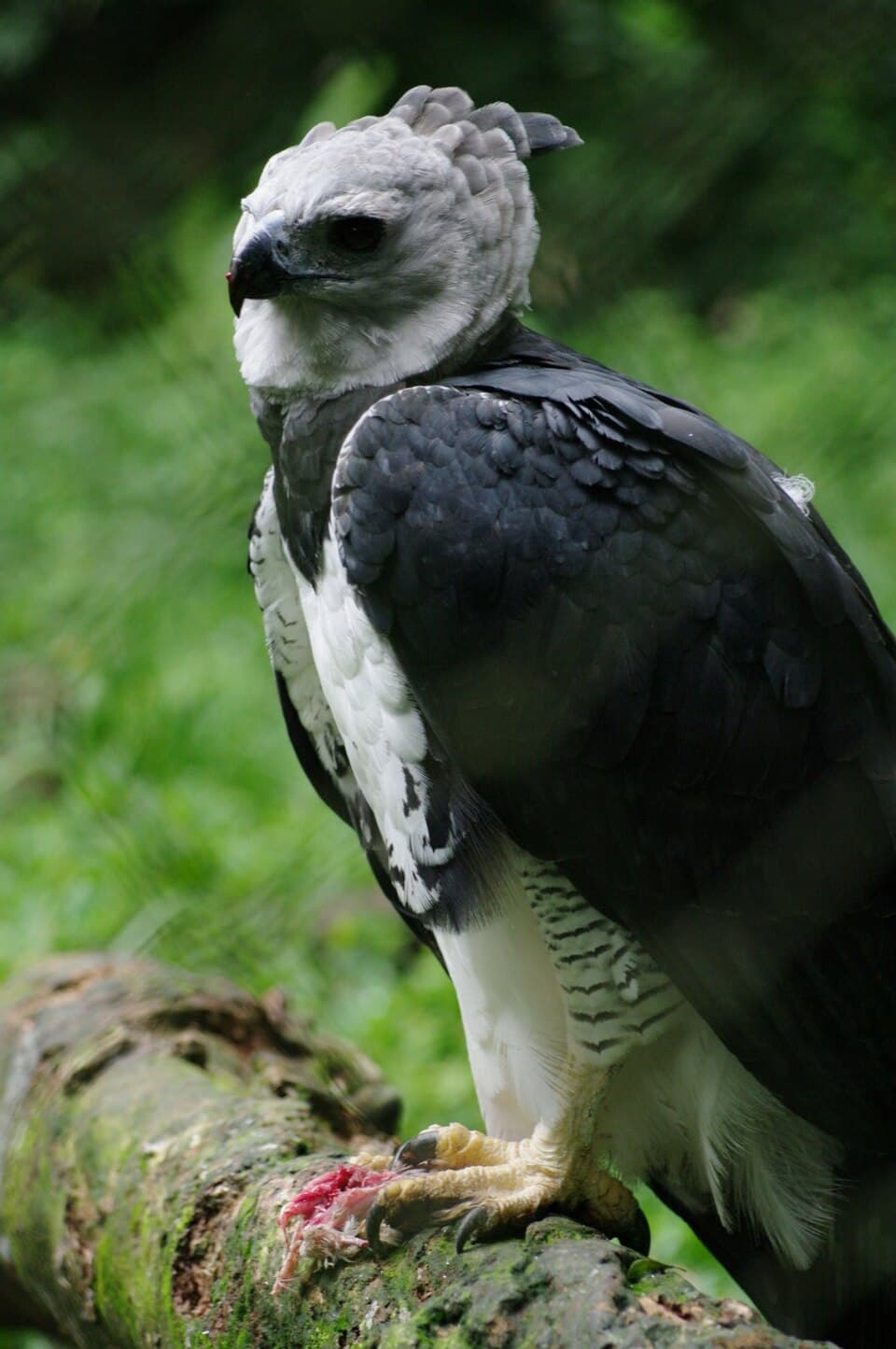
Harpy Eagle
Harpia harpyja
BirdThe harpy eagle is one of the largest and most powerful eagles in the world, a rainforest apex predator capable of snatching monkeys and sloths directly from the treetops. Its enormous talons can exert a grip strength far beyond a human hand's, making it one of the most formidable raptors on Earth.
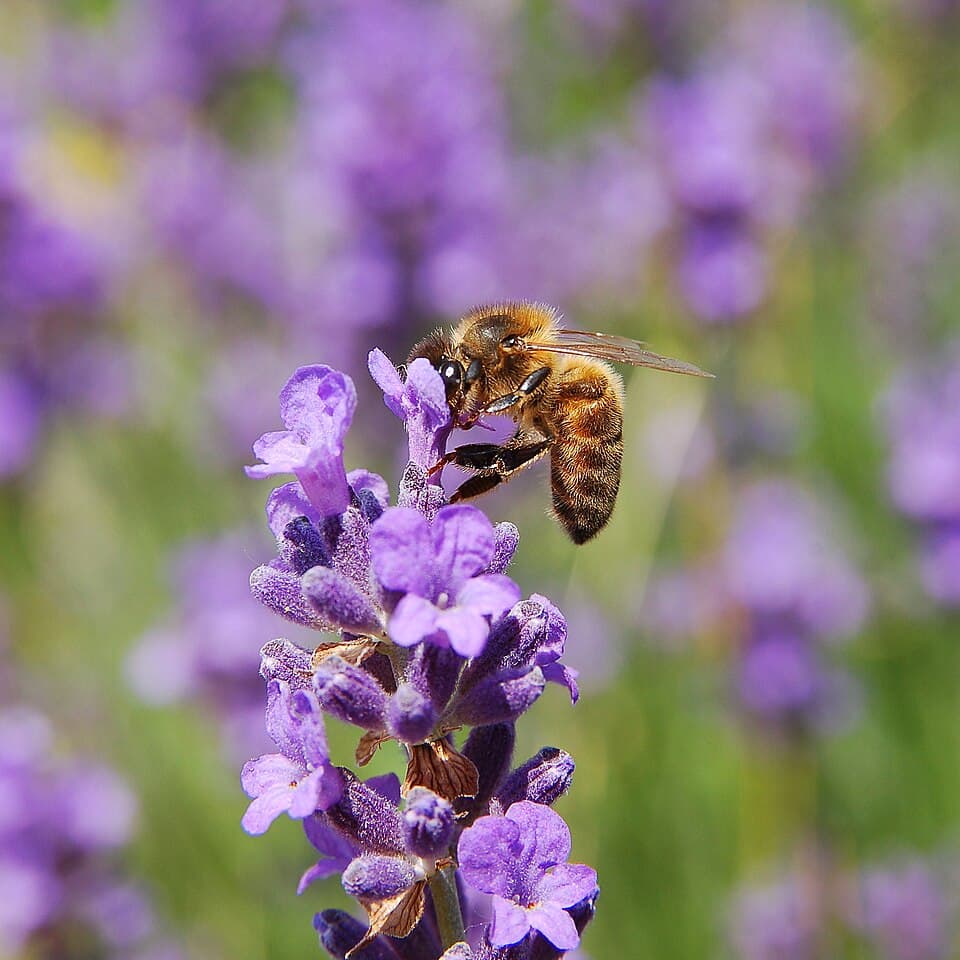
Honeybee
Apis mellifera
InsectThe honeybee is a highly social insect essential to global agriculture, pollinating a huge share of the crops humans depend on while producing honey and wax.
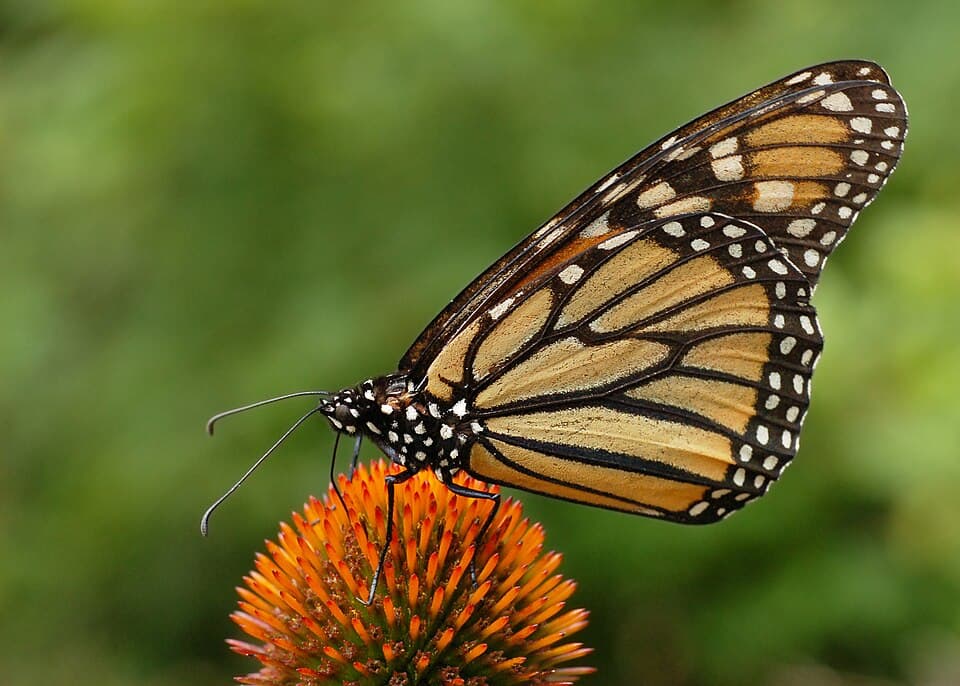
Monarch Butterfly
Danaus plexippus
InsectThe monarch butterfly is famous for an extraordinary multi-generational migration spanning thousands of kilometers between Canada, the United States, and central Mexico.
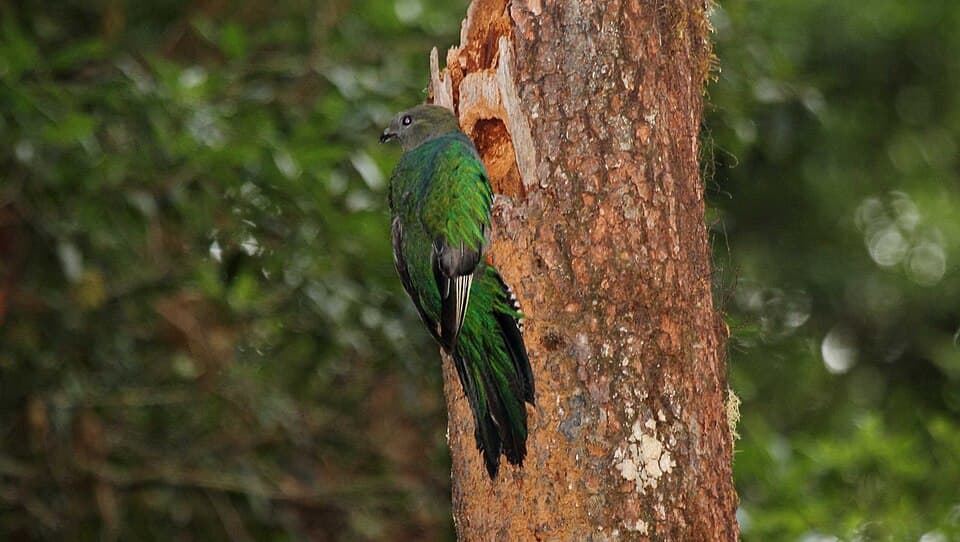
Quetzal
Pharomachrus mocinno
BirdKnown as the resplendent quetzal, this bird is widely considered one of the most beautiful in the world, revered by ancient Mesoamerican civilizations including the Maya and Aztec, who considered it sacred and associated it with the feathered serpent god Quetzalcoatl. Males grow spectacularly long, iridescent green tail streamers that can trail well beyond the length of their own body.
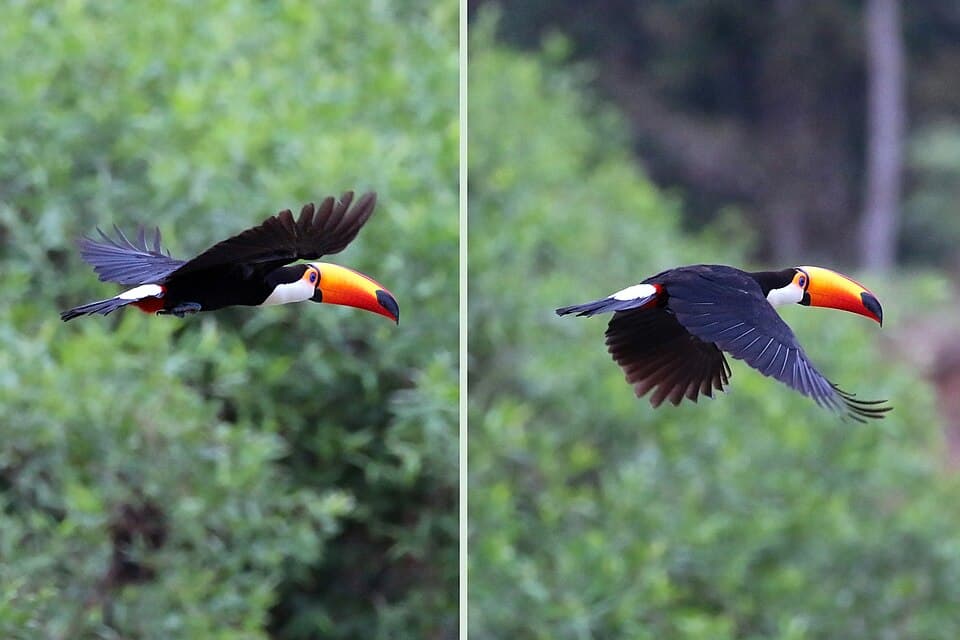
Toco Toucan
Ramphastos toco
BirdThe toco toucan is the largest toucan species, instantly recognizable by its enormous bright orange bill, native to the forests and savannas of South America.
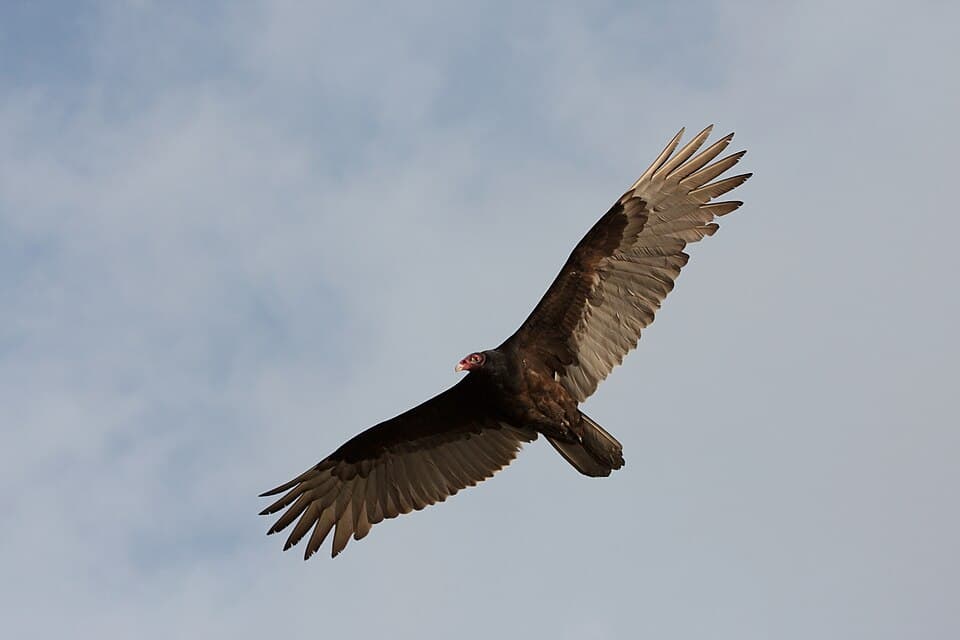
Turkey Vulture
Cathartes aura
BirdThe turkey vulture is a widespread scavenger found across the Americas, playing a critical ecological role by cleaning up carrion using one of the keenest senses of smell in the bird world.
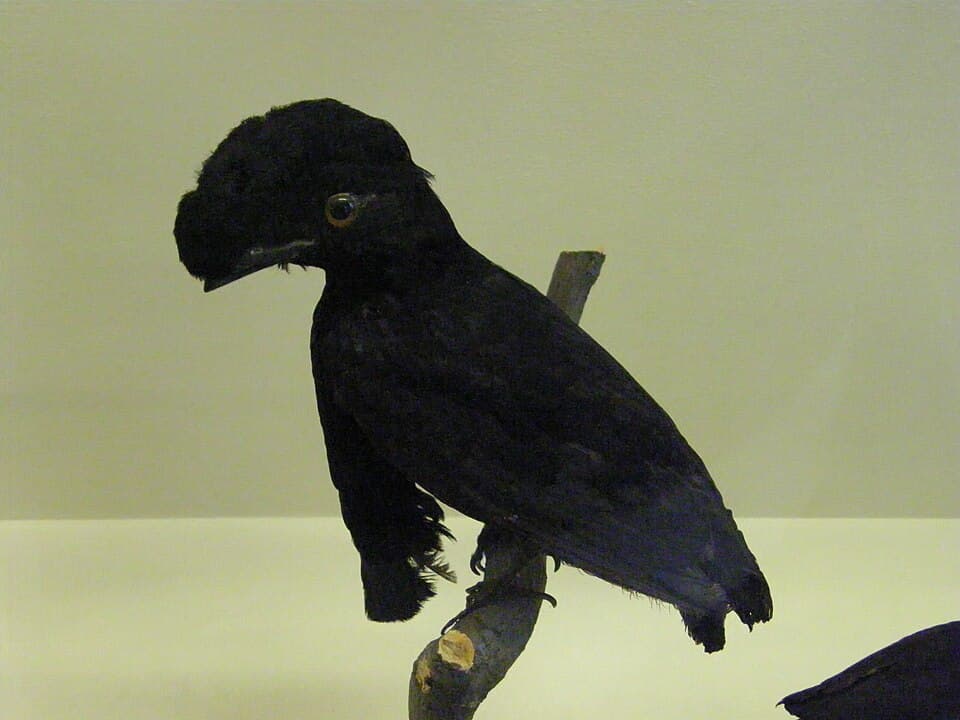
Umbrellabird
Cephalopterus penduliger
BirdThe umbrellabird is a striking rainforest bird named for the umbrella-like crest of feathers that arches forward over its head, along with a long, inflatable wattle of feathered skin hanging from its throat. Males use both features in elaborate courtship displays, along with deep, booming calls that can carry through dense forest.
Flying Animals FAQs
How many flying animals are listed here?
This page currently features 9 species, and more are added regularly as the dataset grows.
What is the most popular animal in this list?
Harpy Eagle is currently the most popular animal in Flying Animals.
Are any of these animals endangered?
Yes — 2 of the 9 species listed are classified as vulnerable, endangered, or critically endangered.
Explore Other Collections
Cute Animals
The most undeniably adorable animals in our catalog.
Smart Animals
Animals known for problem-solving, tool use, and complex social behavior.
Dangerous Animals
Animals capable of seriously harming other animals — or humans.
Fast Animals
Animals built for speed, whether sprinting, swimming, or flying.
Slow Animals
Animals that get by without needing to move quickly at all.
Swimming Animals
Animals built for a life spent largely in the water.
Striped Animals
Animals patterned with bold stripes, from camouflage to warning coloration.
Spotted Animals
Animals with a distinctive spotted coat or skin pattern.