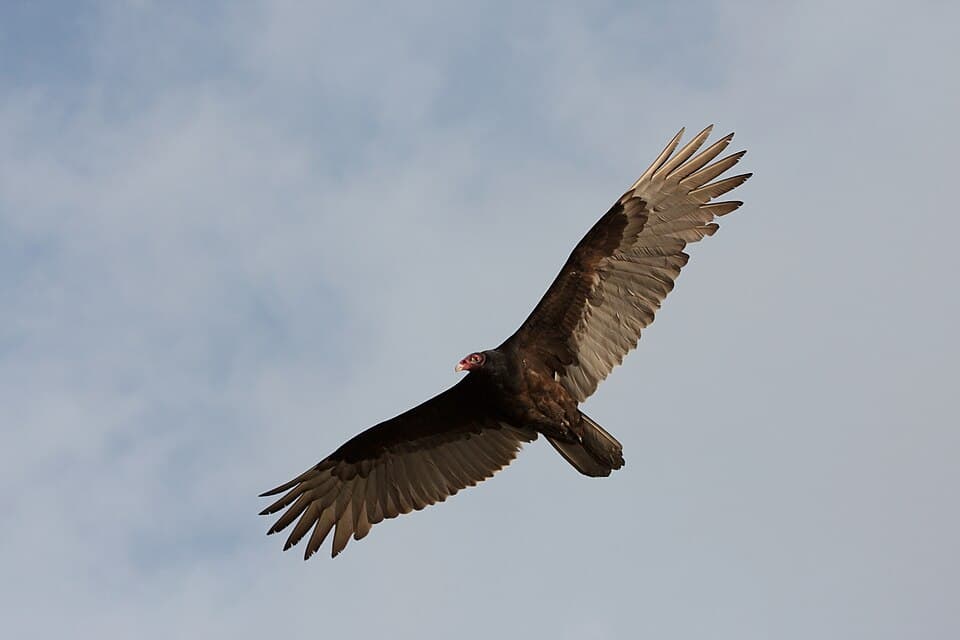
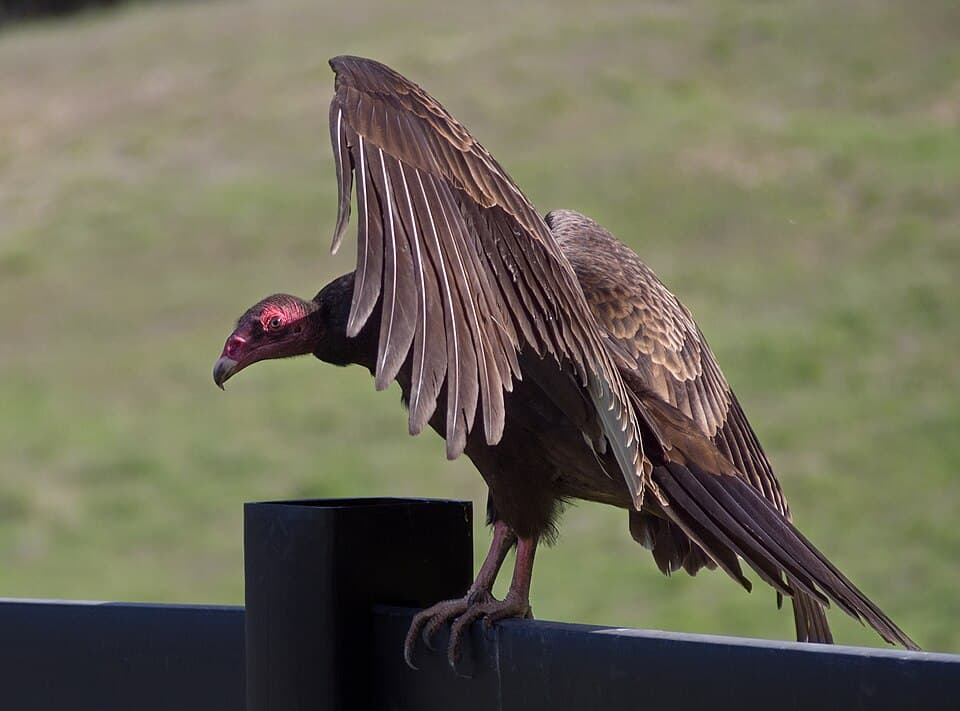
Photo: Dori · CC BY-SA 2.0 · via Wikimedia Commons
Overview
The turkey vulture is a widespread scavenger found across the Americas, playing a critical ecological role by cleaning up carrion using one of the keenest senses of smell in the bird world.
Appearance
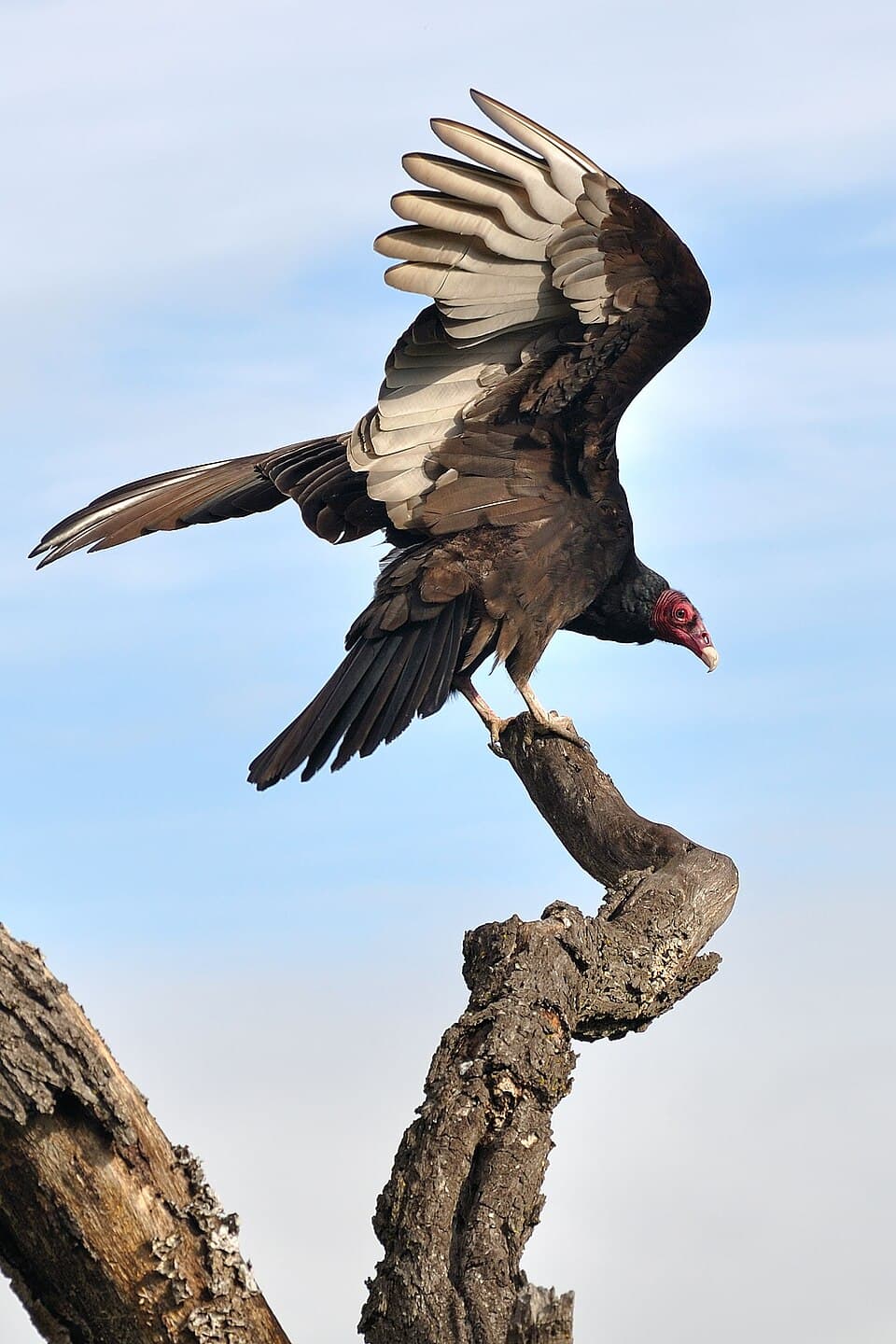
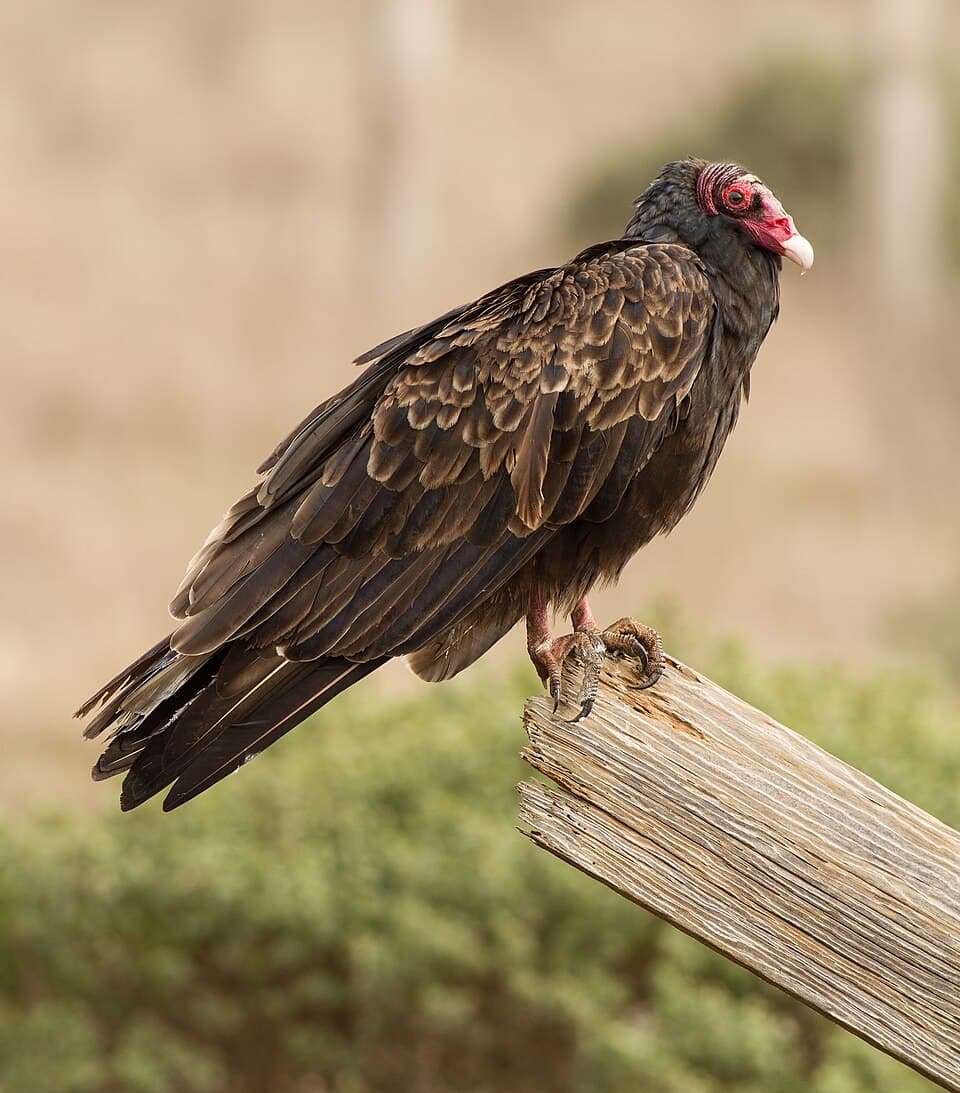
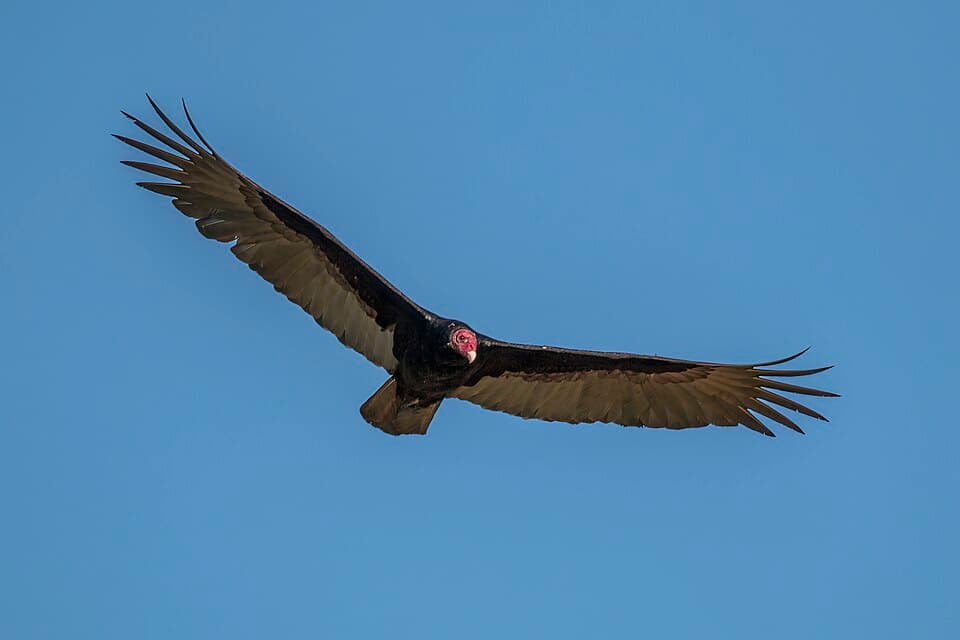
It has dark brown-black plumage, a featherless red head resembling a wild turkey's, and long broad wings held in a shallow V while soaring.
Habitat & Distribution
The turkey vulture is found in forest, grassland, desert habitats.
Diet & Behavior
Diet: Omnivore — Animals with flexible diets that eat both plants and animals, adapting to whatever food is available in their environment.
Turkey vultures locate carrion largely by smell, an unusual ability among birds, and soar for hours on rising thermals with barely a wingbeat to conserve energy.
Predators
- Great horned owl (eggs/chicks)
Prey
This species does not prey on other animals.
Interesting Facts
- 1
It's one of the few birds with a strong sense of smell, used to locate carrion.
- 2
Its bald head stays cleaner than feathers would while feeding on carcasses.
- 3
Turkey vultures can soar for hours using rising warm air with minimal wing flapping.
Gallery
Turkey Vulture FAQs
What does a turkey vulture eat?
The turkey vulture is an omnivore. Animals with flexible diets that eat both plants and animals, adapting to whatever food is available in their environment.
Where does the turkey vulture live?
The turkey vulture is found in forest, grassland, desert habitats across north america and south america.
Is the turkey vulture endangered?
The turkey vulture has a conservation status of Least Concern. Widespread and abundant species that are not currently at significant risk of extinction.
How long do turkey vultures live?
A turkey vulture's typical lifespan is 16–20 years in the wild.
How fast can a turkey vulture run?
The turkey vulture can reach speeds of up to 96 km/h.
How much does a turkey vulture weigh?
An adult turkey vulture typically weighs 0.85–2.26 kg.