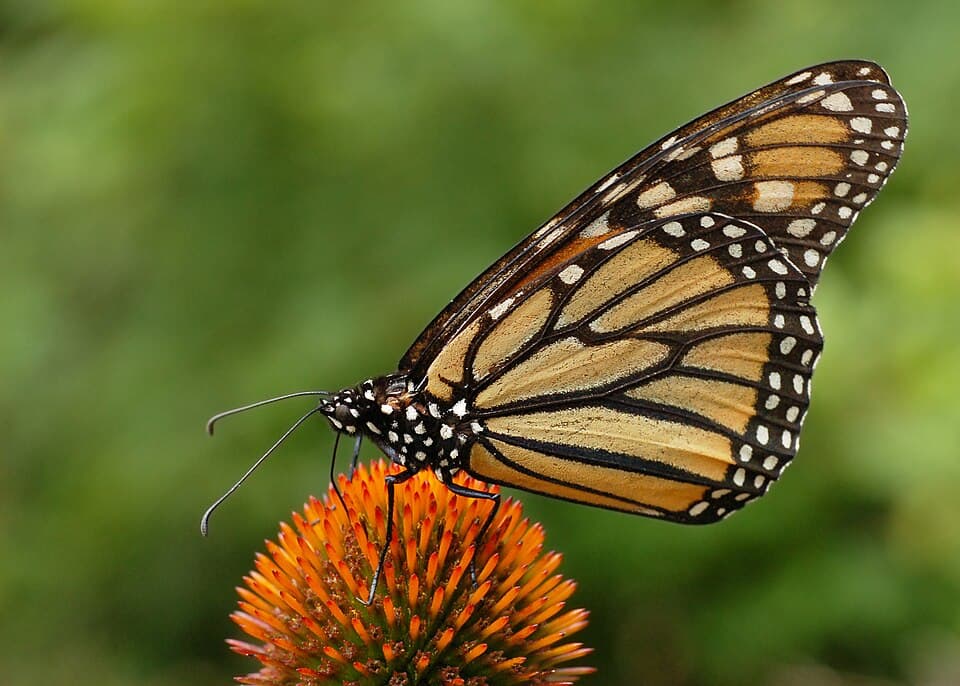
Photo: Photo by and (c)2007 Derek Ramsey (Ram-Man) · GFDL 1.2 · via Wikimedia Commons
Overview
The monarch butterfly is famous for an extraordinary multi-generational migration spanning thousands of kilometers between Canada, the United States, and central Mexico.
Appearance
It has bright orange wings crossed with black veins and bordered with a black margin dotted with small white spots.
Habitat & Distribution
The monarch butterfly is found in grassland, forest habitats.
Diet & Behavior
Diet: Herbivore — Plant-eating animals that graze or browse on grasses, leaves, and other vegetation, from tiny insects to giant elephants.
No single monarch completes the full migratory round trip — it takes several generations, with the final generation living up to eight months to complete the journey south.
Predators
- Birds
- Wasps
- Spiders
Prey
This species does not prey on other animals.
Interesting Facts
- 1
It takes multiple generations of monarchs to complete their full migratory cycle.
- 2
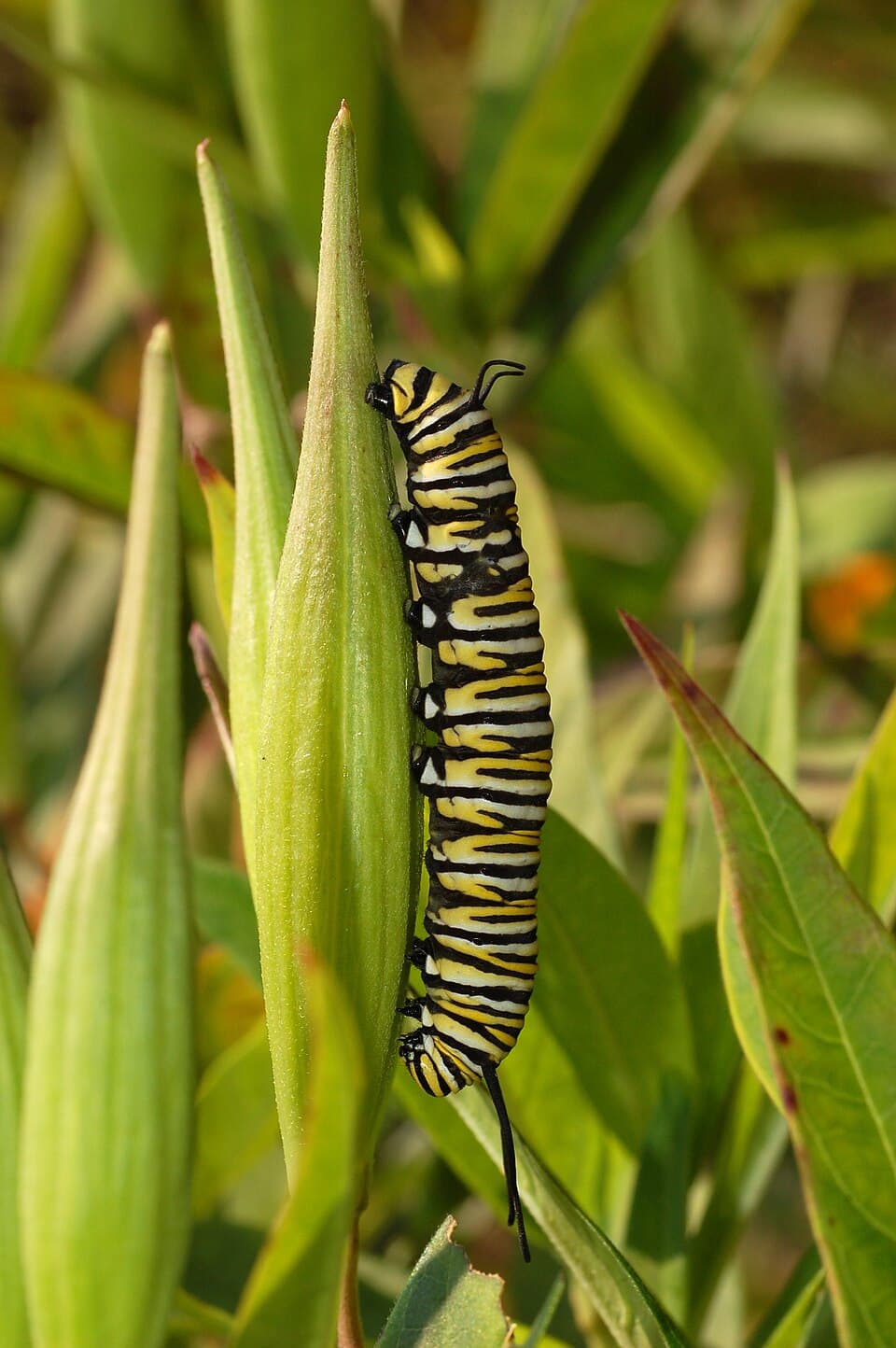
Monarch caterpillars feed only on milkweed, which makes the adults toxic to most predators.
- 3
Some monarchs travel over 4,000 kilometers during migration.
Gallery


Monarch Butterfly FAQs
What does a monarch butterfly eat?
The monarch butterfly is a herbivore. Plant-eating animals that graze or browse on grasses, leaves, and other vegetation, from tiny insects to giant elephants.
Where does the monarch butterfly live?
The monarch butterfly is found in grassland, forest habitats across north america.
Is the monarch butterfly endangered?
The monarch butterfly has a conservation status of Endangered. Species facing a very high risk of extinction in the wild in the near future.
How long do monarch butterflys live?
A monarch butterfly's typical lifespan is 0.03–0.75 years in the wild.
How much does a monarch butterfly weigh?
An adult monarch butterfly typically weighs 0.0003–0.0007 kg.