Photo: Holger Krisp · CC BY 3.0 · via Wikimedia Commons
Overview
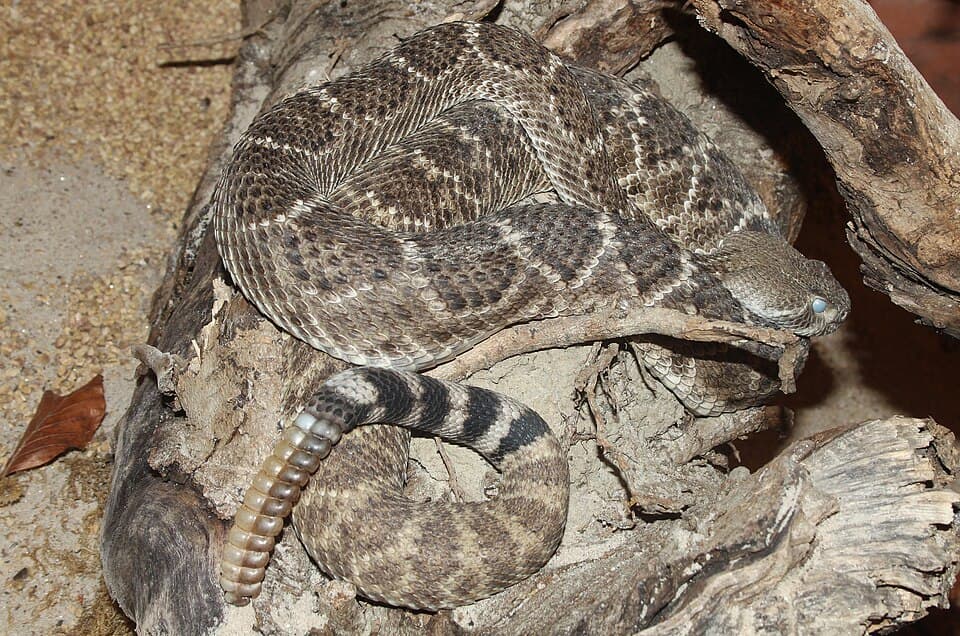
The western diamondback rattlesnake is one of the most dangerous and widely-distributed venomous snakes in North America, easily identified by the diamond pattern along its back.
Appearance
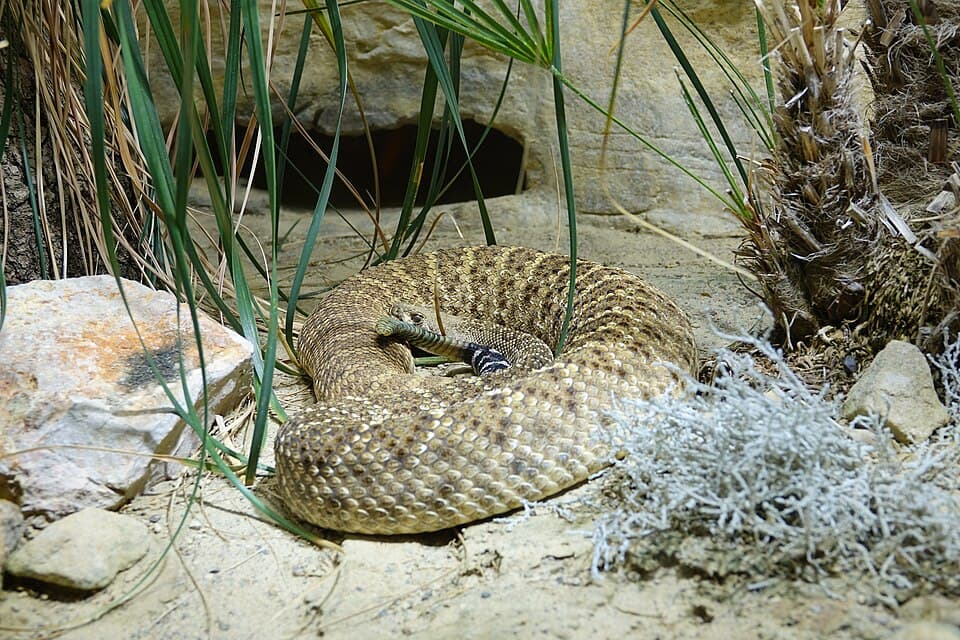
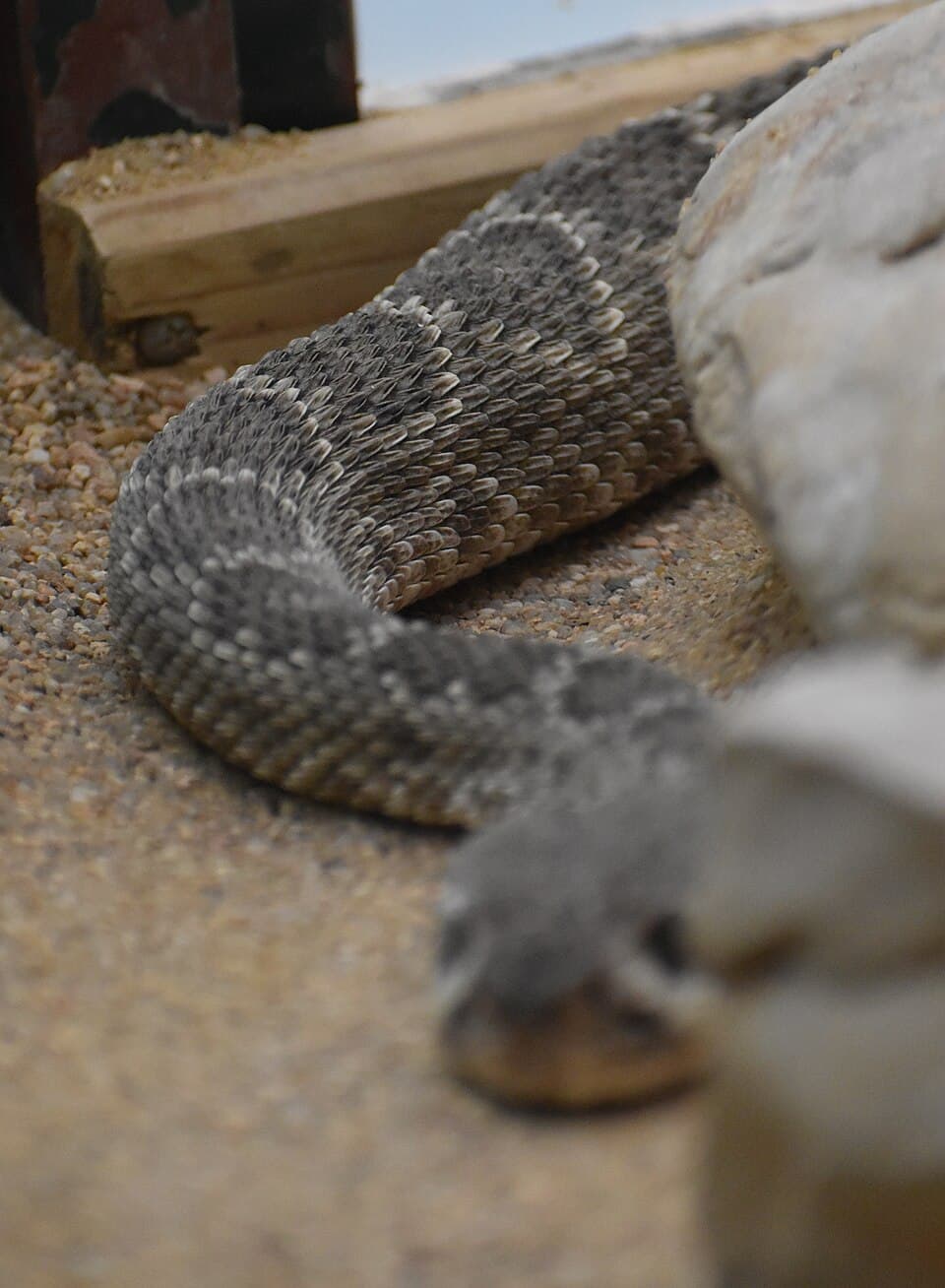
It has a heavy gray-brown body marked with dark diamond-shaped blotches, and a tail ending in a segmented rattle used as a warning.
Habitat & Distribution
The western diamondback rattlesnake is found in desert habitats.
Diet & Behavior
Diet: Carnivore — Meat-eating animals that hunt, scavenge, or fish for prey, ranging from big cats to snakes and birds of prey.
It shakes its tail rattle rapidly to warn off threats before striking, and uses heat-sensing pits to locate warm-blooded prey even in total darkness.
Predators
- Hawk
- Roadrunner
- King snake
Prey
- Rodents
- Rabbits
- Birds
Interesting Facts
- 1
Its rattle is made of interlocking segments of keratin that click together when vibrated.
- 2
A new rattle segment is added each time it sheds its skin.
- 3
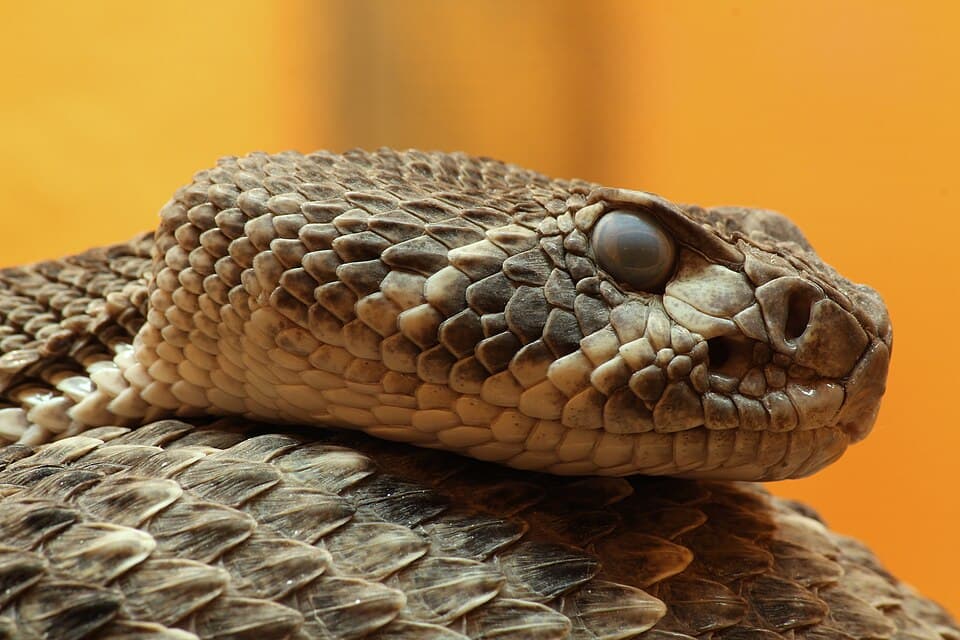
Heat-sensing pits let it strike accurately at prey even in complete darkness.
Gallery

Western Diamondback Rattlesnake FAQs
What does a western diamondback rattlesnake eat?
The western diamondback rattlesnake is a carnivore. Its diet includes rodents, rabbits, birds.
Where does the western diamondback rattlesnake live?
The western diamondback rattlesnake is found in desert habitats across north america.
Is the western diamondback rattlesnake endangered?
The western diamondback rattlesnake has a conservation status of Least Concern. Widespread and abundant species that are not currently at significant risk of extinction.
How long do western diamondback rattlesnakes live?
A western diamondback rattlesnake's typical lifespan is 15–20 years in the wild.
How much does a western diamondback rattlesnake weigh?
An adult western diamondback rattlesnake typically weighs 1.5–4.5 kg.